Best Baby Bottles for Gassy Babies 2026: Anti-Colic Picks
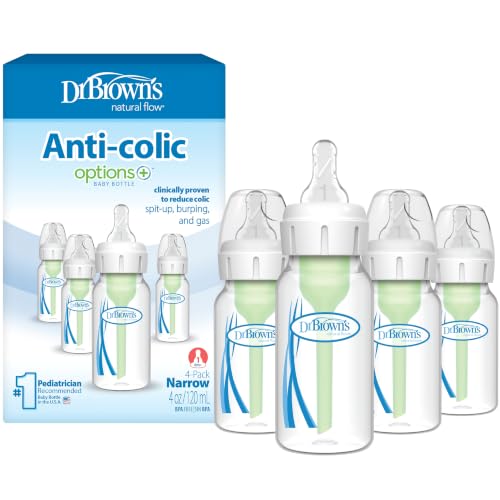
The Dr. Brown's Natural Flow Options+ is the best bottle for gassy babies — the internal vent tube routes air to the back so baby swallows only milk without air bubbles. The wide-neck version supports both formula and breast milk and accommodates a wider breastfeeding latch.
At a Glance
| # | Product | Award | Price |
|---|---|---|---|
| 1 | Dr. Brown's Anti-Colic Options+ N… Dr. Brown's |
Best Overall | $23.69 as of Nov 24, 12:16 PM CT details Buy → |
| 2 | 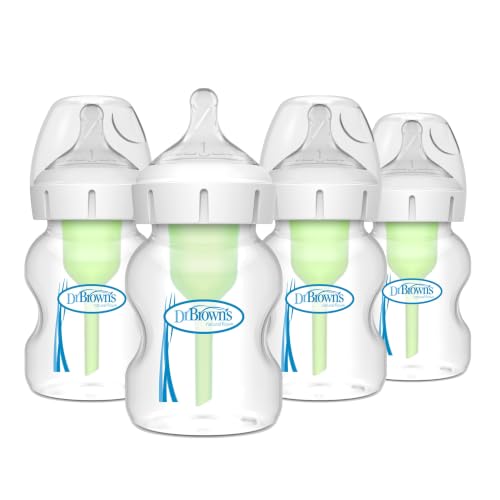 Dr. Brown's Anti-Colic Options+ W… Dr. Brown's |
Best Wide-Neck | $24.99 as of Nov 24, 12:23 PM CT details Buy → |
| 3 | Best for Breastfed | Check price on Amazon Buy → |
Baby Bottles for Gassy Babies Buying Guide
 Photo by Alina Matveycheva / Pexels
A gassy baby during feeding is swallowing air, which causes bloating, discomfort, and the arched-back crying that exhausted parents learn to dread. Anti-colic bottles use vent systems to separate milk from air — instead of milk and air flowing together into baby's mouth, air travels backward through a vent while baby drinks milk cleanly. The difference in gas production is real and measurable, though individual babies vary significantly in response.
How Anti-Colic Vent Systems Work
Dr. Brown's vent system uses an internal straw-like tube that runs from the nipple to the bottom of the bottle. Air enters at the top (nipple area), travels down the vent tube, and exits at the bottom — keeping milk and air separate throughout the feed. This is the most effective vent design and has the largest evidence base behind it. The downside: more parts mean more cleaning. The Options+ version lets you remove the vent system when baby outgrows the gassy stage.
Comotomo: A Different Approach
The Comotomo ($13) uses two small anti-colic vents at the base of the nipple rather than an internal tube. Less effective at air separation than Dr. Brown's vent system, but far easier to clean and more breast-like in feel. Best for breastfed babies where nipple shape matters more than maximum air separation.
Gripe Water vs. Bottle Switch: What to Try First
Before switching bottles, ensure correct feeding position — semi-upright (45 degrees or more) reduces air ingestion significantly regardless of bottle type. Burp baby every 1–2 oz during feeding. If gas persists after position correction, switch to an anti-colic bottle. If gas continues after bottle switch, consult your pediatrician — persistent gas can indicate a formula sensitivity or latch problem that no bottle will fix.
What to Avoid
Bottles without any venting on a consistently gassy baby — they'll continue to swallow air every feed. Vented bottles with poorly sealed vent systems that don't actually separate air and milk (cheap generic options). Boiling vent tube components — the internal parts of Dr. Brown's are dishwasher safe on the top rack. Feeding baby lying flat — always feed at 30–45 degrees minimum.
Watch Before You Buy



“Dr. Brown's Anti-Colic Narrow 4-pack uses the brand's signature venting system to reduce gas and spit-up from the first feed, with BPA-free plastic. The 4 oz capacity suits newborns but is…”
See Today’s Price →What we like
- anti-colic venting system
- reduces gas and spit-up
- BPA-free
- 4-pack value
Watch out for
- 4 oz small size only lasts newborn stage
- Narrow neck harder to clean than wide-neck alternatives
- Vent system has multiple small parts to lose
Read Full Analysis
Dr. Brown's Natural Flow Anti-Colic narrow-neck 4-pack at $25.32 ($6.33/bottle) earns the top rank on this gassy-baby page with an internal venting system that mechanically routes swallowed air away from the milk stream during feeding. Less air ingested means less gas and spit-up after feeds — the core promise of the anti-colic design. BPA-free plastic and the 4-pack value make this the efficient starting point for gassy newborns, and the brand's long track record in anti-colic bottles gives it established credibility. Against the wide-neck variant below it at $25.26 (same anti-colic performance, $0.06 less for the set), the narrow format offers no practical advantage for gas reduction — the vent system is identical. The wide-neck version handles both gas and the latch transition for breastfed babies simultaneously. Against Comotomo at $13 per bottle, Dr. Brown's costs roughly half per bottle and addresses gas mechanically; Comotomo reduces a behavioral gas contributor specific to breastfed babies, not mechanical air swallowing. Best for formula-fed newborns where gas and colic are the primary concern. If the baby is also breastfed, the wide-neck version one rank below is the better pick at essentially the same price — the narrow nipple adds a latch-compatibility disadvantage without any gas-reduction benefit.
“Dr. Brown's Options+ Wide-Neck 5oz bottles pair the brand's trusted anti-colic venting with a wide, breast-like neck opening to ease the transition from nursing for 4. The vent assembly…”
See Today’s Price →What we like
- Anti-colic vent system reduces gas
- Wide neck for breast-like latch
- Compatible with Options+ accessories
- Dr. Brown's proven design
Watch out for
- More parts to wash than standard bottles
- Vent system must be assembled correctly to function
- Wide neck nipples harder to find at stores
- Pricier than basic bottles
Read Full Analysis
Dr. Brown's Options+ Wide-Neck 4-pack for four ($6.32/bottle) is the stronger choice on this gassy-baby page for breastfed infants: the same anti-colic venting system as the narrow variant above it, combined with a wide neck that encourages the open-jaw latch breastfed babies are used to. Gas reduction is the same regardless of neck width — the vent tube routes air identically in both formats. The wide neck adds compatibility without removing any anti-colic benefit. Vs the narrow 4-pack, the difference is $0.06 for the full set. For that negligible gap, wide-neck handles both gas and breastfed-baby latch transition simultaneously. Against Comotomo at $13 per bottle, Dr. Brown's is cheaper per bottle and more focused on mechanical gas reduction — Comotomo's silicone flex targets nipple confusion, a behavioral contributor to gas in breastfed babies, rather than the air ingestion Dr. Brown's venting blocks. The maintenance tradeoff: the vent system (tube, reservoir, collar, cap, nipple) has five parts to disassemble, wash, and reassemble correctly after every feed. Best for gassy breastfed babies where you want to address both gas and latch in one bottle. For formula-fed gassy babies, the narrow variant works equally well but the wide-neck design is a better long-term investment since there's no narrow-neck advantage.
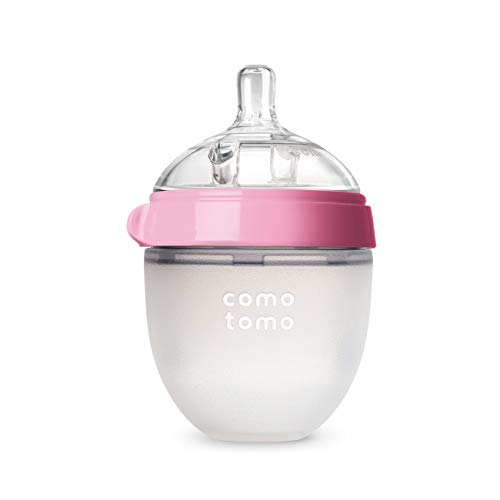
“Comotomo's 5oz silicone bottle mimics breast tissue's flex and warmth with a wide base that promotes a natural latch — making it a go-to recommendation for gassy breastfed babies. At 5oz…”
See Today’s Price →What we like
- Ultra-soft silicone that flexes like breast tissue
- Wide base for natural latch
- Prevents nipple confusion
- Comotomo brand reputation
Watch out for
- Pricier per bottle than most competitors
- 5oz only — frequent refilling for hungry babies
- Silicone can take on smells over time
- Wide base harder to fit in some bottle holders
Read Full Analysis
Comotomo's 5oz silicone bottle at $13.00 carries the Best for Breastfed badge on this gassy-baby page because it addresses a behavioral gas contributor specific to breastfed babies: nipple confusion. When a breastfed baby transitions between breast and a rigid plastic narrow-neck bottle, the mechanical adjustment between different sucking patterns can increase tension and air swallowing. Comotomo's flexible silicone body flexes under hand pressure and the wide base encourages a broad open-jaw latch — both reduce the adjustment gap that contributes to air ingestion. On a gassy-baby page dominated by Dr. Brown's anti-colic vent system, Comotomo plays a specific role. The two Dr. Brown's options above it ($25.26–$25.32/4-pack, $6.32–$6.33/bottle) mechanically block air from entering the milk stream during feeding — a direct physical intervention. Comotomo reduces a secondary gas source for breastfed babies but doesn't vent mechanically. For formula-fed gassy babies, Comotomo provides no gas-reduction benefit. Vs $6.32–$6.33 per bottle, the per-bottle premium is real. Best as the primary bottle for breastfed babies who are both gassy and showing nipple confusion — the two problems often occur together. For formula-fed gassy babies, start with the Dr. Brown's Options+ Wide-Neck above it; the venting system is more directly targeted at mechanical air swallowing regardless of feeding method.
Frequently Asked Questions
Do anti-colic bottles actually work?
Is Dr. Brown's really the best bottle for gas?
How do you clean Dr. Brown's vent tube?
When can I remove the vent insert from Dr. Brown's Options+?
How We Chose These Products
We compare each product’s Amazon listing, the manufacturer’s published specifications and Amazon customer ratings, shown with their review counts as Amazon’s data, and rank the products on how well they answer this page’s question. We do not test products in hand and we do not run our own analysis of review text. A publication or expert is named only where we cite its published findings about that product. No manufacturer paid for placement on this page.
A price appears only when Amazon’s API supplied it at a recent daily refresh, with the date and time beside it, and is withdrawn at 4 AM Central on the day after it turns 24 hours old; otherwise use “Check price on Amazon” for the live price. Read our full methodology →