Band-Aid vs CURAD 2026: Best Adhesive Bandages

Curad Assorted Variety Pack for 300-count is the best value — more bandages per dollar across 6 styles than any Band-Aid multipack. Band-Aid Flexible Fabric for 100-count is the top pick if you want the classic flexible-fabric format that conforms best to knuckles and joints.
At a Glance
Band-Aid vs CURAD Buying Guide

Band-Aid and CURAD both make reliable adhesive bandages that cover minor cuts, scrapes, and blisters. Band-Aid is the original and most recognized name in the category; CURAD is the value-oriented competitor with a stronger variety-pack offering. The practical difference between them is smaller than brand loyalty suggests — both use standard absorbent pads and skin-safe adhesive.
Where Band-Aid Wins
Band-Aid Flexible Fabric is the benchmark for bandages that stay on during movement. The woven fabric construction stretches with skin on knuckles, fingers, and elbows — areas where rigid plastic bandages peel off within hours. Band-Aid Hydro Seal goes further, creating a moist healing environment that reduces scab formation and speeds recovery for blisters and deeper scrapes. For active users who need bandages to stay in place through workouts, dish washing, or outdoor activity, Band-Aid's premium formats justify the higher per-bandage cost.
Where CURAD Wins
CURAD Assorted Variety Pack delivers 300 bandages across 6 styles for $10.52 — roughly 3.5 cents per bandage versus Band-Aid's 7.6 cents per bandage on the standard fabric pack. For households, schools, or first aid kits where volume and variety matter more than specific format quality, CURAD's count and cost advantages are significant. The CURAD variety pack covers the same sizes as a typical Band-Aid assortment and performs comparably for minor wound protection.
Specialty Formats
Band-Aid leads in specialty formats: Hydro Seal waterproof bandages, Tough Strips for high-abrasion areas, and Skin-Flex for sensitive skin. CURAD's line focuses on standard wound care without the specialty upsell. If you have a specific need like blister protection or post-surgical wound coverage, Band-Aid's specialized products are worth seeking out. For general household use, CURAD's standard assortment covers 95% of situations at lower cost.
Which Brand Should You Buy?
Choose CURAD Assorted 300-Count for stocking a home or workplace first aid kit — the per-bandage cost is unbeatable and the variety covers all standard wound sizes. Choose Band-Aid Flexible Fabric if you need bandages specifically for joints and high-movement areas where standard bandages fail. Choose Band-Aid Hydro Seal for blister care or wounds that need a moist healing environment. For everyday cuts and scrapes, both brands perform identically.
“At $7.62 for 100 bandages, the Band-Aid Flexible Fabric in assorted sizes delivers the brand-name quality most households reach for by default — the flexible fabric moves with skin better than…”
See Today’s Price →What we like
- Flexible fabric
- Assorted sizes
- 100-count value
- Trusted brand
Watch out for
- Higher price than generic alternatives
- Adhesive can irritate sensitive skin after extended wear
- 100-count seems like a lot until you have kids
Read Full Analysis
Band-Aid Flexible Fabric Adhesive Bandages earn their position through a feature most buyers overlook: the woven fabric construction stretches with skin at knuckles, elbows, and heels rather than puckering and peeling like plastic strips. For 100, the per-bandage cost of $0.076 is higher than the CURAD Variety Pack but the fabric flexibility pays off specifically on joints and high-movement areas where standard strips typically fail within hours. Against the CURAD 300-count, Band-Aid Flexible Fabric costs more per bandage but less per pack — making it the right scale for a single person or couple rather than a family burning through supplies. Against the Hydro Seal for 10, Band-Aid Flexible Fabric is the everyday value: the Hydro Seal is the right tool for blisters and wet conditions, not a routine cut. Choose this if your household uses bandages primarily on knuckle and joint cuts, where fabric flex meaningfully extends wear time. Skip it if budget per bandage is the priority and wound type variety matters — the CURAD 300-count covers nearly the same use cases at lower cost per bandage. If waterproof protection or moist wound healing is the main need, the Band-Aid Hydro Seal is the more appropriate choice despite its higher per-unit cost.
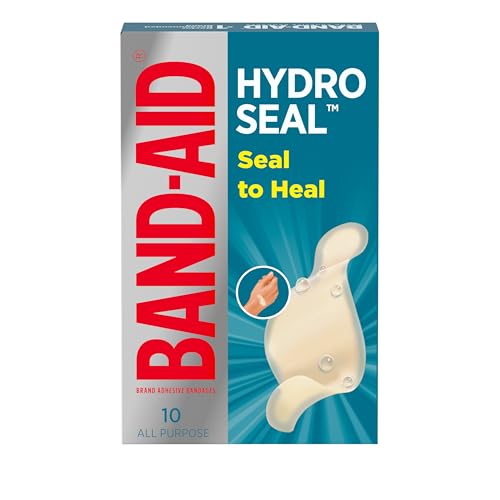
“The Band-Aid Hydro Seal for 10 uses hydrocolloid technology to create a waterproof, moist healing environment that helps protect blisters and abrasions from drying out or getting infected.…”
See Today’s Price →What we like
- Hydro seal technology
- Waterproof
- All-purpose
- 10-count pack
Watch out for
- hydrocolloid bandages bulkier than standard bandages
- not suitable for deep or actively bleeding wounds
- waterproof seal reduces breathability
Read Full Analysis
Band-Aid Hydro Seal addresses a wound care need the other options on this page cannot: hydrocolloid technology creates a sealed moist environment over blisters, friction abrasions, and weeping skin tears rather than drying them with air exposure. For 10 bandages, it is purpose-built for wounds caused by repetitive friction from shoes, athletic activity, or tools — where standard adhesive bandages either fall off or fail to contain the wound properly. Per bandage, Hydro Seal costs roughly 16 times the per-unit price of the CURAD Variety Pack and Band-Aid Flexible Fabric. The premium is justified only for wounds where moist healing and waterproof sealing are genuinely needed. For routine cuts and scrapes, either of the other options provides far more coverage at a fraction of the cost. The 10-count format also runs out quickly if used as an everyday bandage rather than a targeted tool. Choose Hydro Seal for blister management, heel and foot friction abrasions, and wounds you need to keep covered through water exposure like showering or dishwashing. Skip it for standard cuts — the Band-Aid Flexible Fabric at $7.62 or the CURAD 300-pack handles routine wound care more efficiently. The reduced breathability of the hydrocolloid seal can affect healing on simple lacerations, so matching this product to the right wound type is the key to getting value from its higher price.
“At $10.52 for 300 bandages across 6 styles, the CURAD Variety Pack is a strong value for households that go through bandages frequently — the assorted sizes and latex-free construction handle most…”
See Today’s Price →What we like
- 300-count value
- 6 styles
- Assorted sizes
- Latex-free
Watch out for
- Variety of styles means some you rarely use
- Individual bandage wrappers generate significant waste
- Not for wounds requiring larger coverage
Read Full Analysis
The CURAD 300-Count Variety Pack stands out in the Band-Aid vs CURAD comparison for households that need coverage across multiple wound types — the six-style assortment covers standard cuts, larger abrasions, and fingertip injuries without requiring separate purchases. The latex-free construction is worth noting for anyone with latex sensitivities, since neither Band-Aid Flexible Fabric nor Hydro Seal specifically address this on the label. For 300 bandages, the per-bandage cost is roughly $0.035 — significantly lower than Band-Aid Flexible Fabric at $0.076 each or the Hydro Seal at $1.24 each. The variety format dilutes the count advantage somewhat: you will likely deplete one or two styles while others sit unused, so expect to supplement with refill packs over time. Choose this if your household has varied first-aid needs and includes anyone with latex sensitivities — the 300-count volume makes sense for families who cycle through bandage types regularly. Skip it if you consistently use only one bandage size; the Band-Aid Flexible Fabric 100-count is a simpler, more consistent supply. For waterproof coverage on blisters or frequent water exposure, the Band-Aid Hydro Seal remains a separate necessity regardless of which general-purpose pack you choose.
Frequently Asked Questions
Are Band-Aid bandages better than CURAD?
Which brand has better bandages for sensitive skin?
How long can you leave a bandage on a minor wound?
How We Chose These Products
We compare each product’s Amazon listing, the manufacturer’s published specifications and Amazon customer ratings, shown with their review counts as Amazon’s data, and rank the products on how well they answer this page’s question. We do not test products in hand and we do not run our own analysis of review text. A publication or expert is named only where we cite its published findings about that product. No manufacturer paid for placement on this page.
A price appears only when Amazon’s API supplied it at a recent daily refresh, with the date and time beside it, and is withdrawn at 4 AM Central on the day after it turns 24 hours old; otherwise use “Check price on Amazon” for the live price. Read our full methodology →