How to Choose a Dutch Oven: Enameled vs Cast Iron, Size & Brand (2026)
For most home cooks: a 5-5.5 quart enameled cast iron Dutch oven. Lodge enameled ($50-80) is the value benchmark -- same cast iron construction as premium brands at a fraction of the price. Le Creuset and Staub ($200-400+) offer a genuinely smoother enamel and better long-term durability for those who cook frequently enough to justify the investment.
How to Choose a Dutch Oven Buying Guide
 Photo by Merve / Pexels
A Dutch oven is one of the most versatile pieces of cookware you can own -- it braises, bakes bread, makes soups and stews, fries, and goes from stovetop to oven seamlessly. The decision that trips up most buyers is not the brand but the material, size, and whether enameled or bare cast iron is right for how they cook.
Enameled vs. Bare Cast Iron: The Central Choice
Bare cast iron Dutch ovens: less expensive ($30-80 for quality options), require seasoning, are reactive with acidic foods (tomatoes, wine, citrus can strip seasoning and impart a metallic taste), and are excellent for high-heat searing. Not dishwasher safe. Develop a better nonstick surface over years of use. Lodge and Camp Chef are the standard recommendations in this category. Enameled cast iron Dutch ovens: coated with glass-based enamel that is non-reactive (safe for all acidic foods), requires no seasoning, is easier to clean, and comes in a range of colors. More expensive ($50-400+ depending on brand). The enamel can chip or crack with thermal shock (putting a hot pot into cold water) or metal utensil use. Le Creuset, Staub, and Lodge (enameled line) are the main brands. For most home cooks, enameled is the better choice: it handles a wider range of recipes without acidic food restrictions, requires less maintenance, and cleans more easily. Bare cast iron is preferred for camping, outdoor cooking, and cooks who specifically want the best possible sear and are comfortable with the seasoning maintenance.
Size: Matching the Dutch Oven to Your Household
Dutch oven size is measured in quarts. The right size depends primarily on how many people you cook for and what you cook. 3.5-4 quart: appropriate for 1-2 people. Small enough for single servings of soup or stew; too small for bread baking or large braises. 5-5.5 quart: the most versatile size. Handles recipes for 4-6 people, fits a standard bread dough recipe, works for most braises and soups. The recommended starting size for most households. 6-7 quart: appropriate for 6-8 people or for cooks who frequently make large batches of soup, stews, or stocks. Better for larger bread baking. Heavier (especially at the Le Creuset and Staub price point -- a 7.25-qt Le Creuset weighs 13 lbs full). 8+ quart: for large families or batch cooking. Very heavy and takes significant oven space. Most home cooks do not need this size.

Brand Tiers: What Price Buys You
Budget tier ($30-80): Lodge enameled cast iron. Consistently recommended as the best value in Dutch ovens. Same cast iron construction as premium brands, enamel quality is slightly thicker and more chip-resistant than the old Lodge formulation. Available at major retailers. The most recommended Dutch oven for value-conscious buyers at any level of cooking expertise. Mid-range ($80-150): Cuisinart Multiclad and similar brands. Adequate quality but rarely outperforms Lodge meaningfully at a higher price. Premium ($200-400+): Le Creuset and Staub. Both use slightly different enameling processes that produce a smoother, more refined interior finish. Le Creuset's light interior makes it easier to monitor fond development (the browned bits on the pan bottom). Staub uses a matte black interior that many professional cooks prefer for its non-reactive seasoning. Both brands are genuinely better than Lodge in build quality and will last multiple generations with proper care. The price premium is real and the quality difference is real -- the question is whether the difference justifies the cost for your cooking frequency and budget.
Shape and Lid Considerations
Round Dutch ovens fit on standard round burners and are the default choice. Oval Dutch ovens fit whole chickens and larger cuts of meat more naturally but cover round burners less evenly (a practical concern on electric coil ranges). For whole bird braising and roasts: oval. For everything else: round. Lid fit: a properly fitted lid traps steam for braising and creates the humid environment that makes bread bake with a crispy crust. The lid should fit snugly without rocking. Staub lids have bumps on the interior that cause condensation to drip back onto the food continuously rather than falling back to the bottom (called "self-basting"). Le Creuset's lighter lid is easier to handle but does not self-baste.

How We Researched Dutch Oven Recommendations
Picks reflect the price-to-quality gap at each tier rather than brand prestige.
Watch Before You Buy

“”
See Today’s Price →What we like
- Enameled cast iron provides the thermal mass and steam retention that produces commercial-quality sourdough crust
- 7.25-quart capacity accommodates high-hydration loaves that spread wide during the bake
- Le Creuset generational durability makes this a kitchen investment that outlasts any other Dutch oven option
Watch out for
- 7.25-quart volume is too large for standard boule shapes and may cause loaves to spread rather than rise
- Le Creuset premium pricing is the hardest to justify unless you are regularly baking very large sourdough loaves
Read Full Analysis
The Le Creuset 7.25-Quart Signature Dutch Oven earns the top recommendation on this selection guide for buyers who need maximum capacity — at 7.25 quarts it accommodates large whole chickens, substantial beef roasts, and the high-hydration sourdough loaves that smaller Dutch ovens can constrain. Le Creuset's enameled cast iron delivers the thermal mass that produces deep braising results and commercial-quality bread crust: thick walls absorb heat during preheat and release it evenly through the cook, while the tight-fitting lid traps the steam critical for sourdough oven spring. Chip-resistant enamel, sand-colored interior for browning visibility, and a lifetime warranty make it a generational purchase. At 7.25 quarts it's the largest size in Le Creuset's standard round lineup — larger than most 4-person households need for weeknight cooking. For sourdough baking specifically, the large diameter can cause standard boule shapes to spread wider than they rise tall, which affects crumb structure. Le Creuset premium pricing is the hardest to justify unless the pot gets used several times a week. As the top selection guide pick with no priced comparison siblings, the 7.25-quart Le Creuset is positioned as the ceiling recommendation — what to buy when Dutch oven cooking is a confirmed permanent practice and capacity is the priority. Buyers who are uncertain about Dutch oven frequency should start with a Lodge 6-Quart at ~$90 and step up to Le Creuset after confirming the pot becomes a regular weekly tool.
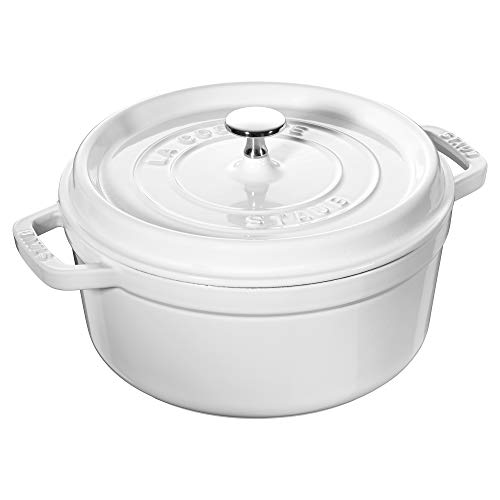
“STAUB's 4-quart round cocotte is French-made enameled cast iron with a self-basting spiked lid, a matte black interior and an oven limit of 900 degrees F without its lid.”
See Today’s Price →What we like
- Spikes under the lid return juices to the food as it cooks, which STAUB calls self-basting
- Oven safe to 900 degrees F without the lid; the lid is oven safe to 500 degrees F
- Matte black enamel interior that STAUB says gives a natural nonstick surface for browning
- Smooth enamel base works on gas, electric, glass, ceramic, induction and halogen cooktops
- Made in France; serves 3 to 4 by STAUB's figure
Watch out for
- Hand washing is recommended to preserve the enamel, although it is dishwasher safe
- A dark interior makes it harder to judge browning by eye
Read Full Analysis
STAUB's Cast-Iron 4-Quart Round Cocotte is the sourdough bread baker's choice in this Dutch oven selection guide — the matte black enamel interior develops micro-bumps over time that improve the natural non-stick properties with each seasoning bake, and the tight-fitting lid with STAUB's signature self-basting spikes creates the steam-trap environment that produces the ear and open crumb that sourdough bakers pursue. The 4-quart round shape is the ideal size for a standard 700g–1kg sourdough boule, fitting snugly enough to support the loaf's rise without spreading. French-made cast iron at STAUB's Alsace foundry with the same heritage manufacturing as Le Creuset. At 10+ lbs with a lid, safely handling a preheated STAUB at 500°F requires two well-insulated oven mitts and deliberate movement — this is a legitimate safety challenge that lighter ceramic alternatives eliminate. STAUB commands a premium comparable to Le Creuset with less widespread retail availability, making replacement lids or pieces harder to source locally. As the second pick on this Dutch oven selection guide with no priced comparison siblings listed, STAUB's 4-Quart Cocotte is recommended for dedicated sourdough bakers who want the steam environment precision that the round cocotte shape and self-basting lid provide. Buyers who braise as much as they bake should consider whether the 4-quart capacity serves both uses; for larger protein braises the 7.25-quart Le Creuset (rank 1) accommodates more.

“”
See Today’s Price →What we like
- Ceramic nonstick makes releasing a sourdough boule after baking cleaner than traditional enameled cast iron
- PTFE-free and PFOA-free ceramic coating addresses health concerns about chemical coatings at high baking temperatures
- Lighter weight than cast iron makes safely lifting a screaming-hot Dutch oven from a 500-degree oven less risky
Watch out for
- Ceramic nonstick may not withstand sustained 500-degree temperatures that sourdough baking requires long-term
- Lower thermal mass versus cast iron reduces the intense bottom heat that creates the signature sourdough crust
Read Full Analysis
The Caraway Nonstick Ceramic Dutch Oven brings a different material philosophy to this Dutch oven selection guide — PTFE-free and PFOA-free ceramic coating addresses the health concerns about chemical coatings at high baking temperatures that make some cooks avoid traditional nonstick Dutch ovens. The ceramic release surface makes removing a sourdough boule after baking cleaner than enameled cast iron, and the lighter weight versus cast iron makes safely lifting a screaming-hot Dutch oven from a 500°F oven meaningfully less risky for everyday bakers. The ceramic coating's long-term performance at sustained 500°F temperatures is the central question for serious sourdough bakers — ceramic nonstick degrades faster than enamel at extreme heat over repeated cycles. Lower thermal mass versus cast iron also reduces the intense retained heat that creates the signature dark sourdough crust and caramelized bottom that cast iron Dutch ovens excel at. As the ceramic option on this selection guide alongside the Le Creuset 7.25-Qt (rank 1) and STAUB 4-Qt Cocotte (rank 2), Caraway is the right choice for bakers who prioritize lighter weight and chemical-free surface over maximum thermal mass and long-term durability at high heat. Cast iron Dutch oven enthusiasts focused purely on sourdough crust performance will find the Le Creuset or STAUB more suited to the 450–500°F sustained baking temperatures that sourdough bread demands.
Frequently Asked Questions
Should I get an enameled or bare cast iron Dutch oven?
What size Dutch oven should I buy?
Is Lodge as good as Le Creuset?
Can I use a Dutch oven on an induction cooktop?
How do you clean an enameled Dutch oven?
Can a Dutch oven be used for bread baking?
How We Chose These Products
We compare each product’s Amazon listing, the manufacturer’s published specifications and Amazon customer ratings, shown with their review counts as Amazon’s data, and rank the products on how well they answer this page’s question. We do not test products in hand and we do not run our own analysis of review text. A publication or expert is named only where we cite its published findings about that product. No manufacturer paid for placement on this page.
A price appears only when Amazon’s API supplied it at a recent daily refresh, with the date and time beside it, and is withdrawn at 4 AM Central on the day after it turns 24 hours old; otherwise use “Check price on Amazon” for the live price. Read our full methodology →