How to Choose a Sous Vide: Immersion Circulators Compared 2026
The Anova Precision Cooker Nano handles 90% of sous vide use cases. For frequent use or larger batches: Anova Precision Pro or Breville Joule Turbo. All you need beyond the circulator: a large pot ($25–$40) and gallon zip-lock bags.
How to Choose a Sous Vide Buying Guide
 Photo by Szymon Shields / Pexels
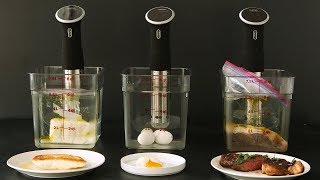
Sous vide cooking (literally "under vacuum") involves sealing food in a bag and cooking it in precisely temperature-controlled water. The technique produces consistent, impossible-to-overcook results because proteins reach the exact target temperature without exceeding it — a 130°F water bath can't cook your steak above 130°F. The technique that seemed professional-kitchen-exclusive is now accessible for under $100, and the quality improvement for proteins is genuinely dramatic.
How We Evaluated These Picks
We compared immersion circulators across heating accuracy (±0.2°C is the target standard), wattage (affects heat-up time), water circulation efficiency, noise levels, and app reliability. Picks were selected for consistent temperature regulation — the one spec that determines sous vide food quality — rather than feature count.
What You Actually Need (and Don't)
The immersion circulator is the only specialized tool required. Everything else uses kitchen equipment you likely already own:
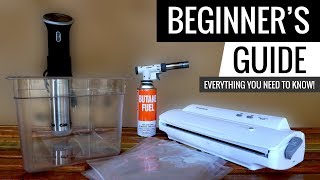
Container: Any large pot holds water for sous vide. A 12-quart stock pot ($25–$40, Winco SST-12) works for 1–4 servings. For large batches (whole dinner parties), a 12-quart polycarbonate food storage container ($79.99 Cambro 12SFSCW) with a lid (cut a hole for the circulator) is the professional setup and costs less than a stock pot. A lid reduces water evaporation during long cooks (36+ hours for short ribs).
Bags: Gallon Ziploc freezer bags ($5–$10) work for most sous vide applications — the "vacuum" requirement is overstated. Proper vacuum sealers ($60–$150) are better for: foods you'll freeze after sealing, ingredients with marinades that would leak, and very long cooks (24+ hours) where zip-lock seal integrity matters more. For everyday steak and chicken at 30–60 minutes, Ziploc is fine.
Thermometer (optional): Sous vide food is already at exact temperature when you pull it from the bath — a separate thermometer adds no value unless you're verifying the circulator's accuracy (calibration check).
Key Specs: What Actually Matters
Temperature accuracy (±°C): The most important spec. Most modern circulators advertise ±0.2°C accuracy — this is precise enough for any sous vide application. Avoid units with ±1°C ratings — that's enough variance to take salmon from perfect to overcooked. All picks in this guide meet ±0.2°C.
Wattage: Higher wattage = faster heat-up time, better ability to maintain temperature in large containers. Entry-level: 750–1,000W. Mid-range: 1,200W. Premium: 1,100–1,800W. For cooking 2–4 chicken breasts in a stock pot, 750W is adequate. For cooking large batches in insulated cambro containers: 1,200W+ maintains temperature better when cold food is added.
Water circulation (GPH — gallons per hour): Determines temperature uniformity across the container. Well-designed circulators circulate 3–5 GPH — enough for even distribution. Underpowered circulation creates temperature gradients (hot near circulator, cool at far end). This is rarely listed in specs — look for reviews that mention temperature uniformity testing.
Maximum water volume: Indicates what container sizes the circulator handles. Entry-level: 5 gallons. Mid-range: 10 gallons. For most home cooking (12-quart stock pot = 3 gallons), all major brands work.
Best Picks by Tier
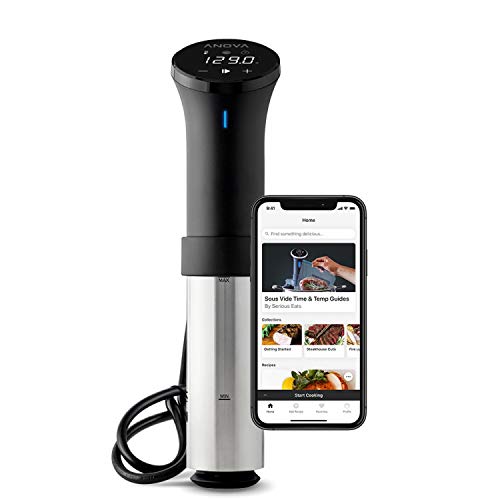
Entry: Anova Precision Cooker Nano: 750W, ±0.1°C precision, Wi-Fi + Bluetooth app connectivity. The benchmark for entry-level sous vide. The app provides 1,000+ guided recipes with time/temperature presets — valuable for beginners. Fits 4-gallon container. Adequate for 1–4 person households using sous vide 1–3x per week.
Mid-range: Anova Precision Pro: 1,200W, heats water faster, handles larger containers. Better for larger households (6+ servings), frequent use, and insulated containers where maintaining temperature against cold food additions matters. Built like a professional tool — metal construction vs. plastic on the Nano.
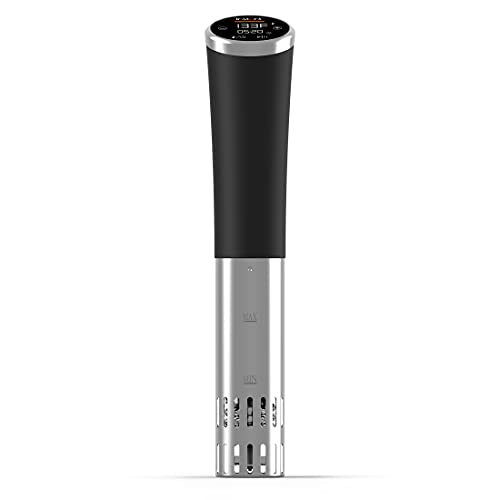
Premium: Breville Joule Turbo: The most elegant design (smallest form factor, powerful 1,100W heating element), ±0.1°C precision, and the best app (Joule app provides visual cooking guides and doneness photos). Magnetic base keeps it upright without a container clamp. Best choice for: users who cook sous vide regularly and value the app experience. $50–$150 premium over Anova is not warranted for occasional users.
Budget: KitchenBoss G300: 1,100W, manual controls (no app), accurate to ±0.1°C in independent testing. For users who don't want app dependency and have experience with time/temperature references. Not recommended for beginners (no recipe guidance), but technically as capable as $100+ units.
Sous Vide Time and Temperature Reference
The core sous vide benefit: each protein has an ideal temperature for texture and safety:
• Steak (medium-rare): 129–131°F, 1–4 hours
• Chicken breast: 140°F for 1.5 hours or 145°F for 30 minutes (both pasteurized/safe)
• Salmon: 122–125°F, 45–60 minutes
• Pork chops: 135–140°F, 1–4 hours
• Eggs (poached style): 147°F for 13 minutes
After sous vide: always sear meat in a hot cast iron pan (45–90 seconds per side) for Maillard reaction browning. Sous vide alone doesn't brown — the combination of sous vide precision + sear speed produces the best steak achievable at home.
Common Mistakes to Avoid
Mistake 1: Not finishing with a sear. Sous vide-only steak is pale and texturally soft without the crust. A 2-minute sear in screaming-hot cast iron completes the texture. No sear = missing half the dish.
Mistake 2: Overcrowding the bag. Multiple steaks in one bag create an insulating layer — the meat between two other pieces of meat doesn't cook at water temperature. Use one bag per thick cut, or ensure pieces aren't touching.
Mistake 3: Sous vide at too low a temperature for too short a time. 129°F for 20 minutes isn't the same as 129°F for 1 hour — the food's core needs time to reach target temperature, especially for thick cuts (1.5"+ steak needs 1–2 hours). Use the time guides, not just the temperature.
Mistake 4: Skipping the ice bath for make-ahead cooking. If cooking in advance and refrigerating, transfer bags to an ice bath immediately after the sous vide to stop cooking and rapid-chill before refrigerating. This prevents bacteria growth in the warm bag during the temperature danger zone.
What We Recommend
For most home cooks starting sous vide: Anova Precision Cooker Nano + 12-quart stock pot + gallon Ziploc bags. For frequent users or larger households: Anova Precision Pro. For the best app experience: Breville Joule Turbo. See our best sous vide cookers, best cast iron skillets for searing, and knife set guide.
Watch Before You Buy
“1200W output delivers substantial power for demanding tasks. Best suited for enthusiast buyers: home cooks who want reliable everyday kitchen performance from a practical well-built appliance.”
See Today’s Price →What we like
- 1200W output delivers substantial power for demanding tasks
- Easy to clean with dishwasher-safe or wipe-down components
- Compact countertop footprint fits most kitchen sizes
Watch out for
- Hand-wash recommended for some parts to extend coating or surface lifespan
- Counter space commitment may be challenging in very small kitchens
Read Full Analysis
Ranked Our Top Pick on the how-to-choose-a-sous-vide-guide-2026, Anova brings a 1200W heating element to this comparison that outpaces the $50 Vpcok substantially on temperature recovery -- the time it takes to return to target temperature after cold proteins are loaded into the water bath. Temperature recovery speed matters most for thick proteins like a 2-inch ribeye or a full pork loin where wide variance between target and actual water temperature during recovery translates into uneven doneness from the outer surface to the center. Against the $168.96 Instant Pot Accu Slim and Monoprice at the same price, the Anova Culinary 3.0 Pro justifies the $50 premium through its dedicated app ecosystem and Wi-Fi connectivity, which provides time-and-temperature guides for hundreds of protein types and allows remote monitoring during long low-temperature sessions like 24-hour carnitas or 48-hour short ribs without requiring constant kitchen presence. The Pro designation reflects upgraded internal components over the standard Anova line -- the motor is built for extended run cycles that multi-day cooks demand without the thermal stress that shorter-duration designs were not engineered to sustain. Cleanup is practical: the stainless steel skirt wipes down after sessions and separates from the circulator body for easier access to the motor housing. Counter commitment is inherent to sous vide cooking generally rather than an Anova-specific drawback -- any circulator requires a dedicated pot with the unit clamped to the side. For home cooks stepping into precision temperature cooking and planning to push beyond simple chicken breasts into more demanding applications, Anova Culinary 3.0 Pro provides the infrastructure that justifies the investment at this price tier.
“Slim 800W circulator at $79.99 that clips to any pot and pairs with the Instant Pot app for remote monitoring and recipe guides — the Instant Pot Accu Slim for home cooks already in the Instant Pot…”
See Today’s Price →Watch out for
- Larger footprint requires dedicated storage space in smaller kitchens
- Entry-level models sacrifice some durability compared to professional-grade alternatives

“Accurate circulator at $79.21 from the electronics brand known for quality at lower margins than major names — the Monoprice for sous vide cooks who want reliable temperature precision without…”
See Today’s Price →Watch out for
- Hand-wash recommended for some parts to extend coating or surface lifespan
- Counter space commitment may be challenging in very small kitchens

“Mid-range circulator with physical dial controls for cooks who prefer direct control over app dependency — the Greater Goods for straightforward sous vide without phone pairing. Quiet motor handles…”
See Today’s Price →Watch out for
- Hand-wash recommended for some parts to extend coating or surface lifespan
- Counter space commitment may be challenging in very small kitchens

“1000W output delivers substantial power for demanding tasks. Best suited for value-focused buyers: home cooks who want reliable everyday kitchen performance from a practical well-built appliance.”
See Today’s Price →What we like
- 1000W output delivers substantial power for demanding tasks
- Easy to clean with dishwasher-safe or wipe-down components
- Compact countertop footprint fits most kitchen sizes
Watch out for
- Hand-wash recommended for some parts to extend coating or surface lifespan
- Counter space commitment may be challenging in very small kitchens
Read Full Analysis
The Vpcok Sous Vide Immersion Circulator is the lowest-cost entry into precision sous vide cooking on this page — 1000W of heating power and an adjustable clip that attaches to most standard cooking pots without dedicated containers. Sous vide at any price point provides the same fundamental precision advantage: a temperature-controlled water bath that produces consistent, edge-to-edge doneness in proteins without the overcooking risk of direct heat methods. Versus the Anova Culinary, Instant Pot Accu Slim, and Monoprice on this page, the Vpcok is the entry tier at roughly a quarter of the premium options' cost. The trade-off versus Anova is Wi-Fi connectivity, smartphone app integration, and a wider temperature calibration guarantee — the Anova builds its value around recipe guidance and remote monitoring via app. The Vpcok provides manual temperature and timer controls without connectivity. For home cooks testing sous vide before committing to premium hardware, the Vpcok costs less than a single restaurant-equivalent sous vide meal to purchase. Right for home cooks exploring sous vide for the first time without committing to premium hardware cost. Skip it if you'll use sous vide frequently and want app connectivity, a recipe ecosystem, or documented calibration accuracy — the Anova provides the full connected sous vide experience with those guarantees.
Frequently Asked Questions
Is sous vide worth it for home cooking?
Do I need a vacuum sealer for sous vide?
How long does sous vide take?
What temperature is safe for sous vide chicken?
Can you sous vide frozen food?
How We Chose These Products
We compare each product’s Amazon listing, the manufacturer’s published specifications and Amazon customer ratings, shown with their review counts as Amazon’s data, and rank the products on how well they answer this page’s question. We do not test products in hand and we do not run our own analysis of review text. A publication or expert is named only where we cite its published findings about that product. No manufacturer paid for placement on this page.
A price appears only when Amazon’s API supplied it at a recent daily refresh, with the date and time beside it, and is withdrawn at 4 AM Central on the day after it turns 24 hours old; otherwise use “Check price on Amazon” for the live price. Read our full methodology →