How to Choose an Electric Kettle: 2026 Buying Guide
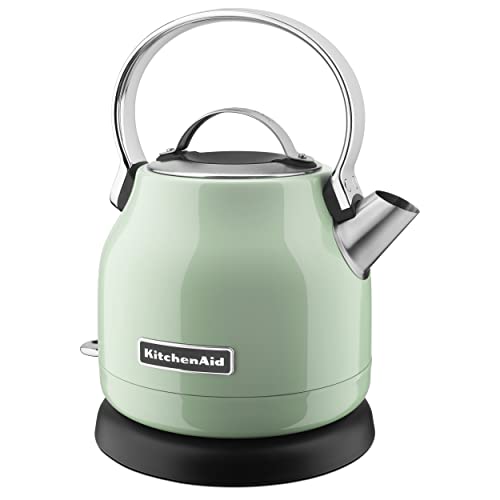
For pour-over coffee or green tea, you need variable temperature control — 200°F for coffee, 175°F for green tea. A boil-only kettle scorches delicate teas. The KitchenAid Electric Kettle covers multiple temperature presets at a mid-range price point.
How to Choose an Electric Kettle: Buying Guide
 Photo by Engin Akyurt / Pexels
An electric kettle seems like a simple purchase until you realize that the water temperature determines everything about how your coffee or tea tastes. Boiling water (212°F) is correct for exactly two things: black tea and instant coffee. It actively ruins green tea, white tea, oolongs, and most pour-over coffee. If you own a boil-only kettle and drink green tea that tastes bitter, temperature is the reason.
Temperature by Beverage: What Each Needs
Green tea: 160-175°F. The amino acid L-theanine (responsible for umami flavor and calming effect) is more heat-stable than the catechins (bitter tannins). At 212°F, catechins dominate — the tea tastes harsh and astringent. At 170-175°F, L-theanine is preserved and catechins are minimized: the tea is smooth and slightly sweet. Steeping time also matters: 2-3 minutes at 175°F vs 1-2 minutes at lower temperatures.
White tea: 160-185°F. The most delicate tea type — high temperatures destroy the subtle floral and fruity notes. Most white teas peak at 175°F.
Oolong: 185-205°F, depending on oxidation level. Lightly oxidized (closer to green): 185-195°F. Dark, heavily oxidized (closer to black): 195-205°F.
Black tea: 205-212°F. The most forgiving — benefits from near-boiling water. Boiling is fine; slightly below-boiling (205°F) extracts slightly less bitterness from tannins.
Herbal/tisanes: 208-212°F. These are not true teas — they're dried herbs, roots, and flowers that generally need near-boiling water for full extraction.
Pour-over coffee (Chemex, V60, Kalita): 195-205°F. At 212°F: over-extraction, bitter notes dominate. At 195°F: under-extraction, sour and weak. The Specialty Coffee Association (SCA) recommends 197-205°F for optimal extraction. Most baristas target 200°F.
French press: 195-200°F. Immersion brewing tolerates a slightly lower temperature than pour-over because grounds stay in contact with water for 4 minutes.
Variable Temperature vs Fixed (Boil-Only)
Boil-only kettles ($20-40): heat to 212°F and stop. Fine for: black tea, instant coffee, instant noodles, hot water for cooking, reheating soups. Not suitable for green tea, white tea, oolong, or pour-over coffee without an external thermometer to cool the water.

Variable temperature kettles ($50-200): allow you to set specific temperatures, usually in presets (160, 175, 185, 195, 212°F) or in 5°F increments. Critical for any specialty beverage. Most models also include a "keep warm" function that holds the selected temperature for 30-60 minutes.
Gooseneck vs Standard Spout
This is the most underappreciated spec distinction in electric kettles. A gooseneck spout has a long, thin, curved neck that provides precise, slow flow control — the water pours in a thin, controllable stream rather than a rush. This matters for:
Pour-over coffee: you need to wet the grounds evenly ("bloom" 30 seconds, then pour in slow circles). A standard spout pours too fast for controlled pour-over — the grounds get washed around, resulting in uneven extraction and channeling. A gooseneck is not optional for Chemex or V60 coffee; it's a functional requirement.
Filling narrow-mouthed vessels: teapots, carafes, narrow thermoses. A gooseneck makes this easy; a standard spout creates spills.
For drip coffee makers, French press, and tea cups: a standard spout is perfectly adequate. Gooseneck kettles are 30-50% more expensive at equivalent quality levels. Only buy a gooseneck if you do pour-over coffee — it's the specific use case it was designed for.
Capacity and Heating Speed
0.8L (27 oz): Fills 2-3 cups. Good for 1-person households. Heats quickly (2-3 minutes).
1.0L (34 oz): 3-4 cups. Most common for small households.
1.5L (50 oz): Standard household size — fills a full teapot or 5 mugs at once.
1.7L (57 oz): Largest common capacity. Slower to heat (3-5 minutes for full load).
Heating speed is determined by wattage. US-market kettles are limited to 120V, making peak wattage around 1500W (vs 3000W in UK/Europe — which is why European kettles boil in 60-90 seconds while US models take 3-5 minutes for a full 1.7L). Higher wattage within the US range: 1500W is fastest available. Lower wattage (1000-1200W) takes 30-50% longer.
Material: Glass vs Stainless vs Plastic
Glass: See the water level without measuring, no metallic taste, visually satisfying. More fragile — thermal shock is the main breakage cause (don't pour cold water into a very hot glass kettle).
Stainless steel: Most durable, no flavor transfer, best for long-term use. Heavier, can't see water level from outside. Food-grade (18/8 or 304 stainless) is recommended — avoid low-quality stainless that may contain trace nickel.
Plastic: Cheapest, lightest. BPA-free plastics are standard now, but some cheaper models use lower-grade plastics that may affect water taste at high temperatures. Not recommended for tea/coffee use where water quality matters.
What We Recommend
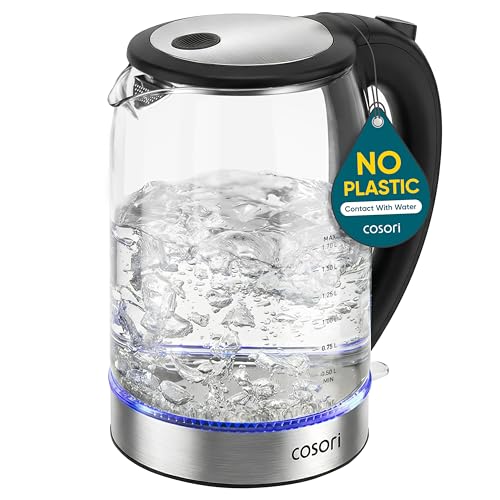
For pour-over coffee drinkers: Fellow Stagg EKG ($150-180) — the best gooseneck variable temp kettle on the market, with ±1°F accuracy, built-in thermometer display, and premium build quality. For general household use with tea variety: Cuisinart CPK-17 ($50-70) — reliable, 1.7L, multiple temperature presets, keep-warm. Budget variable temp: COSORI Electric Kettle ($30-50). For pour-over on a budget: Bonavita 0.5L Gooseneck ($30-40). See our coffee grinder guide and coffee maker guide for a complete home coffee setup.
Common Mistakes to Avoid
Using boiling water for green tea — causes bitter, harsh tea every time. The solution is a variable temperature kettle or letting boiled water cool 2-3 minutes (reaching ~175°F). Buying a gooseneck kettle when you don't do pour-over — you're paying a premium for a feature that doesn't help drip coffee or tea. Not descaling regularly — mineral buildup from hard water reduces efficiency and contaminates the heating element. Descale every 1-3 months with white vinegar or a commercial descaler. Filling above the maximum line — causes spillage when the water boils vigorously.
Our Picks and Why
The KitchenAid Electric Kettle earns the top spot for anyone who drinks more than black tea — variable temperature control is the whole point of a good kettle, and KitchenAid's build quality and the way it holds a set temperature put it ahead of cheaper variable models. For a no-frills boil at the lowest cost, the COSORI Electric Kettle is the better choice — fast, auto-shutoff, and a compact footprint, ideal if you only ever make black tea or instant coffee. The Chefman Electric Kettle ($21.99) rounds out the top three as the higher-end option, with preset temperature buttons and a larger capacity for households that go through several pots a day.
Watch Before You Buy
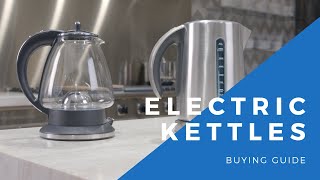
“Variable temperature kettle with presets for green tea (175°F), white tea (185°F), coffee (200°F), and boiling — the KitchenAid for households that brew multiple tea types where water temperature…”
See Today’s Price →Watch out for
- Hand-wash recommended for some parts to extend coating or surface lifespan
- Counter space commitment may be challenging in very small kitchens
Read Full Analysis
KitchenAid Electric Kettle leads this guide with variable temperature control built around beverage-specific presets — 175°F for green tea, 185°F for white tea, 200°F for pour-over coffee, and full boiling. Water temperature directly affects flavor extraction: boiling water on green tea causes bitterness, while water below 195°F under-extracts darker coffee roasts. The 30-minute keep-warm function holds the target temperature after reaching it, eliminating the reheating cycle for households that steep or pour at their own pace rather than precisely timed. The KitchenAid costs $84 more than the COSORI and $85.93 more than the Amazon Basics. Against the Chefman, the premium is just $10.04 — a small step for the KitchenAid brand, 30-minute keep-warm, and the temperature preset system. The SAKI Luna is $45.96 above it. For variable-temperature kettles specifically, $109.99 lands in the practical mid-tier: well above commodity boil-only kettles, notably below specialty premium models. Buy the KitchenAid if you brew multiple tea types or pour-over coffee where water temperature affects flavor quality, and the keep-warm function fits your workflow — it removes the pressure of timing the pour precisely. Skip it in favor of the COSORI or Amazon Basics at $24–$26 if you exclusively boil water for cooking or instant beverages; both deliver boiling reliably at a fraction of the price. The Chefman is worth direct comparison for buyers who want variable temperature at a small further savings without the KitchenAid brand premium.
“The COSORI Electric Kettle Discreet and stylish, features fast 1500w boil speed. Best suited for everyday users who want a reliable fast-boil kettle without spending $27.99.”
See Today’s Price →What we like
- No plastic inside, so the water never touches plastic
- 1.7-liter borosilicate glass body with a 1,500-watt element
- Heats half a liter in under 3 minutes, Cosori says
- Wide mouth and large-angle lid for easy cleaning
- Switches off within 30 seconds of the boil; boil-dry protection
Watch out for
- Its listing describes no temperature settings or keep-warm mode
Read Full Analysis
The COSORI Electric Kettle delivers the core function of an electric kettle — rapid boiling with automatic shutoff — at the lowest practical price in this comparison. The 1500W heating element matches or exceeds the wattage of kettles costing 3–4× more, meaning boil speed is not where COSORI compromises to hit the $26 price point. What $26 buys at the COSORI tier versus the $100–156 kettles from KitchenAid, Chefman, and SAKI: no variable temperature control, no keep-warm function, and simpler construction materials. For users whose primary use case is boiling water for tea, pour-over coffee, or instant noodles — where full rolling boil is the only temperature needed — these missing features are irrelevant, and the COSORI covers daily use at a fraction of the cost of variable-temperature models. The Amazon Basics is $2 less with a comparable feature set, making the COSORI's design quality, 1.7L capacity, and established Amazon review base the practical differentiators for buyers who want the most reliable budget option on this page without the uncertainty of a less-reviewed alternative. For users who need variable temperature control for green tea, white tea, or specialty coffee, the Chefman and KitchenAid are the correct step up.
“Variable temperature settings for different teas and coffees. Best suited for tea and coffee enthusiasts who need precise temperature control.”
See Today’s Price →What we like
- 1.8-liter capacity with a 1,500-watt element
- Borosilicate glass body with blue lights while it heats
- Auto shut-off and boil-dry protection
- Lift-out lid, stainless steel filter and cool-touch handle
- 360-degree swivel base and a drip-free spout
Watch out for
- Its listing describes no temperature settings
Read Full Analysis
The Chefman sits in the precision temperature tier of this kettle comparison — above the basic boil-only COSORI and Amazon Basics, and $10 below the KitchenAid. Variable temperature settings are the defining capability difference: rather than heating to a single full boil, the Chefman allows selecting specific target temperatures for different brewing applications — around 160°F for delicate green and white teas, 185°F for oolong, 195°F for pour-over coffee, and 212°F for black tea and French press. The keep-warm function holds the selected temperature after reaching target, eliminating the timing window problem with manual boiling — if you step away and the water cools before pouring, keep-warm maintains ideal brewing temperature without requiring a reheat cycle. LED indicator lights confirm which preset is active without requiring you to read a display. The cordless base separates for standard pour freedom. The Chefman is nearly identical in price to the KitchenAid — making the $10 difference the primary decision factor between them. The Chefman's variable temperature and keep-warm place it clearly above the basic kettles on this page for tea and specialty coffee users. For users who want design prestige or the KitchenAid brand name alongside the same temperature features, the $10 premium for the KitchenAid is the only remaining distinction. For budget-conscious precision temperature buyers, the Chefman is the rational choice.

“Precision temperature control from 104-212°F in 1-degree increments — the SAKI Luna for serious tea and pour-over coffee enthusiasts who need exact temperature settings beyond approximate…”
See Today’s Price →Watch out for
- Hand-wash recommended for some parts to extend coating or surface lifespan
- Counter space commitment may be challenging in very small kitchens

“The Amazon Basics Stainless Steel Electric Kettle features brushed stainless steel exterior. 4.4 stars from 8,440 Amazon reviews signal consistent reliability.”
See Today’s Price →What we like
- 1.7-liter stainless steel body with a 1,500-watt element
- Strix thermostat control with auto shut-off and boil-dry protection
- All water-contact parts are BPA-free
- Wide opening and a water level indicator
Watch out for
- Its listing describes no temperature settings or keep-warm mode
Read Full Analysis
The Amazon Basics Stainless Steel Electric Kettle is the lowest-priced option on this page — $1.93 less than the COSORI with an identical feature set: 1.7L capacity, auto shutoff, and a cordless serving base. The brushed stainless steel exterior distinguishes it visually from the plastic-body kettles that dominate the sub-$25 category, giving it a look that fits stainless kitchen appliance setups without requiring a $100 spend. At 8,440+ Amazon reviews at 4.4 stars, the review base confirms consistent performance for the boil-and-shutoff use case across a wide user base over multiple years. The handle can feel warm near boiling point — standard for inexpensive kettles where handle material and insulation are simplified to hit the price target, and manageable with a normal grip duration. For users who need a functional electric kettle and nothing more — boiling water for tea, instant noodles, pour-over at full boil, or hot cocoa — the Amazon Basics is the lowest-cost proven option on this page. No temperature presets, no keep-warm function; for standard full-boil applications those features are unnecessary, and the $24 price saves $76 versus the KitchenAid and $76 versus the Chefman. Against the COSORI, the $2 savings is the only functional differentiator, making brand confidence and review volume the practical tiebreaker.
Frequently Asked Questions
What temperature should I use for green tea in an electric kettle?
Do I need a gooseneck kettle for pour-over coffee?
How long does an electric kettle take to boil?
Is glass or stainless steel better for an electric kettle?
What temperature should I use for pour-over coffee?
How do I descale my electric kettle?
How We Chose These Products
We compare each product’s Amazon listing, the manufacturer’s published specifications and Amazon customer ratings, shown with their review counts as Amazon’s data, and rank the products on how well they answer this page’s question. We do not test products in hand and we do not run our own analysis of review text. A publication or expert is named only where we cite its published findings about that product. No manufacturer paid for placement on this page.
A price appears only when Amazon’s API supplied it at a recent daily refresh, with the date and time beside it, and is withdrawn at 4 AM Central on the day after it turns 24 hours old; otherwise use “Check price on Amazon” for the live price. Read our full methodology →