Toshiba vs Panasonic Microwave 2026: Inverter Tech vs Multi-Function

Panasonic wins on reheating quality — Inverter Technology heats food evenly without the hot-outside/cold-inside problem of standard microwaves. The NN-SN936B is best for large households; the NN-SN65KB is the right size for most kitchens. Choose Toshiba's ML2-EC10SA if you want microwave and air fryer in one unit.
At a Glance
| # | Product | Award | Price |
|---|---|---|---|
| 1 | Our Top Pick | Check price on Amazon Buy → |
|
| 2 | Best Value | Check price on Amazon Buy → |
|
| 3 | Panasonic Microwave Oven NN-SN936… Panasonic |
Best Overall | Check price on Amazon Buy → |
| 4 | 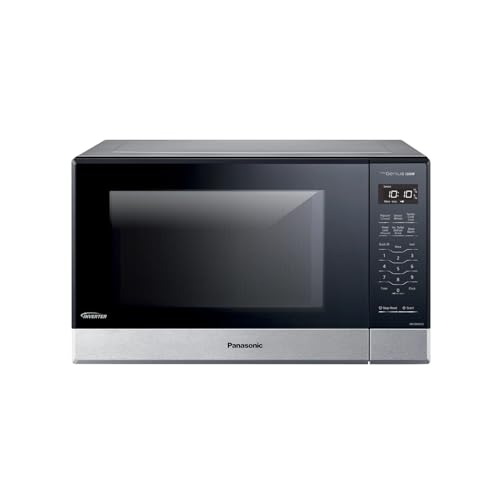 Panasonic NN-SN65KB Microwave Ove… Panasonic |
Check price on Amazon Buy → |
Toshiba vs Panasonic Microwave Buying Guide
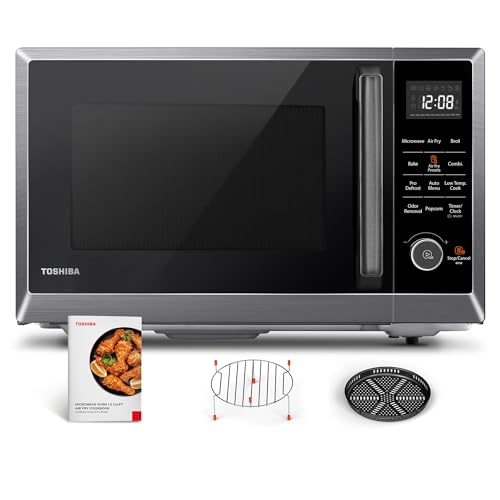
Toshiba and Panasonic approach microwave design differently: Panasonic's core differentiator is Inverter Technology, which delivers continuous power at any wattage setting instead of cycling on/off at full power. Toshiba focuses on multi-function combinations, particularly microwave-plus-air-fryer combos. If you reheat food and expect consistent results, these differences matter more than brand.
Panasonic Inverter Technology: What It Actually Means
Standard microwaves operate at fixed power — when you set 50% power, the magnetron cycles on at 100% then off, producing uneven results. Panasonic's Inverter Technology delivers true 50% power continuously, which heats food evenly without the hot-outside/cold-inside problem that plagues standard microwaves. This makes a measurable difference for defrosting, reheating leftovers, and cooking delicate foods like fish or custard. The NN-SN936B at 2.2 cubic feet is the largest Panasonic Inverter model — right for families or anyone who reheats large dishes. The NN-SN65KB is the mid-range Panasonic Inverter at 1.2 cubic feet, appropriate for most household sizes.
Toshiba's Multi-Function Approach
Toshiba's ML2-EC10SA is the brand's flagship — it's a microwave, air fryer, convection oven, broiler, and more in one unit. This is the right product if counter space is limited and you want to consolidate appliances. The air fryer function produces genuinely crispy results without a separate appliance. The EM925A5A is Toshiba's standard entry — a 900W, 0.9 cubic foot unit that handles basic microwave tasks without any premium features. Toshiba's standard microwaves use conventional magnetron cycling — the same as most budget brands.
Where Panasonic Wins
Panasonic wins on reheating quality. Inverter Technology produces food that's uniformly hot throughout rather than scalding on the edges and cold in the center. For households that microwave frequently — daily reheating of leftovers, defrosting proteins, cooking vegetables — the Panasonic Inverter models justify their price premium. The NN-SN936B's sensor cooking automatically adjusts time and power based on steam detection, which further improves consistency. Panasonic microwaves also have a cleaner, simpler control interface than Toshiba's multi-function units.
Where Toshiba Wins
Toshiba wins when you want one appliance to replace several. The ML2-EC10SA's air fryer function works — it circulates hot air to crisp foods without the oil of traditional frying. If you're buying a microwave AND considering a separate air fryer, the Toshiba combo is worth evaluating first. The combined unit costs less than buying both separately, and frees a counter position. For light microwave users who primarily want versatility, Toshiba is the better choice.
Get Panasonic if / Get Toshiba if
Get Panasonic if you reheat food frequently and want consistent results — Inverter Technology is a real improvement over standard magnetron cycling. The NN-SN936B is the best high-capacity choice; the NN-SN65KB is excellent for standard household use.
Get Toshiba if you want microwave-plus-air-fryer in one unit, have limited counter space, or use the microwave only occasionally and want multi-function value from one appliance.
How we picked these.
We compared Toshiba and Panasonic microwaves available with verified images and active retailer links, selecting models across capacity tiers that represent each brand's distinct feature approach — Panasonic's Inverter line and Toshiba's multi-function lineup.
Watch Before You Buy

“Toshiba ML2-EC10SA 8-in-1 Microwave Air Fryer Combo — combines microwave, air fryer, convection, broil, and more. Best for households wanting to consolidate appliances. Air fryer function genuinely…”
See Today’s Price →What we like
- Air fry + convection in one unit — fewer appliances
- Auto-sense technology for simpler cooking
- Child lock for safety
Watch out for
- Complex controls may overwhelm some seniors
- More expensive
Read Full Analysis
The Toshiba ML2-EC10SA is the appliance consolidation argument on this Toshiba vs Panasonic page — combining microwave, air fryer, convection, and broil modes in one countertop footprint instead of running a dedicated microwave and a separate air fryer. The air fry function uses a heating element and circulated hot air to produce genuinely crispy results on fries, chicken tenders, and reheated pizza that a standard microwave cannot replicate. Auto-sense technology adjusts cooking time automatically for common tasks, reducing the manual trial-and-error that multi-mode appliances typically require. The control interface is the most common complaint — eight modes on a single unit generates menu complexity that some users find less intuitive than a simpler microwave-only panel. It costs $69 less than the top-ranked Panasonic NN-SN936B on this page. For households that already own an air fryer, the combo functions overlap existing tools and the Panasonic is the better choice for pure microwave performance. For households that need to consolidate counter space, the Toshiba 8-in-1 replaces two appliances with one.
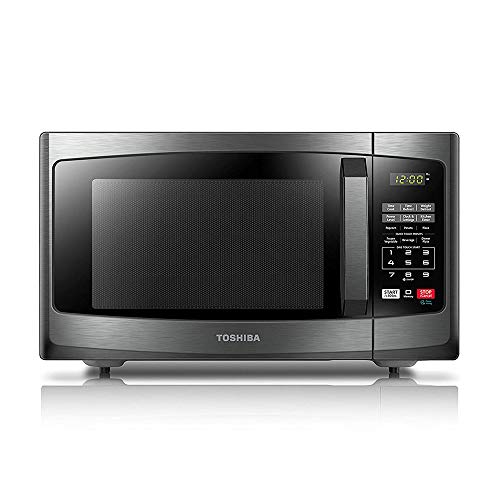
“Toshiba EM925A5A 900W 0.9 Cu Ft — compact, reliable standard microwave. Six preset menus, ECO mode, sound on/off. Best for light users who want basic microwave function without premium features.”
See Today’s Price →What we like
- 900W power handles most cooking tasks including reheating, defrosting, and cooking from frozen
- Sound on/off button silences the beeper — rare and appreciated feature
- LED interior lighting illuminates food better than incandescent microwaves
- Pre-set cooking functions for popcorn, pizza, potato, and beverage
- Eco Mode reduces standby power consumption when not in use
Watch out for
- 0.9 cu ft interior is mid-size — fits a dinner plate but not oversized cookware
- Control panel has a slight learning curve for preset combinations
- The door handle is plastic — feels less premium than the Panasonic
Read Full Analysis
The Toshiba EM925A5A-BS is the budget-conscious microwave on this Toshiba vs Panasonic comparison — it costs $90-160 less than the other models on this page while covering all standard microwave tasks: reheating, defrosting, and cooking from frozen. The sound on/off button is the standout feature at this price point — the ability to silence the beeper is rare among standard countertop microwaves and consistently praised by apartment and late-night users. LED interior lighting illuminates food more clearly than traditional incandescent, and Eco Mode reduces standby power draw when the unit is idle. The 0.9 cu ft interior fits a standard dinner plate but not oversized cookware or large casserole dishes — a genuine capacity limitation compared to the 1.2 cu ft Panasonic models on this page. The plastic door handle feels less premium than the Panasonic counterparts. At 900W it reheats more slowly than the 1200W Panasonic NN-SN65KB. The EM925A5A-BS is the right pick for light microwave users — solo cooks, small households, and secondary kitchen setups — where the $133.89 price, compact footprint, and sound-off feature matter more than wattage or capacity.
“Panasonic NN-SN936B 2.2 Cu Ft Inverter Microwave — 1250W, sensor cooking, Inverter Technology for even reheating. Best choice for families or large-dish reheating. Consistent performance across…”
See Today’s Price →What we like
- Inverter technology for even, gentle heating
- Genius Sensor auto-adjusts power and time
- 1250W — most powerful in class
Watch out for
- Expensive for a microwave
- Large 2.2 cu ft size may overwhelm small kitchens
Read Full Analysis
The Panasonic NN-SN936B is the largest-capacity and highest-wattage model on this Toshiba vs Panasonic page, designed for households that regularly reheat full casserole dishes, large dinner platters, or family-size portions. Panasonic's Inverter Technology is the defining feature: traditional microwaves cycle their magnetron on and off to simulate lower power levels, creating cold spots in the center of food. Inverter delivers truly continuous power at any setting — a 50% power reheat operates continuously at half power rather than alternating between full and off — resulting in more evenly heated food, particularly on delicate proteins and leftovers. The Genius Sensor auto-adjusts cooking time and power based on steam the food releases, eliminating guesswork on standard reheat tasks. The NN-SN936B is the most expensive model in this comparison. The 2.2 cu ft interior is genuinely large — it adds meaningful counter footprint and requires measuring cabinet clearances before purchasing. On this page the Toshiba ML2-EC10SA adds air fry and convection functions; the Panasonic NN-SN936B trades multi-functionality for maximum microwave performance at higher wattage and capacity.
“Panasonic NN-SN65KB 1200W 1.2 Cu Ft Inverter Microwave — the right-sized Panasonic for most households. Sensor cooking, Inverter Technology for consistent results, straightforward controls. Best…”
See Today’s Price →What we like
- Inverter technology delivers continuous power at all settings — no cycling on/off that leaves food unevenly heated
- 1200W is the highest wattage in this guide — fastest cooking times for any task
- 1.2 cu ft interior fits most casserole dishes and large dinner plates
- Keep warm function maintains temperature at 140–160°F without overcooking
- Turbo defrost defrosts by weight or time with inverter-controlled accuracy
Watch out for
- No sound-off button — beeper cannot be silenced
- Control layout is functional but dated compared to Toshiba
- Slightly larger footprint than the 0.9 cu ft models — measure your counter space first
Read Full Analysis
The Panasonic NN-SN65KB is the right-sized Panasonic Inverter microwave for most households — the 1.2 cu ft interior fits standard dinner plates and most casserole dishes without the counter footprint premium of the 2.2 cu ft NN-SN936B. At 1200W it operates at the highest wattage among the models on this page, delivering faster cooking times across defrost, reheat, and cook functions. Inverter Technology applies truly continuous power at every setting rather than cycling the magnetron on and off, eliminating the uneven heating that makes traditional microwaves frustrating for delicate reheating tasks. The sensor cooking function adjusts time and power automatically based on steam output, handling standard tasks without manual programming. The beeper cannot be silenced — a recurring complaint from shared-living and late-night households. On this page, it sits between the Toshiba ML2-EC10SA combo and the full-size Panasonic — the strongest value for buyers who want pure microwave performance without the 8-in-1 complexity or the 2.2 cu ft footprint.
Frequently Asked Questions
What is Panasonic Inverter Technology?
Does the Toshiba air fryer microwave work as well as a dedicated air fryer?
Which microwave is easier to clean?
Are these microwaves compatible with convection baking?
What size microwave do I actually need?
How We Chose These Products
We compare each product’s Amazon listing, the manufacturer’s published specifications and Amazon customer ratings, shown with their review counts as Amazon’s data, and rank the products on how well they answer this page’s question. We do not test products in hand and we do not run our own analysis of review text. A publication or expert is named only where we cite its published findings about that product. No manufacturer paid for placement on this page.
A price appears only when Amazon’s API supplied it at a recent daily refresh, with the date and time beside it, and is withdrawn at 4 AM Central on the day after it turns 24 hours old; otherwise use “Check price on Amazon” for the live price. Read our full methodology →