Audio-Technica vs Shure Microphones 2026: 6 Mics Compared
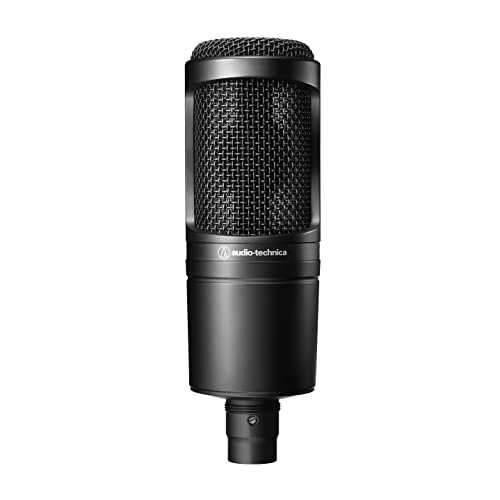
The Audio-Technica AT2020 is the best value XLR condenser for home studios, while the Shure MV7 is the top plug-and-play USB choice for podcasters. Both brands offer strong options — the right pick depends on your setup.
At a Glance
Audio-Technica vs Shure Microphones Buying Guide
Audio-Technica vs Shure: Two Different Recording Philosophies
Audio-Technica built its reputation on condenser microphone technology — their AT2020 line offers studio-grade frequency response at accessible prices. Shure built its reputation on durability and live performance, with the SM58 spending 50+ years as the world's most-used vocal microphone. Both brands now cover the full recording spectrum from $100 USB mics to professional XLR condensers above $200.
Where Audio-Technica Wins
Audio-Technica dominates the home studio condenser market. The AT2020 ($119) captures a wide 20Hz–20kHz frequency range with a cardioid polar pattern that rejects room noise — difficult to beat at this price. For content creators wanting USB simplicity with condenser quality, the AT2020USB+ adds a headphone monitoring jack and mix control that Shure's entry-level mics lack. Audio-Technica's condenser designs suit vocals, acoustic instruments, and voice-over recording where nuance matters.

Where Shure Wins
Shure wins on live stage performance and podcasting versatility. The SM58 is the industry-standard dynamic mic for live vocals — its cardioid pattern and built-in pop filter handle feedback-prone environments that would distort a condenser. The Shure MV7 is Shure's answer to the podcasting boom: dual USB/XLR connection, built-in touch panel controls, and a tight pattern designed for broadcast-quality recording in untreated rooms. For podcasters moving up from consumer gear, the MV7 is the clearest upgrade path.
Choose Audio-Technica If... / Choose Shure If...
Choose Audio-Technica if you're building a home studio, recording acoustic instruments or vocals with acoustic treatment, or want the most condenser-quality per dollar under $200. The ATR2100x-USB is the best starter mic for anyone wanting both USB flexibility and upgrade-path XLR. Choose Shure if you perform live on stage, record in an untreated room, or want a podcast mic that sounds professional without room treatment. Shure's dynamic mics reject background noise that would ruin an Audio-Technica condenser recording.
Watch Before You Buy

“The Audio-Technica AT2020 brings large-diaphragm condenser quality to studio recording, capturing the full 20Hz–20kHz range with a cardioid pattern over XLR. Unlike dynamic mics, it requires…”
See Today’s Price →What we like
- Large diaphragm
- Cardioid pattern
- XLR output
- 20Hz-20kHz response
Watch out for
- Requires audio interface and phantom power — additional cost
- Condenser more sensitive to room noise than dynamic mics
- Not ideal for loud live performance
Read Full Analysis
The AT2020 is a large-diaphragm condenser microphone, which means it captures significantly more detail and frequency range than a dynamic mic like the SM58. The cardioid polar pattern rejects sound from sides and rear, useful in home studios where recording environments are controlled. Its ability to reproduce 20Hz–20kHz with low self-noise makes it a recording standard — guitar fingerpicking, acoustic instruments, and vocals with breathy dynamics all render more faithfully than through a dynamic mic. The difference on recorded material is immediately audible. The catch is the setup cost. The AT2020 requires 48V phantom power from an audio interface or mixer — adding $50–$200 to the total investment depending on which interface you choose. The Shure SM58 at $109 plugs directly into any PA or powered mixer without additional gear. For anyone building a home studio from scratch, factor that interface cost in before comparing price tags. This is not a live performance microphone. Condensers are more fragile than dynamics and far more sensitive to stage noise, feedback, and handling vibration. The AT2020 excels in controlled recording environments — podcasting, voiceover, acoustic instruments, and vocal tracking — where its frequency detail justifies the extra setup. If you primarily perform live and only record occasionally, the SM58 offers more versatility per dollar.

“At $98 the Shure SM58 is the industry-standard dynamic vocal mic with a cardioid pattern, durable steel construction, and XLR output trusted on stages worldwide for decades. It requires an XLR cable…”
See Today’s Price →What we like
- Cardioid pattern
- Durable steel construction
- XLR output
- Industry-standard sound
Watch out for
- Requires XLR cable and PA or amp — not plug-and-play for home use
- No built-in shock mount — needs separate mount for recording
- No off switch on the standard SM58
Read Full Analysis
The SM58 is the most recognizable dynamic vocal microphone in existence, found on stages from local bars to arena concerts for over 50 years. Its neodymium magnet and tuned frequency response — with a presence peak between 2–12kHz — lifts vocal clarity in live mix environments without harsh sibilance. The cardioid polar pattern provides strong off-axis rejection of stage monitors and crowd noise, making it reliable night after night in unpredictable acoustic environments. Versus the AT2020's $119, the price gap is minimal — but the use case difference is significant. The SM58 is a dynamic mic: rugged, handles high SPL without distortion, and requires no phantom power. It works directly through any XLR-equipped PA, amp, or mixer. The AT2020 is a condenser optimized for studio environments where room acoustics are controlled. For live vocals, the SM58 wins without argument. The SM58 can function as a passable studio vocal mic in a pinch — many well-known recordings have been made on it. But compared to the AT2020's large-diaphragm condenser clarity on recorded material, the SM58's frequency response is noticeably narrower in the lows and highs. For pure stage use and long-term durability, the SM58 is the professional standard. If your work splits between live performance and home recording, budget for both rather than trying to make one mic handle everything.

“The Shure SM58S adds a convenient on/off switch to the iconic SM58 cardioid dynamic microphone for $107 useful for quick muting between songs. The tradeoff is a slightly heavier feel and the risk of…”
See Today’s Price →What we like
- On/off switch
- Cardioid pattern
- XLR output
- Durable metal build
Watch out for
- On/off switch can cut audio accidentally mid-performance
- Slightly heavier than no-switch model
- Higher price than standard SM58
Read Full Analysis
The SM58S is the same cardioid dynamic microphone as the SM58 with one addition: a lockable on/off switch. That sounds like a straightforward upgrade, but the SM58S has a genuinely divided user base among working musicians. The switch allows quick muting between songs, handheld control during spoken portions of a set, and simple gain management at venues with less experienced front-of-house engineers — all real conveniences for the right performer. The downsides are equally real. The switch adds a small amount of weight and slightly changes the grip profile — noticeable to vocalists who hold the mic for hours. More critically, the switch can be bumped accidentally: a hand-placement shift during an energetic performance can cut audio at exactly the wrong moment. Working professionals who have been burned by accidental mutes often migrate back to the switchless SM58 and let the sound engineer handle muting on the console. Versus the SM58's $109, the $10 premium is minor — the real question is whether the switch introduces more risk or utility for your specific style. Sonically, the SM58S is identical to the SM58: same neodymium capsule, same frequency response, same cardioid polar pattern. Singers who do lots of MC work, comedy, or spoken word between songs often find the switch worth having. Traditional vocalists in bands rarely need it. If you're undecided, the switchless SM58 is the safer default.
Frequently Asked Questions
Is Audio-Technica better than Shure for recording vocals?
Which is the better beginner mic: Audio-Technica ATR2100x or Shure SM58?
Is the Shure MV7 worth the extra cost over Audio-Technica USB mics?
Do Audio-Technica and Shure use the same microphone types?
Which microphone brand is more durable, Audio-Technica or Shure?
How We Chose These Products
We compare each product’s Amazon listing, the manufacturer’s published specifications and Amazon customer ratings, shown with their review counts as Amazon’s data, and rank the products on how well they answer this page’s question. We do not test products in hand and we do not run our own analysis of review text. A publication or expert is named only where we cite its published findings about that product. No manufacturer paid for placement on this page.
A price appears only when Amazon’s API supplied it at a recent daily refresh, with the date and time beside it, and is withdrawn at 4 AM Central on the day after it turns 24 hours old; otherwise use “Check price on Amazon” for the live price. Read our full methodology →