Best Bass Guitar Strings for Beginners (2026)

The D'Addario EXL170 is the best bass guitar string for beginners — the 45-100 light-medium gauge reduces finger fatigue while the nickel wound construction delivers accurate intonation. For 5-string players, the Ernie Ball Regular Slinky 5-String is the go-to recommendation.
At a Glance
| # | Product | Award | Price |
|---|---|---|---|
| 1 | D'Addario XL Nickel Bass Guitar S… D'Addario |
Best Overall | $23.99 as of Nov 24, 12:08 PM CT details Buy → |
| 2 |  D'Addario XL Nickel Bass Guitar S… D'Addario |
Best for Medium Tension | $23.49 as of Nov 24, 12:09 PM CT details Buy → |
| 3 | 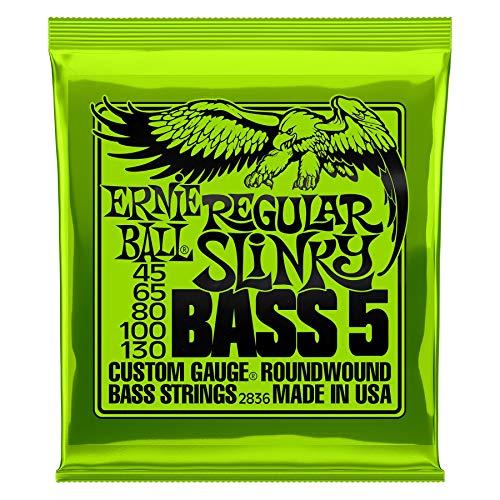 Ernie Ball 5-String Regular Slink… Ernie Ball |
Best for 5-String Bass | $24.99 as of Nov 24, 12:09 PM CT details Buy → |
Bass Guitar Strings for Beginners Buying Guide
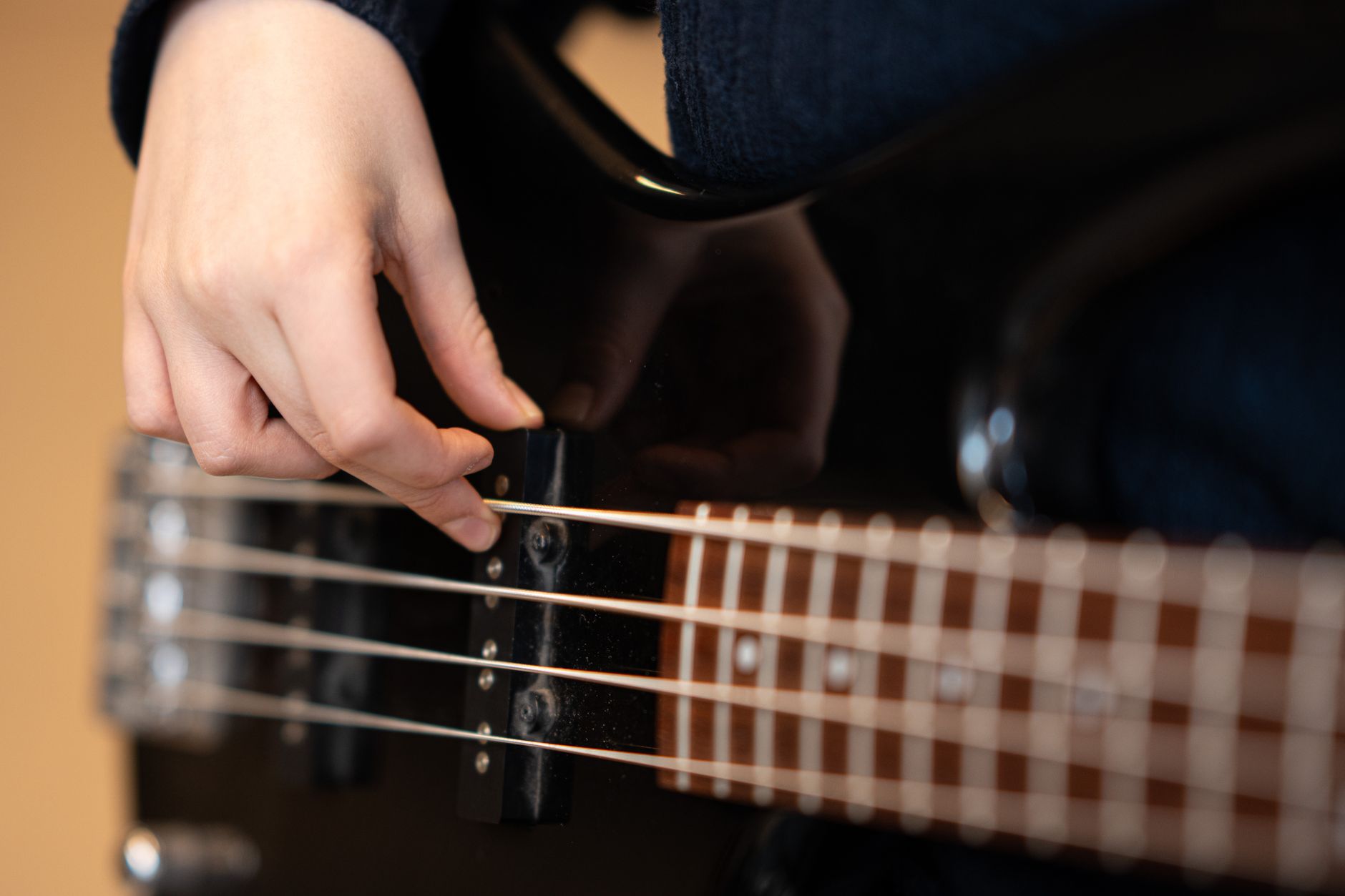 Photo by Lars H Knudsen / Pexels
Bass guitar strings wear out silently — tone dulls, intonation drifts, and fingers work harder without the player noticing. For beginners, the two brands that instructors, Sweetwater, and the r/Bass community consistently recommend are D'Addario and Ernie Ball. Both offer reliable intonation, forgiving playability, and consistent batch quality.
How We Picked These
How we picked these. Strings were selected for balanced playability at each skill level.
Gauge: The Single Most Important Decision
Gauge is string thickness measured in thousandths of an inch. Beginner sets are typically 45-100 (light-medium) or 50-105 (medium). The D'Addario EXL170 at 45-100 has lower tension — easier on fingertips while calluses develop and requires less fretting force. The EXL160 at 50-105 sits at standard medium tension, producing slightly fuller low-end tone once technique is solid. 5-string players need a set including a .130 B string.
Nickel Wound Roundwound: Start Here
Virtually every beginner recommendation defaults to nickel-wound roundwound strings. The textured surface produces the bright, punchy tone in most modern rock, pop, and R&B. Flatwound strings (smooth surface, mellow tone) are for jazz or vintage playing and are a deliberate choice — not a default. Coated strings last 3-5x longer but cost more; save them for when you're changing strings regularly enough to feel the difference.
When to Change Your Strings
Dead strings are the most common undiagnosed problem for beginners. Signs to replace: tone sounds dull compared to a new set, the bass drifts out of tune quickly after tuning, visible discoloration or oxidation on the windings. Playing 30+ minutes daily means replacing every 2-3 months. Both D'Addario and Ernie Ball hold tone acceptably for casual practice schedules.

Price Tiers and Value
Under $20: D'Addario XL Nickel sets are the benchmark — consistent quality without premium markup. $20-30: Ernie Ball Slinky sets and D'Addario medium gauge. These are the practical ceiling for most beginners. Over $30: Coated strings (D'Addario EXP, Elixir) that last significantly longer — only worth it once you're changing strings regularly enough to notice. Start in the $15-25 range until you find the gauge and brand that feel right.
Watch Before You Buy

“Light-medium 45-100 gauge is easiest on new fingers. Consistent intonation, bright nickels tone, the standard beginner recommendation across forums and instructors.”
See Today’s Price →What we like
- XL nickel wound
- 45-100 gauge
- Consistent tone
- D Addario reliability
Watch out for
- D'Addario XL not coated — tone fades faster than NYXL
- Standard tension only
- 45-100 gauge may be too light for some bassists
Read Full Analysis
D'Addario XL Nickel Electric Bass Guitar Strings EXL170 leads this beginner bass strings page because D'Addario XL is the most widely recommended first bass string set across forums, instructors, and music retailers. The 45-100 light-medium gauge is the easiest to fret for new players whose fingertips are still developing callouses, reducing the physical barrier during the first weeks of learning. Nickel wound construction provides a balanced, bright tone that works across all bass styles — rock, pop, funk, blues — without the harshness of stainless steel or the darkness of flatwounds. The round wound format is what most beginner bass instruction assumes. D'Addario's manufacturing consistency means intonation stays true across the set. It is competitively priced for the quality. The main limitations: the XL line is not coated, so tone fades faster than NYXL or other coated alternatives — expect 2–4 weeks of bright tone with regular play before the strings go dull. Standard tension only, so players who develop preferences for higher action may want to explore different gauges over time. But for a first set of bass strings from the most trusted name in the category, the D'Addario EXL170 is the obvious starting point on this page.
Skip this if: You play 5-string bass — this 4-string set doesn't include a B string.
“50-105 medium gauge adds tension and fuller low-end. Good upgrade once calluses are established and you want punchier tone for standard tuning.”
See Today’s Price →What we like
- Nickel wound
- Medium 50-105
- XL series reliability
- Standard bass fit
Watch out for
- Medium 50-105 may feel stiff for lighter players
- Non-coated requires more frequent replacement
- Single-pack — no multi-pack option
Read Full Analysis
On this beginners strings page, D'Addario EXL160's 50-105 medium gauge earns a specific recommendation timing: this is the step-up string, not the starting string. Once a beginner has developed calluses and basic fretting strength on lighter gauge (45-100), moving to EXL160's 50-105 adds punch and low-end fullness that makes the bass sound more like recordings — a motivating upgrade at the 3-6 month mark. D'Addario's XL series manufacturing consistency ensures reliable string-to-string balance across the set. Non-coated means replacement frequency is driven by play time and the player's sweat chemistry, typically every 1-3 months for regular players. For beginners on a learning trajectory, EXL160 is the natural progression from the EXL170 (45-100). Starting on 50-105 without hand strength developed first is the common beginner mistake — the extra tension causes fatigue and slows progress during the critical early months of building technique.
Skip this if: Fingertips are still building calluses — the extra tension is noticeably harder to play.
“45-130 gauge includes the low B string. Ernie Ball Slinky feel is smooth and forgiving for 5-string players who need that extra range.”
See Today’s Price →What we like
- Ernie Ball Regular Slinky is the gold standard for bass strings
- 45-130 gauge is versatile for most styles
- Nickel wound
Watch out for
- Nickel-wound strings go dead faster than coated alternatives
- 5-string set is pricier than 4-string
Read Full Analysis
On the beginners strings page, Ernie Ball 5-String Regular Slinky is the only appropriate option for players who begin on a 5-string bass — there's no equivalent budget or brand compromise worth making on 5-string strings. The 45-130 medium gauge provides a B string (130) that maintains intonation and tension consistently across the neck, which cheap alternatives often fail at. A poorly made B string buzzes, goes flat at the upper frets, or feels inconsistently taut — all problems that make learning harder. Ernie Ball's Regular Slinky is what most bass instructors use on their own instruments, giving beginners a reference point for how a properly strung 5-string should feel and respond. Non-coated nickel wound means budget restringing; beginners changing strings every 2-3 months as they develop won't need the coated premium yet. For a professionally-graded 5-string set, this is the starting point for 5-string beginners who want to learn on instruments strung as professionals use them.
Skip this if: You play 4-string bass — you don't need the B string set.
Frequently Asked Questions
What bass guitar strings should a total beginner buy?
What gauge bass strings should I use?
How often should I change bass guitar strings?
Are D'Addario and Ernie Ball the only good brands?
What is the difference between roundwound and flatwound bass strings?
How We Chose These Products
We compare each product’s Amazon listing, the manufacturer’s published specifications and Amazon customer ratings, shown with their review counts as Amazon’s data, and rank the products on how well they answer this page’s question. We do not test products in hand and we do not run our own analysis of review text. A publication or expert is named only where we cite its published findings about that product. No manufacturer paid for placement on this page.
A price appears only when Amazon’s API supplied it at a recent daily refresh, with the date and time beside it, and is withdrawn at 4 AM Central on the day after it turns 24 hours old; otherwise use “Check price on Amazon” for the live price. Read our full methodology →