Best Beginner Keyboards 2026: 61-Key, Weighted & USB MIDI

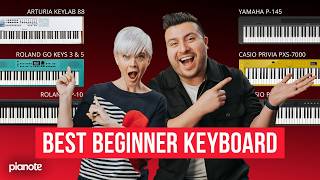
Best Overall: Casio CT-S300 at about $180. 61 full-size keys, 400 tones, and battery operation make this the ideal first keyboard for curious beginners.
At a Glance
| # | Product | Award | Price |
|---|---|---|---|
| 1 | Best Overall | Check price on Amazon Buy → |
|
| 2 | Best Upgrade | Check price on Amazon Buy → |
|
| 3 |  Best Choice Products 61-Key Porta… Best Choice Products |
$129.99 as of Nov 24, 12:23 PM CT details Buy → |
Beginner Keyboards Buying Guide
 Photo by Yan Krukau / Pexels
How we picked these. Products were selected for realistic key feel and learning-supportive features at each price point.
Key Count: Why 61 Keys Is the Right Starting Point
A full piano has 88 keys. Beginners don't need 88 — the realistic playing range for the first 1–2 years of lessons covers roughly 4–5 octaves, which falls comfortably within the 61-key range. Both the Casio CT-S300 and Yamaha PSR-E373 offer 61 keys, which is the standard for beginner and intermediate portable keyboards. Going below 61 (49-key or 37-key boards) restricts range too quickly; going above to 76 or 88 keys adds weight, cost, and size without benefit until you're playing advanced repertoire. Sixty-one keys is the correct starting point for nearly every new player.
Touch Sensitivity: A Feature Both Keyboards Include
Both the Casio CT-S300 and the Yamaha PSR-E373 are listed as touch-sensitive keyboards, so harder keystrokes produce louder notes on either one, similar to a real piano. This matters for anyone who intends to develop real piano technique, since practicing on a keyboard that ignores touch dynamics can make the transition to a weighted acoustic or digital piano harder later. Because both picks on this list include touch sensitivity, it is not a reason to prefer one over the other — the voice count, lesson features, and price differences covered below are what set them apart.
Weighted vs. Unweighted Keys
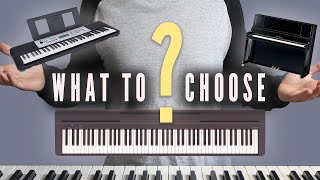
Neither the Casio CT-S300 nor the Yamaha PSR-E373 has weighted keys — both use standard synth-action (light, springy) keys typical of portable keyboards. True weighted or semi-weighted keys simulate the mechanical resistance of acoustic piano hammers and are important for players who want to develop finger strength for acoustic piano. Weighted keyboards start around $300–$400 and are heavier and less portable. For beginners in their first year who aren't certain they'll continue, unweighted 61-key keyboards are a practical entry point. Players who take lessons seriously for more than a year should plan to upgrade to a weighted-key instrument before developing bad technique habits on unweighted action.
Built-In Sounds, Lessons, and Connectivity
The Casio CT-S300 includes 60 built-in tones and a Dance Music Mode that generates auto-accompaniment in various styles — appealing for kids and players who want to explore different sounds. The Yamaha PSR-E373 includes 622 voices and 205 accompaniment styles, plus Yamaha's Education Suite with built-in lessons and key lighting in some configurations. The PSR-E373 also has a more substantial MIDI and audio connectivity footprint. For a child just starting out, the Casio's simplicity is an asset. For a teenager or adult who plans to use the keyboard for more than beginner exercises, the Yamaha's feature depth justifies its roughly $20 higher price.
Beginner Keyboard Buying Mistakes
Don't buy a keyboard without a sustain pedal input if the player is taking piano lessons — sustain (the right pedal on a piano) is used constantly, and practicing without it ingrains incorrect habits. Both keyboards here have a sustain pedal jack; budget $10–$15 for a cheap sustain pedal when you buy. Avoid extremely cheap mini-keyboards with 25 or 37 keys for serious learners — they're fine for production and sound design, but wrong for learning to play piano. Don't skip the stand and bench; playing on a table at the wrong height causes wrist strain that can end a practice session early every time.
Watch Before You Buy
“At $179.99, the CT-S300 covers all beginner essentials with 400 tones, 77 rhythms, and battery operation.”
See Today’s Price →What we like
- 61 full-size keys span 5 octaves for learning standard piano hand positions
- 48-note polyphony handles complex chord voicings without audible note dropout
- 100 built-in song bank tunes enable learn-along practice from day one
- Casio has been the specialist in beginner and portable keyboards for decades
Watch out for
- $199.99 matches the Yamaha PSR-E373 on this page — compare features carefully before choosing between them
- Unweighted plastic keys don't replicate the touch response of real piano keys
Read Full Analysis
The Casio CT-S300 is the ideal first keyboard for complete beginners and curious adults who aren't sure if piano is right for them. 61 full-size keys cover 5 octaves — enough for every beginner piece. 400 built-in tones include acoustic piano, electric piano, organ, strings, and hundreds more for exploration. 77 auto-rhythms provide backing tracks for practice. The battery option (6 AA batteries) means no power cable required — perfect for bringing to friends or practicing in different rooms. Touch response is basic (no velocity sensitivity), which is a downgrade, but acceptable at this price point.
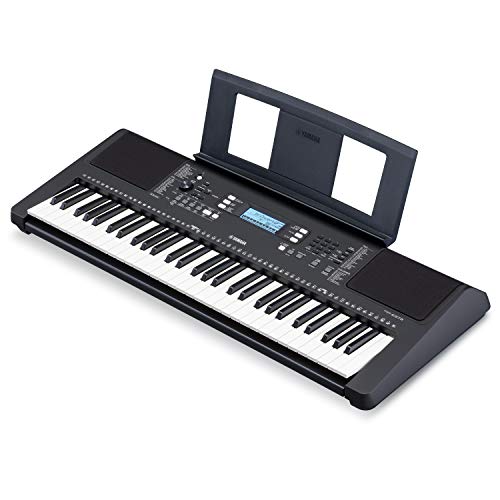
“The PSR-E373 adds 573 tones, touch-sensitive keys, and music education features for serious beginner students.”
See Today’s Price →What we like
- Touch-sensitive keys respond to playing force, teaching piano dynamics from the very beginning
- 400+ Voices and 130+ rhythms provide broader sound library than most beginner keyboards
- Yamaha education suite includes structured lesson functions that guide beginners step by step
- Yamaha is one of the most trusted brand names in musical instruments worldwide
Watch out for
- $199.99 matches the Casio CT-S300 — touch sensitivity and Yamaha lesson suite typically justify this one
- 400+ voices can overwhelm a complete beginner who just needs to learn basic melodies
Read Full Analysis
The Yamaha PSR-E373 is the step up from budget keyboards for beginners who are serious about learning. Touch-sensitive keys mean volume responds to how hard you press — this introduces proper piano technique from day one. 573 voices include premium Yamaha piano samples used in professional instruments. The Education Suite includes 154 built-in songs, guides for left/right hand practice, and grading exercises. USB-MIDI connectivity lets you connect to music software for recording and education apps. It costs double the Casio CT-S300 but offers dramatically better piano simulation and learning tools.
“Best Choice Products' 61-Key Beginner Electronic Keyboard is an entry-level instrument aimed at first-time players who want a full-size key layout at a budget price. No price is currently listed —…”
See Today’s Price →What we like
- 3-step teaching modes (One-Key, Follow, Ensemble) guide complete beginners through song learning
- 255 timbre options and 255 rhythms provide extensive exploration range for new players
- $129.99 is $70 less than the Casio and Yamaha options — lowest-cost keyboard on the page
- Light-up key function helps complete beginners find correct notes visually without sheet music
Watch out for
- Best Choice Products is a budget brand — key action and build quality noticeably below Casio/Yamaha
- 255 timbres are mostly synthetic presets, not professionally sampled instrument voices
Read Full Analysis
Best Choice Products' 61-Key Beginner Electronic Keyboard lands $70 below the Casio and Yamaha models on this page, and the price gap is the central consideration in evaluating it. The three-step teaching mode — One-Key, Follow, and Ensemble — walks complete beginners through song learning progressively without requiring sheet music or prior instrument knowledge. Light-up key functions show you exactly which notes to press, which matters for self-teaching players who haven't yet built note-reading skills alongside physical technique. The 255 preset timbres and 255 rhythms provide a wide exploration range for a new player who wants to audition different sounds and styles. Most of those presets are synthetic rather than professionally sampled instrument voices — the piano voice in particular doesn't approach the Casio CT-S300's sampled tone, and the keyboard action lacks the touch sensitivity of the Yamaha PSR-E373 that teaches proper dynamic control. These are expected limitations at the $130 price tier, not surprising failures. Best Choice Products is a budget import brand without the instrument engineering heritage of Casio or Yamaha, which shows primarily in key feel and sound quality. For a parent who isn't certain a child will stick with lessons beyond three months, or an adult who wants to establish whether keyboard playing is worth a real investment before committing, the Best Choice keyboard offers a lower financial entry point. Players who continue past the first year will outgrow it and need to upgrade — that's the honest trade at this price.
Frequently Asked Questions
Keyboard vs digital piano for beginners — which should I choose?
Do beginner keyboards need weighted keys?
How many keys do I need as a beginner?
Can I learn piano on a cheap keyboard?
What accessories do I need with a keyboard?
How We Chose These Products
We compare each product’s Amazon listing, the manufacturer’s published specifications and Amazon customer ratings, shown with their review counts as Amazon’s data, and rank the products on how well they answer this page’s question. We do not test products in hand and we do not run our own analysis of review text. A publication or expert is named only where we cite its published findings about that product. No manufacturer paid for placement on this page.
A price appears only when Amazon’s API supplied it at a recent daily refresh, with the date and time beside it, and is withdrawn at 4 AM Central on the day after it turns 24 hours old; otherwise use “Check price on Amazon” for the live price. Read our full methodology →