Best Microphone Accessories Under $30 (2026)

The Aokeo Microphone Pop Filter is the most essential mic accessory under $30 — dual-layer mesh eliminates plosive sounds (p, b sounds) without muffling. Amazon Basics XLR Cable is the most reliable budget XLR cable. Cable Matters XLR 2-Pack is the best value for dual-mic setups.
At a Glance
| # | Product | Award | Price |
|---|---|---|---|
| 1 | Amazon Basics XLR Male to Female … Amazon Basics |
Best XLR Cable | $9.76 as of Nov 24, 12:18 PM CT details Buy → |
| 2 | Best Pop Filter | $9.99 as of Nov 24, 12:18 PM CT details Buy → |
|
| 3 | Runner-Up Pop Filter | $9.99 as of Nov 24, 12:13 PM CT details Buy → |
|
| 4 |  Cable Matters 2-Pack Premium XLR … Cable Matters |
Best XLR 2-Pack | $17.99 as of Nov 24, 12:14 PM CT details Buy → |
| 5 | 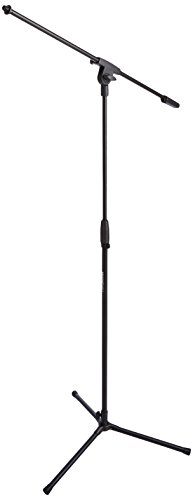 Amazon Basics Sturdy Portable Mic… Amazon Basics |
Best Boom Arm | Check price on Amazon Buy → |
Microphone Accessories Under $30 Buying Guide
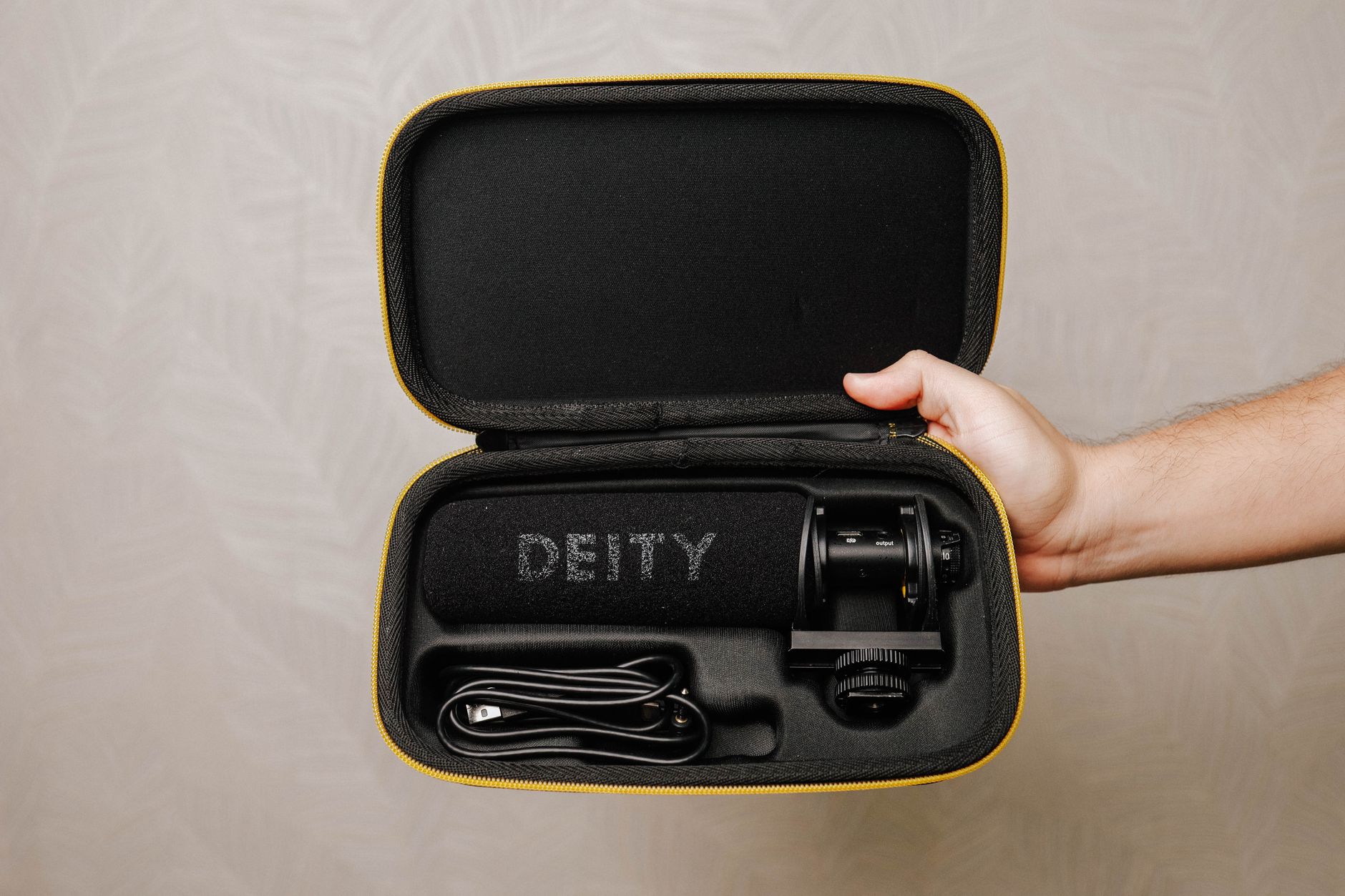 Photo by Luis Quintero / Pexels
A condenser microphone without a pop filter produces unusable audio on plosive syllables — the "p" in "podcast" becomes a wind blast. An XLR cable with poor shielding adds noise floor. A wobbly mic stand causes handling noise during recording. These three accessories are cheaper to fix than the microphone itself and solve the most common home recording problems.
Pop Filters: Single Layer vs. Dual Layer
A pop filter is a mesh screen that sits between your mouth and microphone to diffuse air pressure spikes from plosive consonants (p, b, t, d). Single-layer pop filters (fabric or mesh) reduce plosives adequately for casual podcasting. Dual-layer pop filters (two mesh layers at slightly different angles) reduce plosives more completely without any high-frequency muffling. The Aokeo and Neewer pop filters in this list both use dual-layer design — better than most $15-20 single-layer alternatives. Placement: 4-6 inches from the microphone capsule is standard. Too close reduces effectiveness; too far limits your own head positioning.
XLR Cables: Shielding Quality and Length
All XLR cables carry balanced audio signal — the XLR connector design inherently rejects electromagnetic interference (EMI) and radio frequency interference (RFI) through balanced differential signaling. The difference between cheap and quality XLR cables is connector construction (metal vs. plastic housing), soldering quality, and cable shielding thickness. Poor-quality XLR cables show degraded performance after frequent coiling/uncoiling — the solder points at the connectors crack. Amazon Basics and Cable Matters both use quality connectors with all-copper conductors — appropriate for home studio lengths (6-25 feet). For home recording (mic to audio interface under 20 feet), any properly-made XLR cable performs identically.
Boom Arms: Stability and Range of Motion
A microphone boom arm mounts to your desk and positions the mic at face height, eliminating the need for a floor stand and allowing repositioning without touching the stand base (which causes handling noise). Key specs: weight capacity (must exceed your microphone's weight), reach (typically 14-32 inches from mount point), and spring tension adjustment (allows the arm to hold position without slowly drooping). The Amazon Basics Boom Arm handles most condenser microphones under 1 lb and provides full 360-degree range of motion. C-clamp mount attaches to desks up to 2 inches thick.
What We Recommend
For a new USB microphone setup: Aokeo Pop Filter — plug it directly onto your mic stand, problem solved. For XLR setups: Amazon Basics XLR Cable from mic to audio interface plus Aokeo pop filter. For dual-mic podcast setups (two people): Cable Matters XLR 2-Pack. Adding a boom arm: Amazon Basics Boom Arm frees your desk and eliminates stand handling noise. See also best guitar accessories for instrument-specific picks.
Watch Before You Buy

Showing 5 of 5 products
“The Amazon Basics XLR Male to Female Microphone Cable All Copper Low Noise features all-copper conductors.”
See Today’s Price →What we like
- All-copper conductors
- Low noise
- XLR male to female
- Reliable shielding
Watch out for
- Very short 6 ft cable limits studio flexibility
- Single cable — no pack option
- Basic connectors without locking mechanism
Read Full Analysis
Amazon Basics XLR cables carry the same all-copper conductor construction as name-brand alternatives at a fraction of the price. For a single 6-foot cable, this is the budget entry point for connecting a dynamic or condenser mic to an audio interface, mixer, or PA system. All-copper conductors provide low-noise signal transmission, and the shielding handles the interference rejection needed in typical home studio environments. The 6-foot length is the main practical constraint — adequate for a stationary desk recording setup, but limiting for live sound rigs or studio arrangements where the mic and interface are not immediately adjacent. There is no locking mechanism on the connectors, which matters primarily in live settings where cables get pulled; for home studio use, it is a non-issue. Best for home studio users building their first XLR setup who want dependable signal quality at the lowest possible cost.
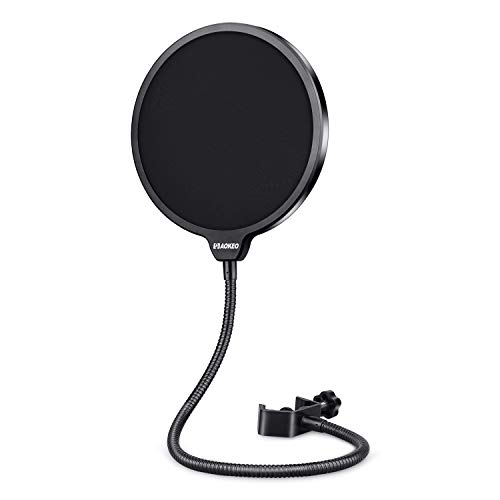
“Dual-layer design catches more plosives than single-layer.”
See Today’s Price →What we like
- Dual-layer design catches more plosives than single-layer
- Blue Yeti compatibility
- Low $9 price
Watch out for
- Gooseneck clip may shift during recording
- Fabric layer needs occasional cleaning
Read Full Analysis
The Aokeo pop filter is the standard recommendation in home recording communities for a reason: the dual-layer design addresses plosives — the bursts of air from P and B sounds that create low-frequency thumps in recordings — more effectively than single-layer alternatives. The outer mesh layer disperses the air blast; the inner nylon layer catches what gets through. With explicit Blue Yeti compatibility, it is sized appropriately for USB condenser mics without requiring any adjustment beyond clipping to a mic stand or boom arm. The gooseneck clip allows repositioning the filter at different angles and distances from the mic capsule — typically 2-4 inches is the useful working range. The practical care note: the fabric layer accumulates lip moisture and residue over time and benefits from occasional gentle cleaning with a damp cloth. Best for vocalists and podcasters who need reliable plosive control at the lowest effective price.

“360-degree gooseneck allows precise angle adjustment.”
See Today’s Price →What we like
- 360-degree gooseneck allows precise angle adjustment
- Dual layer for maximum plosive protection
- Neewer reliability
Watch out for
- Clip grip can loosen over time
- Slightly heavier than basic pop filters
Read Full Analysis
The Neewer pop filter matches the Aokeo on dual-layer plosive protection and price ($9.99 each), with one distinguishing mechanical feature: the 360-degree gooseneck rotation allows the filter to be positioned at any angle relative to the mic capsule without rotating the entire clip. This matters for setups where the mic stand orientation limits the standard attachment angle. The clip grip is the component most likely to wear first — over months of repeated repositioning, the clamping mechanism can develop play that allows the filter to drift. This is manageable with occasional tightening but worth noting for setups where the filter is repositioned frequently. For a stationary setup where the filter is set once and left in place, longevity concerns are minimal. The choice between Aokeo and Neewer at identical prices comes down to whether 360-degree gooseneck rotation is worth more than Aokeo's slightly higher review count. Best for home studio users who need angle flexibility in tight recording setups.
“The Cable Matters XLR Microphone Cable Male to Female 6 ft 2-Pack features 6 ft length.”
See Today’s Price →What we like
- 6 ft length
- 2-pack value
- Male to female
- Balanced signal
Watch out for
- ["2-pack only includes 6 ft cables
- Brand listed as "Cable" — partial data
- No locking connector"]
Read Full Analysis
The 2-pack format makes them the best value per cable on this page — $7.20 each versus $7.05 for the Amazon Basics single. The balanced XLR design rejects electromagnetic interference over the 6-foot run, which is the correct spec for connecting dynamic and condenser mics to audio interfaces in home studios with nearby computers, monitors, and other interference sources. Cable Matters constructions typically feature reinforced connector strain relief, which extends cable life at the plug junction — the most common failure point on any XLR cable. The 6-foot length is the same limitation as the Amazon Basics option: fine for stationary desk setups, potentially short for larger studio arrangements. For anyone building a setup with two microphone inputs, the 2-pack format makes Cable Matters the logical buy over purchasing two singles from Amazon Basics at the same per-cable cost. Best for dual-mic home studio setups or anyone who wants a spare cable on hand.
“The Amazon Basics Portable Microphone Boom Arm Stand Height Adjustable features height adjustable. 4.5 stars from 18,043 Amazon reviews signal consistent reliability.”
See Today’s Price →What we like
- Height adjustable
- Portable boom arm
- Clamp mount
- Affordable price
Watch out for
- Amazon Basics boom arm less sturdy than premium alternatives
- Cable management basic
- Height adjustment can loosen over time
Read Full Analysis
The Amazon Basics Boom Arm brings mic positioning flexibility that no desktop stand can match — extending, rotating, and retracting to place the microphone precisely in front of the mouth while keeping the desk surface clear. With a clamp mount, it installs in under a minute on most desk edges and accommodates standard microphone thread sizes. Height and reach adjustability covers the range needed for most seated recording setups: the arm extends far enough to center a mic over a keyboard or in front of a seated speaker without requiring the user to lean toward a fixed stand. The practical limitations are build quality related: the adjustment joints on Amazon Basics boom arms use plastic tension mechanisms that can develop looseness over time, allowing the mic to slowly creep downward under its own weight. Heavier microphones like the Blue Yeti (1 lb) accelerate this wear compared to lighter mics. Cable management is basic — routing a cable along the arm requires additional cable ties or clips. At 4.5 stars from 18,000+ reviews, day-to-day reliability is solid for home studio and streaming use. Best for podcasters and streamers who want flexible mic positioning without the cost of a premium arm.
Frequently Asked Questions
Do I need a pop filter for home recording?
What is an XLR cable used for?
What microphone accessories do I need for podcasting?
What is a microphone boom arm and do I need one?
What is the difference between a pop filter and a windscreen?
How long should an XLR cable be for home recording?
How We Chose These Products
We compare each product’s Amazon listing, the manufacturer’s published specifications and Amazon customer ratings, shown with their review counts as Amazon’s data, and rank the products on how well they answer this page’s question. We do not test products in hand and we do not run our own analysis of review text. A publication or expert is named only where we cite its published findings about that product. No manufacturer paid for placement on this page.
A price appears only when Amazon’s API supplied it at a recent daily refresh, with the date and time beside it, and is withdrawn at 4 AM Central on the day after it turns 24 hours old; otherwise use “Check price on Amazon” for the live price. Read our full methodology →