Best XLR Microphones (2026)
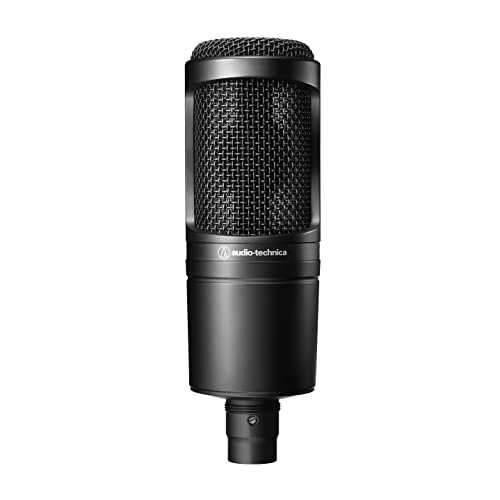
The Audio-Technica AT2020 is the best XLR microphone for home recording — extended frequency response, cardioid pattern for off-axis rejection, and consistent performance that has made it the home studio benchmark for over a decade.
At a Glance
| # | Product | Award | Price |
|---|---|---|---|
| 1 | Audio-Technica AT2020 Cardioid Co… Audio-Technica |
Best Overall | $118 as of Nov 24, 12:08 PM CT details Buy → |
| 2 | Best Dynamic | $89 as of Nov 24, 12:09 PM CT details Buy → |
|
| 3 |  Sennheiser Professional E 835 Dyn… Sennheiser |
Best for Live/Home | $89 as of Nov 24, 12:08 PM CT details Buy → |
XLR Microphones Buying Guide
 Photo by Neil Yonamine / Pexels
An XLR microphone connects to an audio interface or mixer via a balanced XLR cable — the opposite of a USB microphone, which connects directly to a computer. XLR microphones require a preamp (provided by an audio interface or mixer) but in return offer significantly better preamp quality than USB microphone built-ins, the ability to upgrade the preamp independently, and a wider range of microphone options across every price tier. For anyone building a home recording or podcast setup that will last more than one product cycle, XLR is the right foundation.
Condenser vs. Dynamic Microphones
Condenser microphones (AT2020, large-diaphragm condensers) are more sensitive and capture a wider frequency range — they pick up the nuance and air in vocal performances, acoustic instruments, and room ambience. This sensitivity is a double-edged sword in untreated rooms: they also capture HVAC noise, keyboard clicks, mouse noise, and room reflections that dynamic microphones reject. Dynamic microphones (Shure SM58, SM7B) are less sensitive and more directional — they reject off-axis sound, work well in untreated rooms, and are the industry standard for live vocal performance. For a treated recording space, use a condenser. For an untreated home office or bedroom, a dynamic microphone produces cleaner recordings without acoustic treatment.
Polar Patterns for Home Recording
Cardioid pattern (the standard) captures sound from the front and rejects sound from the sides and back — the correct pattern for single-source recording in a room where you want to reject ambience. Omnidirectional picks up from all directions — useful for room miking but impractical in untreated home spaces. Figure-8 picks up front and back, rejects sides — used for two-source recording or specific room miking techniques. For home recording and podcasting, cardioid is the correct starting pattern. Multi-pattern microphones (switchable) add flexibility but are generally unnecessary for home setups.
How we picked these.
We compared 3 XLR microphones across frequency response for voice recording, off-axis rejection in untreated rooms, build quality for long-term use, and street price relative to performance. The Audio-Technica AT2020 leads as the benchmark large-diaphragm condenser for home recording — its cardioid pattern and extended high-frequency response capture vocal clarity that USB microphones at twice the price cannot match.
Watch Before You Buy

“Audio-Technica AT2020: large-diaphragm cardioid condenser, extended high-frequency response for vocal clarity. The home recording benchmark for over a decade.”
See Today’s Price →What we like
- Large diaphragm
- Cardioid pattern
- XLR output
- 20Hz-20kHz response
Watch out for
- Requires audio interface and phantom power — additional cost
- Condenser more sensitive to room noise than dynamic mics
- Not ideal for loud live performance

“Shure SM58: cardioid dynamic vocal microphone, industry standard for live performance and podcast recording in untreated rooms. Rejects off-axis room noise better than any condenser.”
See Today’s Price →What we like
- Industry standard live vocal microphone
- Virtually indestructible — legendary durability
- Cardioid pattern rejects stage feedback
- No preamp requirement
Watch out for
- Less detailed than condenser mics for studio recording
- Not optimized for broadcast/podcast use
“Sennheiser E835: cardioid dynamic with a slightly brighter top end than the SM58. Good for vocals that need presence without the sensitivity of a condenser. Works live and at home.”
See Today’s Price →What we like
- Cardioid pattern
- Dynamic capsule
- XLR output
- Live-stage reliability
Watch out for
- Dynamic microphone requires louder sound sources for best results
- No XLR cable included
- Stage performance focus — less ideal for quiet recording
Frequently Asked Questions
Do I need a condenser or dynamic microphone for home recording?
What do I need to use an XLR microphone?
Can I use an XLR microphone for podcasting?
How We Chose These Products
We compare each product’s Amazon listing, the manufacturer’s published specifications and Amazon customer ratings, shown with their review counts as Amazon’s data, and rank the products on how well they answer this page’s question. We do not test products in hand and we do not run our own analysis of review text. A publication or expert is named only where we cite its published findings about that product. No manufacturer paid for placement on this page.
A price appears only when Amazon’s API supplied it at a recent daily refresh, with the date and time beside it, and is withdrawn at 4 AM Central on the day after it turns 24 hours old; otherwise use “Check price on Amazon” for the live price. Read our full methodology →