How to Choose a Planner: Format and Style Guide (2026)
The Clever Fox Wellness Journal is the top pick here — structured daily pages combine habit tracking, gratitude, and goal-setting in a format that builds consistent journaling practice without blank-page overwhelm.
How to Choose a Planner Buying Guide
 Photo by Mike Murray / Pexels
A planner is a productivity system disguised as a book. Choosing the wrong format for your planning style causes abandonment within 4-6 weeks — not because planners don't work, but because the time structure doesn't match how the owner thinks. The three most common mismatches: hourly planners for people who work in tasks, not appointments; weekly spreads for people who need daily structure; and oversized desk planners for people who work across multiple locations. Identifying your planning style before choosing a format saves $30-80 in abandoned planners.
Daily vs Weekly vs Monthly: Matching Format to Workflow
Daily planners provide a full page per day — typically an hourly schedule, task list, and notes section. They are the correct format for people whose work is appointment-driven (meetings, calls, scheduled deliverables), who work in a single location, and who review their plan every morning. The limitation: daily planners make it harder to see the week as a whole, which is problematic for project planning and deadline management. Weekly planners show Monday-Sunday on a two-page spread with a shared task list — the most popular format because it provides both the week view and enough daily space for 3-5 tasks per day. They are the correct format for knowledge workers managing multiple ongoing projects with few fixed appointments. Monthly planners show the full calendar month — better for event and deadline tracking but insufficient space for daily task management. Most planners combine monthly calendar pages with weekly or daily sections; the ratio determines which view is primary.
Hourly vs Task-Based: The Scheduling Style Question
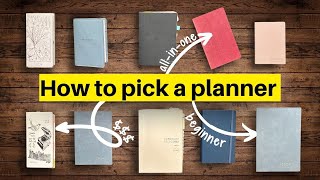
Hourly planners divide the day into 15-30 minute blocks — the format used by executives, healthcare professionals, and others whose day is primarily appointment-driven with defined start/end times. The cognitive requirement: you must know what you will do at 2:15pm when you write your 2pm block. For task-based workers (most knowledge workers, writers, developers, researchers) whose work flows between tasks without fixed time slots, hourly planners create fake specificity — the 9am block says "work on project X" which is not a useful schedule. Task-based planners divide the day into morning/afternoon/evening sections with bullet task lists — more honest to how project work actually gets done. The Bullet Journal method takes this furthest: only tasks, not time slots, with a migration system that carries undone tasks forward. Paper planner format does not determine effectiveness — matching format to scheduling style does.

Paper Weight and Writing Quality
Paper weight (measured in grams per square meter, gsm) determines whether ballpoint pens, gel pens, fountain pens, and markers bleed through to the other side. Standard planner paper is 70-80gsm — adequate for ballpoint pens but fountain pens and broad gel pens show bleed-through. Premium planners (Leuchtturm1917, Moleskine Pro) use 90-120gsm paper that handles fountain pens and most gel pens without bleed-through. Tomoe River paper at 52gsm is the most fountain-pen-friendly despite its light weight, used in premium Japanese planners — ultra-thin pages that prevent bleed-through through chemistry rather than thickness. The practical test: hold the paper to a light source. If you can read text from the previous page through the current one, ink will bleed under heavy pen pressure.
Size: The Portability Trade-off
Planner size is a trade-off between writing space and portability. A5 (5.8 x 8.3 inches) is the most popular planner size — fits in a bag, provides adequate writing space for most daily or weekly formats, and is comfortable to hold. A4 (8.3 x 11.7 inches) provides maximum writing space but only works at a fixed desk. Pocket size (3.5 x 5.5 inches) fits in a jacket pocket but provides minimal writing space per page — only suitable for minimal planning systems. Half-letter (5.5 x 8.5 inches) is the US-standard equivalent of A5. The consideration: if your planner stays on your desk, choose the larger format for more writing space. If it travels with you to meetings, A5/half-letter is the practical maximum without exceeding comfortable bag size.
Dated vs Undated and Binding Types
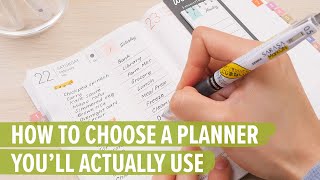
Dated planners have the year, month, and dates pre-printed — you must start using them near the beginning of the period or waste pages. Undated planners have the structure without specific dates, so you write in the date yourself. For consistent daily planners: dated planners provide the commitment of a structured system. For inconsistent planners or anyone who wants to start mid-year: undated planners avoid waste and allow gaps without guilt. Most physical planners are dated for the calendar year. Binding determines how the planner lays flat: spiral binding lays flat and allows folding the cover back — most functional for single-desk use; sewn binding (Moleskine, Leuchtturm) is the most durable; glued binding is common in budget planners but pages separate with heavy use. Hardcover planners hold their shape in a bag and allow writing without a flat surface beneath.
Common Mistakes When Choosing a Planner
The four most common planner-buying mistakes: (1) Choosing a format based on aesthetics rather than planning style — a beautiful hourly planner fails the task-based worker regardless of how nice it looks. (2) Buying the same format that failed before — if weekly didn't work, try daily or undated before concluding "planners don't work for me." (3) Choosing oversized planners for portable use — a desk planner carried in a bag becomes a deterrent to planning because of size and weight. (4) Waiting until January to start — dated planners sell at full price in January and are often discounted 40-60% in February and March when most people have abandoned them. Starting mid-year with an undated planner is functionally equivalent and often cheaper.
What the page recommends, and what it costs
- Clever Fox Wellness Planner - Weekly & Daily Health and — $24.99. Against it: Assembly required — budget 30-60 minutes for initial setup.
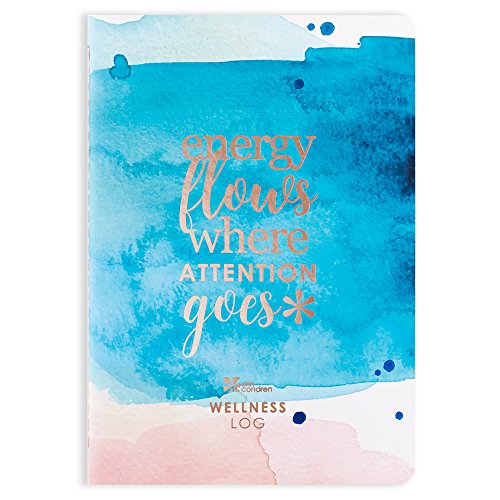
- Erin Condren Designer Petite Planner - Wellness — $14.99. TRACK YOUR WELLNESS IN DETAIL EACH WEEK. Against it: Assembly required — budget 30-60 minutes for initial setup.
- Magnetic Monthly Calendar — $9.99. 4 Magnetic Dry-Erase Markers. Against it: Assembly required — budget 30-60 minutes for initial setup.
How to choose among these
The Clever Fox Wellness Planner - Weekly & Daily Health and at $24.99 suits value-focused buyers: Homeowners looking for functional reliable home goods at an accessible price point. The Erin Condren Designer Petite Planner - Wellness at $14.99 suits budget-conscious buyers: Homeowners looking for functional reliable home goods at an accessible price point. The Magnetic Monthly Calendar at $9.99 suits budget-conscious buyers: Homeowners looking for functional reliable home goods at an accessible price point.

“Structured wellness planner at $24.99 combining habit tracking, workout logging, and weekly reflection prompts — the Clever Fox for people who want to build health routines through journaling rather…”
See Today’s Price →Watch out for
- Assembly required — budget 30-60 minutes for initial setup
- Color and style options may be limited compared to premium furniture brands
“The Erin Conden Designer Petite Planner combines fitness tracking, wellness journaling, and daily scheduling in a slim format that fits in a bag pocket. It is a focused productivity planner designed…”
See Today’s Price →What we like
- TRACK YOUR WELLNESS IN DETAIL EACH WEEK
- INCLUDES 6 MONTHS OF UNDATED TRACKING PAGES
- COMPACT AND LIGHTWEIGHT FOR DAILY USE
- BOLD FLORALS COVER DESIGN WITH PREMIUM FEATURES
Watch out for
- Budget pricing may reflect simpler construction or fewer premium features
- Assembly required — budget 30-60 minutes for initial setup

“Lemome's hardcover daily planner structures each day with hourly time blocks, a priority task list, and an evening reflection section. Thick 100gsm paper stops fountain pen bleed-through.”
See Today’s Price →Frequently Asked Questions
What type of planner should I use?
What is the difference between a daily and weekly planner?
What does gsm mean on planner paper?
Should I get a dated or undated planner?
What size planner is best?
What is a bullet journal and how is it different from a planner?
How We Chose These Products
We compare each product’s Amazon listing, the manufacturer’s published specifications and Amazon customer ratings, shown with their review counts as Amazon’s data, and rank the products on how well they answer this page’s question. We do not test products in hand and we do not run our own analysis of review text. A publication or expert is named only where we cite its published findings about that product. No manufacturer paid for placement on this page.
A price appears only when Amazon’s API supplied it at a recent daily refresh, with the date and time beside it, and is withdrawn at 4 AM Central on the day after it turns 24 hours old; otherwise use “Check price on Amazon” for the live price. Read our full methodology →