How to Choose Pens for Journaling (2026 Guide)
For most journaling: Pilot G2 0.7mm ($17.93/10-pack) or Paper Mate InkJoy Gel ($4.29 multipack) — smooth gel, wide availability, reliable first-stroke. For left-handed writers or thin notebook paper: uni-ball Jetstream ($14.99/3-pack) — hybrid ink dries faster than gel and doesn't smear. For bullet journaling layouts: Pigma Micron fineliner for permanent archival ink.
How to Choose Pens for Journaling Buying Guide
 Photo by Anastasia Shuraeva / Pexels
The pen you use for journaling affects the experience of journaling itself. Writing speed, line consistency, smear behavior (especially for left-handed writers), and bleed-through to the next page all determine whether the physical act of writing feels effortless or frustrating. The three pen types most commonly used for journaling — gel pens, ballpoint pens, and felt-tip pens — each have distinct performance characteristics that suit different paper types, writing speeds, and aesthetic preferences. Understanding these trade-offs prevents the trial-and-error process that costs most journalers $30-60 in abandoned pens.
Gel Pens: The Most Popular Choice for a Reason
Gel pens use a water-based gel ink that flows more smoothly than traditional ballpoint and produces more consistent, saturated lines than rollerballs. For journaling, the advantages are: effortless writing with minimal hand pressure (reducing fatigue during long sessions), consistent line width from start to finish, and wide color availability. The Pilot G2 (0.7mm, $17.00 for 10-pack) is the most-used journaling gel pen and the best-selling gel pen in the US — its rubber grip, consistent ink flow, and reliable first-stroke performance (no skipping after sitting uncapped) make it the benchmark. Paper Mate InkJoy Gel (0.7mm, $3.49 multipack) provides comparable performance at a significantly lower cost per pen. The primary gel pen limitation for journaling: gel ink takes 3-5 seconds to fully dry, which causes smearing for left-handed writers who drag their hand through fresh ink. Gel pens also bleed through lightweight notebook paper (under 80gsm) — premium gel journalers should verify notebook paper weight. See our best note-taking pens for cross-use comparisons.
Ballpoint Pens: The No-Bleed, No-Smear Option
Ballpoint pens use an oil-based ink that dries essentially on contact with paper — the fastest-drying ink category, eliminating smear concerns for left-handed writers and allowing use on almost any paper weight without bleed-through. The trade-off: oil-based ink requires more writing pressure than gel to achieve consistent line coverage, which causes more hand fatigue during long writing sessions and can produce inconsistent lines at lower pressure. For journaling specifically, ballpoints are the correct choice for left-handed writers, for use on thin paper (composition notebooks, lightweight journals), and for writers who prefer a lightweight pen with minimal ink investment. The BIC Cristal (widely available, $3-8 multipack) is the reference ballpoint. For a premium ballpoint experience, the Pentel EnerGel RT is a hybrid oil/gel formula that delivers near-gel smoothness with faster dry time.

Felt-Tip and Fineliner Pens
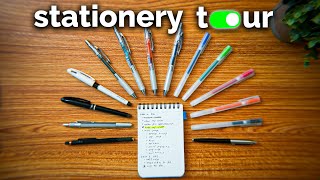
Felt-tip and fineliner pens use fiber tips that produce consistent line width without the ball-rolling mechanism of gel and ballpoint pens. For journaling, felt-tips excel at bullet journaling (BuJo) layouts, headers, and any journaling style that mixes writing with drawing or visual elements. The Staedtler Triplus Fineliner and Micron Pigma fineliner series are the most commonly used for BuJo applications — the Pigma Micron's archival, waterproof, fade-resistant ink makes it a permanent record that resists light exposure and moisture over decades. Felt-tip limitations: most felt-tips use water-based ink that bleeds through thin paper; they require slightly more care (cap-on when not writing) than retractable pens; and the tip wears differently over time depending on writing angle. For journaling on standard lined notebook paper rather than BuJo dotted pages: gel pen is typically preferred over felt-tip for sustained writing comfort.
Tip Size: Line Width and Its Effects
Tip size (0.5mm, 0.7mm, 1.0mm) determines line width and writing feel. 0.5mm (fine) produces narrow lines — ideal for small handwriting, filling journal pages with dense text, and maintaining legibility on small pages. 0.7mm (medium) is the standard for most journaling — comfortable for most handwriting sizes and provides visible, consistent lines without excessive ink spread. 1.0mm (bold/broad) produces expressive, highly readable lines — preferred for fast writing and annotation but can look overweight in dense journaling. The correct tip size depends primarily on handwriting size: small, compact handwriting works best with 0.5mm; average handwriting with 0.7mm; large handwriting or fast-writing styles with 0.7-1.0mm.
Paper Compatibility: The Overlooked Variable
Journal paper weight (gsm) determines whether your pen choice will bleed through to the next page. 70-80gsm (standard composition notebook paper): safe for ballpoint, borderline for gel pens (0.5mm less bleed than 0.7mm), and gel/felt-tip pens will bleed with heavy pressure. 90-100gsm (quality journal paper, Leuchtturm1917, Moleskine): handles most gel pens and medium-weight felt-tips without bleed-through. 120gsm+ (premium paper): handles fountain pens and all gel/felt-tip pens. The practical approach: if you have a notebook already, test your pen on the last few pages — which are typically blank — before committing to a pen-paper pairing.
Left-Handed Journaling: Specific Recommendations
Left-handed writers drag their hand through ink as they write, making fast-drying ink essential. The correct category choices: (1) Ballpoint first: oil-based ink dries on contact. The uni-ball Jetstream ($14.99 for 3-pack) is specifically recommended for left-handed writers — its ACE hybrid ink combines near-gel smoothness with faster-than-gel dry time. (2) If preferring gel: choose quick-dry formulas (some gel brands market specifically to lefties), write with the hook or underhand grip to position the hand below the writing line, or use a fast-dry gel pen like the Pilot G2 at 0.38mm tip size (narrower tips leave less ink per stroke). (3) Avoid: standard felt-tip pens (very slow dry), fountain pens (slowest dry), and broad-tip gel pens.
“Smooth gel ink writes without skipping. 4.7 stars from 2,865 Amazon reviews signal consistent reliability.”
See Today’s Price →What we like
- Smooth, smear-proof gel ink
- Retractable and refillable
- Contoured rubber grip
- Bold 1.0mm point for dark, confident lines
Watch out for
- Gel ink takes longer to dry than a ballpoint

“The Paper Mate InkJoy 100ST Ballpoint Pens Medium Point Black 30-Pack features 30 pens for under $12 — best value. Best suited for households and offices that go through pens quickly.”
See Today’s Price →What we like
- 30 pens for under $12 — best value
- Smooth fast-starting ink
- Stick design never loses a click mechanism
Watch out for
- Disposable design — cannot refill
- Stick cap easy to lose

“1mm bold point for signatures and expressive writing. 4.6 stars from 5,304 Amazon reviews signal consistent reliability.”
See Today’s Price →What we like
- 1mm bold point for signatures and expressive writing
- uni-ball 207 formula
- Retractable
- 12-pack value
- Black ink
Watch out for
- 1mm line too wide for precise note-taking in small spaces
- Bold point goes through ink faster than medium point
- Not available in color variety in bold point
Frequently Asked Questions
What kind of pen is best for journaling?
Do gel pens bleed through journal pages?
What tip size should I use for journaling?
What pens do left-handed journalers use?
Are felt-tip pens good for journaling?
How do I prevent pen smearing in my journal?
How We Chose These Products
We compare each product’s Amazon listing, the manufacturer’s published specifications and Amazon customer ratings, shown with their review counts as Amazon’s data, and rank the products on how well they answer this page’s question. We do not test products in hand and we do not run our own analysis of review text. A publication or expert is named only where we cite its published findings about that product. No manufacturer paid for placement on this page.
A price appears only when Amazon’s API supplied it at a recent daily refresh, with the date and time beside it, and is withdrawn at 4 AM Central on the day after it turns 24 hours old; otherwise use “Check price on Amazon” for the live price. Read our full methodology →