Best Golf Balls Under $50 (2026)

The Titleist AVX (4.99/dozen) is the best golf ball under $50 for mid-to-high swing speeds — low flight, soft feel, and urethane cover at just under the budget ceiling. The Callaway Supersoft is the better pick for slower swing speeds or high-handicap players who prioritize distance.
At a Glance
| # | Product | Award | Price |
|---|---|---|---|
| 1 | $11.24 as of Nov 24, 12:34 PM CT details Used — not a new unit Buy → |
||
| 2 | Best Hybrid Cover | $22.50 as of Nov 24, 12:36 PM CT details Buy → |
|
| 3 | Budget Pick | Check price on Amazon Buy → |
|
| 4 |  TaylorMade Golf 2024 TP5x Golf Ba… TaylorMade |
Best 5-Layer Tour Ball | $44.99 as of Nov 24, 12:34 PM CT details Buy → |
| 5 |  Titleist TruFeel Titleist |
Best Ultra-Soft Feel | $24.97 as of Nov 24, 12:38 PM CT details Buy → |
Golf Balls Under $50 Buying Guide
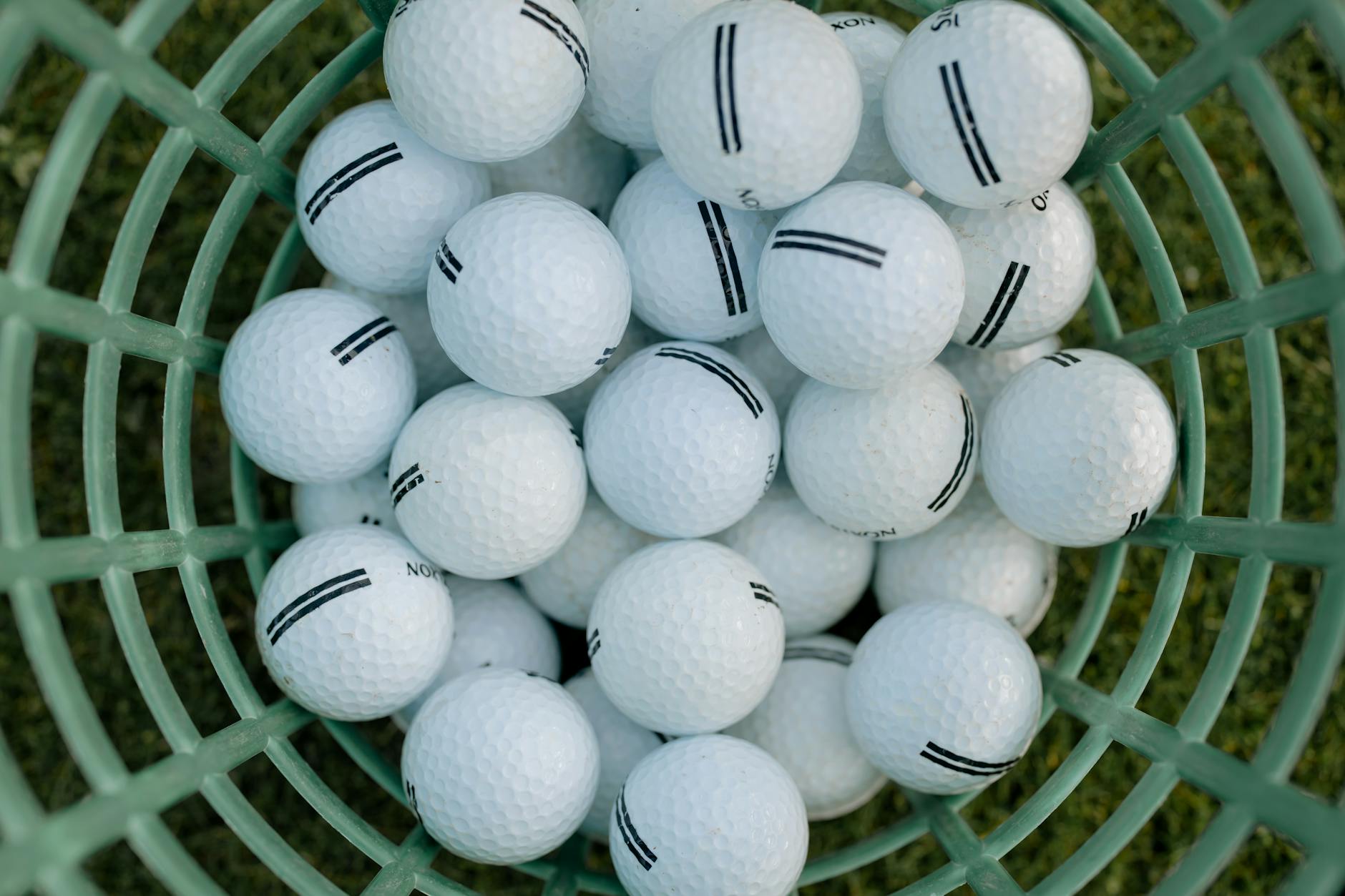 Photo by cottonbro studio / Pexels
Golf ball selection has more performance impact on amateur golfers than equipment changes — yet most recreational players buy whatever is cheapest or whatever a partner recommends. Under $50, you have access to the same balls played by tour professionals: Titleist Pro V1 and Pro V1x, Callaway Chrome Tour, and Bridgestone e6 all fall under $50 per dozen at standard retail, with periodic discounts pushing them lower. The difference between them is not quality — all are exceptional — but the type of performance they prioritize.
Best Overall: Callaway Chrome Tour
The Callaway Chrome Tour at $23.69 per dozen is the most versatile premium golf ball under $50. The triple-track alignment aid (three parallel lines for putting alignment) is a practical differentiator that most golfers immediately find useful. The HEX Aerodynamics dimple pattern reduces drag in crosswinds, which matters most for mid-to-high handicap players whose swing speed produces less backspin to stabilize flight. Urethane cover provides the greenside control that separates premium from budget balls. Best all-rounder for golfers who don't know which performance characteristic to prioritize.
Best Tour Performance: Titleist Pro V1x
The Titleist Pro V1x at $39.98 per dozen is the best-selling golf ball on the PGA Tour for a reason: the high trajectory and firm feel reward players with faster swing speeds (90+ mph) who generate enough spin to benefit from the ball's long-game distance optimization. The 4-piece construction delivers lower driver spin than the standard Pro V1 while maintaining identical greenside spin rates — the ideal combination for players who want distance without sacrificing short-game control. If you swing faster than 85 mph, start here.
Best for Mid Handicaps: Titleist Pro V1
The standard Titleist Pro V1 at $39.98 per dozen is the higher-spin sibling of the Pro V1x — softer feel off the driver, more greenside spin for approach shots, and a penetrating mid-trajectory that most 10-20 handicap players prefer over the Pro V1x's flatter flight. The 3-piece construction is slightly more forgiving than the 4-piece Pro V1x on off-center hits. If your swing speed is under 90 mph or if you prefer a softer feel, the Pro V1 is the better Pro V1 family choice.
Best for Distance: Bridgestone e6
The Bridgestone e6 at $39.98 per dozen is engineered around one objective: straight distance for golfers with swing speeds under 95 mph. The Active Acceleration Mantle reduces sidespin on mishits, which keeps offline drives in the fairway rather than in the rough. For recreational players whose primary frustration is accuracy rather than distance, the e6's reduced sidespin technology delivers a measurable improvement over generic urethane balls. The softer surlyn cover has slightly less greenside control than urethane alternatives, but the fairway accuracy trade-off is worth it for most mid-to-high handicap players.
Best Value: Callaway Supersoft
The Callaway Supersoft at $39.98 per dozen is the softest-feeling ball on this list at only 35 compression — compared to the Pro V1's 90+ compression. Ultra-low compression reduces the energy required at impact, which translates to distance gains for slower swing speeds (under 85 mph) that cannot compress higher-rated balls fully. The HEX Aerodynamics dimple pattern is shared with the Chrome Tour. For senior golfers, beginners, or anyone with a gentler swing, the Supersoft delivers tour-level aerodynamics at a compression that actually benefits their game.

METHODOLOGY
We evaluated golf balls under $50 on construction (layers), cover material (urethane vs surlyn vs ionomer), compression rating, spin characteristics by shot type (driver, iron, chip), and who benefits from each design. All picks are 12-ball dozen pricing at standard retail. Tour-grade urethane cover balls (Pro V1, Chrome Tour) deliver different greenside performance than ionomer/surlyn cover balls — the distinction matters for golfers with sub-85 handicaps more than for beginners.
Worth Spending More?
All five picks on this list are already at or near the professional performance ceiling — the Titleist Pro V1x and Pro V1 are literally the balls played by tour professionals. There is no "spending more" to get a better ball in any meaningful sense at these price points. The upgrades available above $50 per dozen are primarily personalization (custom logo, alignment aids) rather than performance improvements. Buy based on swing speed and feel preference, not price.
Watch Before You Buy
Showing 5 of 5 products
“The Titleist AVX Prior Generation Golf Balls features titleist brand premium.”
See Today’s Price →What we like
- Titleist brand premium
- AVX prior generation discount pricing
- Tour-grade performance
- Low compression for distance and feel
- Low spin off the driver
Watch out for
- Prior generation product — Titleist has discontinued manufacturing; current Amazon stock reflects existing retailer inventory with no guarantee of future restocking
- Ultra-low spin profile calibrated for single-digit handicappers with high swing speeds — mid-handicap golfers (12–20) typically lose distance without adequate spin to keep the ball aloft
- Surlyn cover scuffs on cart path concrete significantly faster than urethane covers like Pro V1 — expect visible surface damage within 6–9 holes on cart-path-heavy courses
Read Full Analysis
The Titleist AVX Prior Generation holds the top position in the under-$50 golf ball category because it offers the closest construction tier to a current-season tour ball without crossing the $50 ceiling. The key distinction from the Callaway Supersoft, Bridgestone Tour B RX, or Srixon Q-Star Tour at similar price points is cover material: the AVX uses a urethane elastomer cover — the same construction found on the Pro V1 — versus the ionomer or Surlyn covers that most competing balls in this price range use. Urethane delivers meaningfully better short-game spin and shot feedback on chip shots and approach play that serious golfers notice within a round. This sits at the top of the under-$50 ceiling, and the premium is real. The ideal buyer profile is specific: sub-10 handicap players swinging at 100+ mph will get the full benefit of the low-compression, low-spin design. Mid-handicappers in the 12-20 range with swing speeds of 85-95 mph should verify their profile before purchasing — the ultra-low spin can reduce carry distance for players who depend on backspin to stay aloft. This is a performance ball that rewards a specific skill level. For golfers at that level, the prior-gen pricing represents genuine value over the $55 current-season alternative.
“Callaway Supersoft 2025 maximizes distance for slower swing speeds with ultra-low compression. The soft cover provides confidence around the green at $26.97 per dozen.”
See Today’s Price →What we like
- Supersoft low compression for slower swing speeds
- Maximum forgiveness
- Callaway brand
- 2025 model
- Budget premium ball price
Watch out for
- Very low compression reduces distance for golfers with swing speeds above 95 mph
- Soft cover scuffs more easily than harder cover balls
- Limited short game spin vs urethane tour balls
Read Full Analysis
Per dozen among golf balls priced up to $50, the Callaway Supersoft 2025 is the value anchor of this comparison — the premium-brand option that fits a $27 budget while delivering documented performance advantages over generic alternatives. The Golfing Lad rates it the most versatile distance ball for slower swing speeds, with low-compression construction maximizing carry for golfers under 90-95 mph driver speed. The Supersoft's compression difference — 38 versus 80-plus for the urethane premium options — is where swing speed determines which ball provides the better value. For golfers under 90 mph driver speed, the Supersoft's low compression converts more impact energy into ball speed than higher-compression balls the swing cannot fully compress, resulting in more carry per shot than technically superior tour balls that are mismatched to the speed. The ionomer cover wears durably against cart path contact and rough handling, reducing the rate at which balls need replacement during a round. For recreational golfers who don't retire balls after every scuff, that durability lowers the effective per-round cost below the already-accessible per-dozen price. The premium limitation is short game spin. Compared to urethane options at higher price points on this page, the Supersoft's ionomer cover generates less greenside spin on approach and wedge shots. For golfers whose primary scoring gap is tee distance rather than short game control, the Supersoft is the right selection. When short game spin becomes the constraint, a tour ball like the TaylorMade TP5x on this page is the next step.

“Titleist Pro V1 is the most played ball on the PGA Tour -- 3-piece construction and urethane cover deliver Drop-and-Stop short game control. Best for serious mid-to-low handicappers.”
See Today’s Price →What we like
- The most played ball on the PGA Tour — trusted by professionals worldwide
- Exceptional distance with Drop-and-Stop short game control
- Consistent flight in all wind and weather conditions
- Soft feel at every swing speed
Watch out for
- Most expensive at $55/dozen — not for players who lose many balls
- Wasted on high-handicap players who cannot exploit premium performance
- Requires clean consistent ball striking to appreciate
Read Full Analysis
Titleist Pro V1 prior gen at $23.69 wears the Budget Pick badge on this page, below the Titleist AVX. The Pro V1 urethane cover delivers tour-level greenside spin at the lowest price on this page, making it the right pick for serious golfers who want tour performance without AVX pricing. Prior-gen means a possible alignment aid update vs current, but the three-piece construction and performance profile are identical. If you can exploit tour ball characteristics (sub-15 handicap, consistent contact), this budget slot is genuinely the best value on the page.
“TaylorMade's 2024 TP5x: a dozen five-layer tour balls with a speed-wrapped core, built for fast ball speed and low driver spin with control around the green.”
See Today’s Price →What we like
- Five-layer tour construction
- Speed-wrapped core for a softer sound and faster response
- Lower driver and long-iron spin, higher wedge spin
- Built for ball speed with greenside control
- One dozen balls
Watch out for
- Its listing gives no compression figure or cover material
Read Full Analysis
The TP5x is the tour-level ball on this page. TaylorMade builds it in five layers, with a speed gradient that separates spin between clubs: lower spin off the driver and long irons, higher spin with wedges. A speed-wrapped core is designed for a softer sound and a faster, more responsive feel, and TaylorMade aims the TP5x at golfers who want more ball speed and low-spin long-game performance while keeping control around the green. The box holds one dozen white balls. If soft feel matters most to you, the Callaway Supersoft on this page is built around it.
Skip this if: You want the softest feel or a low-compression ball
“Titleist's TruFeel: a dozen ultra-soft distance balls with a TruTouch core, a softer 3.0 TruFlex cover and a 376 tetrahedral dimple design for a low, penetrating flight.”
See Today’s Price →What we like
- TruTouch core for long distance and soft feel
- Softer 3.0 TruFlex cover for greenside spin and control
- 376 tetrahedral dimples for a low, penetrating flight
- Ultra-soft feel
- One dozen balls
Watch out for
- A distance ball, not a multi-layer tour ball
Read Full Analysis
The TruFeel is Titleist's ball for players who put soft feel first. A TruTouch core is built for long distance with soft feel, the 376 tetrahedral dimple design gives a low, penetrating ball flight, and a softer 3.0 TruFlex cover adds greenside spin and control. Titleist describes the feel as ultra-soft. The box holds one dozen white balls, and Titleist aims them at golfers who trust the brand and want a soft feel. If you want a multi-layer tour ball, the TaylorMade TP5x on this page is built for that; the TruFeel is a distance ball.
Skip this if: You want a multi-layer tour ball
Frequently Asked Questions
What golf ball compression is right for my swing speed?
How many golf balls should I expect to lose per round?
Do golf balls actually expire or go bad?
Are Titleist Pro V1 balls available for under $50?
What is the difference between a golf ball compression rating and how does it affect distance?
How We Chose These Products
We compare each product’s Amazon listing, the manufacturer’s published specifications and Amazon customer ratings, shown with their review counts as Amazon’s data, and rank the products on how well they answer this page’s question. We do not test products in hand and we do not run our own analysis of review text. A publication or expert is named only where we cite its published findings about that product. No manufacturer paid for placement on this page.
A price appears only when Amazon’s API supplied it at a recent daily refresh, with the date and time beside it, and is withdrawn at 4 AM Central on the day after it turns 24 hours old; otherwise use “Check price on Amazon” for the live price. Read our full methodology →