Best ATX 3.1 Power Supplies 2026

The CORSAIR HX1200i (2025) is the best ATX 3.1 PSU — fully modular, native 12V-2x6 connector, Cybenetics Lambda A++ noise rating, and Corsair Link USB integration for software-defined power monitoring.
At a Glance
| # | Product | Award | Price |
|---|---|---|---|
| 1 | Best Overall | $279.99 as of Nov 24, 12:37 PM CT details Buy → |
|
| 2 | Best Premium | $319.99 as of Nov 24, 12:37 PM CT details Buy → |
|
| 3 | Best Platinum | $247 as of Nov 24, 12:36 PM CT details Used — not a new unit Buy → |
|
| 4 | Best 1000W | $231.99 as of Nov 25, 10:41 AM CT details Buy → |
|
| 5 | Best Value | $142.42 as of Nov 24, 12:37 PM CT details Used — not a new unit Buy → |
ATX 3.1 Power Supplies Buying Guide
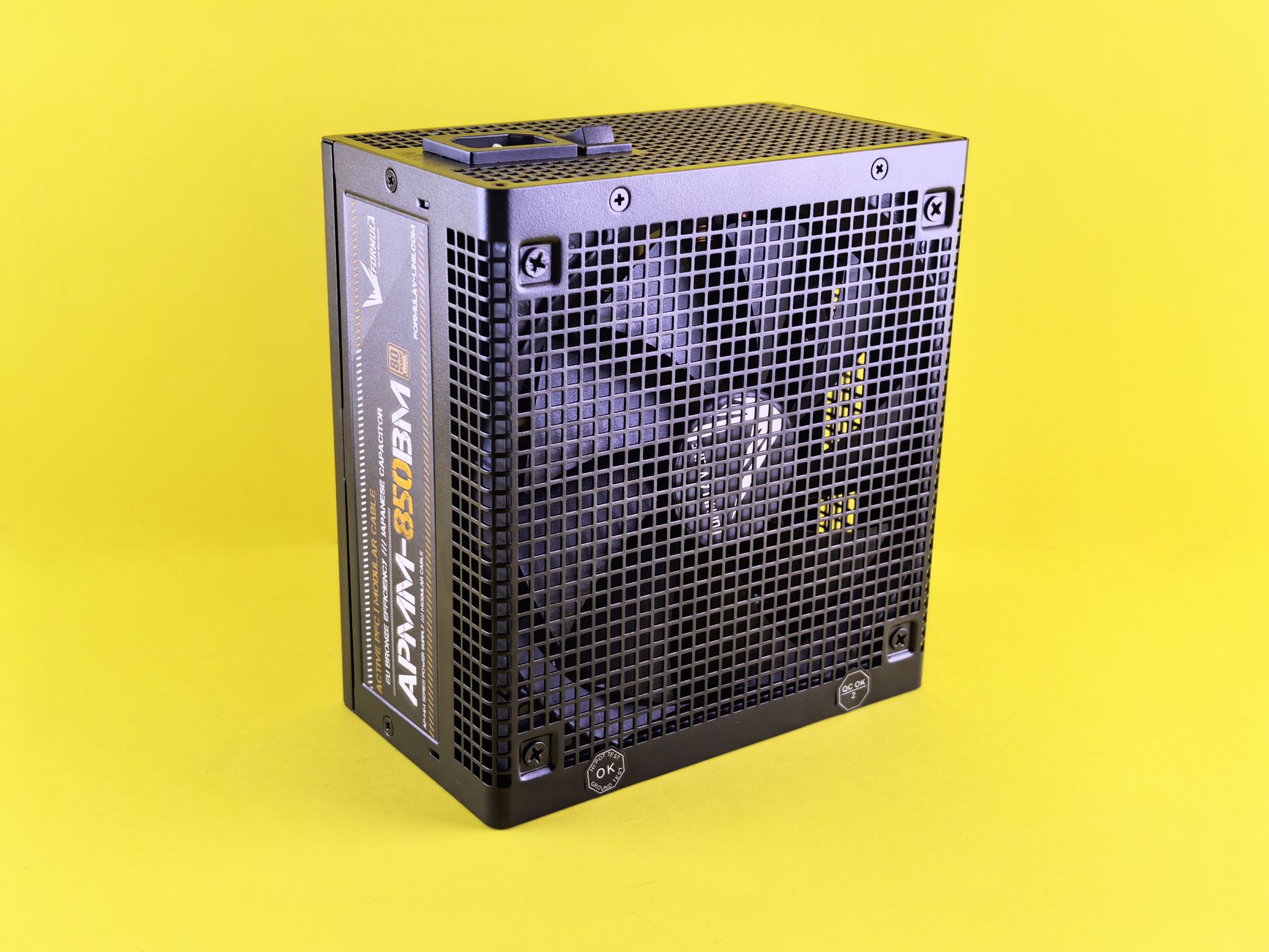 Photo by Andrey Matveev / Pexels
ATX 3.1 is the current PSU standard, supplanting ATX 3.0 in 2024-2025. The key difference is the 12V-2x6 connector — mechanically identical to the original 12VHPWR connector but with shorter sense pins that ensure power-on only completes when fully seated. This pin redesign solved the partial-seating melting issue that plagued some ATX 3.0 PSUs paired with RTX 4090 / 5090 GPUs.
Why ATX 3.1 Matters
The original 12VHPWR connector on ATX 3.0 PSUs has a documented failure mode: under sustained 575W loads (RTX 5090 territory), partial seating causes uneven current distribution across the six 12V pins, melting the connector and burning the GPU PCB. The 12V-2x6 pin redesign on ATX 3.1 prevents this by ensuring the four sense pins make contact only after the twelve current pins are fully seated. For RTX 4090 / 5090 / 5080 buyers, ATX 3.1 isn't optional — it's required for safe long-term operation.
Wattage Selection
Match wattage to build: 850W for RTX 5080 / 5070 Ti, 1000W for RTX 5090, 1200-1500W for dual-CPU workstations or extreme overclocking. PSUs operate at peak efficiency at 50-80% load, so don't oversize beyond 50% margin over your typical wall draw. A 1500W PSU on a 600W gaming build runs at 40% load — outside peak efficiency band, slightly inefficient.
Digital Power Monitoring (Corsair iCUE Link)
Corsair's HX-series and AX-series PSUs include a USB header for iCUE Link integration — software-defined power monitoring with per-rail tracking, real-time efficiency curves, and customizable alerts. For builders who care about telemetry, this is a meaningful feature. For typical gamers, it's overkill. The Corsair RM-series and competitor ATX 3.1 PSUs achieve identical electrical performance without the digital monitoring layer.
SFX vs ATX
SFX PSUs (Corsair SF-series, Cooler Master V SFX) are required for genuinely small ITX cases (NR200, A4-H2O, Phanteks Evolv Shift). They're 50% smaller than ATX (125 × 100 × 63.5 mm vs 150 × 86 × 140 mm) and use shorter cables that may be too short for mid-tower ATX cases. SFX models cost 30-50% more than equivalent ATX wattage. Pick SFX only for ITX; pick ATX for everything else.
Watch Before You Buy

“CORSAIR HX1200i (2025) is the best ATX 3.1 PSU for high-end builds — 1200W, fully modular, native 12V-2x6, Cybenetics Lambda A++ noise rating, iCUE Link USB integration for digital…”
See Today’s Price →What we like
- 1200W output handles single-GPU flagship configurations and multi-GPU workstation builds without approaching the wattage ceiling
- Cybenetics Platinum efficiency rating exceeds standard 80+ Platinum across multiple load points for lower heat and noise output
- Native ATX 3.1 with 12V-2x6 connector ships ready for RTX 50 and RX 9000 series GPUs without adapter cable concerns
Watch out for
- 1200W exceeds what most single-GPU gaming builds will ever draw — 850-1000W covers 95% of gaming use cases at lower cost
- iCUE monitoring integration requires Corsair software installed and running in the background at all times
Read Full Analysis
The Corsair HX1200i (2025) earns the top spot on this ATX 3.1 PSU comparison by combining the highest practical wattage ceiling with Corsair's most advanced monitoring integration. And 1200W, it covers the peak power draw of an RTX 5090 paired with a Core Ultra 9 or Ryzen 9 9950X without approaching the wattage ceiling — headroom matters because PSUs operate most efficiently at 50-70% of rated output, and 1200W keeps a typical 600-700W peak draw firmly in the efficiency sweet spot. Cybenetics Platinum efficiency exceeds the standard 80 Plus Platinum self-certification across multiple load points in independent testing, and the Lambda A++ noise rating from Cybenetics is the quietest tier available for a unit of this output. iCUE Link USB integration provides real-time wattage, voltage rail, and temperature monitoring through Corsair's software without requiring a separate power meter. Against the ASUS ROG Strix 1200W Platinum ($259.50 — rank 3 on this page), the HX1200i costs $40.49 more for the iCUE monitoring integration and Cybenetics' independent Platinum certification versus ASUS's 80 Plus Platinum self-certification. For builders who don't use iCUE software and don't need digital monitoring, the ASUS saves $40 for the same wattage and ATX 3.1 compliance. Against the HX1500i ($334.31 — rank 2), the HX1200i saves $34.32 for 300W less headroom — the difference only matters for dual-GPU workstation builds where peak draw genuinely reaches 1000W+ sustained. The monitoring caveat in the cons is accurate: iCUE runs as a background Windows service that consumes a small but measurable amount of CPU and memory. Builders who prefer zero-software system environments should note this and consider the ASUS ROG Strix as the monitoring-free alternative at 1200W.

“CORSAIR HX1500i (2025) is the maximum-headroom ATX 3.1 PSU for dual-CPU workstations or extreme builds. 1500W, all the same features as the HX1200i. Worth the $35 premium only if your…”
See Today’s Price →What we like
- 1500W output covers the most extreme multi-GPU workstation and AI inference builds with substantial headroom to spare
- Fluid dynamic bearing fan operates at near-silent levels during typical single-GPU gaming loads before ramping up under heavy draw
- Zero-RPM fan stop mode keeps the unit completely silent during low and medium power draw scenarios
Watch out for
- At $334, HX1500i carries a significant cost premium that most single-GPU gaming builds cannot justify over a 1000W unit
- Larger 180mm chassis depth can reduce cable management clearance in compact mid-tower cases with short PSU tunnels
Read Full Analysis
The Corsair HX1500i (2025) is purpose-built for a narrow use case: builds where peak power draw genuinely exceeds 1000W under sustained load. These configurations exist — dual high-end GPU workstations running inference or rendering, extreme overclocking rigs with delidded CPUs, and AI developer systems running local LLM inference on multiple Ada or Blackwell GPUs simultaneously. It delivers 1500W with the same Cybenetics Platinum efficiency, Lambda A++ noise rating, and iCUE Link USB monitoring as the HX1200i below it — the $34.32 premium buys 300W of additional output and the confidence of never approaching the wattage ceiling regardless of configuration. The fluid dynamic bearing fan delivers near-silent operation during typical single-GPU gaming loads where the PSU draws 400-600W — far below the point where fan speed increases meaningfully. Zero-RPM fan stop mode keeps the unit completely silent under low and medium loads. At 1500W, this is the largest PSU on this page and carries the 180mm chassis depth that standard PSUs don't require — verify PSU tunnel clearance in the target case before ordering. For the large majority of single-GPU gaming builds — including RTX 5090 configurations — the HX1200i is the rational choice with $34.32 in savings and adequate wattage headroom. The HX1500i's value case requires that the builder genuinely draws above 1000W peak, which means multi-GPU systems, workstations with multiple NVMe SSDs and high-core-count CPUs under simultaneous load, or users who plan to add a second GPU at a future date. Recommending 1500W for a standard gaming build is a form of over-engineering that the HX1200i and even the RM1000x ($159.99 — rank 5 on this page) make unnecessary.

“ASUS ROG Strix 1200W Platinum is the only 80 Plus Platinum 1200W ATX 3.1 PSU. ROG aesthetics, fully modular, native 12V-2x6, 10-year warranty. The right pick if you want platinum efficiency…”
See Today’s Price →What we like
- 1200W output delivers substantial power for demanding tasks
- 80+ efficiency certification reduces energy waste and electricity costs over time
- Modular or fully modular design enables clean cable management in the case
Watch out for
- Oversized wattage is wasted budget — size the PSU appropriately to your build
- Non-modular designs require cable management of unused cables regardless
Read Full Analysis
The ASUS ROG Strix 1200W Platinum is the efficiency-tier pick for builders who want Platinum-certified output at 1200W without the iCUE software dependency that the Corsair HX1200i requires. It undercuts the HX1200i by $40.49 while delivering the same 80 Plus Platinum efficiency tier, native 12V-2x6 connector, and 10-year warranty. The ROG Strix branding brings ASUS's military-grade component selection and the premium cable sleeving — matte black braided cables — that photograph well in windowed builds and integrate cleanly with the ROG aesthetic across motherboard, cooling, and GPU. The efficiency distinction from the HX1200i is worth stating precisely: ASUS claims 80 Plus Platinum certification through the standard 80 Plus testing protocol, while Corsair has additionally tested the HX1200i through Cybenetics' independent multi-point measurement methodology and achieved Platinum there too. Both are Platinum efficiency units; Cybenetics provides independent verification that Corsair has chosen to pursue and ASUS has not. For the vast majority of buyers, both measurements lead to indistinguishable real-world efficiency and electricity cost. The cable clearance note in the cons — "compact ATX form factor fits SFF-friendly cases" — reflects that the ROG Strix 1200W uses a more compact chassis than expected for 1200W output, but cable lengths may be restrictive in full-tower cases with extended runs. Builders with E-ATX motherboards in full-tower cases should verify cable reach before purchasing. Against the HX1000i ($234.99 — rank 4 on this page), the ROG Strix adds 200W for $24.50 more — straightforward value for builds that need 1200W specifically and want Platinum efficiency over the HX1000i's Gold tier.

“Corsair HX1000i is the 1000W version of the HXi line — sufficient for any RTX 5090 build with high-end CPU. Native 12V-2x6, ATX 3.1 with PCIe 5.1, fully modular. The right wattage for…”
See Today’s Price →What we like
- Intel ATX 3.1 certified, supporting the PCIe Gen 5.1 platform and resisting transient power spikes
- 80 Plus Platinum efficiency
- 140mm Fluid Dynamic Bearing fan rated for quiet, long-lasting operation
- Zero RPM Fan Mode switches the fan off entirely at low and medium loads
- Corsair iCUE software for custom fan curves and overcurrent-protection settings
Watch out for
- Fan curves, power monitoring and the overcurrent-protection toggle run through Corsair's iCUE software
- Its listing gives no warranty length, Cybenetics noise rating or connector list
Read Full Analysis
The Corsair HX1000i fills the sweet spot on this ATX 3.1 PSU comparison: 1000W of output covers an RTX 5090 paired with a high-end CPU without approaching the wattage ceiling, and iCUE Link monitoring provides real-time power draw telemetry that the RM1000x below it on this page cannot offer. It sits $65 below the HX1200i and $40 above the RM1000x — the $40 premium over the RM1000x specifically buys the iCUE USB monitoring integration and the fluid dynamic bearing fan design used in the HX series, which operates more quietly under sustained load than the RM-series fan curve. Both units carry Cybenetics A++ noise ratings, but the HX-series fan achieves that rating with a different engineering approach. For builders using iCUE to manage Corsair RGB fans, RAM, and AIO coolers, the HX1000i's monitoring integration is the logical conclusion — a unified dashboard showing wattage draw, voltage rail stability, and PSU temperature alongside the other Corsair component telemetry. The RM1000x at $159.99 requires a separate power meter or motherboard power monitoring to achieve equivalent visibility. For builders who don't run iCUE, the $75 savings of the RM1000x buys identical electrical performance, the same wattage, and the same 10-year warranty — the HX1000i premium is purely for monitoring access. Against the HX1200i, the HX1000i saves $65 for 200W less ceiling. For single-GPU gaming builds — including RTX 5090 configurations with mainstream CPUs — 1000W is adequate headroom and the HX1000i is the correct wattage choice. Only multi-GPU or extreme overclocking configurations that regularly draw above 850W sustained under simultaneous CPU + GPU load benefit from the 1200W ceiling.

“CORSAIR RM1000x ATX 3.1 trades digital monitoring for $75 lower price than the HX1000i. Identical electrical performance, same 10-year warranty, same Cybenetics A++ noise rating. The…”
See Today’s Price →What we like
- 1000W output handles RTX 5090 + Ryzen 9 / Core Ultra 9 builds with headroom
- ATX 3.1 + PCIe 5.1 ready - current spec for next-gen GPU power delivery
- Fully modular cabling for clean builds; 10-year warranty
Watch out for
- Premium price for the wattage - comparable competitors at lower cost exist
- Fan can spin at low loads - Zero RPM mode is decent but not class-leading
Read Full Analysis
On this ATX 3.1 PSU comparison page filled with HX-series units priced $235-335 and an ASUS ROG Strix the Corsair RM1000x makes the most important argument on the page: ATX 3.1 compliance, native 12V-2x6 connector, 10-year warranty, and Cybenetics A++ noise rating at $75-175 less than every other option here. The electrical performance difference between a $159 and $235 PSU of the same specification tier is negligible for gaming loads — Cybenetics independently measures both the RM1000x and HX1000i at A++ noise levels, and both carry the same 10-year Corsair warranty. The gap is entirely in the iCUE USB monitoring feature that the HX-series provides and the RM1000x does not. The value argument crystallizes against the HX1000i ($234.99 — rank 4 on this page): the HX1000i costs $75 more for the same wattage, the same ATX 3.1 compliance, and the same warranty. The $75 difference buys a software dashboard showing power draw and voltage telemetry in real time. For builders who value this monitoring data, the HX1000i is worth it. For the majority of gaming builders who never need to see instantaneous wattage readings during a session, the RM1000x's $75 savings buys nothing except a leaner system software footprint without iCUE running at startup. The RM1000x's Cybenetics Gold efficiency versus the HX-series' Cybenetics Platinum means approximately 2-3% lower efficiency at mid-to-high loads — translating to $3-8 per year more in electricity at typical gaming usage patterns. Over a 10-year warranty period, the HX1000i's Platinum efficiency might save $30-80 in electricity — less than its $75 price premium. The RM1000x is the rational choice for builders who want 1000W ATX 3.1 compliance at the lowest defensible cost from a tier-1 brand.
Frequently Asked Questions
Do I need ATX 3.1 if I'm not buying an RTX 5090?
Is 1500W overkill for a single-GPU build?
What's the difference between Corsair HXi and RMx?
How We Chose These Products
We compare each product’s Amazon listing, the manufacturer’s published specifications and Amazon customer ratings, shown with their review counts as Amazon’s data, and rank the products on how well they answer this page’s question. We do not test products in hand and we do not run our own analysis of review text. A publication or expert is named only where we cite its published findings about that product. No manufacturer paid for placement on this page.
A price appears only when Amazon’s API supplied it at a recent daily refresh, with the date and time beside it, and is withdrawn at 4 AM Central on the day after it turns 24 hours old; otherwise use “Check price on Amazon” for the live price. Read our full methodology →