Best Podcasting Kit for Beginners 2026: Top 5 Mics

The HyperX QuadCast S is the best podcasting mic for beginners — plug-and-play USB setup, built-in shock mount, and tap-to-mute make it foolproof. On a tighter budget, the FIFINE K669B gets you surprisingly clean audio for a fraction of the cost.
At a Glance
| # | Product | Award | Price | Power Source | Audible Noise | Polar Pattern | Score |
|---|---|---|---|---|---|---|---|
| 1 | Best Overall | Check price on Amazon Buy → |
Usb Condenser | 44 Decibels | Cardioid, Bidirectional, Omnidirectional and Stereo | 6.7 | |
| 2 |  Logitech Creators Blue Yeti USB M… Logitech G |
Best for Multi-Person | $69.86 as of Nov 24, 12:15 PM CT details Buy → |
Corded Electric | 120 Decibels | Multipattern | 6.8 |
| 3 |  Audio-Technica ATR2100X-USB Cardi… Audio-Technica |
Best Versatile Pick | Check price on Amazon Buy → |
Usb-c | 24 Decibels | Unidirectional | — |
| 4 | Best Premium Pick | $255 as of Nov 24, 12:27 PM CT details Buy → |
Corded Electric | 132 Decibels | Unidirectional | 7.5 | |
| 5 | Best Budget Pick | $22.79 as of Nov 24, 12:19 PM CT details Buy → |
Corded Electric | 16 Decibels | Unidirectional | — |
Score Breakdown
| HyperX QuadCast S – R… | Logitech Creators Blu… | Audio-Technica ATR210… | Shure MV7 USB Podcast… | FIFINE K669B USB Micr… | |
|---|---|---|---|---|---|
| Overall | 6.7 | 6.8 | – | 7.5 | – |
| Comfort | 70 | 65 | – | 70 | – |
| Noise Canceling | 65 | 65 | – | 83 | – |
| Sound | 65 | 73 | – | 73 | – |
Scores 0–100 from published specifications and independent reviewers' measurements. Amazon star ratings are shown separately and are never part of a score. 0 = feature not present. – = insufficient data. How we score →
Podcasting Kit for Beginners Buying Guide
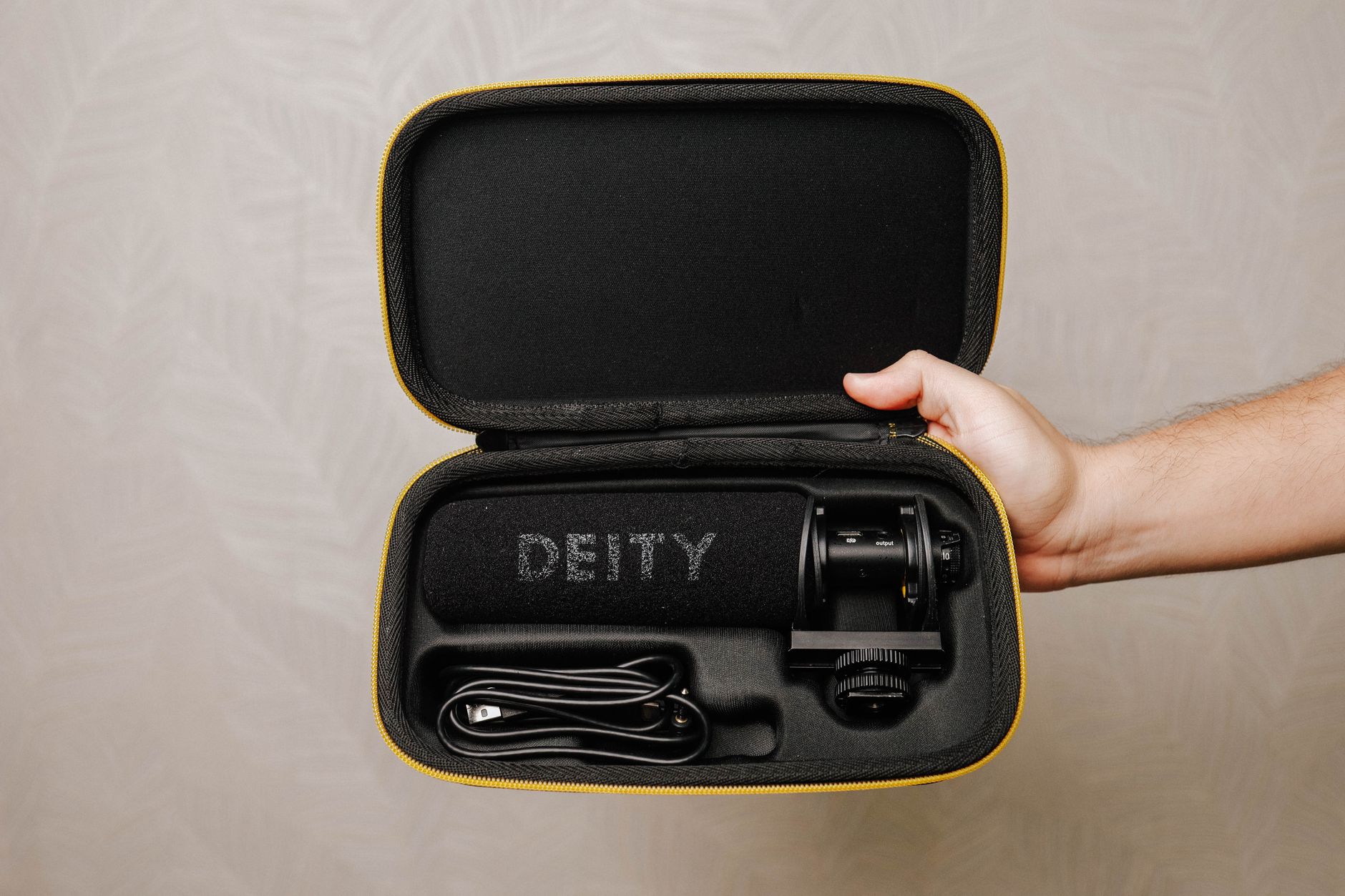 Photo by Luis Quintero / Pexels
Most beginner podcasters overthink gear. A $100 USB microphone in a quiet room beats a $500 microphone in a noisy one. These picks assume you are recording solo or with one guest in a typical home or office environment.
How We Picked These
Products were selected for ease of setup and voice clarity at each price point. Unlike many guides, we excluded condenser mics requiring a separate audio interface — this list is for people who want to plug in and record immediately.
USB vs. XLR: What Beginners Need to Know
USB microphones plug directly into your computer — zero extra gear required. XLR microphones connect through an audio interface ($100 to $200 extra), which gives you more control but adds complexity. The Audio-Technica ATR2100x is unusual: it has both USB and XLR outputs, letting you start simple and upgrade later without buying a new mic.

Polar Pattern: Why Cardioid Matters
All five mics here default to cardioid pickup — they capture sound from the front and reject noise from the sides and back. The Blue Yeti is the exception, offering cardioid plus omnidirectional, stereo, and bidirectional modes. The extra modes are useful for two-person interviews or ambient recording; for solo podcasting, cardioid is all you need.
Room Acoustics Beat Gear
The biggest upgrade for any beginner podcaster is free: record in a small, carpeted room with soft furnishings. Closets work exceptionally well. A $25 mic in a dead-quiet closet sounds better than a $300 mic in a live-sounding kitchen. Once your space is sorted, gear choices matter more.

Worth Spending More?
If you plan to monetize or collaborate professionally, the Shure MV7 at $299 gives broadcast-quality audio with a built-in headphone jack and voice isolation mode. If you eventually want to add a co-host in person, the Blue Yeti multi-pattern pickup becomes genuinely useful.
Why the HyperX QuadCast S – RGB USB Condenser Microphone for PC takes the top spot
The HyperX QuadCast S – RGB USB Condenser Microphone for PC is the top-ranked pick on this page. It holds a 4.7-star average from 18,744 Amazon customer reviews. Its listed strengths: 4 polar patterns for flexible recording setups; built-in anti-vibration shock mount reduces desk and chair vibration. The listed trade-off: more expensive than Blue Yeti for a similar core feature set. The closest alternative on this page is the Logitech Creators Blue Yeti USB Microphone for PC.
Watch Before You Buy
“Tap-to-mute button, built-in shock mount, and RGB status indicator. The QuadCast S removes every first-timer friction point — no drivers, no mixer required.”
See Today’s Price →What we like
- Tap-to-mute with an LED that shows when the mic is live
- Built-in anti-vibration shock mount and internal pop filter
- Four polar patterns: stereo, omnidirectional, cardioid, bidirectional
- Gain dial and headphone jack on the mic
- Mount adapter fits most mic stands and boom arms
- Certified by Discord and TeamSpeak
Watch out for
- A condenser: in a noisy room it hears more of the room than a dynamic microphone
Read Full Analysis
The HyperX QuadCast S is a USB condenser microphone built specifically for broadcast and streaming, with four selectable polar patterns that most competitors in this price range don't offer. Cardioid mode focuses on sound directly in front of the mic; bidirectional captures two people facing each other across a table; omnidirectional picks up a whole room; stereo mode uses both capsule arrays simultaneously for immersive recording. The built-in anti-vibration shock mount is integrated into the base — no separate adapter needed — and the tap-to-mute LED changes color to signal mute status clearly on camera. Audio captures at 16-bit/48kHz over USB-C. It's the most expensive beginner pick on this page, $14 above the Blue Yeti and $19 above the AT ATR2100x. The extra cost gets you the LED lighting for streaming aesthetics and the HyperX brand recognition in gaming communities, but the four polar patterns are the genuinely useful differentiator — they cover solo recording, two-person interviews, and group podcast formats without buying additional gear. The Shure MV7 at $299 steps up in dynamic transducer build quality but offers only cardioid. The HyperX QuadCast S is the right first mic for streamers who want flexibility from the start and don't plan to outgrow it quickly. Skip it if you only record solo in cardioid — the ATR2100x saves $19 and dynamic transducers handle untreated rooms better.
“Four switchable polar patterns make the Yeti the go-to for interviewing guests in person. Bidirectional mode lets two hosts face each other and share one mic.”
See Today’s Price →What we like
- Four pickup patterns: cardioid, omni, bidirectional and stereo
- Custom three-capsule condenser array
- On-mic controls for mute, gain, pattern and headphone volume
- No-latency headphone monitoring
- Adjustable desktop stand included; also fits a mic stand or boom arm
- Plug and play on Mac and PC
Watch out for
- A condenser: in a noisy room it hears more of the room than a dynamic microphone
- Its Blue VO!CE voice effects run in Logitech's software
Read Full Analysis
The Blue Yeti has been the best-selling USB microphone in its class for over a decade, and the reason is straightforward: it offers professional-grade flexibility at a beginner-accessible price. Three onboard capsules combine into four selectable polar patterns — cardioid, bidirectional, omnidirectional, and stereo — which means it adapts from solo recording to multi-person interviews without additional hardware. A built-in headphone jack enables zero-latency monitoring, so you hear yourself in real time rather than through software playback delay. Gain control and mute are both hardware knobs on the body. Audio captures at 16-bit/48kHz. It costs $14 less than the HyperX QuadCast S while offering the same four polar patterns plus the headphone monitoring output. The AT ATR2100x is $5 less but uses a dynamic transducer and only cardioid mode; it handles noisy rooms better but lacks the polar pattern versatility. The Shure MV7 is the clear step-up for professional output. The Blue Yeti occupies the middle ground most beginners actually need. The Blue Yeti is the safest first USB microphone purchase: the largest community of tutorials, accessories, and troubleshooting guides exist specifically for it, which matters when you're still learning. Skip it only if room noise is a serious problem — the ATR2100x's dynamic capsule handles that scenario better.
“USB and XLR outputs in one mic. Start with USB today; plug into an audio interface later without buying a new microphone. Unusual and practical at this price.”
See Today’s Price →What we like
- USB and XLR
- cardioid dynamic
- tap-to-mute
- headphone monitoring
- no drivers
- plug-and-play
Watch out for
- Dynamic capsule has less detail in high frequencies vs condenser mics
- USB output limits to stereo mix — no multitrack
- Requires audio interface if using XLR output
Read Full Analysis
The Audio-Technica ATR2100x stands apart from every other mic on this page by using a dynamic transducer instead of a condenser. Dynamic mics work by electromagnetic induction rather than capacitance — they're less sensitive overall, which means they pick up less room noise, air conditioning hum, keyboard clatter, and ambient sound bleed. For home studios without acoustic treatment (most beginners), that trade-off is actually an advantage: the ATR2100x tolerates a live room far more gracefully than the Blue Yeti or HyperX QuadCast S. The USB-C and XLR outputs coexist on the same body, giving a genuine upgrade path to an audio interface later without replacing the mic. It's $5 less than the Blue Yeti but with key differences: cardioid-only pattern versus four polar patterns, and dynamic versus condenser capsule. If you record in a carpeted room with minimal echo, the Blue Yeti's condenser will sound richer; in a hard-walled untreated space, the ATR2100x will sound cleaner. The dual USB-C/XLR connection is an exclusive advantage no other beginner mic on this page offers. Buy the Audio-Technica ATR2100x if you're recording in an untreated space or if you anticipate upgrading to an audio interface setup within a year or two. The XLR output future-proofs the investment. Skip it if your recording space is acoustically treated — the Blue Yeti's condenser shines in those conditions.

“Broadcast-grade dynamic capsule with voice isolation mode. The MV7 handles noisy rooms better than the condenser mics on this list and doubles as an XLR mic for studio setups.”
See Today’s Price →What we like
- Dynamic mic design physically rejects background noise that condenser mics pick up — HVAC systems, apartment walls, and keyboard sounds disappear from the recording
- Dual USB and XLR output lets you use this with your laptop today and upgrade to an audio interface later without replacing the microphone itself
- Voice-isolating technology tunes the polar pattern toward close-range voice frequencies, reducing pickup from everything else in the room at the same distance
- Touch-panel controls for gain, monitoring, and mute sit on the mic body — adjust levels without touching your computer software
- ShurePlus Motiv app applies EQ, compression, and limiting directly on the microphone so the signal arrives at your recording software already processed
Watch out for
- Cardioid-only (no multiple polar patterns like Blue Yeti)
- More expensive at $150
- Dynamic mics can sound thinner than condensers without proximity effect
Read Full Analysis
The Shure MV7 is the professional-tier option on this page, combining a broadcast-quality dynamic cardioid capsule with both USB-A and XLR outputs. Shure's dynamic transducer design traces its engineering lineage to the SM7B — the microphone used by professional broadcasters and podcasters at the highest level. The MV7 brings that same noise-rejection characteristic into a USB-compatible package. A touch-sensitive mute panel on the body and direct headphone monitoring jack eliminate the need for a mixer or interface for basic setups. The ShurePlus MOTIV app enables onboard EQ, compression, and limiter adjustments — meaningful tone-shaping for a beginner learning to dial in their sound. It costs roughly three times the ATR2100x and Blue Yeti. The gap is real but so is the difference: the Shure dynamic capsule produces a focused, warm, broadcast-ready sound that condenser mics at this price can't match. Room noise rejection is significantly stronger. The dual USB/XLR output means the mic moves from a direct-to-computer setup to a proper audio interface rig without replacement. The Shure MV7 is the right investment if you're committed to podcasting or streaming as a serious creative endeavor and plan to keep the mic for several years. It's overkill for someone still figuring out whether they'll stick with the hobby — start with the ATR2100x and upgrade later if needed.

“The FIFINE K669B delivers clean cardioid audio — an almost absurd value. Gain knob on the body, zero-latency headphone monitoring, and plug-and-play USB. The right starting point if your…”
See Today’s Price →What we like
- Cardioid condenser in a solid metal body
- Volume knob on the mic, down to zero for privacy
- Plug and play over USB-A, with a 5.9-foot cable in the box
- Tripod stand included
- No 48V phantom power needed
Watch out for
- One pickup pattern, and its listing names no headphone jack
- Not compatible with Xbox or phones, per FIFINE
Read Full Analysis
The FIFINE K669B is a budget USB cardioid condenser microphone that delivers usable audio quality at a price point where most competitors are built around toy-grade components. FIFINE has established a reputation for honest budget audio gear: the K669B includes a desktop stand, a volume control knob on the mic body, a 3.5mm headphone monitoring jack, and USB plug-and-play compatibility across Windows and Mac with no drivers required. For someone who has never recorded audio before and genuinely doesn't know if podcasting is a long-term interest, that combination of functional features and extremely low risk makes the K669B a rational starting point. It costs roughly one-fourth of the ATR2100x and one-twelfth of the Shure MV7. The trade-offs are real: narrower frequency response, less rejection of background noise, and no polar pattern flexibility. Listeners will notice the audio quality difference in a side-by-side comparison, but for an internal meeting, a test podcast episode, or a voice-over project, it clears the minimum bar. The included desktop stand saves an additional purchase. Buy the FIFINE K669B if you're completely new to audio recording and want to spend as little as possible while learning the basics. Once you've committed to the medium, upgrade to the ATR2100x or Blue Yeti — you'll hear the improvement immediately and the $24 spent won't feel wasted.
Frequently Asked Questions
What microphone do most beginner podcasters use?
Do I need an audio interface to start podcasting?
Is the Shure MV7 worth it for beginners?
How do I reduce background noise in my podcast recording?
Can I use a podcasting mic for streaming or video calls?
How We Chose These Products
We compare each product’s Amazon listing, the manufacturer’s published specifications and Amazon customer ratings, shown with their review counts as Amazon’s data, and rank the products on how well they answer this page’s question. We do not test products in hand and we do not run our own analysis of review text. A publication or expert is named only where we cite its published findings about that product. No manufacturer paid for placement on this page.
A price appears only when Amazon’s API supplied it at a recent daily refresh, with the date and time beside it, and is withdrawn at 4 AM Central on the day after it turns 24 hours old; otherwise use “Check price on Amazon” for the live price. Read our full methodology →
How We Score These Products
Each dimension score comes from evidence about the exact model listed — a published specification, a measurement by a named independent reviewer, or that product’s own buyer reviews, as described for each dimension below — not from a similar product in the same range. We do not test products ourselves, and we do not score a dimension we could not evidence. A dash means no evidence was found for that product, not that it performed badly.
Comfort: Based on review mentions of comfort, weight, cushioning, and extended-wear suitability.
Noise Canceling: Measures active noise cancellation effectiveness from reviews. Open-back headphones score 0 (no ANC by design).
Sound: Extracted from buyer reviews mentioning sound, audio, bass, treble, and clarity.
The overall score is the mean of the dimensions we could evidence for that product, on a 10-point scale. Price is shown separately and is never folded into a score. Amazon star ratings are shown separately and are never part of any score.