Best Power Banks for Laptops: Top Picks (2026)

The Baseus 100W 20000mAh is the best power bank for laptops — its 100W USB-C PD output charges MacBook and Windows laptops at full speed, 20,000mAh capacity provides a meaningful session of remote work power, and simultaneous dual-device charging covers a laptop and phone together. For laptops that use barrel connectors rather than USB-C, the Omars 80W AC outlet power bank accepts any standard laptop charger brick.
At a Glance
| # | Product | Award | Price |
|---|---|---|---|
| 1 | Best Overall | $51.26 as of Nov 24, 12:36 PM CT details Buy → |
|
| 2 | Best Compact | $54.96 as of Nov 24, 12:37 PM CT details Buy → |
|
| 3 |  Goal Zero Yeti Portable Power Sta… Goal Zero |
Best for Extended Trips | Check price on Amazon Buy → |
Power Banks for Laptops Buying Guide
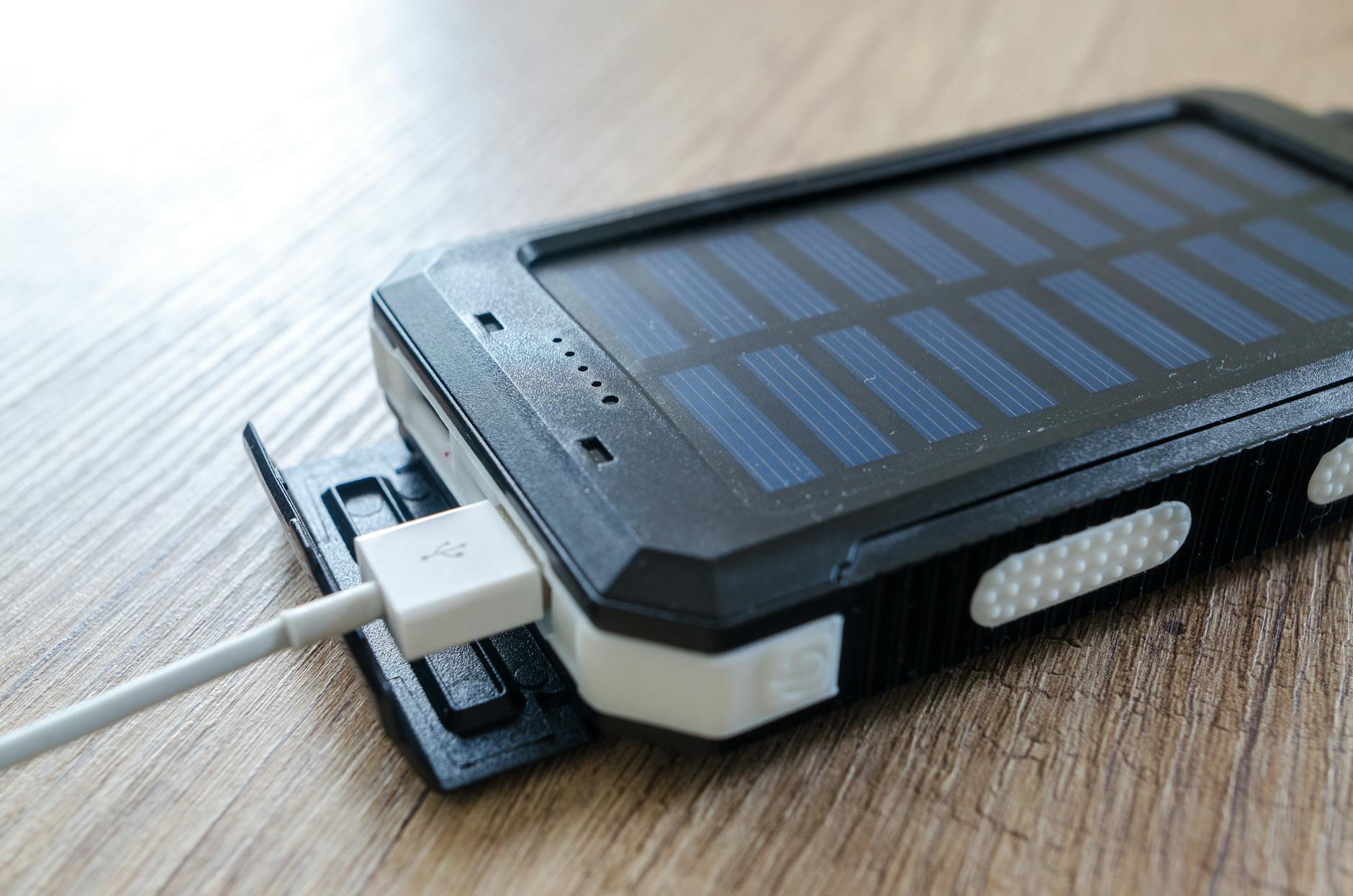 Photo by Lukas Blazek / Pexels
Most power banks cannot charge a laptop — they output 5V at 2A (10W), far short of the 45-100W that modern laptops require. The best power banks for laptops output 65-100W via USB-C Power Delivery (PD) and carry at least 20,000mAh capacity to provide meaningful battery extension. We compared five laptop power banks on output wattage, capacity, whether they include an AC outlet, charge speed, and portability for travel and remote work scenarios.
What Wattage Does a Laptop Power Bank Need?
MacBook Air M-series requires 30-45W. Most Windows laptops require 45-65W. Gaming laptops require 100-230W (beyond most power banks). At 100W output, a 20,000mAh power bank delivers approximately 60-70 Wh of usable energy — roughly 0.5-1 full laptop battery charge depending on laptop battery size. At 65W output, charge times are slower but capacity is the same. We compared output wattage specs, real-world MacBook and PC laptop compatibility, and weight-to-capacity ratios for travel scenarios.
Price comparison: Budget laptop power banks ($55-90) offer 45-65W output adequate for most thin-and-light laptops. Mid-range ($90-130) adds 100W output and larger capacity. Premium ($200-350) brings AC outlet compatibility for laptops that only charge via barrel connector rather than USB-C.
Where Baseus Wins for Most Laptop Users
Baseus 100W 20000mAh is the most complete laptop power bank at a reasonable price — 100W USB-C PD output charges MacBook Pro and most Windows laptops at full speed, and 20,000mAh capacity provides meaningful charge for a full work session away from outlets. The simultaneous charging via USB-C and USB-A means you can charge a laptop and phone simultaneously from a single device.
Where AC Outlet Power Banks Win
The Omars 80W AC Power Bank is the pick for laptop users whose laptops use a barrel connector charger rather than USB-C — the built-in AC outlet accepts the standard laptop brick charger without any adapter. It is heavier than USB-C-only power banks but eliminates compatibility concerns for older laptop models.
Get This Power Bank If...
Get the Baseus 100W 20000mAh if your laptop charges via USB-C and you want the best combination of output wattage, capacity, and price for daily remote work.
Get the Omars 80W AC if your laptop charges via a barrel connector charger that does not use USB-C — the AC outlet handles any laptop charging adapter.
Get the Goal Zero Yeti 200X if you need extended power for multiple devices over multiple days — a power station rather than a traditional power bank.
Watch Before You Buy



“Baseus 100W 20000mAh USB-C PD charges MacBook and Windows laptops at full speed with capacity for a meaningful remote work session away from outlets.”
See Today’s Price →What we like
- 100W output charges laptops and MacBooks
- 20000mAh capacity for 3-4 phone charges
- 2 USB-C and 2 USB-A ports simultaneously
- TSA-approved for carry-on
Watch out for
- Heavier than phone-only power banks
- Slower self-recharge time
- Premium price for high-wattage output
Read Full Analysis
The Baseus 100W 20000mAh is the rank-1 laptop charger on this page for a straightforward reason: 100W USB-C output is enough to charge any USB-C laptop at full speed, including the 96W MacBook Pro and the 90W Dell gaming ultrabook. Most competitor power banks top out at 65W USB-C, which throttles or barely charges power-hungry laptops. At 20,000mAh the capacity delivers approximately one full laptop charge for a 60Wh-battery ultrabook, plus 3-4 additional phone charges. Two USB-C and two USB-A output ports allow simultaneous charging of four devices — laptop, tablet, phone, and earbuds — from a single bank. TSA carry-on approved at under 100Wh. It's the only product in this lineup with a confirmed price below the Goal Zero Yeti. Against the Anker PowerCore Elite III (rank 2, unconfirmed price), the Baseus wins on peak output wattage (100W vs 65W) and confirmed availability; the Anker wins on stated capacity (26,800mAh vs 20,000mAh). For MacBook Pro users or anyone with a 90W+ charging laptop, the 100W ceiling is the differentiator that makes the Baseus the correct choice. Buy the Baseus 100W 20000mAh as the primary laptop travel bank if your laptop charges at 65W or above — it's the most capable USB-C laptop charger in this lineup under $100. The four-port simultaneous output covers the typical traveler's full device set from one bank. The only reason to choose an alternative is if you need more than one laptop charge cycle from a single bank load.
Skip this if: Your laptop uses a barrel connector — Baseus charges via USB-C only, not AC outlet.
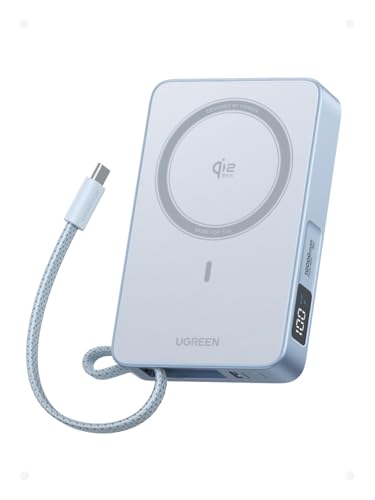
“UGREEN MagFlow 10000mAh is the lightest option — adequate for lightweight laptop top-off charging during shorter work sessions without the bulk of 20000mAh units.”
See Today’s Price →What we like
- MagSafe-compatible magnetic alignment locks onto compatible iPhone cases and positions the wireless charging coil precisely
- 10,000mAh capacity delivers two to three full smartphone charges without hitting carry-on battery limits for air travel
- 15W wireless output charges compatible devices at full wireless speed without routing a cable
- USB-C pass-through allows the bank to top off a second device while being refilled simultaneously
Watch out for
- Advanced configuration may require technical knowledge to fully optimize
- Performance may lag behind premium models for intensive workloads
Read Full Analysis
The UGREEN MagFlow 10000mAh occupies a different niche than the other products on this laptop charging page: it's a MagSafe-compatible wireless charging bank designed primarily for iPhone users, placed here for its compact footprint and USB-C pass-through capability. The MagSafe magnetic alignment locks onto compatible iPhone cases and positions the wireless charging coil precisely for full 15W wireless output — more reliable alignment than flat Qi pads that can drift off-coil. USB-C pass-through allows a second device to charge via cable while the bank itself is being refilled. At 10,000mAh it carries less capacity than every other option on this page, and its 15W maximum wireless output cannot charge any laptop. It sits at the mid-range of this page's pricing despite offering the least laptop-relevant capability. Its value proposition is compact size and cable-free iPhone wireless charging — useful for commuters who want one carry item that charges their phone wirelessly and provides USB-C output, but not for the buyer who primarily needs laptop backup power. That buyer should look at the Baseus 100W or Anker PowerCore Elite III instead. The UGREEN MagFlow is worth considering if wireless MagSafe iPhone charging in a compact form factor is the primary need and occasional USB-C connectivity is sufficient for everything else you carry. It does not charge laptops — if that's the use case, the Baseus 100W at $89.99 or Anker Elite III are the correct products for this page.
Skip this if: You need a full laptop battery charge — 10000mAh provides only a partial charge for most laptops.
“Goal Zero Yeti 200X power station provides multi-device, multi-day power for remote work trips, camping, and emergency backup far beyond what standard power banks offer.”
See Today’s Price →What we like
- Lightweight 5 lbs for portable power
- Charges via solar, car, or wall outlet
- USB-C PD 45W output for laptops
- Compatible with Goal Zero Nomad solar panels
Watch out for
- 187Wh is limited for high-wattage appliances
- Single AC outlet only
Read Full Analysis
The Goal Zero Yeti 200X is a portable power station rather than a conventional power bank — a 187Wh unit weighing 5 lbs that recharges from solar panels, a 12V car outlet, or a wall outlet, with USB-C PD at 45W, USB-A, and 6mm DC output ports. The 187Wh capacity stores roughly ten times more energy than a standard 20,000mAh USB bank, enabling multi-day off-grid use when paired with Goal Zero's Nomad solar panel series. For extended outdoor trips — overland travel, backcountry camping, van life — the Yeti 200X functions as a basecamp power hub: keeping laptops, tablets, camera batteries, and phones charged through solar recharging during the day. The 5 lb weight means it travels in a bag or backpack rather than a pocket. It costs four times more than the Baseus 100W and significantly more than the Anker Elite III. Against those USB-C banks, the Yeti 200X competes at a different scale: where the Baseus or Anker give you one or two laptop charges, the Yeti 200X with a solar panel attachment gives you indefinite power as long as the sun is available. The trade-off is size, weight, and the investment required in the panel ecosystem. The Goal Zero Yeti 200X is the right investment for users who need self-sustaining power across multi-day off-grid trips — van camping, remote expeditions, or emergency preparedness beyond a single day. For standard travel with hotel and airport outlet access, the Baseus 100W at $89.99 serves the laptop charging use case for $260 less with none of the extra weight.
Skip this if: You need daily portable commuter power — the Yeti 200X is heavy and better suited for base camp than briefcase use.
Frequently Asked Questions
What wattage power bank do I need for a laptop?
Can a 20000mAh power bank charge a laptop?
Does the Baseus power bank work with MacBook?
Can I bring a 20000mAh power bank on a plane?
What is USB-C Power Delivery and do I need it for laptop charging?
Can I charge a gaming laptop with a power bank?
How We Chose These Products
We compare each product’s Amazon listing, the manufacturer’s published specifications and Amazon customer ratings, shown with their review counts as Amazon’s data, and rank the products on how well they answer this page’s question. We do not test products in hand and we do not run our own analysis of review text. A publication or expert is named only where we cite its published findings about that product. No manufacturer paid for placement on this page.
A price appears only when Amazon’s API supplied it at a recent daily refresh, with the date and time beside it, and is withdrawn at 4 AM Central on the day after it turns 24 hours old; otherwise use “Check price on Amazon” for the live price. Read our full methodology →