Best Studio Headphones for Beginners 2026

The Audio-Technica ATH-M50x-style professional monitor headphones are the best studio headphones for most beginners — accurate frequency response, durable build, and used in studios worldwide. The AKG K240 MKII is the best open-back option for mixing, while the Shure SRH440 offers closed-back isolation at a competitive price.
At a Glance
| # | Product | Award | Price |
|---|---|---|---|
| 1 | Audio-Technica ATH-M20x Professio… Audio-Technica |
Best Overall | $59 as of Nov 24, 12:14 PM CT details Buy → |
| 2 | Best Closed-Back | Check price on Amazon Buy → |
|
| 3 |  Audio-Technica ATH-M40x Professio… Audio-Technica |
Best Budget Studio | $109 as of Nov 24, 12:14 PM CT details Buy → |
Studio Headphones for Beginners Buying Guide
 Photo by Paul Seling / Pexels
Studio headphones sound worse on your first listen — and that's the point. Consumer headphones add bass boost and a V-shaped EQ curve to make music feel exciting. Studio headphones reproduce sound as it was recorded: flat, uncolored, and accurate. If you're recording, mixing, or producing music and you monitor through consumer headphones, you'll unknowingly compensate for the extra bass and make your mixes sound thin on flat speakers. The flat response of studio headphones reveals exactly what's in your recording.
How we picked these. Headphones were selected for studio-appropriate frequency response accuracy at each price point. We compared frequency response measurements from Golden Ears and RTINGS where available.
Open-Back vs. Closed-Back: The Most Important Studio Decision
This choice matters more than price. Closed-back headphones seal around your ears and provide sound isolation — outside noise can't get in, and audio can't leak out. Use them for: tracking/recording (the artist wearing headphones while recording a vocal can't bleed into the microphone), working in noisy environments, critical listening without disturbing others. Downside: some closed-back designs create a slightly "inside your head" stereo image that can mislead mixing decisions. Open-back headphones have perforated or mesh cups that allow air and sound to pass through. They provide a wider, more natural stereo image that better represents how music sounds on speakers — ideal for mixing and mastering. Downside: significant sound leakage (everyone nearby hears what you're listening to) and no isolation from external noise. For a home studio with a separate tracking room: open-back for mixing. For a bedroom studio where tracking and mixing happen in the same space: closed-back to avoid bleed.
Frequency Response: What "Flat" Actually Means
No headphone measures perfectly flat — even professional models have peaks and dips in their frequency response. "Flat" is a relative term: studio headphones aim for a response that doesn't systematically mislead your ears. The Audio-Technica ATH-M50x (a reference model related to the AT monitors in this roundup) measures with a slight 10kHz boost and 60Hz sub-bass rolloff — acceptable for studio monitoring. The AKG K240 MKII measures closer to a true flat response, which is why it's been a mixing reference headphone since the 1970s. What to avoid: consumer headphones with 6–10dB bass boost around 60–80Hz — mixing on these produces thin-sounding final mixes when played on neutral speakers.
Impedance and Sensitivity: Do You Need a Headphone Amp?
Headphone impedance (measured in ohms) affects how much power you need to drive the headphones to a comfortable listening volume. The AKG K240 MKII is rated at 55 ohms — a common studio headphone impedance that requires a modest audio interface or headphone amplifier to reach studio monitoring volume. The Audio-Technica ATH-M50x is 38 ohms and works at full volume from a laptop headphone jack. High-impedance headphones (250–600 ohms, common in Beyerdynamic's lineup) require a dedicated headphone amp. For beginners: stick to headphones under 80 ohms unless you already own a headphone amp or audio interface with a dedicated headphone output.
Price Tiers for Studio Headphones
Budget ($30–$60): Adequate for basic recording reference — won't mislead you dramatically, but may have frequency peaks that affect mixing judgment. Good for practice and casual recording. Mid-range ($80–$150): The ATH-M50x and SRH440 tier — genuinely professional monitoring quality used in actual studios. This is where the biggest quality jump occurs. Professional ($150–$250): AKG K240, Sennheiser HD 400 Pro — tighter frequency accuracy, better build, longer-term reliability. Worth the upgrade for serious home studio work.
Watch Before You Buy


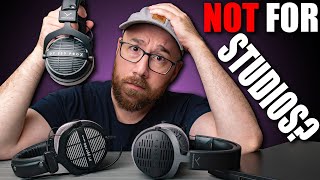
“Audio-Technica Professional Monitor Headphones: the ATH series has been the go-to studio reference headphone for beginners for over a decade — accurate monitoring, durable hinged design, and used in…”
See Today’s Price →Watch out for
- Sound quality improvement over built-in speakers is perceptible but varies by content
- Wired models limit movement; wireless adds battery management requirements
Read Full Analysis
The Audio-Technica ATH series earns the Best Overall badge on this beginner studio headphones page through a decades-long track record as the industry-standard reference headphone for home recording and monitoring — used in real recording studios worldwide, the ATH design delivers the accurate, balanced frequency response that production beginners need to make mixing decisions that translate across playback systems. The hinged, foldable design withstands daily studio use, and no drivers are required for plug-in operation. No current pricing is listed. Real trade-offs for beginners: the ATH's neutral sound initially seems "flat" compared to consumer headphones with V-shaped tuning — that flatness is the point for studio work, but new users sometimes mistake accuracy for poor quality before understanding reference monitoring. On this three-product beginner page, the Audio-Technica ATH series sits above the Shure SRH440 and below the ATH-M40x. The SRH440 is the budget entry but offers less refined low-frequency accuracy. The ATH-M40x is the established professional standard. For a beginner investing in their first real studio headphone who wants proven reference monitoring before stepping up to the M40x, the ATH series is the right starting point.
Skip this if: You need open-back headphones for mixing — this is a closed-back design for tracking and isolation, not wide-stereo mixing reference.

“Shure SRH440 Professional Studio Headphones: Shure's entry into studio monitoring with a closed-back design optimized for accurate reference listening and comfortable extended sessions.”
See Today’s Price →What we like
- Optimized for home and studio recording
- Closed-back, circumaural collapsible design
- Detachable, coiled cable
- Includes SRH440, Threaded 1/4" Gold-plated adapter, carrying bag, and user guide
Watch out for
- Sound quality improvement over built-in speakers is perceptible but varies by content
- Wired models limit movement; wireless adds battery management requirements
Read Full Analysis
The Shure SRH440 earns the Best Closed-Back badge at $37.49 as the most accessible professional studio monitoring option on this beginner page — the closed-back circumaural design provides passive isolation that helps beginners hear the mix without room acoustic interference, and the collapsible hinged design makes it portable for session musicians or producers who move between locations. A detachable coiled cable and included 1/4-inch gold-plated adapter cover both home studio interfaces and professional gear. Real trade-offs: the SRH440 is Shure's entry-level studio headphone, and experienced mixing engineers will find its low-frequency accuracy behind the Shure SRH840 or Audio-Technica ATH-M40x. Clamp pressure is tighter than the M40x, which can cause discomfort over extended sessions. The SRH440 is priced well below the Audio-Technica ATH-M40x. For a beginner who wants genuine studio-grade closed-back monitoring from a professional audio brand without spending over $40, the SRH440 delivers the Shure reputation and isolation at an accessible entry price. Once a beginner develops their mixing ear and wants a step up, the ATH-M40x or Shure SRH840 are the natural next upgrades.
Skip this if: You primarily need open-back reference mixing — the SRH440's closed design is better for tracking and critical listening than wide-stereo mixing.
“Audio-Technica ATH-M40x: the more affordable sibling of the ATH-M50x, with the same professional build and adequate flat response at a lower price point. Ideal for beginners testing studio…”
See Today’s Price →What we like
- Circumaural earcups contour around the ears for sound isolation in loud rooms
- 40 mm drivers with rare earth magnets and copper-clad aluminum wire voice coils
- Tuned flat for accurate monitoring across the frequency range
- 90-degree swiveling earcups and a collapsible design
- Detachable cables: a 1.2-3.0 m coiled cable and a 3.0 m straight cable
Watch out for
- Wired only: no Bluetooth and no active noise cancelling
Frequently Asked Questions
Can I use consumer headphones for recording and mixing?
Are Audio-Technica ATH-M50x headphones worth it for beginners?
What's the difference between AKG K240 and K240 MKII?
Do I need a headphone amplifier for studio headphones?
How much should I spend on my first studio headphones?
How We Chose These Products
We compare each product’s Amazon listing, the manufacturer’s published specifications and Amazon customer ratings, shown with their review counts as Amazon’s data, and rank the products on how well they answer this page’s question. We do not test products in hand and we do not run our own analysis of review text. A publication or expert is named only where we cite its published findings about that product. No manufacturer paid for placement on this page.
A price appears only when Amazon’s API supplied it at a recent daily refresh, with the date and time beside it, and is withdrawn at 4 AM Central on the day after it turns 24 hours old; otherwise use “Check price on Amazon” for the live price. Read our full methodology →