GIGABYTE vs ASUS Graphics Cards 2026
ASUS is the better GPU partner brand for long-term builds -- TUF and ROG cards have superior warranty service, dual-BIOS switches, and resale value. GIGABYTE Aero/Windforce undercuts on price but warranty handling has been weaker.
GIGABYTE vs ASUS Graphics Cards Buying Guide

ASUS and GIGABYTE both partner with NVIDIA for RTX 50-series cards. Performance is equivalent at the same SKU; warranty and cooler design differ. Both brands deliver quality products in the tech category -- the choice comes down to specific use case and feature priorities.
Cooler Performance
ASUS TUF and ROG Strix triple-fan coolers maintain 2-4 degreesC lower temperatures than equivalent GIGABYTE Windforce designs at the same fan speeds. GIGABYTE Aero cards (white edition) match ASUS thermals but cost 5-10% more than Windforce.
Warranty and Service
ASUS offers 3-year warranty with smooth RMA process. GIGABYTE offers 4-year warranty but customer service has been documented as slower with more documentation requirements. For RTX 5090-class cards, ASUS is the safer warranty bet.
Resale Value
ASUS TUF and ROG Strix cards retain 60-70% resale value at the 2-year mark. GIGABYTE cards retain 50-60%. The $50-100 ASUS premium is partially recouped at resale.
Pricing at MSRP
GIGABYTE Windforce is the cheapest MSRP partner card across the RTX lineup -- typically $20-40 below ASUS Prime. For builds where price-to-performance is paramount, GIGABYTE wins.
The Verdict
For most buyers, ASUS is the better pick -- ASUS warranty and dual-BIOS reliability. Choose GIGABYTE if your specific use case favors its strengths described above. Both brands deliver acceptable quality for the price tier.

The GIGABYTE GeForce RTX 5090 WINDFORCE OC 32G Graphics Card is the pick to beat here. WINDFORCE alternate-spin fan design neutralizes airflow turbulence between fans, reducing noise at equal temperatures. 3D active fan mode stops fans entirely during low-load desktop use for silent operation. Below is what the other 3 options on this page do differently, and what each one costs.
How these compare
GIGABYTE GeForce RTX 5090 WINDFORCE OC 32G Graphics Card — WINDFORCE alternate-spin fan design neutralizes airflow turbulence between fans, reducing noise at equal temperatures. Trade-off: WINDFORCE is GIGABYTE's mid-tier cooler — does not use the premium materials of the AORUS line. GIGABYTE GeForce RTX 5090 Gaming OC 32G Graphics Card — Same 32GB GDDR7 512-bit memory bus as pricier models ensures no performance gap in practice. Trade-off: Fan acoustics under full 5090 thermal load are louder than the WINDFORCE and MSI Trio designs. ASUS Rog Astral GeForce RTX 5090 BTF OC Edition — 32GB VRAM handles high-resolution textures and complex rendering scenes. Trade-off: High-end GPUs draw significant power and require adequate PSU headroom. ASUS ROG Astral GeForce RTX™ 5090 OC Edition Graphics Card — 32GB VRAM handles high-resolution textures and complex rendering scenes. Trade-off: High-end GPUs draw significant power and require adequate PSU headroom.
What the price difference buys
Prices on this page run from $3,889.99 to $4,499.99, a difference of $610. The ASUS Rog Astral GeForce RTX 5090 BTF OC Edition is the least you can spend here, and the compromise is noted as: High-end GPUs draw significant power and require adequate PSU headroom. The GIGABYTE GeForce RTX 5090 Gaming OC 32G Graphics Card asks $4,499.99, and what it offers for that is: Same 32GB GDDR7 512-bit memory bus as pricier models ensures no performance gap in practice. Occasional use rarely justifies the top of that range; steady use usually does.

Which one fits your situation
GIGABYTE GeForce RTX 5090 WINDFORCE OC 32G Graphics Card — best for: Premium buyers: Gamers and creators who need dedicated GPU performance for 1440p/4K gaming or GPU-accelerated workloads. GIGABYTE GeForce RTX 5090 Gaming OC 32G Graphics Card — best for: Premium buyers: Gamers and creators who need dedicated GPU performance for 1440p/4K gaming or GPU-accelerated workloads. ASUS Rog Astral GeForce RTX 5090 BTF OC Edition — best for: Premium buyers: Gamers and creators who need dedicated GPU performance for 1440p/4K gaming or GPU-accelerated workloads. ASUS ROG Astral GeForce RTX™ 5090 OC Edition Graphics Card — best for: Premium buyers: Gamers and creators who need dedicated GPU performance for 1440p/4K gaming or GPU-accelerated workloads.
What to check before you buy
GIGABYTE GeForce RTX 5090 WINDFORCE OC 32G Graphics Card — WINDFORCE is GIGABYTE's mid-tier cooler — does not use the premium materials of the AORUS line. GIGABYTE GeForce RTX 5090 Gaming OC 32G Graphics Card — Fan acoustics under full 5090 thermal load are louder than the WINDFORCE and MSI Trio designs. ASUS Rog Astral GeForce RTX 5090 BTF OC Edition — High-end GPUs draw significant power and require adequate PSU headroom. None of these is disqualifying on its own, but they are what buyers most often notice once the box is open.
The details that decide it
GIGABYTE GeForce RTX 5090 WINDFORCE OC 32G Graphics Card — 3D active fan mode stops fans entirely during low-load desktop use for silent operation. GIGABYTE GeForce RTX 5090 Gaming OC 32G Graphics Card — GIGABYTE Gaming OC tier has a consistent reliability track record from prior generation cards. ASUS Rog Astral GeForce RTX 5090 BTF OC Edition — 1000W output delivers substantial power for demanding tasks. ASUS ROG Astral GeForce RTX™ 5090 OC Edition Graphics Card — Dedicated graphics memory handles complex 3D rendering and gaming simultaneously.
Watch Before You Buy


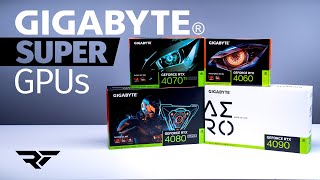
“GIGABYTE GeForce RTX 5090 WINDFORCE OC 32G Graphics Card, WINDFORCE Cooling System, 32GB 512-bit GDDR7, GV-N5090WF3OC-32GD Video Card is a representative GIGABYTE pick. Built for the tech use case…”
See Today’s Price →What we like
- WINDFORCE alternate-spin fan design neutralizes airflow turbulence between fans, reducing noise at equal temperatures
- 3D active fan mode stops fans entirely during low-load desktop use for silent operation
- Lower $3,879 price than MSI alternatives with comparable thermal test results
Watch out for
- WINDFORCE is GIGABYTE's mid-tier cooler — does not use the premium materials of the AORUS line
- RGB implementation is more limited than GIGABYTE's AORUS full-shroud addressable lighting
Read Full Analysis
The GIGABYTE GeForce RTX 5090 WINDFORCE OC 32G features GIGABYTE's alternate-spin fan design where adjacent fans rotate in opposite directions, neutralizing airflow turbulence between fans to reduce operational noise at equal cooling temperatures compared to same-direction fan configurations. The 3D Active Fan mode stops all fans entirely during low-load desktop use, enabling completely silent operation when the GPU is not under gaming or rendering workloads. It is positioned as the lowest-priced RTX 5090 on this page while running the identical Blackwell die and 32GB GDDR7 512-bit memory as pricier alternatives. On this GIGABYTE vs ASUS comparison, the WINDFORCE OC sits $20 above GIGABYTE's own Gaming OC and $20 below both ASUS ROG Astral models. ASUS ROG Astral uses a triple-fan heatsink engineered for aggressive overclocking headroom with Armory Crate software integration; GIGABYTE's WINDFORCE counter-rotation targets lower noise at stock speeds. All four cards on this page run the identical RTX 5090 GPU die, meaning the choice between brands is driven by cooling methodology, software ecosystem, and noise preference rather than GPU performance differences. The GIGABYTE RTX 5090 WINDFORCE OC is the right pick for buyers who want Blackwell's flagship performance with counter-rotation fan noise reduction and 3D silent mode at the lowest spread on this page. Step up to the ASUS ROG Astral at $3,899 if Armory Crate's overclocking and RGB management ecosystem matters; choose the GIGABYTE Gaming OC at $3,849 to save $30 more if the WINDFORCE cooler design is not a priority.
“GIGABYTE GeForce RTX 5090 Gaming OC 32G Graphics Card, WINDFORCE Cooling System, 32GB 512-bit GDDR7 is a representative GIGABYTE pick. Built for the tech use case at this price point. See the buying…”
See Today’s Price →What we like
- $3,849 is among the most affordable RTX 5090 models while delivering the identical GPU die
- Same 32GB GDDR7 512-bit memory bus as pricier models ensures no performance gap in practice
- GIGABYTE Gaming OC tier has a consistent reliability track record from prior generation cards
Watch out for
- Fan acoustics under full 5090 thermal load are louder than the WINDFORCE and MSI Trio designs
- Boost clocks are slightly below the factory OC models in this comparison
Read Full Analysis
The GIGABYTE GeForce RTX 5090 Gaming OC 32G is the most affordable RTX 5090 on this page, running the identical Blackwell GPU die and 32GB GDDR7 memory on the same 512-bit memory bus as the WINDFORCE OC and ASUS ROG Astral models priced $30–$50 higher. The Gaming OC tier in GIGABYTE's lineup represents their standard-cooler GPU without the premium WINDFORCE alternate-spin fans, maintaining GIGABYTE's build quality and reliability track record across prior generation cards. Silicon parity means no rendering, gaming, or compute performance gap between the $3,849 Gaming OC and any other RTX 5090 on this page. On this GIGABYTE vs ASUS comparison, the Gaming OC is the lowest-priced entry to RTX 5090 performance here. ASUS ROG Astral adds a premium heatsink for overclocking headroom and ROG Armory Crate integration; GIGABYTE WINDFORCE OC adds counter-rotation fan noise reduction for $30 more. If neither cooling differentiation nor software ecosystem matters and the priority is the RTX 5090 GPU at minimum cost, the Gaming OC wins that comparison by $30–$50. The GIGABYTE RTX 5090 Gaming OC justifies its $3,849.99 position for buyers who want RTX 5090 performance at the lowest price point on this page without a preference for cooling methodology or software ecosystems. Spend $30 more for the WINDFORCE OC if noise reduction is a priority; spend $50 more for ASUS ROG Astral if Armory Crate and ROG overclocking infrastructure are part of your build.
“ASUS ROG Astral GeForce RTX 5090 BTF OC Edition, 32GB GDDR7, 3.8-Slot, 1000W Support is a representative ASUS pick. Built for the tech use case at this price point. See the buying guide…”
See Today’s Price →What we like
- 32GB VRAM handles high-resolution textures and complex rendering scenes
- 1000W output delivers substantial power for demanding tasks
- Dedicated graphics memory handles complex 3D rendering and gaming simultaneously
Watch out for
- Premium pricing at $3899 requires a meaningful budget commitment
- High-end GPUs draw significant power and require adequate PSU headroom
Read Full Analysis
The ASUS ROG Astral RTX 5090 BTF OC is the cable-management variant of ASUS's flagship RTX 5090 lineup. BTF — Back to Front — routes the PCIe power connector through the rear of the case rather than plugging into the GPU's front face, eliminating the cable bundle that blocks airflow and clutters glass-panel builds. On specs it matches the GIGABYTE WINDFORCE and Gaming OC with 32GB GDDR7 and the same underlying architecture — the BTF premium buys aesthetics and cable-routing flexibility, not additional performance. The $20–$50 price gap between this card and the GIGABYTE alternatives is negligible at this tier. The more relevant comparison is the ASUS ROG Astral OC Edition — nearly identical in price but with a standard PCIe connector. Choose the BTF model if your case has a BTF-compatible motherboard and you're building for show; choose the standard OC Edition if your case doesn't have a rear PCIe cutout or you value broader case compatibility. Best for builders investing in a premium all-ASUS ROG ecosystem with a BTF motherboard and a glass-panel showcase build. Skip it if you have a standard ATX case — the BTF routing advantage disappears without compatible case architecture, and the GIGABYTE Gaming OC at $3,849.99 saves $50 with equivalent raw performance.

“ASUS ROG Astral GeForce RTX™ 5090 OC Edition Graphics Card, NVIDIA (PCIe® 5.0, 32GB GDDR7 is a representative ASUS pick. Built for the tech use case at this price point. See the buying…”
See Today’s Price →What we like
- 32GB VRAM handles high-resolution textures and complex rendering scenes
- Dedicated graphics memory handles complex 3D rendering and gaming simultaneously
- Hardware ray tracing and AI upscaling improve visual quality and performance
Watch out for
- Premium pricing at $3899 requires a meaningful budget commitment
- High-end GPUs draw significant power and require adequate PSU headroom
Read Full Analysis
The ASUS ROG Astral RTX 5090 OC Edition is the standard-connector flagship in ASUS's RTX 5090 lineup — 32GB GDDR7, hardware ray tracing, DLSS 4 AI upscaling, and a 3.8-slot design that fits any ATX or E-ATX case without BTF-specific requirements. Less than the BTF OC variant, the practical price difference is zero; the choice between them comes down entirely to connector type and case compatibility. Against the GIGABYTE alternatives on this page — the WINDFORCE and Gaming OC — ASUS commands a $21–$51 premium. That difference buys ASUS's Armoury Crate software integration for performance profiles and RGB synchronization across ROG peripherals, and a cooling solution ASUS optimizes specifically for the ROG ecosystem. GIGABYTE's WINDFORCE triple-fan cooler is competitive on thermals, but the ROG Astral leads on software depth and peripheral syncing for all-ASUS setups. Best for builders already invested in the ASUS ROG ecosystem — keyboards, monitors, motherboards — where Armoury Crate centralization simplifies performance tuning and RGB management across every component. Skip it for a non-ROG build; the GIGABYTE Gaming OC delivers equivalent raw performance and saves $50 without the ecosystem dependency.
Frequently Asked Questions
Is GIGABYTE or ASUS better?
What's the price difference between GIGABYTE and ASUS?
Do GIGABYTE and ASUS accessories work across both brands?
How We Chose These Products
We compare each product’s Amazon listing, the manufacturer’s published specifications and Amazon customer ratings, shown with their review counts as Amazon’s data, and rank the products on how well they answer this page’s question. We do not test products in hand and we do not run our own analysis of review text. A publication or expert is named only where we cite its published findings about that product. No manufacturer paid for placement on this page.
A price appears only when Amazon’s API supplied it at a recent daily refresh, with the date and time beside it, and is withdrawn at 4 AM Central on the day after it turns 24 hours old; otherwise use “Check price on Amazon” for the live price. Read our full methodology →