How to Choose a Portable Monitor (2026 Buying Guide)
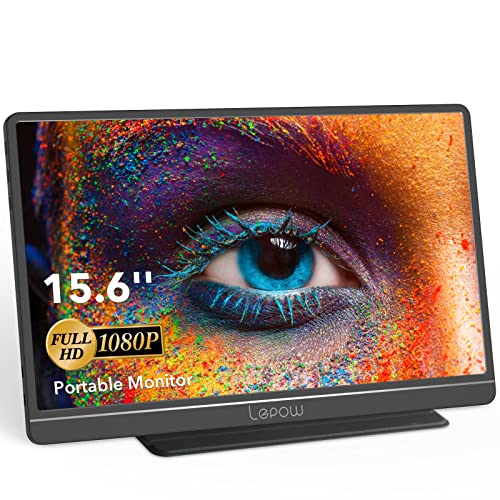
The Lepow 15.6-inch USB-C Monitor is the best portable monitor for most buyers — 1080p IPS, USB-C single-cable setup, included smart case stand, and under 2 lbs. For sharper resolution, the LG Gram Plus View 16-inch WQXGA is the premium pick for design work.
How to Choose a Portable Monitor Buying Guide
 Photo by cottonbro studio / Pexels
Portable monitors are a genuinely useful productivity tool for anyone who travels with a laptop or works from multiple locations. A $79.99 Lepow 15.6-inch 1080p monitor plugs into USB-C and gives you a second screen anywhere. A $250 LG Gram Plus View 16-inch adds WQXGA resolution and a sharper panel for designers and editors who need color accuracy on the road. The decisions that matter: connectivity (USB-C vs. HDMI), resolution, size and weight, and whether your laptop can actually power the monitor without an external adapter. This guide explains each trade-off.
Connectivity: USB-C Power Delivery vs. HDMI
The biggest practical difference between portable monitors is how they connect. USB-C monitors (Lepow, ASUS ZenScreen) receive both video signal and power through a single USB-C cable — if your laptop has a USB-C port that supports DisplayPort Alt Mode (most MacBooks and modern Windows laptops do), you can run the monitor with zero extra cables. This is the setup that actually makes portable monitors work cleanly on a coffee shop table. HDMI ports on portable monitors are useful as a fallback for devices that don't support USB-C video output, but HDMI carries video only — you still need a separate USB cable for power. Before buying, verify your laptop's USB-C port supports DisplayPort Alt Mode (not all USB-C ports do; Thunderbolt 3/4 and USB 3.2 Gen 2 with DP alt are the ones that do) or that the monitor comes with the correct adapter for your device.
How We Picked These
Monitors were selected to represent clear value at entry, mid-range, and premium tiers for different use cases.
Resolution and Size: What You Actually Need
15.6-inch 1080p portable monitors (Lepow, ASUS MB16, Viewsonic) are the volume tier — they're light (under 1.8 lbs), affordable ($70–$150), and match the screen size of a 15-inch laptop for a consistent dual-screen experience. 1080p at 15.6 inches is acceptable but noticeably lower density than a modern laptop's Retina or QHD panel — text can look slightly softer if you're used to a sharp display. 16-inch WQXGA (2560×1600) monitors like the LG Gram Plus View ($250) match the pixel density of premium laptops and look significantly sharper for design work, document editing, and photography. If your primary use is a second window for reference or communication, 1080p is fine. If you're doing design, video, or detailed visual work, the WQXGA resolution makes a visible difference. IPS panels are standard across portable monitors at all price tiers — the color accuracy and viewing angles are adequate for content creation, not just consumption.
Weight, Battery, and Real Portability
Most 15.6-inch portable monitors weigh 1.5–2 lbs, comparable to a thin paperback novel. They're genuinely portable. The LG Gram Plus View at 1.76 lbs is among the lightest 16-inch options available. Protective cases: some portable monitors come with a folding smart case that doubles as a stand — the Lepow includes one. Others require a separate sleeve or case. A monitor without a stand solution requires propping it against a surface, which limits placement flexibility. Check whether the included stand allows height and angle adjustment, or if it's fixed — the ASUS ZenScreen's built-in stand adjusts to multiple angles, which matters for ergonomic positioning at varying surfaces.
Common Mistakes to Avoid
Don't buy a USB-C portable monitor without confirming your laptop supports DisplayPort Alt Mode over USB-C. Plugging into a USB-C port that supports only charging or data transfer produces no image output — this is the most common buyer complaint. Don't expect portable monitors to match desktop IPS panel brightness outdoors; most reach 250–300 nits, which is readable indoors but washed out in direct sunlight. Avoid monitors with only Micro HDMI connectors if your cable bag is already complex — the Micro HDMI adapter is easy to forget. For travel specifically, prioritize the included case over resolution — a monitor without protection gets scratched in a laptop bag within weeks.
Watch Before You Buy


“The Lepow Portable Monitor 15.6 Inch 1080P 106 percent sRGB USB-C HDMI Speakers Smart Case features 15.6-inch fhd ips. Best suited for laptop users wanting portable second monitor for travel…”
See Today’s Price →What we like
- 15.6-inch FHD IPS
- USB-C
- 178-degree viewing angle
- 300 nits
- slim 0.3 inches
- 1.6 lbs
Watch out for
- 300 nits brightness struggles in bright office or outdoor settings
- No built-in battery — requires powered USB-C source
- Speakers are thin and functional at best
Read Full Analysis
As the Best Overall Value pick on a portable monitor buying guide, the Lepow 15.6-inch makes the case for the category without overcharging for it. It offers a 15.6-inch FHD IPS panel with 178-degree viewing angles, USB-C single-cable operation, and a 1.6-pound build that fits in most laptop bags — the core portable monitor feature set at the lowest price on this page. For anyone new to the portable monitor category and deciding whether the format fits their workflow, the Lepow is the lowest-risk discovery purchase. IPS panel technology provides color consistency across wide viewing angles, which matters for working beside rather than directly in front of the display. At 300 nits brightness, outdoor use and brightly lit office environments are genuine limitations — the panel washes out in high ambient light. No built-in battery means the monitor draws power from the connected laptop or a USB-C power bank, which adds to the laptop's battery drain during mobile sessions. Built-in speakers exist but deliver thin audio suitable only for narration and calls, not entertainment or music. Against the ASUS ZenScreen MB16AHV, the Lepow costs $76 less and gives up build quality, brightness, and software features — the ASUS earns its premium for frequent business travelers and demanding productivity setups. Against the LG Gram Plus View at $249.99 (3.4x the Lepow's price), the LG delivers WQXGA resolution and LG's premium panel engineering, a meaningful upgrade for design and content creation work. The Lepow is correctly positioned as the entry point: it identifies buyers who benefit from a portable monitor at minimal cost, with clear upgrade paths to the ASUS or LG when requirements or budget grow.

“The ASUS ZenScreen MB16AHV 16 Inch 1080P USB-C Portable Monitor features 16-inch fhd ips. Best suited for mobile workers wanting slim 16-inch usb-c portable monitor for productivity.”
See Today’s Price →What we like
- 15.6-inch 1080p IPS anti-glare screen
- Two USB-C ports and mini HDMI; one cable for power and video
- 10 mm thin with a fold-out kickstand and a tripod socket
- Flicker-free, low-blue-light eye care and a 3-year warranty
Watch out for
- About 0.9 kg (2 lb), heavier than the lightest panels here

“The LG Gram Plus View 16 Inch WQXGA Portable Monitor features 16-inch 2560x1600 ips. Best suited for power users wanting large sharp portable monitor for work or creative tasks.”
See Today’s Price →What we like
- 16-inch 2560x1600 IPS
- 99% sRGB
- USB-C
- ergonomic stand
- 350 nits
- ultra-slim 4.4mm
- 1.76 lbs
Watch out for
- Expensive for a portable monitor
- Heavier than 15.6-inch alternatives
- Stand has limited angle positions
Read Full Analysis
The LG Gram Plus View is the premium tier on a portable monitor page anchored by a $72 Lepow and $148 ASUS ZenScreen. It costs three times the Lepow — and the justification is the display specification: 2560x1600 WQXGA resolution on a 16-inch IPS panel with 99% sRGB coverage. Neither the Lepow nor the ASUS ZenScreen offers this combination. Both are 1080p at 16 inches. At this size, 1080p works for general productivity but feels constrained for design software, video editing timelines, or side-by-side document workflows. WQXGA at 16 inches is the inflection point where additional pixels translate into genuinely visible workspace rather than marginal clarity gains. The 4.4mm thickness and 1.76-pound weight make the Gram Plus View a practical daily carry rather than a desk-bound secondary monitor. For developers, designers, or consultants who travel and need a real secondary display rather than a cramped split-screen, the weight savings eliminate the "I'll leave the monitor at home today" trade-off. USB-C single-cable connection handles both video and power from compatible laptops, keeping cable management clean at a desk or coffee shop. The 99% sRGB coverage makes color-critical work — photo editing, UI design, presentation graphics — accurate on the road without the color drift that lower-gamut panels introduce. Creative professionals who calibrate displays for client deliverables will find the Gram Plus View usable for that purpose in a way the Lepow simply isn't. Where the LG loses the argument is for buyers whose portable monitor use is document review, spreadsheets, or streaming reference content. For those tasks, 1080p is sufficient, and the Lepow at $72 does the job without hesitation. The Gram Plus View is specifically right for the buyer doing high-density work away from the office — software development needing a documentation pane, design requiring accurate color rendering, or video editing where timeline density matters. For those buyers, the $177 premium over the Lepow is earned. For everyone else, the ASUS ZenScreen offers a defensible middle ground.
Frequently Asked Questions
Do portable monitors work with any laptop?
What resolution should I choose for a portable monitor?
Can a portable monitor be powered by USB-C without a wall adapter?
What is the difference between a portable monitor and a secondary laptop screen?
How heavy is a typical portable monitor?
Can I use two portable monitors with one laptop?
How We Chose These Products
We compare each product’s Amazon listing, the manufacturer’s published specifications and Amazon customer ratings, shown with their review counts as Amazon’s data, and rank the products on how well they answer this page’s question. We do not test products in hand and we do not run our own analysis of review text. A publication or expert is named only where we cite its published findings about that product. No manufacturer paid for placement on this page.
A price appears only when Amazon’s API supplied it at a recent daily refresh, with the date and time beside it, and is withdrawn at 4 AM Central on the day after it turns 24 hours old; otherwise use “Check price on Amazon” for the live price. Read our full methodology →