How to Choose a Soundbar (2026 Buying Guide)
Match soundbar to TV size: 32-inch TVs pair with a 2.0 or 2.1 bar under $150. 55-65-inch TVs benefit from a 3.1 or 5.1 system with a dedicated subwoofer. The Vizio SV510X includes a surround bundle — the right value pick for living rooms where placing separate surround speakers is feasible.
How to Choose a Soundbar Buying Guide
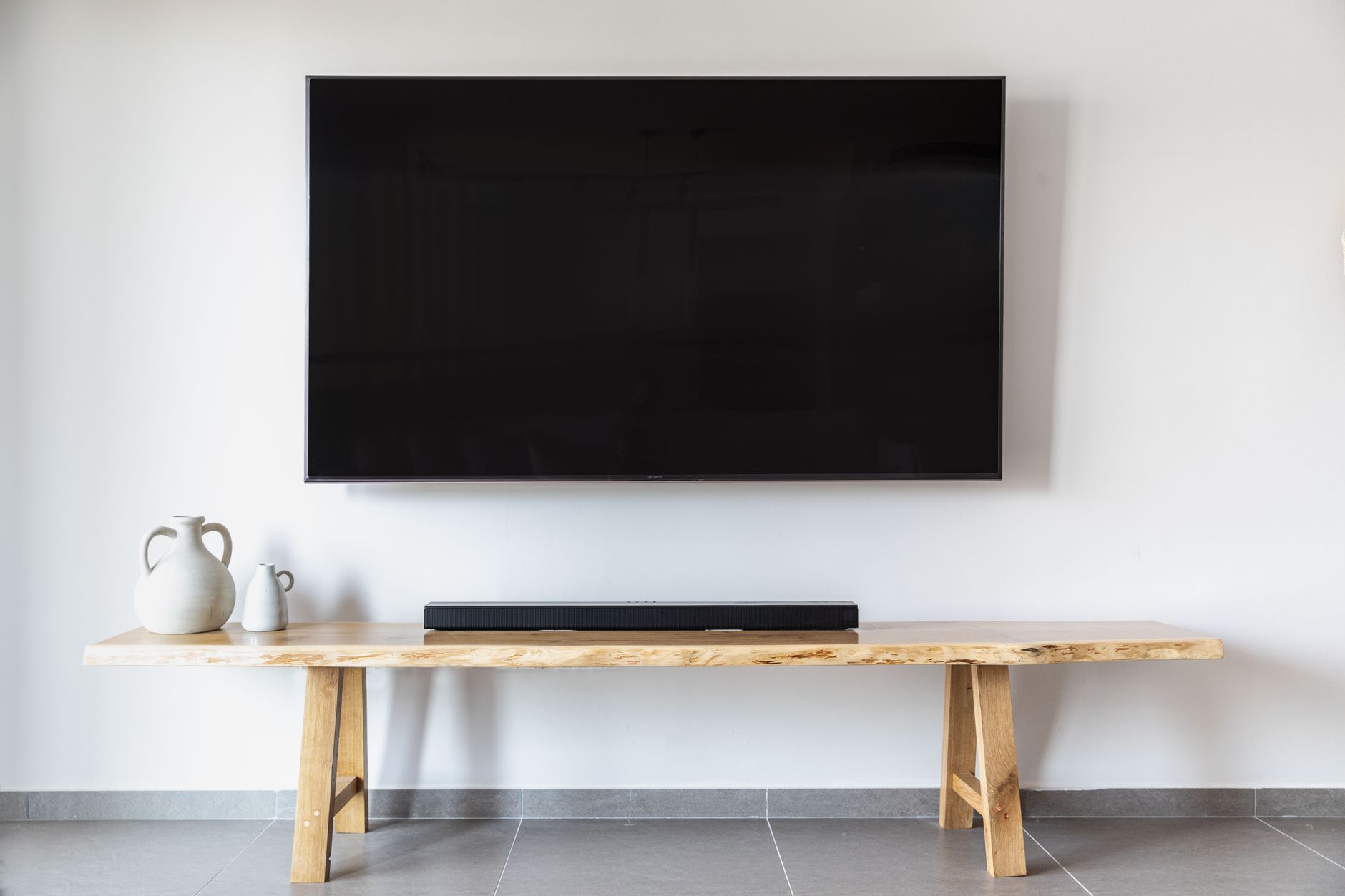 Photo by yair elgazar / Pexels
A soundbar improves TV audio more dramatically than any other single upgrade. Built-in TV speakers aim at the floor or backward and produce 5-15 watts of thin audio. A soundbar mounted at ear level with 60-200 watts produces dialogue you can understand without cranking the volume. The challenge is choosing the right format and feature set for your room and use case — buying a $400 Atmos soundbar for a 120 sq ft bedroom is as wrong as buying a $80 2-channel bar for a 500 sq ft living room.
Soundbar Formats: 2.0, 2.1, 3.1, 5.1, Dolby Atmos
The numbers describe speaker channels. A 2.0 bar has two channels (left and right) — good for dialogue clarity and basic stereo. A 2.1 adds a subwoofer for bass — the minimum for movies and music. A 3.1 adds a center channel dedicated to dialogue — significant improvement for anything voice-heavy. A 5.1 system adds rear speakers, approximating true surround. Dolby Atmos (also called 7.1.2 or 5.1.2) adds upward-firing drivers that bounce sound off the ceiling for height perception — the most immersive format available in a soundbar. Match format to use: for TV dialogue and news, a 2.0 or 2.1 handles it cleanly. For movies and streaming, 3.1 or 5.1 is worthwhile. For home theater experience with Atmos-encoded content on Disney+, Netflix, or 4K Blu-ray: a Dolby Atmos bar delivers a genuinely different experience. A $150 2.1 bar will not do Atmos content justice regardless of what the packaging implies.
Connectivity: HDMI ARC vs eARC vs Optical
How the soundbar connects to the TV determines what audio formats it can receive. Optical (TOSLINK) is the oldest standard — supports stereo and basic Dolby Digital 5.1, nothing higher. HDMI ARC (Audio Return Channel) supports compressed Dolby Digital and basic DTS — adequate for most soundbars under $200. HDMI eARC (Enhanced ARC) supports full-bandwidth lossless audio including Dolby TrueHD Atmos and DTS:X — required for getting the full quality from any Atmos soundbar. Rule: if you are buying a Dolby Atmos soundbar, verify both the soundbar and your TV have eARC. If your TV is more than 3-4 years old, it likely has ARC but not eARC — this limits Atmos performance even with a premium soundbar. Check your TV's HDMI port labels before buying.


Room Size and Placement
Soundbar output is measured in watts but the relevant spec is max SPL (sound pressure level) in dB at a given distance. For a room under 200 sq ft: a 2.0 or 2.1 bar with 60-80W is plenty — most single-bedroom or office setups. For a 200-400 sq ft living room: 80-150W with a dedicated subwoofer. For 400+ sq ft open-plan spaces: a 150W+ system with rear speakers or multiple units. Placement matters as much as output: a soundbar should be mounted directly below or above the TV at ear level when seated — not on a shelf below the TV stand where furniture blocks the sound. Height-channel Atmos content requires a ceiling within 9 feet to work — the upward-firing drivers bounce off the ceiling to simulate height. In rooms with vaulted or sloped ceilings, Atmos height effects are diminished or non-functional.
Subwoofer: Wired vs Wireless
Wired subwoofers are the budget option but a cable running across the floor defeats the visual cleanliness a soundbar offers. Most mid-range and premium soundbars include wireless subwoofers that communicate via 2.4GHz or proprietary RF — they can be placed anywhere within 30 feet without a cable run. When evaluating wireless subs: check that the connection is robust (dedicated RF, not Bluetooth) and that the sub can be placed in a corner (corner placement naturally amplifies bass by 3-6 dB). The Samsung HW-Q60C includes a wireless sub; the Sonos Beam Gen 2 requires a separately purchased Sonos Sub — be aware of total system cost when comparing.

Top Soundbars by Category and What They Cost
Best overall under $200: the Vizio M512a-H6 5.1.2-channel delivers genuine 5.1 with wireless surrounds and upward-firing drivers for under $200. Best overall under $300: the Samsung HW-Q60C adds eARC, Q-Symphony sync with Samsung TVs, and solid Dolby Atmos performance. Best for dialogue/TV: the Sonos Beam Gen 2 — superb speech clarity, Alexa and Google Assistant built in, integrates with Sonos multi-room system. Best premium Atmos: the Sony HT-A7000 — 7.1.2 channels, 8 built-in drivers, 500W, the reference bar for critical listening. See our best soundbars guide, best under $200, and best Dolby Atmos soundbars.
How We Evaluated This Guide
Soundbar format specifications validated against Dolby and DTS technical documentation. Connectivity requirements sourced from HDMI Forum eARC specification.
Watch Before You Buy

“”
See Today’s Price →What we like
- Complete 5.1 wireless configuration — subwoofer and rear speakers connect wirelessly so no wire runs across the room are required
- Wireless subwoofer places deep bass anywhere in the room without a cable run from the soundbar
- Dolby Digital and DTS decoding covers both major surround sound formats used on streaming, broadcast, and disc content
- HDMI ARC single-cable connection to the TV carries the entire system's audio and allows TV remote volume control
Watch out for
- Advanced configuration may require technical knowledge to fully optimize
- Performance may lag behind premium models for intensive workloads
Read Full Analysis
The Vizio SV510X Soundbar SE Surround Bundle delivers complete 5.1 wireless surround sound in one package — the wireless subwoofer and rear satellite speakers connect to the soundbar without any cable runs across the room, eliminating the installation challenge that wired surround systems require. Dolby Digital and DTS decoding covers both major surround formats used by streaming services, broadcast TV, and disc content. HDMI ARC single-cable connection carries audio from TV to soundbar and enables TV remote volume control without requiring a dedicated soundbar remote. On this soundbar guide, the SV510X Surround Bundle is priced identically to the Sony S100F 2.1 soundbar. The configuration difference is significant: Vizio provides a complete 5.1 wireless surround setup (soundbar + wireless sub + rear speakers) while Sony's S100F is a 2.1 system (soundbar with wired subwoofer). For home theater use where rear channel audio in action sequences and gaming matters, the Vizio 5.1 wireless system delivers a meaningfully different experience at the same $200 price point. The Vizio MicMe Karaoke Soundbar on this page adds karaoke functionality — a separate use case that doesn't compete with the SV510X. The Vizio SV510X Surround Bundle is the better $200 choice for home theater buyers who want a full 5.1 wireless surround experience with no cable runs. The Sony S100F is better suited to stereo music listening and smaller rooms where rear channel speakers don't add value. Skip both if karaoke is the actual use case — the Vizio MicMe at $379.98 addresses that specifically.

“The Sony S100F delivers clear, room-filling stereo sound from a slim, wall-mountable profile that suits most TV setups without cluttering the entertainment area. Its S-Force Front Surround…”
See Today’s Price →What we like
- Built-in tweeter and a Bass Reflex speaker
- Easy TV set-up over HDMI ARC, plus Bluetooth
- S-Force Pro Front Surround
- Voice enhancement for hushed dialogue and calls
- Wall-mountable, with an optical cable and remote in the box
Watch out for
- No separate subwoofer; bass comes from the bar's Bass Reflex speaker
Read Full Analysis
Sony HT-S100F is the clean, purpose-built TV audio upgrade on this soundbar guide — a 2.0ch design focused on dialogue clarity and front soundstage improvement for the majority of viewers who want better speech intelligibility than built-in TV speakers without the complexity of surround. Sony's Dual Passive Radiators handle bass extension within the slim single-unit design, removing the need for a separate subwoofer at this price. HDMI ARC and optical inputs cover both modern and legacy TV connectivity. The Sony HT-S100F matches the Vizio SV510X-0806 in price while taking a different approach. The Vizio SE bundle pairs a soundbar with satellite speakers for surround channel expansion; the Sony prioritizes a simpler, cleaner front sound stage for dialogue-heavy viewing. Neither is wrong — the choice depends on whether wider surround or better dialogue clarity from a single piece matters more to your household. Against the Vizio MicMe, the Sony HT-S100F saves $180. The MicMe adds karaoke functionality with built-in microphone support — a specialty feature the Sony skips entirely. If karaoke is not a use case, the Sony provides comparable TV audio quality for significantly less. Choose the Sony HT-S100F if you want a compact, no-fuss soundbar from a trusted brand that prioritizes dialogue clarity at $200 without extra components. Skip if surround sound channels or karaoke are the goal.

“The Vizio MicMe 2.1 is a unique karaoke soundbar that doubles as a capable home theater speaker, pairing a dedicated wireless subwoofer with built-in microphone support for karaoke sessions. Its…”
See Today’s Price →What we like
- 2-inch size provides a comfortable viewing or working surface area
- Reliable performance for everyday computing and productivity tasks
- Compact design saves desk space without sacrificing core functionality
Watch out for
- Advanced configuration may require technical knowledge to fully optimize
- Performance may lag behind premium models for intensive workloads
Read Full Analysis
Vizio MicMe 2.1 is the most specialized option on this soundbar guide page — a karaoke-first soundbar with a built-in wireless microphone system. Vizio's two-in-one design functions as both a daily TV soundbar and a standalone karaoke system without additional hardware, supporting multiple microphone inputs and vocal effects including echo and reverb. The 2.1ch configuration with wireless subwoofer handles both movie audio and karaoke bass performance. As a TV soundbar, the Vizio MicMe sits at a significant price disadvantage compared to the Sony HT-S100F and Vizio SV510X-0806 on this page — both deliver quality TV audio for $180 less. The premium is entirely justified by the karaoke functionality; if karaoke is not a use case, the price gap versus the other options is difficult to defend. The value case for the Vizio MicMe becomes clear when you compare buying a dedicated karaoke machine plus a soundbar separately — the combined cost typically exceeds what the MicMe charges for both in one unit. Choose the Vizio MicMe 2.1 if your household actively uses karaoke for family entertainment nights or social gatherings and you want a single device that handles both TV audio and karaoke without separate hardware. Skip if karaoke is not a regular use case — the Sony HT-S100F or Vizio SV510X-0806, both, deliver equal or better TV audio for $180 less.
Frequently Asked Questions
What soundbar format do I need for movies?
Do I need eARC on my TV for a soundbar?
Where should I place a soundbar?
Is a soundbar better than a full surround sound system?
Can I use a soundbar with any TV?
How much should I spend on a soundbar?
How We Chose These Products
We compare each product’s Amazon listing, the manufacturer’s published specifications and Amazon customer ratings, shown with their review counts as Amazon’s data, and rank the products on how well they answer this page’s question. We do not test products in hand and we do not run our own analysis of review text. A publication or expert is named only where we cite its published findings about that product. No manufacturer paid for placement on this page.
A price appears only when Amazon’s API supplied it at a recent daily refresh, with the date and time beside it, and is withdrawn at 4 AM Central on the day after it turns 24 hours old; otherwise use “Check price on Amazon” for the live price. Read our full methodology →