How to Choose a Power Bank: Capacity, Speed, and Size (2026)
The INIU 20000mAh 22.5W Portable Charger is the best budget high-capacity recommendation — 20,000mAh at under $25 delivers four smartphone charges or one laptop partial charge, hitting the large-capacity sweet spot at the lowest verified price.
How to Choose a Power Bank Buying Guide
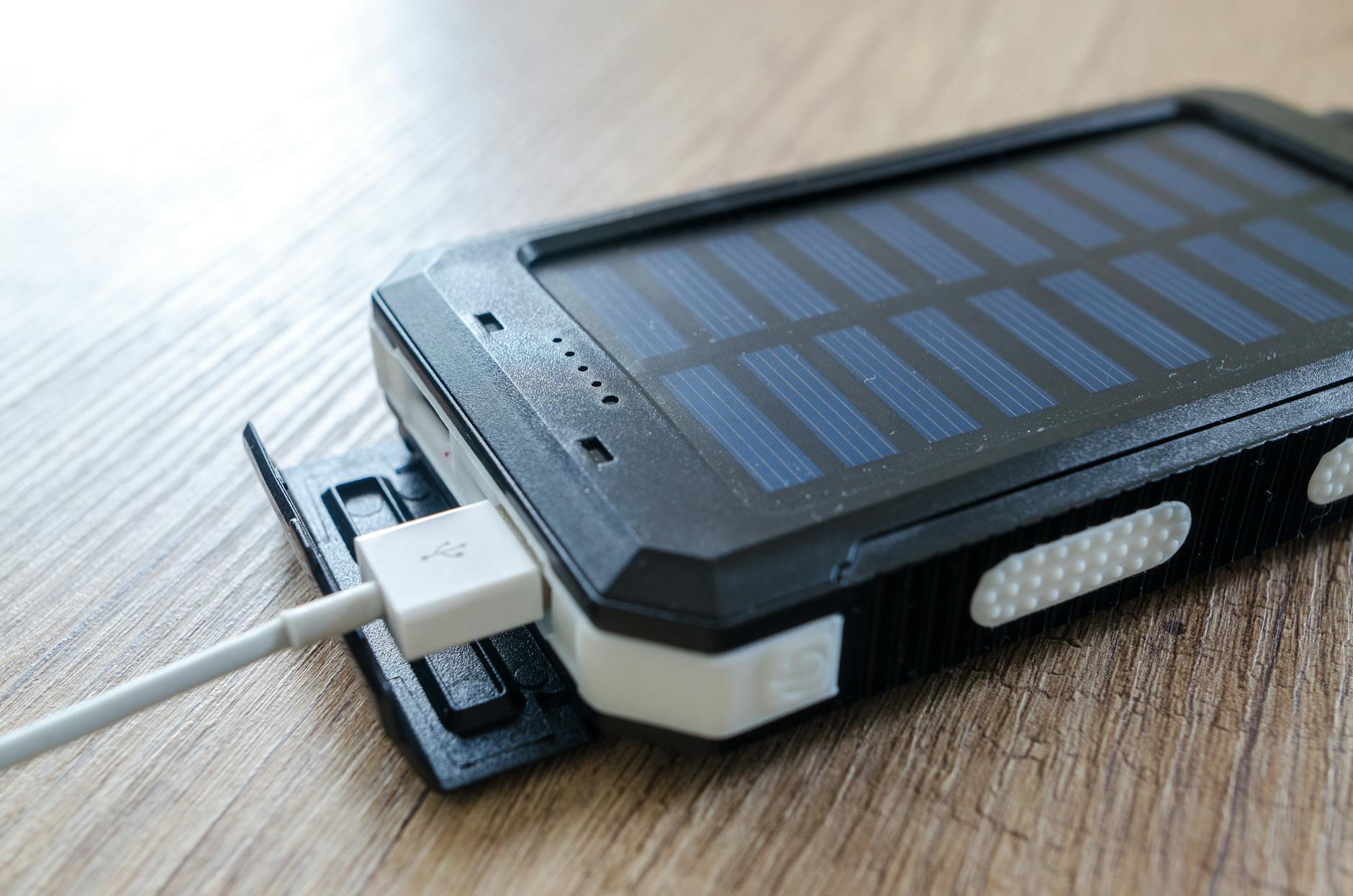 Photo by Lukas Blazek / Pexels
Power bank specs have two numbers that matter: capacity in mAh and charging speed in watts. A 20,000 mAh bank that charges at 10W takes 6-8 hours to charge a phone — less useful than a 10,000 mAh bank at 65W that tops a phone in 45 minutes. Most buying mistakes happen when shoppers optimize only for the big mAh number without checking the wattage. This guide clarifies both dimensions and matches them to actual use cases.
Capacity: How Much Do You Actually Need?
A typical smartphone battery is 4,000-5,000 mAh. Due to conversion losses (15-20%), a 10,000 mAh power bank realistically delivers 1.5-2 full phone charges. A 20,000 mAh bank gives 3-4 charges. For a MacBook Pro with a 100 Wh battery (roughly 27,000 mAh equivalent), the Anker 737 at 24,000 mAh ($104.99) charges it once and has reserve left. The Anker Nano at 5,000 mAh ($104.99) fits in a front pocket and handles one emergency top-up. INIU's 20,000 mAh options ($25-45) are the sweet spot for multi-day travel.
Charging Speed: The More Important Number
Charging speed in watts determines how fast both the power bank fills your device AND how fast the power bank itself recharges. The INIU 20,000 mAh at 22.5W charges a modern iPhone 15 from 0-50% in 30 minutes — useful. The same capacity bank at 10W takes over an hour. For laptops, 65W is the minimum to charge while in use; below 65W, most laptops draw more power than the bank provides during active work. The Baseus 100W ($90) at 20,000 mAh charges a MacBook Pro at full wattage while simultaneously keeping other devices topped up via a second port.


Sizes and Form Factors
Under 5,000 mAh: card-sized or pocket-sized — some have built-in cables. Fits in a pocket with a phone. Best for: one emergency charge, daily carry. 10,000-15,000 mAh: roughly the size of a thick phone. Best for: one- to two-day travel, light laptop top-ups. 20,000+ mAh: roughly the size of a hardcover paperback. Best for: multi-day trips, laptop charging, multiple devices. The Anker Nano 5000 is the only true pocket power bank that charges at 22.5W with a built-in USB-C connector. The INIU 65W 20,000 mAh is a full-trip bank that stays compact relative to its capacity.
Pass-Through Charging
Pass-through means the power bank can charge your device while simultaneously being recharged itself. Most banks support this but at reduced efficiency — the bank gets warm and charges both slower. This is fine for overnight plug-in use. For travel, it means you can leave everything connected to one outlet. The Anker 737 ($104.99) supports intelligent pass-through that optimizes current distribution between input and output ports simultaneously.

What to Avoid
No-name power banks with suspiciously high capacity claims (claims of 50,000 mAh for $15 are physically implausible at that price). Power banks without output wattage listed — buy by watts, not mAh only. Old Micro-USB charging input (avoid: slow to recharge). Power banks without overcharge protection (they exist at very low price points and can be fire hazards). Always buy from Anker, INIU, Baseus, RAVPower, or Mophie — brands that publish real electrical specs and have UL/CE certification.
Watch Before You Buy

“INIU 65W Ultra Compact 20000mAh — $43.34, laptop-compatible, compact for its capacity class.”
See Today’s Price →What we like
- 10,000 mAh
- dual USB-A
- USB-C
- PowerIQ 3.0
- compact
- TSA carry-on safe
- LED indicator
Watch out for
- Heavier than phone-only banks despite compact design
- Less brand recognition than Anker
- No smart display (LED indicators)

“Baseus 100W 20000mAh — $90, charges MacBook Pro at full speed while using it.”
See Today’s Price →What we like
- 100W output charges laptops and MacBooks
- 20000mAh capacity for 3-4 phone charges
- 2 USB-C and 2 USB-A ports simultaneously
- TSA-approved for carry-on
Watch out for
- Heavier than phone-only power banks
- Slower self-recharge time
- Premium price for high-wattage output
Read Full Analysis
The Baseus 100W 20000mAh Laptop Portable Charger outputs 100W USB-C PD from a 20000mAh bank with two USB-C and two USB-A ports — capable of charging a MacBook Air, an Android phone, and a tablet simultaneously. TSA carry-on compliance means it travels in the cabin without restriction. On this capacity guide page, the Baseus represents the middle tier of laptop-capable charging. The INIU 65W outputs 35W less for $45 savings — fine for thin-and-light laptops. The Anker 737 adds 40W of headroom and 4000mAh more capacity for $20 more. For MacBook Air and most 13-inch laptops, 100W is the sweet spot. Buy the Baseus for laptop-carrying travelers who need 100W capability without the Anker 737 premium. Skip for MacBook Pro 14/16-inch users where 140W makes the $20 Anker premium worthwhile. Skip for phone-only travel where the INIU 22.5W covers the need at $65 less.

“Anker 737 24000mAh 140W — $104.99 charges MacBook Pro twice, fastest recharge at 140W input.”
See Today’s Price →What we like
- 20,000 mAh
- 65W PD USB-C
- foldable AC outlet
- charges laptops
- 3-port simultaneous
- 1.1 lbs
Watch out for
- Large and heavy for a power bank
- Premium price vs. phone-focused alternatives
- Overkill for phone-only travelers
Read Full Analysis
The Anker 737 Power Bank carries 24000mAh with a 140W USB-C PD output — the highest wattage bank on this page — and displays exact remaining charge via a digital percentage screen rather than imprecise LED dots. Three ports charge simultaneously: USB-C at 140W combined, and USB-A output alongside. On this guide page contextualizing bank capacity choices, the Anker 737 anchors the high end. Against the Baseus 100W, the Anker costs $20 more, carries 4000mAh more, and outputs 40W more. For MacBook Pro 14-inch and 16-inch users who require above 100W for peak fast charging, that distinction is the entire buying decision. Buy the Anker 737 for demanding laptop users — MacBook Pro 14/16, Dell XPS 15, or any laptop requiring 100W+ input for peak charging speed. The digital display is a genuine convenience for multi-day trip planning. Skip for phone-only travel at $85 more than a capable 20000mAh phone bank. Skip for MacBook Air users where the Baseus handles 100W at $20 less.
Frequently Asked Questions
How many phone charges does a 20000mAh power bank give?
Can a power bank charge a laptop?
Is it safe to leave a power bank charging overnight?
What wattage power bank do I need for a MacBook?
How long does it take to recharge a power bank itself?
How We Chose These Products
We compare each product’s Amazon listing, the manufacturer’s published specifications and Amazon customer ratings, shown with their review counts as Amazon’s data, and rank the products on how well they answer this page’s question. We do not test products in hand and we do not run our own analysis of review text. A publication or expert is named only where we cite its published findings about that product. No manufacturer paid for placement on this page.
A price appears only when Amazon’s API supplied it at a recent daily refresh, with the date and time beside it, and is withdrawn at 4 AM Central on the day after it turns 24 hours old; otherwise use “Check price on Amazon” for the live price. Read our full methodology →