Best Caulk Gun 2026: Newborn 250, Milwaukee M12, COX Chilton

The Newborn 250 is the best caulk gun for anyone who caulks more than a few times per year. The 18:1 thrust ratio and no-drip mechanism are genuinely worth the upgrade from $8 hardware-store guns. Cordless power users: Milwaukee M12 if you own their battery platform.
At a Glance
| # | Product | Award | Price |
|---|---|---|---|
| 1 | Best Overall | $33.98 as of Nov 24, 7:43 PM CT details Buy → |
|
| 2 | 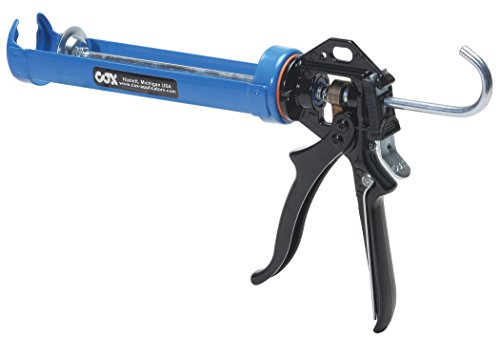 41004 Cox 10 Oz. Chilton Rotating… COX(コックス) |
$31.20 as of Nov 24, 12:08 PM CT details Buy → |
|
| 3 |  Milwaukee 2441-20 M12 10 oz Caulk… Milwaukee |
Best Premium | $169.98 as of Nov 24, 12:13 PM CT details Buy → |
| 4 | Budget Pick | $52.86 as of Nov 24, 12:14 PM CT details Buy → |
Caulk Gun Buying Guide
 Photo by Terrance Barksdale / Pexels
Caulk gun performance shows most when sealing a full bathroom or applying a long exterior bead — the Newborn 250 Super Smooth at $29.36 uses an 18:1 thrust ratio that delivers even bead pressure without hand fatigue, the benchmark by which professional manual guns are measured. The COX 41004 rotating cradle at $31.21 adds 360-degree tube rotation for caulking corners and tight angles without repositioning your wrist. The Milwaukee M12 cordless at $145 eliminates manual rod pressure entirely for high-volume caulking work on large jobs. The Albion B12S20 handles 20 oz sausage-pack caulk for commercial-volume applications. This guide covers which gun mechanism, thrust ratio, and caulk format matches your project scale and tube type.
Best Budget Pick: COX 41004 Chilton Professional Rotating Cradle Caulk Gun ($31.21) — COX's rotating cradle solves the problem of caulking in tight corners. Best for Best Premium: Milwaukee 2441-20 M12 12V Cordless Caulk Gun (Tool Only) — The Milwaukee M12 caulk gun eliminates hand fatigue entirely on. ---| Gun | Type | Thrust Ratio | Drive Type | No-Drip | Price |
|---|---|---|---|---|---|
| Newborn 250 | Manual | 18:1 | Smooth | Yes | ~$28 |
| COX 41004 | Manual rotate | 13:1 | Smooth | Yes | ~$25 |
| Milwaukee 2441-20 | Cordless M12 | N/A | Motor | Yes | ~$110 |
| Albion B12S20 | Sausage/Manual | 18:1 | Smooth | Yes | ~$55 |
Thrust Ratio Explained
How we picked these. Products were selected for bead consistency and hand fatigue reduction at each price point.
Thrust ratio (e.g., 18:1) is how much mechanical advantage the gun provides. A gun with 18:1 ratio requires 18× less hand force to push the plunger than pushing the tube directly. Basic $8 hardware-store guns have 4:1–6:1 ratios, which causes hand fatigue and cramping during extended use. Professional guns start at 10:1; the Newborn 250's 18:1 is among the highest available. For thick materials (construction adhesive, window caulk), higher thrust ratio matters more.
Ratchet vs Smooth Drive
Ratchet drive (the standard on most cheap guns) advances the plunger in discrete clicks — this causes the bead to pulse: a tiny pause at each click, then a surge. Smooth drive advances continuously with no pulsing, producing a perfectly even bead. For caulking, smooth drive is significantly better. All four guns on this list use smooth drive — a key reason they outperform $8 ratchet guns.
When to Use a Cordless Caulk Gun
For a homeowner doing one bathroom per year, a cordless gun is overkill. For a contractor installing 20+ windows per day or tiling an entire kitchen, the hand-fatigue savings from a cordless gun are real and meaningful. Consider cordless when: (a) you're using more than 10 tubes per session, (b) the material is very stiff (construction adhesive, silicone), or (c) you're using both hands for positioning work.
Caulking Technique for a Professional Result
Cut the tube tip at a 45° angle to the desired bead diameter — smaller is better, you can always make a second pass. Hold the gun at 45° to the joint, push the tip firmly into the joint, and pull toward you (not push) at a steady pace. Apply consistent trigger pressure. After completing a run, use a damp finger (latex) or a dedicated caulk tool to tool the bead flat before it skins over. Clean up immediately — latex caulk cleans with water; silicone requires mineral spirits.
Related Guides
Watch: Which Construction Adhesive is Best? by Project FarmWatch Before You Buy


“Newborn 250 18:1 — smooth drive, no-drip mechanism, professional build quality.”
See Today’s Price →What we like
- 18:1 thrust ratio for silicone, hybrids, polyurethanes and epoxies
- Smooth pressure rod that needs less force than a ratchet rod and runs quieter
- Revolving steel frame keeps the bead oriented around corners
- Zinc alloy handle and trigger with a rubber grip
- Spout cutter and seal puncture tool built in
Watch out for
- Manual: every bead is pushed by hand squeeze
- Its listing names no drip-stop or quick pressure release
Read Full Analysis
The Newborn 250 is the caulk gun that contractors use on real jobs, and using it once explains why. The 18:1 thrust ratio requires noticeably less hand force than the 4:1–6:1 guns from hardware stores, which matters on a day where you're applying 20 tubes. The smooth continuous drive produces a perfectly even bead — no pulsing, no surging. The no-drip mechanism (a spring-loaded plate that retracts the plunger when you release the trigger) stops flow immediately, preventing the drips that mess up work surfaces. Built of all metal, it will outlast dozens of cheap guns.
“COX Chilton Rotating Cradle — barrel rotates to any angle for tight corners and overhead work.”
See Today’s Price →What we like
- 12:1 mechanical advantage
- Barrel turns for work around corners
- Switchable flow control and a thumb-activated instant pressure release
- Built-in ladder hook and seal puncturing device
- Sintered steel catch plate with a wear compensating device
Watch out for
- Manual: every bead is pushed by hand squeeze
- Made for low- to medium-viscosity materials, its listing says
Read Full Analysis
COX's rotating cradle is the answer to the frustration of repositioning your whole body to apply caulk at an odd angle. The barrel rotates 360° so you can orient the tube nozzle to exactly the right position without changing your arm position. The 13:1 smooth drive is excellent, and the overall build quality is professional. For installation contractors working around window frames, shower surrounds, and similar detail work, the rotating barrel saves real time and reduces wrist strain.
“Milwaukee M12 — variable speed motor, zero hand fatigue for production caulking work.”
See Today’s Price →What we like
- Cordless 12V gun on Milwaukee's M12 battery platform
- Dispenses caulk, sealant and adhesive from standard 10 oz cartridges
- Its listing details give a 5-year tool warranty
Watch out for
- Tool only: no M12 battery or charger in the box
- Its listing gives no speed, thrust or drip-control details
Read Full Analysis
The Milwaukee M12 caulk gun is the right tool for anyone doing high-volume production caulking. Variable speed trigger lets you dial in the exact flow rate for different materials — slow for precise beads, fast for big gaps. No hand fatigue is the key selling point: on a window installation job with 20+ windows, your hand would cramp badly with a manual gun. The M12 platform compatibility is a bonus for Milwaukee users who already own batteries and chargers.

“Albion B12S20 Sausage Gun — 20 oz packs mean fewer reloads, less waste, better economics.”
See Today’s Price →What we like
- Takes 10, 13 or 20 oz sausage packs
- Converts to bulk or 10 oz and 12 oz cartridges with the parts included
- 12:1 manual drive rated at 375 lbf of thrust and 120 psi
- 2-inch aluminum barrel on a rotating swivel
- Double gripping plates, and sausage pistons that prevent bag-wrap
Watch out for
- Manual: every bead is pushed by hand squeeze
- Its listing names no drip-stop or quick pressure release
Read Full Analysis
Professional caulking contractors use sausage pack guns because the economics make sense at volume: a 20 oz sausage pack contains double the material of a standard tube, costs less per unit, and generates no cardboard tube waste. Albion's B12S20 is the standard manual sausage gun — well-made, 18:1 smooth drive, and built to handle the daily abuse of a production environment. The learning curve on loading sausage packs is minimal. If you're regularly going through more than 5 tubes per session, this pays for itself quickly.
Frequently Asked Questions
What's the difference between caulk and sealant?
How do I remove old caulk before applying new?
Should I caulk before or after painting?
Why does my caulk crack after drying?
How long does caulk last before reapplying?
How We Chose These Products
We compare each product’s Amazon listing, the manufacturer’s published specifications and Amazon customer ratings, shown with their review counts as Amazon’s data, and rank the products on how well they answer this page’s question. We do not test products in hand and we do not run our own analysis of review text. A publication or expert is named only where we cite its published findings about that product. No manufacturer paid for placement on this page.
A price appears only when Amazon’s API supplied it at a recent daily refresh, with the date and time beside it, and is withdrawn at 4 AM Central on the day after it turns 24 hours old; otherwise use “Check price on Amazon” for the live price. Read our full methodology →