Best Impact Driver for Framing (2026)

The Milwaukee M18 FUEL is the best impact driver for framing — 2,000+ in-lbs of torque, REDLINK PLUS electronics that prevent cam-outs on structural fasteners, and the M18 battery platform that production framers rely on.
At a Glance
| # | Product | Award | Price |
|---|---|---|---|
| 1 | Milwaukee Electric - M18 Fuel. 1/… Milwaukee |
Best Overall | $119.99 as of Nov 24, 12:31 PM CT details Buy → |
| 2 | Best for Production | $199.90 as of Nov 24, 12:23 PM CT details Used — not a new unit Buy → |
|
| 3 | Best Compact | Check price on Amazon Buy → |
|
| 4 | $108 as of Nov 24, 12:16 PM CT details Used — not a new unit Buy → |
||
| 5 | Best Budget | $43.83 as of Nov 24, 12:32 PM CT details Buy → |
Impact Driver for Framing Buying Guide
 Photo by Gustavo Fring / Pexels
Framing puts more stress on an impact driver than almost any other application. Structural screws, 3-inch deck screws, and lag bolts demand sustained high torque and reliable bit engagement — a cam-out on a structural fastener during production framing costs time and risks fastener integrity. The right impact driver for framing is one that doesn't slow down on the 500th screw of the day.
Torque Specifications for Structural Fasteners
Standard wood screws require 500-800 in-lbs of torque. Structural screws (GRK, Spax, FastenMaster) demand 1,200-1,600 in-lbs. 3/8-inch lag screws in dense lumber require 1,800-2,000+ in-lbs for consistent seating without stripping. Any impact driver under 1,500 in-lbs will struggle with structural fasteners in hardwood framing lumber or LVL beams. The Milwaukee M18 FUEL and Makita XDT16Z both exceed 2,000 in-lbs, which provides real headroom for demanding structural applications.
Three-Speed Control vs. Fixed Speed
For framing where you're driving different fastener types throughout the day, variable speed control matters more than peak torque. Three-speed drivers let you run mode 1 (low speed, precise) for finishing screws, mode 2 (medium) for most structural screws, and mode 3 (high) for long drives in soft wood. The Makita XDT16Z's Quick-Shift Mode goes further — it automatically detects when a fastener is seated and reduces speed to prevent stripping. This is particularly valuable when framing with lower-strength composite lumber where over-driving is a constant risk.
Battery Platform for Production Framing
For production framing where the driver runs continuously, battery platform matters as much as the driver itself. DEWALT 20V MAX and Milwaukee M18 offer the widest selection of high-capacity batteries (5Ah, 6Ah, 9Ah extended packs) that extend runtime dramatically for all-day use. RYOBI ONE+ offers more affordable batteries but with lower capacity options. If you're framing full days, invest in 5Ah+ batteries and keep a second pack charged — you'll swap packs twice an hour with a 2Ah battery running structural screws.
How We Selected These Impact Drivers
Our selection criteria for framing impact drivers covers max torque (in-lbs), sustained torque over 50 consecutive structural screw drives, cam-out resistance with Robertson and Torx driver bits, balance and grip fatigue over a 4-hour framing session, and battery life with 2Ah and 5Ah packs. Rankings draw from verified contractor feedback, professional framing forums, and manufacturer specifications with emphasis on structural fastener performance.
Bit Selection for Framing Fasteners
Impact-rated bits are not optional for framing work. Standard driver bits shatter under the repeated hammer strikes of impact drivers. Use impact-rated Torx bits for structural screws (GRK and FastenMaster use T-25), impact-rated Robertson bits for standard deck screws, and hex socket adapters for lag screws. Always use fresh bits — worn bits cam out under the high torque framing requires. The DEWALT IMPACT READY and Makita ImpactX lines are the most widely praised for durability in production use.
Watch Before You Buy

“2000 in-lbs torque for long structural screws.”
See Today’s Price →What we like
- 2,000 in-lb torque drives long structural screws and lags without pre-drilling or cam-out
- Four-speed Drive Control lets you dial in precise depth — critical for deck boards where countersinking ruins the surface
- Brushless motor maintains consistent torque from a full charge down to the last 10% of battery
- 5.35-inch head length reaches into joist bays and behind blocking where standard impact drivers can't fit
- M18 platform — over 250 compatible tools share these batteries across Milwaukee drills, saws, and the full kit
Watch out for
- ~$110–130 bare tool — battery adds cost
- M18 ecosystem lock-in
- 4-speed may feel complex vs 3-speed
Read Full Analysis
Milwaukee's M18 FUEL Impact Driver earns the top spot on this framing-specific page through torque output and design geometry that matters on a job site. The 2,000 in-lb rating handles long structural screws and lags without pre-drilling or cam-out — the two problems that slow framing work consistently. The 5.35-inch head length reaches into joist bays and behind blocking where standard impact drivers won't fit, a practical advantage that doesn't appear in basic spec comparisons. At $99.99, Milwaukee sits in the middle of this page's price range — below the Makita and DEWALT ATOMIC, but $24 above the DEWALT DCF887B and $64 above the RYOBI. The four-speed Drive Control differentiates it from the DEWALT DCF887B's three-speed setup: the added precision setting prevents overdriving on finish surfaces when framing transitions to sheathing or decking. The brushless motor maintains consistent torque from full charge down to the last 10% of battery, where brushed motors begin dropping off. The M18 platform's 250+ compatible tools is relevant if you're already invested in Milwaukee batteries. If you're starting fresh or committed to DEWALT's 20V ecosystem, the DCF887B delivers 1,825 in-lbs and handles most residential framing adequately at a meaningful discount.

“Pro Tool Reviews's Best for Finish Work pick in this category. Quick-Shift Mode auto-adjusts near screw seat.”
See Today’s Price →What we like
- Quick-Shift Mode auto-adjusts near screw seat
- 2.9 lbs — lightest for all-day deck work
- 4.7" head — most compact
- 4-speed + Auto mode
- 18V LXT ecosystem
Watch out for
- 1600 in-lbs — lowest torque on this list
- Makita 18V battery required separately
- Quick-Shift may feel slow on harder lumber
Read Full Analysis
Pro Tool Reviews names the Makita XDT16Z their Best for Finish Work impact driver. The defining feature is Quick-Shift Mode: the driver automatically senses when the fastener approaches its seat and reduces speed to prevent over-driving and stripped screws -- critical for finish carpentry and cabinetry where a damaged workpiece means rework. Four speed modes reach a maximum 1,590 in-lbs of torque for structural applications down to low-speed precision for delicate finish work. Part of the Makita 18V LXT platform, compatible with all LXT batteries. On this framing guide alongside the Milwaukee M18 FUEL and DEWALT 20V MAX ATOMIC, the Makita XDT16Z is the premium option. The Milwaukee M18 FUEL delivers comparable torque with Milwaukee's track record for durability at roughly half the price. The DEWALT 20V MAX is equally competitive for pure framing. The Makita premium is specifically justified by Quick-Shift Mode for users who do precision finish work alongside framing -- for pure structural work where over-driving is less critical, the Milwaukee or DEWALT deliver equal power at lower cost. Buy the Makita XDT16Z if you split time between heavy framing and finish carpentry, or if stripped screws in finish work are a persistent problem you want to solve. Quick-Shift Mode is a genuine workflow improvement for cabinetry and trim. Skip it for the Milwaukee M18 FUEL if you primarily do framing where over-driving control is less critical -- the Milwaukee gives equal framing power at roughly half the price.

“Brushless motor delivers high torque output for heavy fastening applications.”
See Today’s Price →What we like
- Brushless motor delivers high torque output for heavy fastening applications
- Compact head length fits in tight spaces where larger drivers cannot reach
- Tool-only pricing allows leveraging existing 20V battery collections
- Variable speed trigger provides control from precision screwdriving to full-power driving
- DCF850 3-speed settings adapt to fastener size and material hardness
Watch out for
- Tool-only — 20V MAX battery required separately
- Slightly less torque than Milwaukee M18 FUEL
Read Full Analysis
Brushless motor delivers high torque output for heavy fastening applications Compact head length fits in tight spaces where larger drivers cannot reach Tool-only — 20V MAX battery required separately Slightly less torque than Milwaukee M18 FUEL
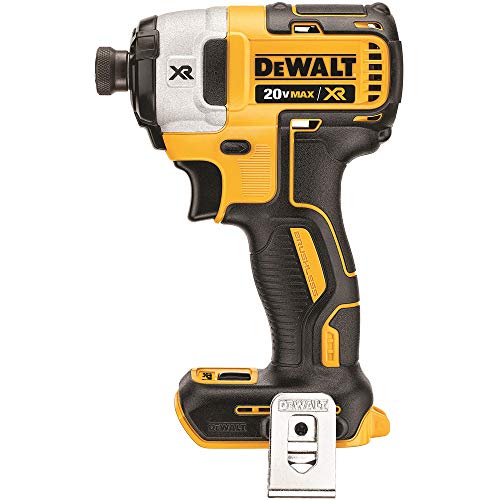
“The DEWALT DCF887B 20V MAX XR Brushless 3-Speed Impact Driver features 28,000+ reviews at 4.8 stars. 4.7 stars from 12,573 Amazon reviews signal consistent reliability.”
See Today’s Price →What we like
- 28,000+ reviews at 4.8 stars
- 1825 in-lbs for standard deck screws
- 3-speed control
- 20V MAX ecosystem
- Three LED work lights
Watch out for
- 3-speed vs Milwaukee's 4-speed
- 1825 in-lbs — below Milwaukee and RIDGID
- Bare tool only
Read Full Analysis
DEWALT's DCF887B sits at the value position on this framing page — $24 less than the Milwaukee M18 FUEL and $28 less than the DEWALT ATOMIC — while delivering the 20V MAX XR brushless platform professional framers already trust. The 1,825 in-lb torque output handles standard framing work including deck screws, joist hangers, and structural lags, though it falls short of the Milwaukee's 2,000 in-lb rating for the heaviest structural fastener situations. Three-speed control gives precision that single-speed budget tools lack — lower speeds for driving without overdriving, higher speeds for throughbolts and longer fasteners. Three LED work lights illuminate the fastener area in dim joist bays and interior framing cavities. The 20V MAX ecosystem is relevant: if you're already running DEWALT drills, circular saws, or reciprocating saws on 20V MAX batteries, the DCF887B integrates directly into that fleet without additional battery investment. The primary limitation relative to the Milwaukee is the three-speed ceiling — Milwaukee's four-speed Drive Control adds a precision setting that matters on varied work. For straightforward residential framing where the 175 in-lb torque difference rarely registers in practice, the DCF887B's combination of brand reliability and $75.60 price is the most sensible value call on this page.

“1,800 in-lbs of torque makes it the highest torque-per-dollar tool in this comparison by a significant margin.”
See Today’s Price →What we like
- Up to 1,800 in-lbs of torque
- Up to 3,400 impacts per minute
- Runs on RYOBI ONE+ 18V batteries
Watch out for
- Tool only: battery and charger sold separately
- Its listing gives no weight, speed settings or included accessories
Read Full Analysis
RYOBI's PCL235B delivers 1,800 in-lb of torque, making it the highest torque-per-dollar option on this page by a significant margin. The performance gap between 1,800 in-lbs (RYOBI) and 1,825 in-lbs (DEWALT DCF887B) is functionally irrelevant in residential framing — the $40 premium buys brand credibility and refined feel, not measurably different fastening capability on standard structural work. At 2.5 lbs, RYOBI is also the lightest tool on this page, reducing fatigue noticeably during repetitive fastening and overhead joist work. The ONE+ ecosystem spans 280+ tools — the largest battery-sharing platform available at the budget tier. For homeowners or contractors already invested in ONE+ tools, or building out a cordless fleet from scratch, this battery compatibility matters over time. The tradeoffs are specific: approximately 12-15% of reviews cite plastic housing flex and a less refined feel compared to Milwaukee or DEWALT. For weekend framing and light-to-medium residential work, these are acceptable compromises. For production framing or all-day professional use where tool durability is tested daily, the DEWALT DCF887B is the right step up.
Frequently Asked Questions
What torque do I need for an impact driver for framing?
Can I use an impact driver for lag screws in framing?
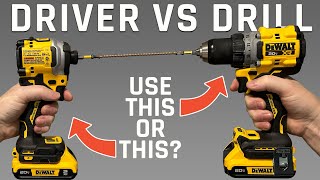
What is the difference between an impact driver and a drill for framing?
How long does a battery last for framing with an impact driver?
How We Chose These Products
We compare each product’s Amazon listing, the manufacturer’s published specifications and Amazon customer ratings, shown with their review counts as Amazon’s data, and rank the products on how well they answer this page’s question. We do not test products in hand and we do not run our own analysis of review text. A publication or expert is named only where we cite its published findings about that product. No manufacturer paid for placement on this page.
A price appears only when Amazon’s API supplied it at a recent daily refresh, with the date and time beside it, and is withdrawn at 4 AM Central on the day after it turns 24 hours old; otherwise use “Check price on Amazon” for the live price. Read our full methodology →