Best Saw for Cutting Wood (2026): Top Picks by Cut Type

The Bosch Single Bevel Sliding Compound Miter Saw is the best saw for precision wood cutting — sliding arm extends cutting width for wider boards, dual-bevel capability handles crown molding compound angles, and Bosch's build quality holds calibration through heavy use. For curves, the Makita 4329K jig saw is the specialist.
At a Glance
Saw for Cutting Wood Buying Guide
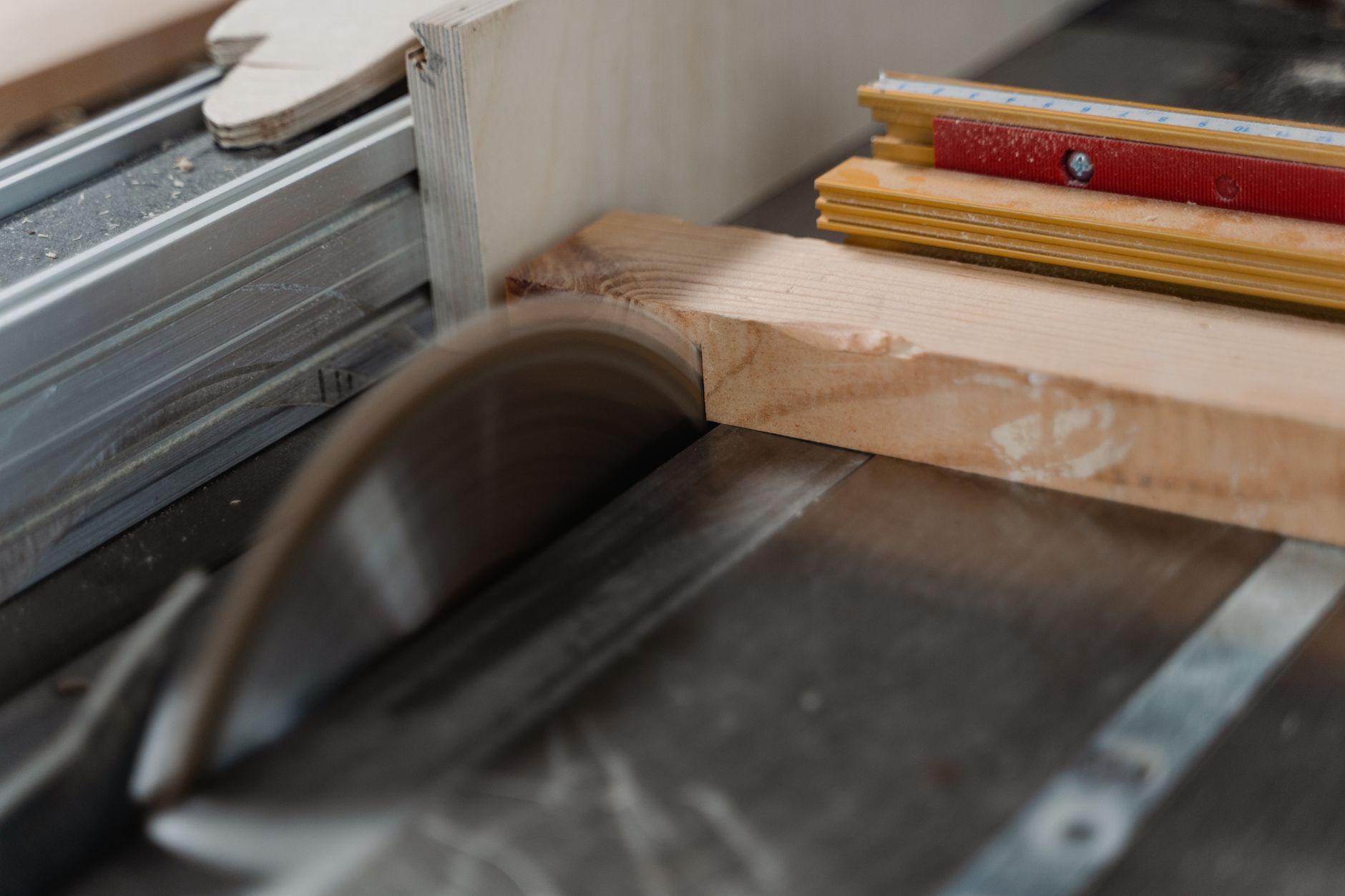 Photo by Tima Miroshnichenko / Pexels
The best saw for cutting wood depends entirely on the type of cut and the wood dimension. No single saw cuts everything optimally — a miter saw makes perfect crosscuts but can't rip a board to width. A circular saw rips and crosscuts dimensional lumber but can't make the precise angled cuts of a miter saw. A chainsaw cuts through trees and branches that no other saw can handle but isn't appropriate for finish carpentry. Understanding which cut you need determines which saw you need.
How We Selected These Saws
We compared wood-cutting saws across five criteria: cut type (crosscut vs rip vs curved vs bucking), maximum cutting depth and capacity (board thickness and width the saw handles), motor power and blade speed (affects cut quality in hardwoods), portability vs precision (corded stationary tools vs portable tools), and blade compatibility (standard blade sizes allow aftermarket upgrades). Brands evaluated: Bosch, Makita, WEN, Remington, BLACK+DECKER.
Saw Types: Matching the Tool to the Job
Miter saw (Bosch): The precision crosscutting standard for trim carpenters and finish woodworkers. Makes clean 90° and angled cuts across boards — essential for installing baseboard, crown molding, door casings, and picture frames. The Bosch Single Bevel Sliding Compound Miter Saw adds a sliding arm that extends cutting width beyond the blade diameter, handling wider boards than fixed miter saws. Jig saw (Makita): The curve-cutting specialist. Cuts circles, arcs, and irregular shapes that straight saws can't make. Essential for cutting openings in panels, shaping decorative elements, and any non-straight cut in sheet goods or dimensional lumber. Circular saw (included in BLACK+DECKER kit): The most portable ripping and crosscutting saw for dimensional lumber. Takes practice for straight cuts (a straightedge guide helps) but handles 2x4 through 2x12 framing lumber and sheet goods efficiently. Chainsaw (WEN, Remington): For cutting trees, large branches, and logs. Not a woodworking tool — a tree maintenance and firewood tool. Electric chainsaws (WEN) are quieter and require less maintenance than gas for light-duty use. Gas chainsaws handle longer sustained cutting sessions and heavier timber.
Blade Selection Matters More Than the Saw
A mediocre saw with the right blade outperforms a premium saw with the wrong blade. For crosscutting boards: 60-80 tooth carbide blade (more teeth = smoother cut). For ripping boards along the grain: 24-40 tooth ripping blade (fewer teeth = faster material removal). For sheet goods (plywood, MDF): 40-60 tooth blade with ATB (alternate top bevel) grind prevents tearout on the face veneer. Always let the blade reach full speed before entering the cut, and use appropriate blade RPM ratings for your saw's RPM output.
Common Saw Mistakes
Three mistakes: (1) Using a miter saw to rip lumber — the miter saw is a crosscut tool. Ripping on a miter saw is unsafe and imprecise. Use a table saw or circular saw with a ripping guide for rip cuts. (2) Cutting with a dull blade — dull blades require more force, cause kickback risk, and produce burned, rough cuts. Replace carbide blades when you notice burning smell or rough edges. (3) Not supporting the cut-off piece — an unsupported offcut drops as the cut completes, binding the blade and causing kickback. Always support both sides of the cut line with sawhorses or a workbench.
Watch Before You Buy
“Single-bevel sliding action handles 12-inch crown moldings on the flat. Best suited for trim carpenters and diyers doing crown molding on most home-scale projects.”
See Today’s Price →What we like
- Single-bevel sliding action handles 12-inch crown moldings on the flat
- Bosch lineage means smooth bearings and reliable bevel-lock mechanisms
- Compact for a 12-inch saw - easier to fit in a job-site truck
Watch out for
- Single-bevel only - must flip the workpiece for opposite-direction cuts
- Less expensive Bosch saws have less robust dust collection
Read Full Analysis
Single-bevel sliding action handles 12-inch crown moldings on the flat Bosch lineage means smooth bearings and reliable bevel-lock mechanisms Single-bevel only - must flip the workpiece for opposite-direction cuts Less expensive Bosch saws have less robust dust collection
“”
See Today’s Price →What we like
- Top-handle grip positions hand directly above the cut line for more precise control than barrel-grip designs
- Variable speed 500-3,100 SPM adjusts for fine scroll work at low speed and fast cutting at high
- 3.9-amp corded power delivers consistent speed through hardwood without battery fade
- Tool-less blade change swaps blades in seconds without a separate wrench
Watch out for
- Corded operation requires extension cord access for use away from the workshop
- Top-handle reduces wrist clearance on flush cuts next to cabinet sides — a D-handle has more clearance there
Read Full Analysis
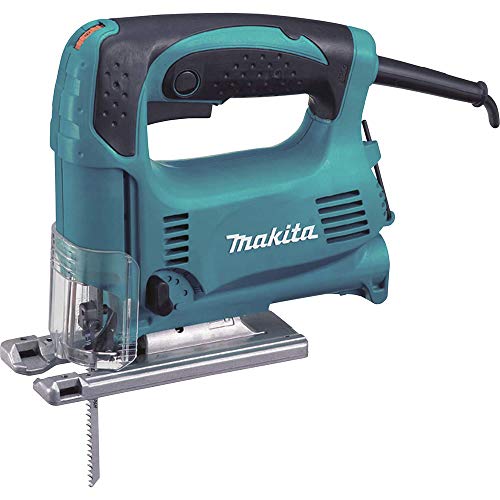
The Makita 4329K is the precision curve-cutting specialist on this page, and the top-handle grip design is its defining characteristic. Unlike barrel-grip jig saws where the hand wraps around the motor body, the top-handle positions the palm directly above the blade line — improving directional control on tight scroll cuts and curved template work where accurate line-following requires constant small corrections. Variable speed from 500 to 3,100 SPM is the other key feature: at 500 SPM the saw follows delicate scroll patterns through thin hardwood veneer without tearing grain, while at full speed it clears material efficiently on rougher cuts. The 3.9-amp corded motor maintains consistent SPM under load throughout a cutting session, unlike battery jig saws that slow as voltage drops on hard material. Tool-less blade change is a practical advantage since jig saw work frequently demands switching between wood, metal, and scroll blades across a single project. The geometry limitation shows up on flush cuts adjacent to vertical cabinet sides — the top-handle reduces wrist clearance in that position compared to a D-handle design. Recommended for furniture makers, sign carvers, and pattern workers who do significant curve work where control precision matters more than portability.

“”
See Today’s Price →What we like
- 16-inch bar covers residential firewood cutting and small tree felling without renting professional equipment
- Corded 15-amp motor never loses power mid-cut the way battery saws do on long bucking sessions
- Automatic oiler lubricates bar and chain continuously without stopping to manually apply oil
- Under $70 is the most affordable way to access a usable 16-inch bar for occasional firewood work
Watch out for
- Requires a 100-foot extension cord for most tree removal, creating a trip and entanglement hazard
- Electric chainsaw chains stretch faster than gas chains on sustained hardwood cutting sessions
Read Full Analysis
The WEN 16-inch electric chainsaw fills the residential firewood and small tree removal use case at the lowest entry cost on this page. A 16-inch bar handles everything from bucking 10-12 inch diameter logs to limbing downed trees after a storm — the realistic workload for a homeowner managing their property rather than a commercial operation. Corded 15-amp power maintains consistent chain speed through hardwood across an entire cutting session, avoiding the power fade that battery saws show as voltage drops on long bucking runs. The automatic oiler lubricates bar and chain continuously without stopping to apply oil manually — a convenience feature that also extends bar life by preventing dry-running heat damage. The extension cord is the primary operational constraint: a 100-foot cord handles most residential lot work, but the cord creates a tripping and entanglement hazard that requires active management during cutting. Electric chains also stretch faster than gas chains on sustained hardwood sessions — plan for more frequent tensioning adjustments than gas saw owners typically perform. On a best-saw-for-cutting-wood page this occupies the outdoor cutting niche that none of the other saws address, making it a legitimate addition for buyers whose projects include tree work alongside shop work.
Frequently Asked Questions
What is the best saw for cutting wood for beginners?
What saw should I buy first for woodworking?
What is a compound miter saw used for?
When do I need a jig saw vs a circular saw?
Gas chainsaw vs electric chainsaw: which is better?
How We Chose These Products
We compare each product’s Amazon listing, the manufacturer’s published specifications and Amazon customer ratings, shown with their review counts as Amazon’s data, and rank the products on how well they answer this page’s question. We do not test products in hand and we do not run our own analysis of review text. A publication or expert is named only where we cite its published findings about that product. No manufacturer paid for placement on this page.
A price appears only when Amazon’s API supplied it at a recent daily refresh, with the date and time beside it, and is withdrawn at 4 AM Central on the day after it turns 24 hours old; otherwise use “Check price on Amazon” for the live price. Read our full methodology →