Channellock vs Tekton Hand Tools (2026)

Channellock wins for pliers — USA-made, proven in professional trades for decades, with the 430 tongue-and-groove pliers at $19 as the benchmark. Tekton wins for budget wrench sets and full tool kits where price matters more than heritage.
At a Glance
| # | Product | Award | Price |
|---|---|---|---|
| 1 | Channellock CHL430 10-Inch Straig… Channellock |
Best Channellock Pliers | Check price on Amazon Buy → |
| 2 |  Channellock 369 9-1/2-Inch High L… Channellock |
Best Lineman Pliers | $35.94 as of Nov 24, 12:08 PM CT details Buy → |
| 3 |  Channellock 958 6-1/4-Inch Wire S… Channellock |
Best Wire Stripper | $13.95 as of Nov 24, 2:51 PM CT details Buy → |
| 4 | Best Tekton Set | $37.99 as of Nov 24, 12:19 PM CT details Buy → |
|
| 5 | Best Ratcheting Wrenches | Check price on Amazon Buy → |
|
| 6 | Best Hex Keys | Check price on Amazon Buy → |
Channellock vs Tekton Hand Tools Buying Guide
Channellock and Tekton represent two different approaches to hand tool value. Channellock (made in Meadville, Pennsylvania since 1886) is the iconic American pliers brand — every plumber, electrician, and mechanic knows the orange-handled tongue-and-groove pliers named after the company. Tekton is a Michigan-based direct-to-consumer brand offering wrench sets, socket sets, and torque tools at below-retail prices. This comparison helps you decide when each brand is the right buy.
Channellock: Pliers, Crimpers, and Lineman Tools
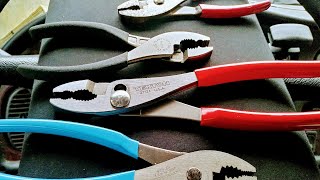
Channellock dominates the pliers category. The model 430 tongue-and-groove pliers are manufactured to tighter tolerances than most imports, with the patented Channellock groove that holds jaw settings without slipping. The 369 lineman's pliers are used by electricians for pulling wire, twisting conductors, and cutting cable — they carry a lifetime guarantee and are made in the USA. Channellock's 908 and 909 crimping tools are standard equipment for automotive and electrical wiring. The brand does not make wrench sets or socket tools, making it a specialty buy for pliers and specialized gripping tools. Winner for pliers: Channellock — there is no better consumer plier at any price.
Tekton: Wrenches, Sockets, and Hex Keys
Tekton sells primarily through Amazon without the retail markup of hardware store brands. Their 30-piece combination wrench set uses high-torque (12-point, then later offset box ends) chrome-vanadium steel at a price that undercuts GearWrench and other professional brands. The ratcheting wrench sets are a standout — the WRN53091 SAE set at 13 pieces and WRN53192 metric 19-piece are frequently recommended in professional forums as the best value-per-piece ratcheting wrenches available. Tekton wrenches carry a full lifetime guarantee. Winner for wrenches and sockets: Tekton — exceptional value without the retail premium.
Build Quality and Warranty
Channellock tools are manufactured in the USA with American steel. The chrome-vanadium steel and finish quality are noticeably better than most imports. Tekton tools are made in Taiwan and China using premium steel — they are not USA-made, but quality control is high for the price. Both brands offer lifetime warranty replacements with minimal friction. For pliers, Channellock's domestic manufacturing is a meaningful quality advantage. For wrenches at value prices, Tekton closes the gap significantly and often beats domestic-branded options that are also manufactured overseas.
When to Buy Each Brand
Buy Channellock when you need: tongue-and-groove pliers, lineman's pliers, crimping tools, or any specialty gripping tool. The brand is the defining standard in its category. Buy Tekton when you need: combination wrenches, ratcheting wrenches, hex keys, torque wrenches, or socket sets at direct-to-consumer pricing. Use both in the same shop — they do not overlap. See our Best Pliers Sets for broader pliers coverage and Best Socket Sets for socket system recommendations.
Watch Before You Buy
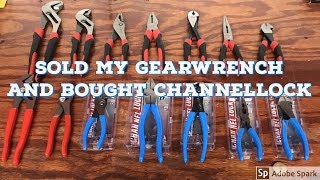
“Channellock 430 is the classic tongue-and-groove plier — adjustable to grip pipes, nuts, and fittings in a range of sizes. Crosshatch pattern jaws provide grip without slipping.”
See Today’s Price →What we like
- 12-position adjustment covers a wide fastener size range
- CrossHatch jaw pattern for superior grip
- Made in USA since 1886
- Comfortable handles with grip finish
Watch out for
- 10-inch size may be too large for confined spaces
- Not for hex fasteners — use a wrench instead
- Open jaw can slip on rounded fastener edges
Read Full Analysis
The Channellock 430 is the definitive tongue-and-groove plier — the tool category that Channellock invented in 1933 and still manufactures in Meadville, Pennsylvania. The 12-position jaw adjustment covers a wide range from small fittings to large pipe, and the CrossHatch jaw pattern grips surfaces that smooth jaws slip on. It is the most affordable tool on this comparison page and the first choice for plumbing repairs, nut and bolt work, and general fastening that requires an adjustable gripping tool. Against the TEKTON 30-piece wrench set and ratcheting set on this page, the Channellock 430 covers round workpieces and pipes that wrenches cannot grip — the two tool types are complementary rather than competing.
“Channellock 369 Hi-Leverage Lineman's Pliers are the standard in electrical work — induction-hardened cutting blades cut aluminum and copper wire cleanly.”
See Today’s Price →What we like
- Rounded nose for bending, shaping and gripping wire
- XL extreme leverage design that Channellock says needs less force to cut
- Laser heat-treated cutting edges that hold their sharpness
- Made in the USA from high carbon steel
Watch out for
- Fixed jaw: it will not adjust to grip pipes or large nuts
Read Full Analysis
The Channellock 369 Hi-Leverage Lineman Pliers are the standard electrical tool for cutting and pulling wire on residential and commercial job sites. The Hi-Leverage jaw design multiplies hand force mechanically, significantly reducing fatigue on repetitive wire cutting and pulling operations. Induction-hardened cutting blades maintain edge sharpness through aluminum and copper wire well beyond what non-hardened blades last. The heavy-duty construction is built for sustained professional use rather than occasional DIY work. It costs twice the Channellock 430 tongue-and-groove pliers on this page but serves a completely different trade function — electrical work rather than plumbing. Best for licensed electricians and DIYers doing full wiring projects where wire cutting and pulling are repetitive operations.
“Channellock 958 induction-hardened jaws last longer than most competitors and the needle-nose geometry adds wire bending capability — American-made at a price between Klein and budget options.”
See Today’s Price →What we like
- Strips and cuts wire in one tool
- Compact 6-1/4-inch length
- Channellock's blue-handled design, as its title names it
Watch out for
- Its bullets are generic brand text and state no gauge range, jaw material or warranty
Read Full Analysis
The Channellock 958 is the American-made wire stripper for 10-18 AWG wire, covering the standard residential wiring range. Induction-hardened jaws at the stripping slots outlast non-hardened cutting edges that soften and tear insulation after moderate use rather than cutting clean. The needle-nose jaw section adds wire bending and looping capability, reducing the need to swap to a separate tool for terminal and outlet connections. It is the most affordable tool on this page and competitive with the Klein equivalent that is more common on trade sites. The trade-off versus Klein is brand recognition in electrical trades — Klein is preferred by most experienced electricians, while the Channellock performs comparably at the same price. No return spring requires manual re-open between each strip.

“Tekton has built a strong reputation for quality hand tools at fair prices, and this 30-piece set is a perfect example.”
See Today’s Price →What we like
- 30 pieces: excellent SAE and metric coverage
- Chrome-vanadium steel, well-polished
- Roll-up pouch for storage
- Strong value for the quality
- Lifetime warranty from Tekton
Watch out for
- Standard (non-ratcheting) box ends
- Box end access in tight spaces can be slow
- Not flex-head
Read Full Analysis
The TEKTON 30-piece combination wrench set is the comprehensive answer to the Channellock plier lineup on this comparison page — where Channellock covers adjustable gripping and round workpieces, TEKTON covers hex fasteners that require controlled torque. Thirty pieces in SAE and metric cover every common fastener size in automotive and home maintenance without gaps, and the chrome-vanadium steel is polished to reduce corrosion in tool storage. The roll-up pouch organizes by size and packs flat into a tool bag. It costs more than the Channellock 430 at $18.95 but substantially less than the TEKTON ratcheting set — the right entry if you need complete wrench coverage without the ratcheting mechanism premium. TEKTON backs this with a lifetime warranty.

“TEKTON's SAE ratcheting set is the counterpart to the metric WRN53192 — same 72-tooth ratcheting box ends in a roll-up pouch that fits in a tool bag or glove compartment.”
See Today’s Price →What we like
- SAE ratcheting combination wrenches in 72-tooth design
- Roll-up storage pouch for portable organization
- 13-piece coverage from 1/4" to 1"
- 6-point box end geometry
- Mirror chrome finish
Watch out for
- SAE only — separate purchase needed for metric
- 13 pieces limits coverage above 1"
- Roll pouch less rigid than tray storage
Read Full Analysis
The 72-tooth ratcheting mechanism in the WRN53091 is the practical upgrade over standard combination wrenches — 72 teeth means only a 5-degree arc of swing needed to advance the wrench, allowing you to loosen fasteners in spaces where a full handle swing is impossible. The 6-point box end geometry grips fastener flats rather than corners, reducing the rounding risk on already-worn fasteners that 12-point ends cause. The 13-piece SAE coverage from 1/4" to 1" handles the full range of US standard automotive and structural fasteners. It is the premium purchase on this page versus the TEKTON 30-piece. If you work in tight engine bays and enclosed mechanical spaces regularly, the ratcheting mechanism pays back in time and frustration on every job.
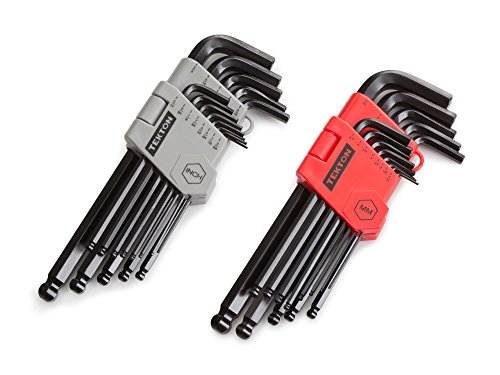
“The TEKTON 25282 delivers 26 keys (SAE + metric) in a color-coded rack for $12.32 — the best organizational value in the hex key category.”
See Today’s Price →What we like
- 26 keys: 13 SAE (3/64–3/8") + 13 Metric (1.27–10mm)
- Color-coded holder holds keys by size for fast identification
- Black oxide chrome-vanadium steel
- Ball-end + flat-end dual option on every key
- Storage rack organizes keys by size
Watch out for
- CrV steel — softer than Bondhus Protanium under extreme torque
- Plastic holder less durable than fabric rolls
- Smaller minimum size (3/64") may feel flimsy under heavy use
Frequently Asked Questions
Are Channellock pliers better than generic tongue-and-groove pliers?
Is Tekton as good as GearWrench or Craftsman?
Does Channellock make wrenches or socket sets?
Where are Tekton tools made?
Which is better for an electrician — Channellock or Tekton?
How We Chose These Products
We compare each product’s Amazon listing, the manufacturer’s published specifications and Amazon customer ratings, shown with their review counts as Amazon’s data, and rank the products on how well they answer this page’s question. We do not test products in hand and we do not run our own analysis of review text. A publication or expert is named only where we cite its published findings about that product. No manufacturer paid for placement on this page.
A price appears only when Amazon’s API supplied it at a recent daily refresh, with the date and time beside it, and is withdrawn at 4 AM Central on the day after it turns 24 hours old; otherwise use “Check price on Amazon” for the live price. Read our full methodology →