Corded vs Cordless Power Tools Explained (2026)
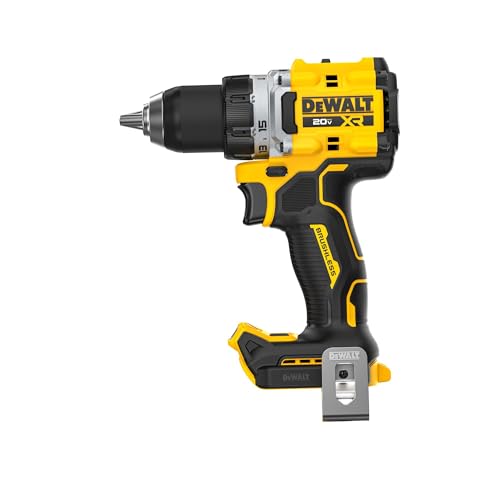
Cordless wins for portable tools in 2026 — the DEWALT 20V MAX XR Drill and Driver exemplifies the category: brushless motor, 2-speed, fits a 60+ tool ecosystem. Corded still leads for stationary shop tools and sustained-load applications. Pick one battery platform and stay with it.
Corded vs Cordless Power Tools Explained Buying Guide
Corded tools dominated the market for 70 years because batteries were heavy, expensive, and died quickly. That changed completely between 2015 and 2022. Modern 18V/20V lithium-ion batteries now match corded tools for most applications. But corded tools still win in specific, important situations — and knowing when to choose each saves money and prevents frustration.
Where Cordless Now Wins
Cordless won the consumer market outright for: drills and drivers, circular saws, jigsaws, reciprocating saws, and most nailers. The Milwaukee M18 FUEL circular saw at $199 cuts as fast as a corded circular saw in construction lumber — the test results are virtually identical. For any job where you move around (framing, decking, roofing, renovation), cordless is faster because there is no cord to manage, no extension cord to run, and no trip hazard. Battery platforms now offer 2+ hours of run time on a single charge for light use. If you already own a battery platform, every additional cordless tool in that platform gets free battery compatibility.
Where Corded Still Wins
Corded tools maintain advantages in three areas: sustained high-load applications, stationary shop tools, and low-budget entry points. A corded table saw, band saw, or planer draws consistent power for hours without interruption or battery swaps. A corded router running at full RPM for 45 minutes to finish a table edge never fades — a cordless router may need a battery swap mid-cut. Corded tools also cost 30-50% less than comparable cordless: a corded circular saw is $60-100 vs $150-200 cordless. For a shop where you work at a fixed station with outlets nearby, corded makes economic sense. Third: for applications requiring 120V sustained power that no battery system can match — large planers, 10" table saws, dust collectors — corded is the only option.

Battery Platform Lock-In
The biggest decision in cordless tools is not which tool to buy — it is which battery platform to buy into. DeWalt 20V MAX, Milwaukee M18, Makita 18V LXT, and Ryobi 18V ONE+ are the four dominant platforms. Batteries are not cross-compatible. A DeWalt battery does not work in a Milwaukee tool. Once you own 3+ batteries of a platform, switching costs you $100-200 in replacement batteries. Platform selection matters more than any individual tool choice. DeWalt and Milwaukee lead in professional-grade tools; Ryobi leads in value and platform breadth for homeowners (200+ tools on one battery). Makita has the largest professional catalog. See our cordless battery platform comparison for detailed analysis.
The Hybrid Approach
The right setup for most serious DIYers: cordless for portable tools (drill, circular saw, jigsaw, impact driver), corded for stationary shop tools (table saw, band saw, router table). A DeWalt or Milwaukee cordless kit ($200-400) covers the mobile work. A corded table saw ($350-500) covers precision ripping. This hybrid approach is also how most professional shops are set up — cordless for the field, corded for the shop. It avoids the cost of high-voltage (60V) cordless systems that try to replicate corded performance at cordless prices ($300+ per tool, $150+ per battery).

What to Avoid
Avoid: mixing battery platforms (one Milwaukee drill + one DeWalt circular saw = two separate battery inventories). Avoid: buying corded portable tools — a corded drill in 2026 is a false economy; cordless has surpassed it. Avoid: 60V/80V MAX cordless systems for homeowner use — the batteries cost as much as a basic corded tool and the platform is narrow. Avoid: cheap no-brand cordless tools where the battery cells are the failure point after 18 months. Stick to the four major platforms where batteries are sold everywhere.
Ready to Choose?
See our best cordless drills, best cordless power tools, and cordless voltage explained for platform-specific recommendations with current prices.
Watch Before You Buy

“20V MAX XR brushless motor provides 57% more run time than brushed models. Best suited for diyers and homeowners who need a reliable everyday driver for assembly, hanging, and repairs.”
See Today’s Price →What we like
- 20V MAX XR brushless motor provides 57% more run time than brushed models
- Half-inch chuck handles bits up to 1/2 inch for heavy drilling in wood and metal
- 3-mode selector (drill, drive, hammer drill) covers masonry through woodworking
- LED worklight illuminates tight spaces without a separate flashlight
Watch out for
- Battery not included in some configurations — verify kit vs. tool-only listing
- Heavier than 12V compact models — fatiguing for repeated overhead work
Read Full Analysis
The DEWALT 20V MAX XR is the standard by which cordless drills are measured in the mid-range — the brushless motor delivers 57% more runtime than brushed equivalents at the same voltage, which means fewer battery swaps during a full day of drilling and driving. The 1/2-inch chuck accepts larger bits for drilling into framing lumber and masonry, and the 3-mode selector (drill, drive, hammer drill) eliminates the need for a separate hammer drill for concrete anchor installation. The LED worklight illuminates interior spaces without a separate light source. Against the SKIL 20V and Black+Decker on this page, the DEWALT XR is the premium choice — worth the premium for users who drill frequently enough to notice the runtime and torque difference.

“The Makita Lithium-Ion Cordless Angle Drill features a brushless 12V motor with 57% more runtime versus brushed models and a 3-position pivoting head that converts from inline to right-angle in…”
See Today’s Price →What we like
- Brushless 12V motor provides 57% more runtime versus brushed Makita models
- 1/2-inch chuck reaches tight corners where a standard right-angle drill can't fit
- 3-position pivoting head converts from inline to right-angle in seconds
- Compact 7.2-inch body fits in one hand for extended overhead work
Watch out for
- 12V platform provides less torque than 18V — not for driving large bolts into hard materials
- Pivot locking mechanism loosens over time with heavy use — needs periodic re-tightening
Read Full Analysis
The Makita cordless angle drill is the right tool when a standard drill cannot physically reach the workpiece — the 3-position pivoting head converts from inline to right-angle in seconds, giving access to fasteners behind cabinetry, inside wall cavities, and in joist bays that block a straight-on drill. The 12V brushless motor is compact and light enough to hold overhead with one hand for extended runs. On a corded vs. cordless comparison page, the Makita angle drill represents a compelling cordless-specific advantage — a corded angle drill in tight overhead spaces creates a cable hazard that a cordless tool eliminates. Against the SKIL and Black+Decker, the Makita offers specialized pivoting capability that neither alternative provides.

“SKIL 20V 1/2 Inch Cordless Drill Driver by SKIL is a lightweight cordless power tool option for general DIY drilling and driving tasks.”
See Today’s Price →What we like
- 2-inch size provides a comfortable viewing or working surface area
- Variable speed trigger provides precise control from slow start to full power
- Brushless motor delivers longer battery life and consistent torque output
Watch out for
- Cordless drills require battery management — always charge before a job begins
- High-torque models can be too powerful for delicate work without speed control discipline
Read Full Analysis
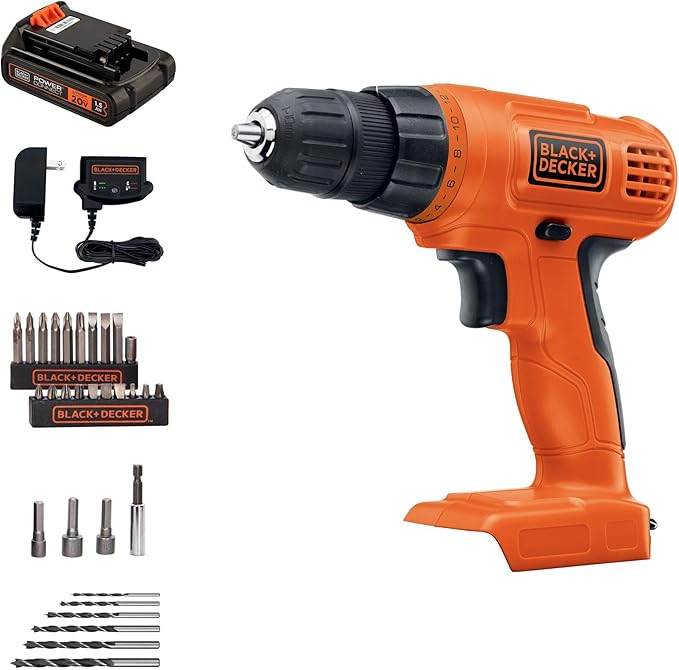
The SKIL 20V delivers a straightforward entry into 20V cordless drilling and driving — a brushless motor at this price point means longer battery life and more consistent torque output versus brushed alternatives at the same voltage. The 1/2-inch chuck handles common bit sizes for wood, metal, and general fastening, and the variable speed trigger provides slow-start control for precision work. As the third option on this corded vs. cordless guide, the SKIL represents the accessible mid-range — more affordable than the DEWALT XR while delivering brushless efficiency that the Black+Decker at $54.30 does not match. Best for homeowners who need a reliable cordless drill for assembly, hardware installation, and DIY projects without stepping into the premium tier.
“”
See Today’s Price →Watch out for
- Cordless drills require battery management — always charge before a job begins
- High-torque models can be too powerful for delicate work without speed control discipline
“”
See Today’s Price →Watch out for
- Cordless drills require battery management — always charge before a job begins
- High-torque models can be too powerful for delicate work without speed control discipline
Frequently Asked Questions
Are cordless tools as powerful as corded?
How long does a cordless tool battery last per charge?
Is it worth switching from corded to cordless?
Which cordless battery platform should I start with?
Do cordless tools work in cold weather?
How We Chose These Products
We compare each product’s Amazon listing, the manufacturer’s published specifications and Amazon customer ratings, shown with their review counts as Amazon’s data, and rank the products on how well they answer this page’s question. We do not test products in hand and we do not run our own analysis of review text. A publication or expert is named only where we cite its published findings about that product. No manufacturer paid for placement on this page.
A price appears only when Amazon’s API supplied it at a recent daily refresh, with the date and time beside it, and is withdrawn at 4 AM Central on the day after it turns 24 hours old; otherwise use “Check price on Amazon” for the live price. Read our full methodology →