DIY Electrical Safety Guide: What Homeowners Can Do 2026
The Klein Tools NCVT1P voltage tester is the tool to own for DIY electrical work: it flashes and beeps at 50 to 1,000V AC without touching metal, so you can confirm a circuit is dead first, where a multimeter needs probes on bare wire. Add the Gardner Bender GFI-3501 to check outlets you have wired.
DIY Electrical Safety Guide Buying Guide
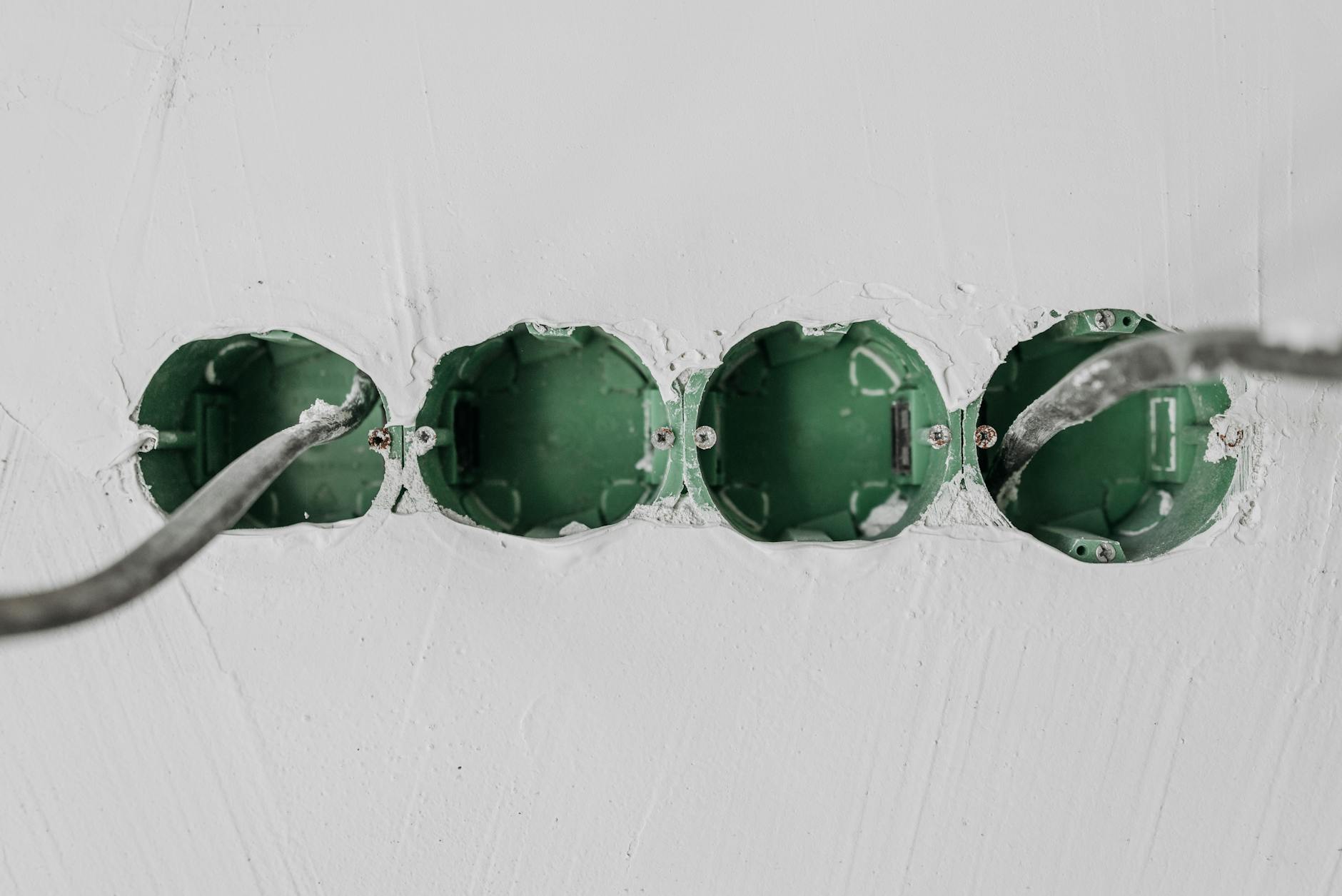 Photo by Pavel Danilyuk / Pexels
Electrical work falls into two clear categories: homeowner-appropriate tasks (replacing outlets, switches, fixtures, and GFCI devices) and tasks requiring a licensed electrician (panel work, new circuits, service entrance, and anything requiring permits in your jurisdiction). The boundary matters because the consequences of mistakes differ dramatically — a misconnected outlet switch fails safely; a miswired panel feeds back to the service entrance and risks electrocution and fire.
How We Compiled This Guide
We compared the safety tools on this page from their own listings and ranked them by how directly each keeps you safe: a voltage tester first, an outlet tester second, a multimeter third. The steps below follow common practice for working on de-energized circuits. Permit and licensing rules vary by state and municipality — always check local requirements before starting any electrical project. This guide prioritizes safe practice over speed.
The Most Important Tool: Non-Contact Voltage Tester
Before touching any wire, outlet, or switch — regardless of whether you think the power is off — use a non-contact voltage tester (NCV tester). This is the single non-negotiable tool in DIY electrical work. NCV testers detect live voltage through insulation without touching the conductor. They cost little and are worth far more in safety.
The Klein Tools NCVT1P on this page flashes red and beeps when it detects 50 to 1,000V AC. Works through wire insulation, outlet face, and switch bodies. Fluke and Greenlee make similar pens.
How to verify it works: before using on an unknown circuit, test it on a known live outlet first — confirms the tester is functioning. Then test your de-energized circuit. If the tester beeps on a circuit you think is off: the wrong breaker was tripped, or the circuit has a second feed. Stop, find the correct breaker, test again.

What Homeowners Can Safely Do (With Power OFF at Breaker)
Replace standard duplex outlets: Turn off breaker, verify off with NCV tester, remove old outlet, photograph wiring, connect black to brass screw (hot), white to silver screw (neutral), bare/green to green screw (ground), reinstall. 30-minute job.
Replace GFCI outlets: Critical in bathrooms, kitchens, garages, and outdoor locations. Same process as standard outlets plus connecting the LINE vs LOAD terminals correctly (LINE = power from panel; LOAD = optional daisy-chain protection for downstream outlets). GFCI outlets are made by Leviton, Hubbell and others. Code requires GFCI in all wet locations — replacing standard outlets in these areas with GFCI is a safety upgrade worth doing.
Replace light switches: Single-pole switches (controls one fixture from one location): straightforward swap. Three-way switches (controls one fixture from two locations — like a stairway light): more complex wiring but achievable with good labeling. 4-way switches: leave for an electrician unless very comfortable with wiring diagrams.
Replace light fixtures: Turn off power, verify off, disconnect wires (match colors), connect new fixture. Weight note: ceiling fans and heavy fixtures require mounting boxes rated for weight — standard octagon boxes are only rated for 35 lbs. Fan-rated boxes support up to 150 lbs and have screw anchor for fan wobble.
Replace an electrical panel breaker: Only if breaker is an exact same-brand replacement in an existing panel, and you are comfortable working in the panel box WITHOUT touching main lugs. If uncomfortable: call an electrician. An electrician costs more than the breaker, but the panel is where a mistake is most dangerous.
When to Call a Licensed Electrician (Non-Negotiable)
Any work on the main panel's main lugs: The cables entering the main panel from the utility meter are ALWAYS live — the main breaker does NOT disconnect these. Working near them without utility shutoff is a lethal risk. An electrician with proper tools and training handles this.
Adding new circuits: Running new wire from panel to a new location requires permits in almost every jurisdiction. Permits require inspection. Permits require licensed electricians in many states. Check your local building department before starting.
Upgrading service amperage: Going from 100A to 200A service requires utility company coordination plus licensed electrician plus permits. Not DIY work.
Aluminum wiring (pre-1972 homes): Homes built before 1972 may have aluminum branch circuit wiring. Aluminum connections oxidize and can cause arc faults. Requires licensed electrician using aluminum-rated devices and anti-oxidant compound.
Knob and tube wiring (pre-1950s): Open air wiring without ground conductor. Cannot be extended. Often voided by homeowner's insurance if modified incorrectly. Electrician required.
Circuit Breaker Sizing and Wire Gauge Basics
Every wire gauge has a maximum ampacity — the safe current it can carry without overheating. This is why circuit breakers match wire gauge:
• 14 AWG wire → 15A breaker (standard lighting circuits)
• 12 AWG wire → 20A breaker (kitchen outlets, bathroom)
• 10 AWG wire → 30A breaker (dryer circuits)
• 6 AWG wire → 50A breaker (range circuits)
Oversized breakers on undersized wire are the primary cause of electrical fires — the wire overheats before the breaker trips. Never replace a 15A breaker with a 20A to "fix" a tripping issue — this is extremely dangerous. A tripping breaker indicates overloaded circuit, failed device, or wiring fault — diagnose the cause, don't upsize the protection.

Common Mistakes to Avoid
Mistake 1: Assuming the power is off without testing. Breaker labels are wrong more often than homeowners think. Always verify with a non-contact voltage tester on every wire you're about to touch.
Mistake 2: Reversing hot and neutral. White wire = neutral (to silver/white terminal), black = hot (to brass/gold terminal). Reversing these creates a "reverse polarity" outlet that works for most devices but creates shock hazard — the metal shell of a plug-in device becomes electrified instead of neutral. NCV testers catch this: a functioning outlet with reversed polarity will detect voltage on the neutral prong.
Mistake 3: Pushing wires into backstab connections. Backstab (push-in) terminals on outlets and switches are convenient but less reliable than screw terminals. Use screw terminals for all connections — backstabs work loose over years and create intermittent connection issues and arc faults.
Mistake 4: Not turning off the correct breaker. In older homes with poorly labeled panels, finding the correct breaker takes longer. Solution: plug a radio or lamp into the circuit, then flip breakers until it goes off — now you're certain. A circuit breaker finder kit, such as Klein Tools' CL110, speeds this up by sending a signal on the circuit that a receiver detects at the panel.
What We Recommend
Essential safety tools: a non-contact voltage tester such as the Klein Tools NCVT1P, and a plug-in outlet tester such as the Gardner Bender GFI-3501. For DIY outlet and switch work: a 6-in-1 screwdriver, needle-nose pliers and a wire stripper and cutter. For panel breaker identification: a circuit breaker finder. See our best electrical testers, best screwdriver sets, and best wire strippers for complete electrical kit recommendations.
“Klein Tools' NCVT1P: a pocket non-contact voltage tester that detects 50 to 1,000V AC in cables, outlets, switches and fixtures; green LED when on, red flash and beep on voltage.”
See Today’s Price →What we like
- Detects 50 to 1,000V AC without touching the conductor
- Green LED shows it is working; flashes red and beeps on voltage
- Auto power-off saves the battery
- Pocket clip; 6.6-foot drop protection
Watch out for
- AC detection only: it does not measure voltage or test DC
Read Full Analysis
The NCVT1P is the tool this guide tells you never to work without. Hold its tip near a cable, an outlet slot, a switch or a breaker and it flashes red and beeps if AC voltage between 50 and 1,000 volts is present - without touching any metal. A green light shows the tester itself is on, so test it on a known live outlet first, then on the circuit you are about to work on. It switches itself off to save the battery, clips in a pocket and survives a 6.6-foot drop. It detects AC only and does not measure voltage.
Skip this if: You need to measure exact voltages
“Gardner Bender's GFI-3501: a plug-in tester for standard and GFCI outlets whose three lights show correct wiring or six faults, with a GFCI trip test at 6 to 9 mA.”
See Today’s Price →What we like
- Tests standard and GFCI outlets and extension cords
- Three lights show 7 wiring conditions
- GFCI test trips between 6 and 9 mA
- Finds open ground, open neutral and reversed hot/neutral
Watch out for
- Checks outlets only, not switches or fixtures
Read Full Analysis
Plug the GFI-3501 into an outlet and its three lights tell you whether the wiring is correct or which of six faults is present: open ground, open neutral, open hot, hot/ground reversed or hot/neutral reversed. A test button trips a GFCI outlet at 6 to 9 milliamps, so you can confirm the GFCI actually cuts power. It also tests extension cords. Use it after replacing an outlet - it catches the reversed-polarity mistake a voltage pen cannot. It only checks plug-in outlets.
Skip this if: You need to test switches or fixtures

“AstroAI's True RMS digital multimeter: auto-ranging 6,000 counts for AC and DC voltage, current, resistance and continuity, with a backlit display.”
See Today’s Price →What we like
- True RMS, 6,000-count auto-ranging meter
- Measures AC/DC voltage, current, resistance and continuity
- Sold by AstroAI's own store
- Backlit display
Watch out for
- More to learn than a pen tester
Read Full Analysis
A multimeter measures what a pen tester can only detect: the actual voltage at an outlet, whether a wire is continuous end to end, or whether a switch is closing. AstroAI's True RMS meter auto-ranges across AC and DC voltage, current and resistance with a 6,000-count display and a continuity buzzer. It needs probes on bare metal, so use the voltage pen first to confirm a circuit is dead before you touch anything. This listing is sold by AstroAI's own store and shipped by Amazon.
Skip this if: You only need a live-or-dead check
Frequently Asked Questions
Can homeowners do their own electrical work?
What is a GFCI outlet and where do I need them?
How do I know if my electrical panel is safe?
What happens if I wire an outlet backwards?
Can I replace a 15 amp breaker with a 20 amp to stop tripping?
How We Chose These Products
We compare each product’s Amazon listing, the manufacturer’s published specifications and Amazon customer ratings, shown with their review counts as Amazon’s data, and rank the products on how well they answer this page’s question. We do not test products in hand and we do not run our own analysis of review text. A publication or expert is named only where we cite its published findings about that product. No manufacturer paid for placement on this page.
A price appears only when Amazon’s API supplied it at a recent daily refresh, with the date and time beside it, and is withdrawn at 4 AM Central on the day after it turns 24 hours old; otherwise use “Check price on Amazon” for the live price. Read our full methodology →