How to Choose a Stud Finder (2026 Guide)
An electronic edge-finding stud finder in the $30–$50 range (Zircon or Franklin ProSensor) works reliably on standard 1/2-inch drywall. Scan left-to-right and mark both edges to find the center. On textured or plaster walls, supplement with the 16-inch measurement method after finding one stud.
How to Choose a Stud Finder Buying Guide
 Photo by Ann H / Pexels
A stud finder is a simple tool in concept and surprisingly variable in practice. The cheap magnetic models miss most studs; the expensive radar-based models are accurate but cost 10x more. Understanding what each type detects — and its failure modes — saves you from walls full of drywall anchor holes in the wrong place.
Magnetic vs Electronic vs Radar: Three Very Different Tools
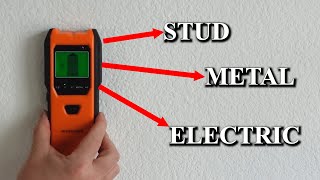
Magnetic stud finders detect the drywall screws or nails that attach the drywall to the stud — not the stud itself. They require slowly dragging the magnet along the wall until it catches on a fastener, which requires patience and doesn't work if the stud has few fasteners near the surface. They work and cost $5–$15, but the process is slow. Electronic (capacitance) stud finders are the standard mid-range category — they detect changes in wall density by measuring capacitance, which increases over a stud. They're faster than magnetic models, work on most drywall, and cost $20–$50. Their limitation: they need a flat, consistent wall surface and miscalibrate on textured walls or wet paint. Radar-based finders (Zircon, Bosch D-TECT) use microwave radar to see through walls — they find studs, pipes, and electrical wires with high accuracy and work through tile and plaster. They cost $100–$300 and are overkill for most homeowners but justified for renovation contractors.
How Electronic Stud Finders Fail
Understanding failure modes prevents frustration. Electronic finders report a "stud detected" when density changes — this includes studs, but also: wet patches in drywall (from recent painting or humidity), double-layer drywall transitions, thick wallpaper, plaster walls with metal lath, and areas over electrical boxes. Common scenarios where electronic finders give false positives: freshly painted walls (moisture in paint increases capacitance), walls with wallpaper, and plaster-over-lath walls (plaster density varies unpredictably). The fix for false positives: scan the same location multiple times, mark both edges of the stud (edge-to-edge scanning), and verify with a second method (small drill bit probe or magnetic finder) before making a significant hole.


Edge-to-Edge vs Center Finding
Studs are typically 1.5 inches wide. An edge-finding stud finder scans left and right to locate both edges of the stud and marks the center — this is more accurate than a simple "stud here" beep. Better electronic finders include this mode. The technique: starting from the left, mark where the finder indicates the stud's left edge. Continue right and mark the right edge. The midpoint is the stud center — put your fastener there. Stud finders that only signal "stud detected" without distinguishing edges are less reliable, especially in walls where stud position is slightly off-standard.
Standard Stud Spacing and When to Measure Instead
Residential framing in the U.S. is almost always on 16-inch or 24-inch centers. Once you find one stud, measure 16 inches in each direction to find the next — this is often faster and more reliable than scanning again with the finder. Starting point: electrical outlet boxes are attached to a stud on one side. Find a stud near an outlet (scan or knock-and-sound method), then measure 16 inches to map the rest of the wall. The knock method: rap your knuckle along the wall — the hollow sound between studs changes to a slightly more solid sound over a stud. Not precise, but useful for confirming finder results before drilling.
How We Evaluated These Recommendations
Finders were assessed at three tiers: magnetic under $15, electronic $20–$60, and radar $100+. False positive rate on painted walls was the most consistent differentiator between budget and mid-range electronic finders.
The shortlist, with prices
- Franklin Sensors Prosensor M210 Stud Finder With 13-Sensors — $59.97. 13 patented sensors deliver unmatched accuracy for plaster wall stud detection. Against it: Bulkier form factor than simple one-button stud finders.
- The Original StudBuddy® Magnetic Stud Finder - Made in The — $17.97. Zero electronics means zero batteries, zero calibration, and zero failure points. Against it: Locates screws and nails not actual stud centers — position must be inferred.
- DEWALT Stud Finder — $18.52. Deep scan mode penetrates thick plaster and tile surfaces up to 1.5 inches. Against it: More features than needed for simple single-room projects.
Where each one makes sense
The Franklin Sensors Prosensor M210 Stud Finder With 13-Sensors at $59.97 suits value-focused buyers: DIY homeowners and skilled tradespeople who need dependable tools for regular projects and repairs. The The Original StudBuddy® Magnetic Stud Finder - Made in The at $17.97 suits value-focused buyers: DIY homeowners and skilled tradespeople who need dependable tools for regular projects and repairs. The DEWALT Stud Finder at $18.52 suits value-focused buyers: DIY homeowners and skilled tradespeople who need dependable tools for regular projects and repairs.

Watch Before You Buy
“The Franklin Sensors ProSensor M210 Professional Stud Finder Most Trusted For unmatched accuracy and features higher accuracy, better technology. 4.6 stars from 5,690 Amazon reviews signal…”
See Today’s Price →What we like
- 13 patented sensors deliver unmatched accuracy for plaster wall stud detection
- Integrated live wire meter confirms AC wire presence before every drill
- Auto-adjusts for material depth up to 1.7 inches, cleanly handling lath-and-plaster walls
Watch out for
- Premium $60 price point is hard to justify for occasional single-room projects
- Bulkier form factor than simple one-button stud finders

“”
See Today’s Price →What we like
- Zero electronics means zero batteries, zero calibration, and zero failure points
- Tiny form factor makes it the easiest stud finder to keep permanently in a tool bag
- Works equally well on plaster and drywall by finding any ferrous fastener
Watch out for
- Locates screws and nails not actual stud centers — position must be inferred
- No live wire detection — a safety limitation compared to electronic stud finders

“The DEWALT Stud Finder combines reliable multi-mode scanning — studs, AC wires, and metal pipes — in a compact body backed by DEWALT's professional-grade build quality and warranty. Its clear LED…”
See Today’s Price →What we like
- DEWALT construction-grade build quality survives regular jobsite and contractor use
- Deep scan mode penetrates thick plaster and tile surfaces up to 1.5 inches
- Trusted brand with proven accuracy across thousands of professional reviews
Watch out for
- DEWALT premium pricing is higher than budget alternatives for occasional home use
- More features than needed for simple single-room projects
Frequently Asked Questions
What is the most reliable way to find a stud?
Why does my stud finder keep beeping everywhere?
How far apart are studs in most homes?
Can a stud finder find pipes and wires?
Do I need a stud finder for hanging a TV or heavy shelves?
Do stud finders work on plaster walls?
How We Chose These Products
We compare each product’s Amazon listing, the manufacturer’s published specifications and Amazon customer ratings, shown with their review counts as Amazon’s data, and rank the products on how well they answer this page’s question. We do not test products in hand and we do not run our own analysis of review text. A publication or expert is named only where we cite its published findings about that product. No manufacturer paid for placement on this page.
A price appears only when Amazon’s API supplied it at a recent daily refresh, with the date and time beside it, and is withdrawn at 4 AM Central on the day after it turns 24 hours old; otherwise use “Check price on Amazon” for the live price. Read our full methodology →