How to Choose Clamps for Woodworking (2026)
The KAIWEETS Digital Clamp Meter is the top-ranked product on this page — true RMS measurement handles AC/DC current, voltage, and resistance in a clamp-style housing that avoids breaking circuits for safe non-contact electrical testing.
How to Choose Clamps for Woodworking Buying Guide
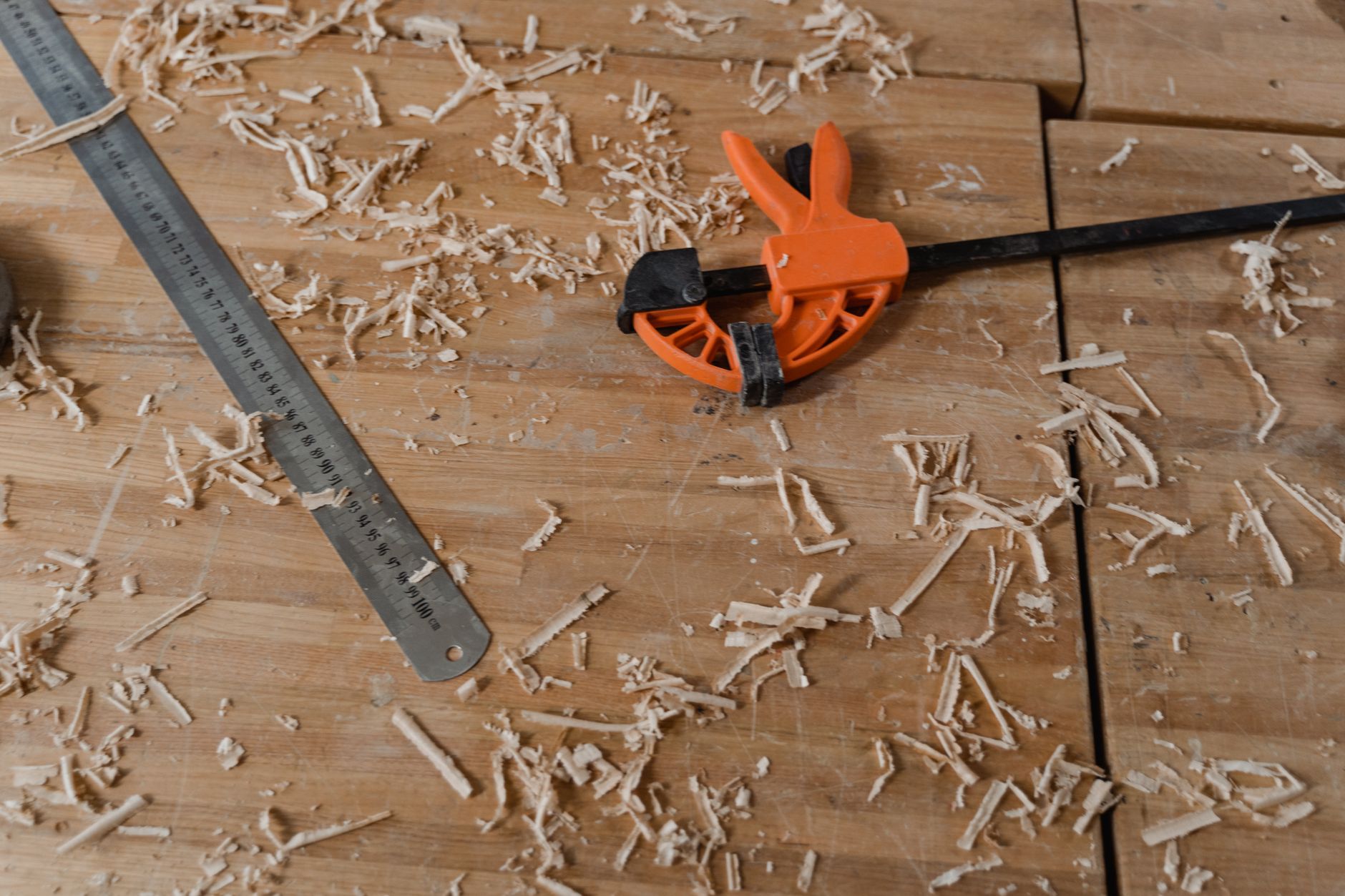 Photo by Tima Miroshnichenko / Pexels
Clamps are the most underestimated tool in woodworking. Experienced woodworkers consistently say they own too few — the number you need multiplies with every joint in your project. The right clamps depend on what you're building, how much reach you need, and whether you're edge-gluing boards or assembling case goods.
Clamp Types: Match the Clamp to the Joint
Parallel jaw clamps (also called cabinet clamps or F-clamps) are the workhorses for panel glue-ups and face-frame assembly — their wide, flat jaws distribute pressure without bowing the wood. Pipe clamps are the economy option for long spans: buy the heads ($15–$20/pair) and use standard black pipe in whatever length you need. Bar clamps (I-bar, T-bar, or lightweight bar) are versatile all-around clamps for general woodworking assembly. One-handed trigger clamps are for holding workpieces during cutting and routing — not for serious glue pressure. Spring clamps and C-clamps round out the shop for small tasks. The fundamental rule: you need more clamps than you think. A face-frame assembly often needs 8–10 clamps spaced 6–8 inches apart.
Clamping Pressure and Jaw Spread
More is not always better for clamping pressure. Over-tightening clamps on a glue joint can squeeze too much glue out, creating a starved joint that fails at the glue line. For most wood glues (Titebond, PVA-type), 100–150 PSI is optimal. This corresponds to finger-tight plus a quarter turn on most medium-sized clamps. Jaw spread (the maximum opening) determines what you can clamp — a 12-inch jaw spread handles panel glue-ups up to 12 inches wide; a 24-inch spread is needed for wide panels and cabinet sides. Buy clamps with more jaw spread than your current projects require — you'll grow into them.
Parallel Jaw vs Pipe Clamps: The Core Trade-Off
Parallel jaw clamps (Bessey K-Body, Jet, Jorgensen) apply pressure that stays perpendicular to the work surface — the jaws don't rack under load. This prevents bowing in panel glue-ups. They cost $25–$60 each, which adds up fast. Pipe clamps apply pressure that can cant slightly as the screw tightens, potentially causing panels to bow. The fix: alternate clamps above and below the work surface. Pipe clamps cost $15–$20 for the heads plus pipe — far cheaper for long spans. Professional furniture makers use parallel jaw clamps for visible glue-ups; production shops use pipe clamps for everything and alternate them. For a home shop: 6–8 parallel jaw clamps (24-inch) covers most furniture work; add pipe clamp heads for occasional long spans.

Specialty Clamps Worth Owning
Band clamps (also called strap clamps) wrap around irregular shapes — chairs, frames, hexagonal boxes — and apply even pressure where bar clamps can't reach. Corner clamps hold 90-degree joints square during glue-up, essential for boxes and frames when you're working alone. Edge clamps (sometimes called three-way clamps) apply pressure perpendicular to an edge, useful for applying edge banding without a dedicated iron. Cauls — straight boards clamped on top of a panel glue-up — spread pressure evenly across clamp positions and prevent the panel from bowing up between clamps. No specialized clamp required; just straight-grained lumber.
How We Evaluated These Recommendations
Clamps were evaluated at three price tiers: budget under $15 each, mid-range $20–$40, and professional $40–$70. Jaw parallelism under load was the most consistent differentiator between mid-range and professional clamps.
The products this guide covers
- KAIWEETS HT206D Digital Clamp Meter T-RMS 6000 Counts — $47.99. This multimeter can accurately measure AC/DC Current, AC/DC Voltage, Frequency or Duty Cycle, Resistance,. Against it: LED replacement bulbs may be proprietary on some models limiting future bulb options.
- Bessey Clutch Style Bar Clamps - 24 In 600 lb - GSCC2.524- — $14.39. 2.5-inch size provides a comfortable viewing or working surface area. Against it: LED replacement bulbs may be proprietary on some models limiting future bulb options.
- MLCS Can-Do Heavy Duty Corner Clamp & Vise — $34.99. Against it: LED replacement bulbs may be proprietary on some models limiting future bulb options.
Picking between them
The KAIWEETS HT206D Digital Clamp Meter T-RMS 6000 Counts at $47.99 suits value-focused buyers: Home office users readers and hobbyists who need focused adjustable lighting at their workspace or bedside. The Bessey Clutch Style Bar Clamps - 24 In 600 lb - GSCC2.524- at $14.39 suits value-focused buyers: Home office users readers and hobbyists who need focused adjustable lighting at their workspace or bedside. The MLCS Can-Do Heavy Duty Corner Clamp & Vise at $34.99 suits value-focused buyers: Home office users readers and hobbyists who need focused adjustable lighting at their workspace or bedside.

Watch Before You Buy
“The KAIWEETS Digital Clamp Meter features this multimeter can accurately measure ac/dc current, ac/dc voltage, frequency or duty cycle, resistance,. 4.5 stars from 16,046 Amazon reviews signal…”
See Today’s Price →What we like
- True RMS clamp meter: AC/DC current through the jaws, no need to break the circuit
- Capacitance and K-type thermocouple temperature, plus voltage and resistance
- Low-impedance mode, low-pass filter for drive signals and non-contact voltage detection
Watch out for
- Clamp body is bulkier than a pocket multimeter

“The Bessey GSCC2.524 economy clutch-style bar clamp delivers reliable clamping force for everyday woodworking tasks. Its 24-inch capacity handles most panel and edge-gluing jobs, and the economy…”
See Today’s Price →What we like
- 2.5-inch size provides a comfortable viewing or working surface area
- LED bulb technology delivers energy-efficient lighting with long lifespan
- Adjustable brightness or color temperature matches different times of day and activities
Watch out for
- LED replacement bulbs may be proprietary on some models limiting future bulb options
- Strong directional lighting may cause glare if positioned without adjustment
Read Full Analysis
An economy clutch-style bar clamp from Bessey, a German manufacturer with a long reputation for clamping precision in woodworking. At 24-inch capacity, this handles the most common panel glue-ups, edge-gluing, and face-frame assembly without the size limitations of shorter clamps. The clutch-style mechanism locks rapidly along the bar without threading — faster adjustment than screw-type bar clamps when positioning multiple clamps simultaneously on a panel. Bessey economy tier maintains the flat bar design that resists flex under clamping pressure, which cheaper bar clamps flex on. For any woodworker building a clamp set, 24-inch bar clamps are the most versatile length — usable for both narrow and wider workpieces. Bessey economy clamps typically compete on price with Jorgensen and Irwin in the same format.

“The MLCS Can-Do Clamp is purpose-built for corner and assembly work, functioning as both a clamp and a corner brace in one. Experts note corner braces are a must-have addition for accurate…”
See Today’s Price →Watch out for
- LED replacement bulbs may be proprietary on some models limiting future bulb options
- Strong directional lighting may cause glare if positioned without adjustment
Frequently Asked Questions
How many clamps does a woodworker actually need?
What is the difference between parallel jaw clamps and F-clamps?
Can I use too much clamp pressure on a glue joint?
What are cauls and do I need them?
Are pipe clamps as good as bar clamps?
What clamps do I need for making picture frames?
How We Chose These Products
We compare each product’s Amazon listing, the manufacturer’s published specifications and Amazon customer ratings, shown with their review counts as Amazon’s data, and rank the products on how well they answer this page’s question. We do not test products in hand and we do not run our own analysis of review text. A publication or expert is named only where we cite its published findings about that product. No manufacturer paid for placement on this page.
A price appears only when Amazon’s API supplied it at a recent daily refresh, with the date and time beside it, and is withdrawn at 4 AM Central on the day after it turns 24 hours old; otherwise use “Check price on Amazon” for the live price. Read our full methodology →