How to Choose a Ladder: Step vs Extension Guide (2026)
Step ladders suit interior work under 10 feet; extension ladders are for gutters and roofs. Fibreglass over aluminium if you go near wiring. The Louisville Ladder 6-Foot Fiberglass Twin Front Step Ladder covers the interior case.
How to Choose a Ladder Buying Guide

Ladders account for more than 100 deaths and 300,000 emergency room visits per year in the US — more than any other home improvement tool. The right ladder type, proper duty rating, and correct setup procedure reduce that risk dramatically. This guide covers when to use each ladder type and what specs to buy for your actual use case.
Step Ladder vs Extension Ladder
A step ladder is self-supporting — it stands on four feet with no wall required. Maximum working height is the top of the ladder minus 2 steps (never stand on the top two steps or the top platform). A 6-foot step ladder reaches a working height of about 10 feet. An extension ladder leans against a wall or structure — it reaches higher than any step ladder of similar size. An 8-foot ceiling in a house: a 6-foot step ladder works fine. A 2-story exterior wall: a 24-foot extension ladder is needed. An attic access in a hallway: a step ladder. Painting the eaves of a 30-foot house: extension ladder. The rule: if you need to work against a wall or structure, use an extension. If you need to work in an open space, use a step.
Duty Rating: The Spec That Matters Most
Ladder duty ratings define maximum load capacity including the person, tools, and materials. Type III (light duty): 200 lbs — consumer home use only, not for heavy materials. Type II (medium duty): 225 lbs — DIY and light professional use. Type I (heavy duty): 250 lbs — professional use. Type IA (extra heavy duty): 300 lbs — heavy professional and industrial. Type IAA (special duty): 375 lbs — scaffold and industrial. Calculate your duty rating need: your body weight + 50 lbs for tools and materials, then add a 25% safety buffer. A 180 lb person carrying 30 lbs of tools needs 210 lbs minimum — Type I (250 lbs) is appropriate. Never underestimate the weight of materials: a gallon of paint is 8-9 lbs, a bucket of joint compound is 12 lbs.

Material: Aluminum vs Fiberglass
Aluminum ladders are lighter, cheaper, and standard for general use. They conduct electricity — never use near live electrical lines or panels. Fiberglass ladders are heavier (20-40% heavier than aluminum at the same height) and cost 30-50% more, but they are non-conductive and OSHA-required for electrical work. For most homeowner tasks: aluminum is fine and more practical for moving around. For electricians and anyone working near service panels or overhead lines: fiberglass is required. Werner and Little Giant are the two primary quality brands; both make fiberglass and aluminum versions in the same ladder lines.
Extension Ladder Sizing
Extension ladder height is labeled by the ladder's extended length, but the working height is lower — the top rung must be 3-4 feet above the roofline or contact point (for stability). A 24-foot extension ladder reaches about 21 feet of working height. Rule for rooflines: measure the eave height, add 3 feet, then buy a ladder at least that extended length. For a two-story house with 18-foot eaves: you need a 24-foot ladder. For a single-story with 9-foot eaves: a 16-foot extension works. Extension ladders should be set at a 75° angle (1 foot out for every 4 feet up) — the OSHA-specified safe angle. Too steep and the ladder tips back; too shallow and the base slides out.
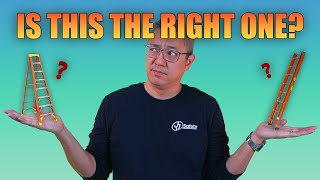
Multi-Position and Articulating Ladders
The Little Giant Velocity and Werner MT series are articulating ladders that convert between step, extension, scaffold plank support, and staircase positions. They cost $200-400 but replace 2-3 single-purpose ladders in a small garage. For homeowners who need occasional reach and limited storage: an articulating ladder is the best single-ladder solution. The Little Giant Velocity M17 (17-foot max extension, 300 lbs, Type IA, $260-300) handles every residential task. See our best ladders guide and best ladders for home use.
Setup and Safety Rules
Extension ladder: always have three points of contact. Place on firm, level ground — ladder levelers exist for uneven surfaces. Tie off the top of the ladder for any work lasting more than a few minutes. Never reach past your hips on either side — move the ladder instead. Step ladder: open fully and lock the spreader bars before climbing. Never lean a step ladder against a wall — use it only in the fully open position. Both types: inspect for bent steps, loose rivets, and damaged feet before each use. Wet rungs are a leading cause of falls — non-slip boots and anti-slip ladder covers help. Do not use a damaged ladder.
“With its 375-Pound capacity, elegant design and smooth finish, you won’t find a more durable, reliable twin step. Best suited for enthusiast buyers: diy homeowners and skilled tradespeople who need…”
See Today’s Price →What we like
- 375 lb Type IAA rating
- Double-sided twin step: climbable from either side
- SHOX system resists damage from rough handling, per Louisville
- Raptor boots with slip-resistant, non-marring tread
Watch out for
- A fixed 6-foot stepladder: no extension mode for gutters
Read Full Analysis
With its 375-Pound capacity, elegant design and smooth finish, you won’t find a more durable, reliable twin step Inside spreader braces keep your double ladder protected while in transport as well provide a safe and stable twin Corded models limit mobility; cordless models require proper battery charge management Beginners should review safety guidelines and practice on scrap material before first project use

“”
See Today’s Price →What we like
- Retractable design stores flat against a wall — ideal for apartments and small garages
- 3-story reach is rare in residential ladders under $150
- Quick-release retraction speeds repeated use and storage cycles
- Aluminum construction keeps weight down compared to fiberglass at this height
Watch out for
- Retractable mechanism has more moving parts than fixed ladders — requires annual inspection
- Load ratings should be confirmed before each use; check product spec sheet carefully

“”
See Today’s Price →What we like
- Mounts to window sill in under 60 seconds with no tools — ready in a nighttime emergency
- Anti-slip rungs maintain footing even with bare feet during evacuation
- Compact storage box fits under a bed or in a closet without consuming floor space
- Rated for two-story drops up to 25 feet, covering most residential second floors
Watch out for
- Intended for emergency evacuation only — not a general-purpose climbing ladder
- Rungs swing freely against the building face, which is harder for children and elderly to navigate
Frequently Asked Questions
What size ladder do I need to clean gutters?
What is the difference between Type I and Type II ladders?
Are fiberglass ladders worth it?
Can I stand on the top step of a step ladder?
What is an articulating ladder?
How We Chose These Products
We compare each product’s Amazon listing, the manufacturer’s published specifications and Amazon customer ratings, shown with their review counts as Amazon’s data, and rank the products on how well they answer this page’s question. We do not test products in hand and we do not run our own analysis of review text. A publication or expert is named only where we cite its published findings about that product. No manufacturer paid for placement on this page.
A price appears only when Amazon’s API supplied it at a recent daily refresh, with the date and time beside it, and is withdrawn at 4 AM Central on the day after it turns 24 hours old; otherwise use “Check price on Amazon” for the live price. Read our full methodology →