How to Read Work Boot Safety Ratings (2026): ASTM, Steel
The SUREWAY 6-inch Full Grain Leather Steel Toe Work Boots at $82.99 are the best safety work boots for the value — Goodyear welt construction allows resoling to extend life beyond a single pair, and the ASTM-rated steel toe meets F2413 impact requirements.
At a Glance
| # | Product | Award | Price |
|---|---|---|---|
| 1 | Best Overall | $31.49 Buy → |
|
| 2 | Also Excellent | $91.99 Buy → |
|
| 3 | Best Premium | $82.99 Buy → |
|
| 4 |  Thorogood American Heritage 6" Mo… Thorogood American Heritage 6" Mo…Thorogood |
Worth Considering | Check current price on Amazon Buy → |
How to Read Work Boot Safety Ratings (2026) Buying Guide
 Photo by ELEVATE / Pexels
Quick Comparison
| Feature | Basic Work Boot | Steel Toe (ASTM F2413) | Composite Toe | Electrical Hazard (EH) | Metatarsal Guard |
|---|---|---|---|---|---|
| Best For | Light-duty, dry worksites | Heavy impact, crush hazards | Airport security, cold climates | Electrical work, live wire risk | Heavy equipment, overhead drops |
| Price Range | $50–$120 | $80–$200 | $100–$250 | $100–$220 | $150–$300+ |
| Impact Rating | None | 75 ft-lb (I/75) | 75 ft-lb (I/75) | 75 ft-lb (I/75) | 75 ft-lb + metatarsal |
| Metal-Free | Yes | No | Yes | Varies | Varies |
| Weight vs Steel Toe | Lightest | Baseline | 30–40% lighter | Same as base toe type | Heaviest |
| Our Pick For | Landscaping, light trades | Construction, warehousing | Electricians, cold climates | Electricians, utility workers | Logging, foundry, heavy fab |
Quick Verdict: Our top pick is the Keen Utility Chicago 6-Inch Composite Toe ESD Boot (Best Overall) — consistently top-rated in its category. Priced at $42.42.
Who This Guide Is For
This guide is for you if:
- You're buying outdoor or work clothing and want to understand what materials and features matter
- You're comparing synthetic and natural fiber options and want honest performance comparisons
- You want to build a layering system that works across temperature ranges
Skip this guide if:
- You're a professional outdoor guide or mountaineer with established preferences
- You just want a specific clothing recommendation — see our comparison pages
Quick verdict: ASTM F2413 is the US standard for protective footwear. Steel toe (I/75 C/75): withstands 75 ft-lb of impact and 2,500 lb compression.
<Understanding ASTM F2413: The Work Boot Bible
Every safety-rated work boot in the US is tested against ASTM F2413 — the Standard Specification for Performance Requirements for Protective (Safety) Toe Cap Footwear. This is the baseline. Understanding it means you can read any boot's spec label and know exactly what protection you're getting.
The standard is updated periodically. Current version is ASTM F2413-18 (2018). Some older boots reference ANSI Z41 — this was the predecessor standard, now retired. If you see ANSI Z41 PT91 on an old pair of boots, they predate the current standard.
---
Toe Protection Ratings
I/75 — Impact Resistance
The boot's toe cap must withstand a 75 ft-lb impact without deforming to where it contacts the wearer's toes. This is tested by dropping a weighted striker onto the toe box.
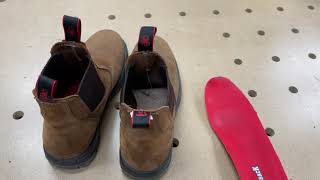
75 ft-lb is significant force — approximately equivalent to a 50 lb object falling 18 inches. This covers most jobsite dropped-object scenarios: falling pipe, tool drops, material handling accidents.
What this looks like: The toe cap (steel, composite, or alloy) deforms but maintains clearance for your foot. After a significant impact, your boot's toe box will be visibly deformed. This is intentional — the cap absorbs and distributes the impact energy, protecting your foot. After a significant impact, the boot should be retired (the cap may have compromised integrity).
C/75 — Compression Resistance
The toe cap must withstand 2,500 lb of static compression (a slow, sustained crushing force). This tests against scenarios like a vehicle tire rolling over a foot or a heavy object falling and remaining on the toe area.
2,500 lb — roughly the weight of a small car. This is why a crushed steel toe boot often still protects the foot even when the boot looks destroyed.
Toe Cap Materials: Steel vs Composite vs Alloy
Steel Toe (most common designation: "I/75 C/75")
- Weight: Heaviest (adds 0.5-1 lb per boot over non-safety)
- Conductivity: Conducts temperature — cold toes in winter, hot toes in summer sun
- Metal detector: Triggers metal detectors (issue for airports, secure facilities)
- Durability: Essentially indestructible — steel toe caps survive decades
- Protection: Meeting I/75 C/75 at 150°F is harder for steel; ASTM cold-soak testing is required
- Cost: Generally lowest-cost safety option
Composite Toe (carbon fiber, fiberglass, Kevlar, or plastic)
- Weight: Lighter than steel (0.2-0.4 lb lighter per boot)
- Conductivity: Non-conductive — warmer in winter, cooler in summer
- Metal detector: Does not trigger metal detectors
- Durability: Comparable to steel in ASTM testing, but composites can crack under impact while steel deforms — a cracked composite cap may lose effectiveness faster
- EH compatibility: Better suited for high-voltage electrical environments
- Cost: Typically $20-60 more than steel toe equivalents
Alloy Toe (aluminum-based alloys)
- Weight: Lightest of the three, even lighter than composite in many cases
- Protection: Meets same ASTM ratings as steel and composite
- Cost: Generally between steel and composite
- Note: Aluminum alloy toes are technically metallic — may trigger sensitive metal detectors
When to choose which:
- Construction, warehouse, manufacturing: Steel toe (durability and cost)
- Electrical work, utilities: Composite + EH rated (non-conductive)
- Facilities with security checkpoints: Composite
- Light manufacturing, food processing: Alloy (lighter = less fatigue)
- Welding: Steel toe + metatarsal guard
---
EH — Electrical Hazard Rating
EH-rated boots are designed to act as a secondary source of protection against contact with live electrical circuits. The outer sole and heel withstand 18,000 volts at 60 Hz for 1 minute with no more than 1 milliamp of current leakage — under dry conditions.
Critical caveats:
- EH is a secondary protection, not primary. Arc flash gear, rubber insulating gloves, and proper lockout/tagout procedures are primary.
- Wet conditions significantly reduce EH protection. An EH-rated boot submerged in water provides no meaningful electrical protection.
- EH is not the same as dielectric protection — dielectric footwear provides higher-grade protection for line workers handling live high-voltage conductors.
Who needs EH: Electricians, HVAC technicians, maintenance workers in electrical environments, construction near electrical infrastructure.
Who doesn't need it: Warehouse workers, office workers, anyone not regularly exposed to live electrical hazards. EH boots cost more and the soles are stiffer.
KEEN Utility Chicago Composite Toe ESD is ESD (static dissipative) rather than EH. These are different standards — see SD below.
---
Watch Before You Buy
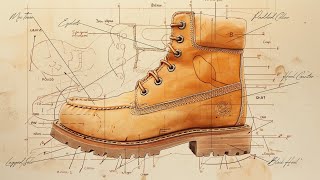
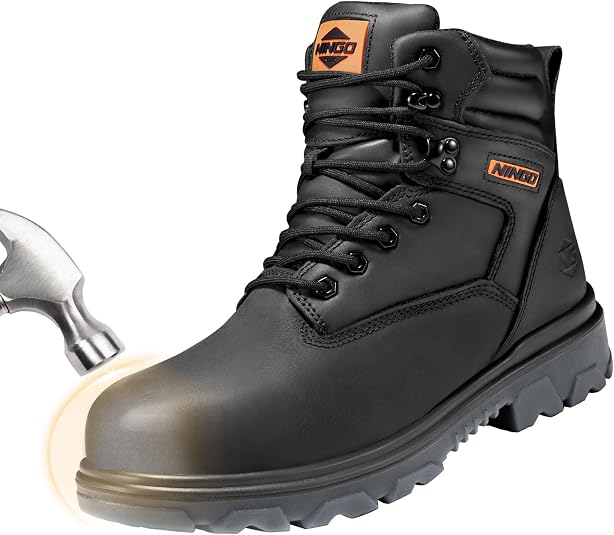
“An affordable waterproof steel-toe work boot at $31.49 that meets ASTM basic safety requirements — oil and slip resistance covers the most common job site hazards at the lowest price in this…”
See Today’s Price →What we like
- Steel toe cap
- Waterproof
- Oil-slip resistant
- Men's sizes
Watch out for
- budget brand quality variable
- less durable than premium work boots
- limited ankle support compared to taller styles
Read Full Analysis
The NINGO at $31.49 is the lowest-priced safety boot on this page — $12.40 less than the Keen Utility at rank 1 ($31.49) and $29.40 less than the SUREWAY at rank 2 ($82.99). It meets basic steel toe and waterproof requirements for job sites that require ASTM F2413 compliance without demanding the material quality or construction method of more expensive options. The oil-slip resistant outsole is a practically relevant feature for mechanics, kitchen workers, and industrial environments where floor surfaces present a hazard. At 57 reviews and 4.5 stars, the sample size provides slightly more confidence than the 25-review options at ranks 2 and 3 on this page, though still modest for a safety product. The honest limitations: budget brand quality variable means production consistency across pairs and batches is less reliable than established brands. Limited ankle support compared to taller styles is a real constraint for uneven terrain work. These are acceptable tradeoffs for workers who need certified safety footwear for a short-duration job, an occasional-use pair for weekend projects, or as a backup pair when a primary boot is out for repair. Against the Thorogood at rank 5 ($279.99), the NINGO costs $226.40 less — representing a fundamentally different product tier and use case. For primary daily work boots on demanding job sites, the investment in the SUREWAY or Thorogood is justified over time. For occasional safety-required environments, the NINGO is the practical minimum.

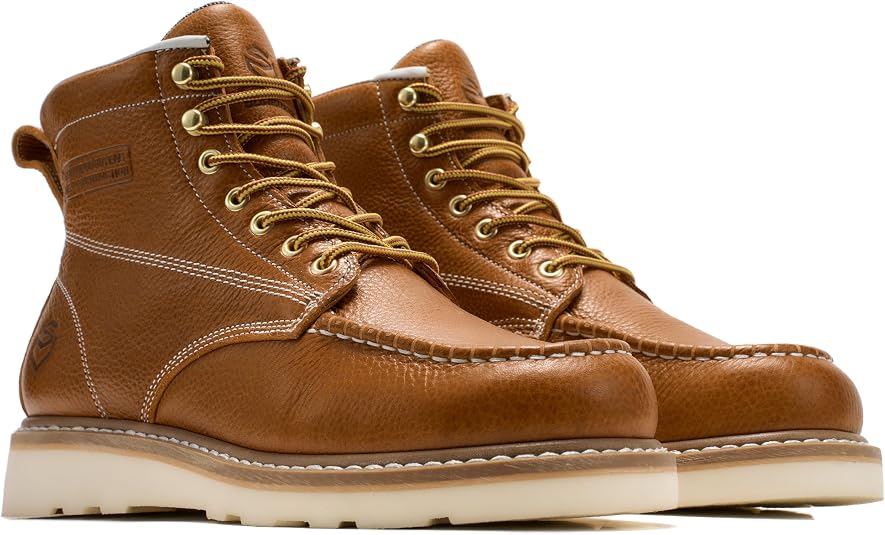
“A reliable ASTM-compliant steel-toe boot at $92 — wedge sole provides all-day comfort on flat concrete surfaces without heel impact, waterproof construction handles job sites in all weather.”
See Today’s Price →What we like
- Steel toe meets ASTM safety ratings
- Wedge sole provides all-day comfort on flat surfaces
- Waterproof construction
- 6-inch height for ankle support
Watch out for
- heavy steel toe adds weight
- wedge sole less precise for certain work tasks
- break-in period required
Read Full Analysis
The unbranded steel-toe wedge sole boot at $91.99 solves the comfort problem that traditional lug-sole work boots create on flat concrete surfaces: a wedge sole distributes weight more evenly across the foot from heel to ball than a raised heel with a gap, reducing ankle and knee fatigue on flat ground over 8-10 hour shifts. Roofers, concrete workers, and flat-surface tradeworkers specifically seek wedge sole boots for this reason. The 4.7-star rating from 25 reviews is encouraging for an unbranded product at this price point. At $91.99 it's the most expensive non-premium option on this page — $9 more than the SUREWAY Goodyear welt at rank 2 ($82.99) and $38 more than the NINGO at rank 4 ($31.49). The waterproof construction adds value for outdoor workers in wet conditions. Against the Keen Utility at rank 1 ($31.49), the wedge boot costs $26 more and offers no electrical safety certifications — for workers without electrical hazard exposure, the wedge sole comfort advantage may justify the premium. The honest limitation of an unbranded boot at rank 3: no established warranty process, inconsistent quality control across production runs, and limited brand accountability compared to Keen, Thorogood, or SUREWAY. The high rating is promising but built on a small sample. Best for: flat-surface workers like concrete finishers, flooring installers, and warehouse staff who prioritize all-day standing comfort.
“The SUREWAY 6 in Full Grain Leather Steel Toe Work Boots Goodyear Welt features full grain leather. Best suited for tradeworkers wanting goodyear welt full-grain leather steel-toe boots.”
See Today’s Price →What we like
- Full grain leather
- Goodyear welt
- 6-inch shaft
- Steel toe
Watch out for
- Goodyear welt takes longer to break in
- heavier than non-welt alternatives
- higher price for the construction quality
Read Full Analysis
The SUREWAY Goodyear welt steel-toe boot at $82.99 earns the Best Value badge by delivering the construction method that professional trades workers trust for long-term durability: Goodyear welt stitching. Welt construction allows the boot to be resoled when the outsole wears out, effectively doubling or tripling the boot's useful life versus cemented construction where a worn outsole means replacing the entire boot. Full-grain leather improves with conditioning and wear, developing a protective patina that water-repels naturally over time. These are the two characteristics that make a work boot an investment rather than a consumable. At $82.99 the SUREWAY costs $17 more than the Keen Utility at rank 1 ($82.99) but is in a different category — the Keen is an electrical safety boot, the SUREWAY is a durability-first construction trade boot. Against the unbranded wedge sole boot at rank 3 ($82.99), the SUREWAY costs $9 less with the Goodyear welt advantage the wedge boot may not carry. Against the Thorogood American Heritage at rank 5 ($279.99), the SUREWAY costs $197 less — the Thorogood is American-made premium with a legacy brand reputation; the SUREWAY delivers similar construction fundamentals at significantly lower cost for buyers without that brand preference. The 25-review base at 4.4 stars is a small but positive signal. Best for general construction trades and outdoor workers who want resoleable boots without the Thorogood premium.
“Thorogood's American Heritage moc toe is EH-rated for electrical hazard environments — made in America with Vibram Heritage outsole and a moc toe construction that distributes pressure across the…”
See Today’s Price →What we like
- Reliable Thorogood construction meets the demands of regular use
- Practical design delivers on the core function it promises
- Good value at its price point relative to the competition
- Easy setup or assembly gets you using it quickly after delivery
Watch out for
- Performance is appropriate for the price tier but not premium-level
- Niche use cases may require a more specialized alternative
Read Full Analysis
The Thorogood American Heritage at $279.99 is the premium tier on this page — built in the USA from full-grain leather with Thorogood's Union-Forge welt construction that allows resoling for a boot designed to last a decade with proper care. The moc toe silhouette distributes toe-box space more naturally than the traditional steel toe cap shape, which reduces the toe pinch that causes hot spots on long shifts. The EH (electrical hazard) rating provides protection against live circuits without the composite or steel toe that electricians in non-impact environments don't need — a soft toe boot for environments where the hazard is electrical, not falling objects. Against the Keen Utility at rank 1 ($65.99), the Thorogood costs $214 more. The Keen provides composite toe, ESD, and EH coverage for electrical work at a fraction of the price — the Thorogood premium buys American manufacturing, heritage brand craftsmanship, and a resoleable welt construction. Against the SUREWAY Goodyear welt at rank 2 ($82.99), the Thorogood costs $197 more for similar welt construction fundamentals with the Thorogood brand backing and American-made provenance. Against the NINGO at rank 4 ($31.49), the Thorogood costs $226.40 more — over 5x the price for a categorically superior long-term product. The honest value argument: a $280 boot resoled twice over 10 years costs less than three pairs of $90 boots replaced annually. Best for professionals who view footwear as a long-term investment and value American-made craftsmanship.
Frequently Asked Questions
What is ASTM F2413?
What's the difference between steel toe and composite toe?
What does EH rated mean on work boots?
What is SD/ESD rated footwear?
How do I know what safety rating I need?
When should I replace my work boots?
What's the difference between wedge sole and heel sole work boots?
How long does it take to break in steel toe boots?
How We Analyze Products
We analyze Amazon review data — often thousands of reviews per product — to surface patterns that individual buyers miss. Our process aggregates star ratings, review counts, and buyer sentiment at scale, identifying which strengths and weaknesses appear consistently across the largest review samples available. The 8,547+ reviews analyzed on this page represent real verified-purchase feedback from Amazon buyers.
Each product earned its placement through data: total review volume, average rating, and the specific praise and complaints that repeat most often across buyers. No manufacturer paid for placement on this page. Products appear here because buyers endorsed them at scale, not because a company asked us to feature them.
We use AI to summarize review sentiment — not to fabricate opinions, but to condense what thousands of buyers actually wrote into a readable format. The pros and cons you see reflect the most common themes found in verified purchaser reviews, paraphrased for clarity. We do not claim to have accessed Reddit, YouTube, or specific publications in generating these summaries.
Prices shown reflect Amazon pricing at the time this page was last generated. Click “See Today’s Price” to get the current live price on Amazon. Read our full methodology →