Best Student Credit Cards 2026: No-Fee & Cash Back
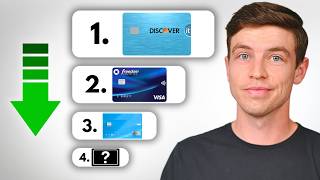
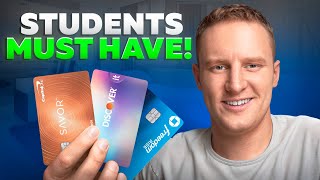
The Discover it Student Cash Back is our top pick for students — the first-year Cashback Match effectively doubles your rewards, and the 5% rotating categories require engagement that builds good habits. For students who want a straightforward card with no activation required, the Capital One SavorOne Student earns 3% on dining and entertainment with a $50 welcome bonus.
At a Glance
| # | Card / Product | Award | Annual Fee | Rewards Rate | APR Range | |
|---|---|---|---|---|---|---|
| 1 | Discover it® Student Cash Back | Our Top Pick | $0 | 5% on rotating quarterly categories (up to $1,500/quarter, activation required); 1% everywhere else | — | Apply → |
| 2 | Capital One SavorOne Student Cash Rewards Credit Card | Also Excellent | $0 | 3% on dining, entertainment, popular streaming, and grocery stores; 8% Capital One Entertainment; 1% other | — | Apply → |
| 3 | Discover it® Secured Credit Card | Best Value | $0 | 2% cash back at gas stations and restaurants (up to $1,000/quarter combined); 1% on all other purchases | 26.49% Variable | Apply → |
| 4 | Bank of America® Customized Cash Rewards Credit Card for Students | Worth Considering | $0 | 3% in chosen category (changeable monthly); 2% at grocery stores and wholesale clubs; 1% other (3%+2% capped at $2,500/quarter) | — | Apply → |
| 5 | Chase Freedom Rise™ | Honorable Mention | $0 | 1.5% cash back on all purchases | — | Apply → |
| 6 | Citi Rewards+ Student Card | Worth a Look | N/A | — | — | Apply → |
Student Credit Cards Buying Guide
 Photo by DΛVΞ GΛRCIΛ / Pexels
How we evaluated these. We compared student credit cards across approval likelihood for limited/no credit history, APR range, annual fee ($0 preferred), reward rate, and credit-building tools (credit score access, alerts), cross-referencing NerdWallet and Bankrate student card rankings. Rates as of April 2026. Terms apply.
Student credit cards are designed for college students with limited or no credit history, offering more lenient approval requirements than standard cards. The card you open in your first year of college sets the foundation for your credit file: every on-time payment builds a payment history record that follows you for decades, and this account's age will eventually become one of your oldest positive trade lines.
Some products featured are from partners who compensate us, which may influence which products we write about. This does not affect our evaluations. Our opinions are our own. Learn more.
Student credit cards are designed for college students with limited or no credit history. They typically offer lower credit limits, more lenient approval requirements, and basic rewards — with the primary goal being credit establishment rather than reward maximization. Choosing the right student card in your freshman or sophomore year sets the foundation for credit access throughout your adult life.
Building Credit Is the Primary Goal — Rewards Are Secondary
A student credit card's core purpose is establishing a credit history. Payment history accounts for 35% of your FICO score — the largest single factor. Making every payment on time, starting in college, creates a multi-year positive payment record that follows you after graduation. Rewards matter, but a card that earns 5% on dining and 1% elsewhere is no better for your credit than a card earning 1% everywhere — what matters is on-time payments and low utilization. Don't choose a student card primarily for rewards; choose one from a major issuer (Discover, Capital One, Chase, Citi) that reports to all six credit bureaus and offers a graduation path to an unsecured card.
What Issuers Look at for Student Applications
Student card applications consider enrollment status (enrollment verification at some issuers), income including part-time work and regular allowances from parents (CARD Act allows this), and thin-file approval models that don't require prior credit history. Discover and Capital One are the most accessible for students with zero credit history. Bank of America and Chase student cards may require a small deposit or prior banking relationship. Your odds of approval improve significantly if you apply through a bank where you already have a checking account — that relationship is a positive factor even without a credit score.
Secured vs. Unsecured Student Cards
Some issuers offer unsecured student cards (no deposit required) based on enrollment status and income. Others require a small deposit for students with absolutely no income or credit history. Discover it Secured ($200 minimum deposit) is technically a secured card but transitions automatically to an unsecured card after 7 months of responsible use, making it effectively a stepping stone product. If you qualify for an unsecured student card (Discover it Student, Capital One Quicksilver Student), there's no reason to use a secured card instead — unsecured cards don't require tying up deposit money.
Graduation Path: What Happens After College
The best student cards have a built-in upgrade path. Discover automatically reviews accounts after 7–12 months and upgrades to an unsecured card. Capital One reviews annually and upgrades qualified accounts. When you graduate, call the issuer to request product change to a standard (non-student) card — this keeps your account open and your credit history intact while removing the "student" label. Never close your first credit card — the age of your oldest account is a FICO factor, and your student card will eventually be your longest-standing account.
How Much Credit to Use (Utilization Rules)
Credit utilization — your balance as a percentage of your credit limit at statement close — is the second-most important factor in your credit score. Keep it below 30% to avoid score damage; keep it below 10% for the best possible score. With a $500 student credit limit, that means keeping your balance under $150 (or $50 for optimal utilization). Pay the balance in full every month — carrying a balance costs you interest without providing any additional credit-building benefit. See also: best secured credit cards and best cards for building credit.

This content is for informational purposes only and should not be considered financial advice. Consult a licensed financial advisor for guidance specific to your situation.
Discover it® Student Cash Back
“Best student card overall. Cashback Match doubles year-one rewards, 5% rotating categories, Good Grades credit, and no annual fee. First-choice for most students.”
What we like
- Cashback Match: Discover automatically matches all cash back earned in your first year (terms apply) — effectively 10% on 5% categories in year one
- 5% cash back on rotating quarterly categories (up to $1,500/quarter, activation required)
- 1% unlimited cash back on all other purchases
- No annual fee; no foreign transaction fees
- Good Grades Reward: $20 statement credit each school year your GPA is 3.0 or higher (for 5 years)
Watch out for
- 5% categories require quarterly activation — missing activation earns only 1%
- Discover has lower merchant acceptance than Visa/Mastercard (though coverage has improved significantly)
- After first year, Cashback Match ends — ongoing rewards more limited than some competitors
Rates as of April 16, 2026. Terms apply. Verify on issuer site.
Capital One SavorOne Student Cash Rewards Credit Card
“Best student card for dining and entertainment. 3% on restaurants, streaming, and groceries with a $50 bonus after just $100 spend. No tracking required.”
What we like
- 3% cash back on dining, entertainment, popular streaming services, and at grocery stores (excluding superstores)
- 8% cash back on Capital One Entertainment purchases
- $50 welcome bonus after $100 spend in first 3 months (terms apply) — most attainable threshold available
- No annual fee; no foreign transaction fees
- No activation or category tracking required
Watch out for
- 1% on non-bonus categories — lower than a flat-rate card for miscellaneous spending
- Grocery store exclusion: superstores like Walmart/Target do not qualify for 3%
- APR is high — must pay in full monthly
Rates as of April 16, 2026. Terms apply. Verify on issuer site.
Discover it® Secured Credit Card
“Best secured card for building credit. Refundable deposit, real rewards with Cashback Match, no annual fee, and automatic upgrade review after 7 months.”
What we like
- $0 annual fee — no cost to build credit
- 2% cash back at gas stations and restaurants (up to $1,000/quarter combined), 1% everywhere else
- Cashback Match: Discover matches all cash back earned in your first year automatically
- Automatic account review starting at 7 months for upgrade to unsecured card
- No foreign transaction fees — unusual for a secured card
- Reports to all three major credit bureaus monthly
Watch out for
- Minimum $200 security deposit required to open the account
- 26.49% Variable APR — avoid carrying a balance
- 2% category capped at $1,000/quarter combined gas + restaurants
Rates as of April 16, 2026. Terms apply. Verify on issuer site.

Bank of America® Customized Cash Rewards Credit Card for Students
“Best student card welcome bonus ($200) and customizable 3% category. Good fit for BofA banking customers who can manage the $1,000 spend threshold.”
What we like
- 3% cash back in a category of your choice (online shopping, dining, travel, drug stores, gas/EV charging, or home improvement/furnishings) — can change monthly
- 2% at grocery stores and wholesale clubs
- $200 online cash rewards bonus after $1,000 in purchases in first 90 days — largest student card bonus available (terms apply)
- No annual fee
- Preferred Rewards program available as you build a BofA relationship
Watch out for
- 3% and 2% categories combined capped at $2,500 in quarterly purchases (then 1%)
- Requires an active Bank of America checking/savings account for some offers
- $1,000 spend in 90 days is higher than some student competitors
Rates as of April 16, 2026. Terms apply. Verify on issuer site.
Chase Freedom Rise™
“Best starter card for Chase customers. Simple 1.5% flat rate, $25 autopay credit, and a clear path to better Chase cards. Recommended for existing Chase bank customers.”
What we like
- 1.5% cash back on every purchase — simple flat rate with no categories to track
- No annual fee
- $25 statement credit after enrolling in autopay within 3 months of account opening
- Access to Chase Credit Journey for free credit monitoring
- Clear upgrade path to Chase Freedom Flex, Freedom Unlimited, or Sapphire
Watch out for
- 1.5% flat cashback rate — lower than the Discover it Student card's 5% rotating categories and Capital One SavorOne Student's 3% dining rate
- Welcome bonus is just $25 for autopay enrollment — vs $50-$200 on comparable student cards like Capital One Quicksilver Student
- Approval odds are significantly better with an existing Chase checking or savings account — harder to get approved without one
Rates as of April 16, 2026. Terms apply. Verify on issuer site.
Citi Rewards+ Student Card
“Citi Rewards+ Student Card rounds up every purchase to the nearest 10 ThankYou Points. Great for coffee shop purchases. No annual fee and extra ThankYou Points for Citi cardholders.”
What we like
- Round-up to nearest 10 ThankYou points
- No annual fee
- 5x points on hotels/car rentals (first year)
- 10% back on first 100K points redeemed
- Good for small everyday purchases
Watch out for
- Points ecosystem requires Citi card family for best redemption
- No cash back option
- Not the highest flat rate
Rates as of April 16, 2026. Terms apply. Verify on issuer site.
Frequently Asked Questions
What is the best student credit card?
Can students get a credit card with no credit history?
What credit limit can students expect?
Should students get a secured or unsecured student credit card?
What is the most important thing to know about using a student credit card?
How We Evaluate Financial Products
We compare financial products based on objective criteria: annual fees, APR ranges, rewards rates, sign-up bonuses, and key perks. We do not factor in issuer relationships or compensation when determining rankings. Products are ranked based on overall value for the target use case described on this page.
Rates and terms change frequently. We update these pages regularly, but always verify current rates directly on the issuer’s website before applying. APR ranges shown reflect the full possible range — your actual rate depends on your creditworthiness.
This content is for informational purposes only and should not be considered financial advice. We compare products; we do not advise on which product is right for your personal financial situation. Read our full methodology →