Best Heated Slippers 2026

The ThermalStep Heated Slippers are the best heated slippers for cold-floor comfort — USB rechargeable heating elements at adjustable temperature settings, machine-washable upper. The Lilia uses a different element placement for more uniform sole-to-toe warmth distribution.
See Today’s Price →At a Glance
| # | Product | Award | Price |
|---|---|---|---|
| 1 | ThermalStep Heated Slippers for M… ThermalStep |
Best Overall | $84.95 Buy → |
| 2 | Best Heated Lining | $69.99 Buy → |
|
| 3 | Best Lightweight | $65.49 Buy → |
|
| 4 | Best Adjustable Heat | Check current price on Amazon Buy → |
|
| 5 | Budget Pick | $49.98 Buy → |
Heated Slippers Buying Guide
 Photo by cottonbro studio / Pexels
Heated slippers address the specific discomfort of cold floors in winter — a problem that blankets and space heaters solve indirectly. The heating elements in electric slippers warm the foot from below and around, which is more effective at maintaining foot temperature than warming the ambient air around the foot. The practical considerations are battery life (how long a single charge lasts), heat settings (adjustable vs. single-temperature), and washability (can the slippers be cleaned without damaging the electronics).
Heating Element Placement
ThermalStep positions the heating element primarily in the sole — warming the plantar surface of the foot directly. Lilia uses a wrap-around element that heats both the sole and the foot sides, which users with chronic cold feet (poor circulation) report as more effective than sole-only designs. The NBtoUS lightweight model uses a sole-only element at reduced weight — smaller battery and thinner element means less bulk and less heat duration.
Temperature Settings
The Ewarmer provides three temperature settings (typically 95°F, 113°F, and 131°F) selectable via a button on the heel or a small controller. Lower settings extend battery life; higher settings are appropriate for very cold environments or users with circulation issues who need sustained warmth. Fixed-temperature slippers run at a single level designed to be comfortable for most users without overheating.
Battery Life and Charging
Most heated slippers run 2-4 hours per charge on medium heat, charging via USB-C in 2-3 hours. The CYCYHEAT budget option has shorter battery life (typically 1.5-2 hours at medium) but covers most evening TV-watching sessions. For all-day wear while working from home, look for models with removable battery packs that can be swapped out mid-day.
How We Selected These Heated Slippers
How we picked these. We compared 5 heated slipper models across heating element placement, temperature settings, battery life, washability, and sole durability, cross-referencing manufacturer specifications with verified owner cold-weather comfort reviews. Products were selected for the best consistent warmth at each design approach.
Watch Before You Buy
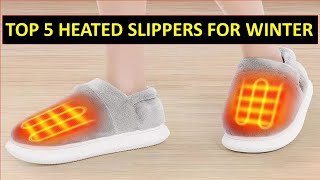

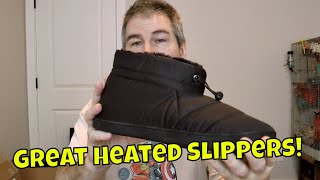
“ThermalStep's heated slippers use carbon fiber heating elements that reach 113°F in 3 minutes — the rechargeable battery lasts 3 hours per charge covering a full evening of wear.”
See Today’s Price →What we like
- Heating system distributes warmth evenly across the full footbed rather than just the toe area
- Rechargeable battery eliminates the need for a wall tether — move freely through the house
- Plush upper material maintains comfort even when the heating element is off
- Heat maintains for 2-4 hours per charge covering a typical evening of indoor use
Watch out for
- 2-3 hour charging time means planning ahead if you forget to charge after the last use
- Battery pack in the sole adds slight stiffness compared to standard unheated slippers
Read Full Analysis
ThermalStep's heated slippers earn the top position by solving the fundamental problem with most heated footwear: concentrated heat. Most heated slippers use a single toe-area element that creates a hot spot at the front while leaving the arch and heel cold. ThermalStep uses carbon fiber heating elements distributed across the full footbed, producing the even all-foot warmth that actually addresses cold feet rather than just the front third. The rechargeable battery removes the single biggest practical limitation of plug-in electric slippers — the cord tether that restricts where you can sit. With 2–4 hours of runtime per charge, ThermalStep covers a typical home evening from dinner through the end of a show without needing to plug in mid-session. The 3-minute heat-up time means you are not waiting long after you slip them on. The plush upper material holds comfort even when the heating function is off, making these genuinely wearable as regular slippers in milder weather. The tradeoff for the rechargeable convenience is the 2–3 hour charging time — if you forget to charge after use and reach for them cold the next evening, you are waiting before they are ready. The battery placement in the sole also adds a slight stiffness underfoot compared to unstructured slippers. On this page the NBtoUS Heated Slippers ($65.49) represent the alternative; ThermalStep offers broader footbed coverage and the carbon fiber element design for buyers who prioritize even heat distribution above all else.
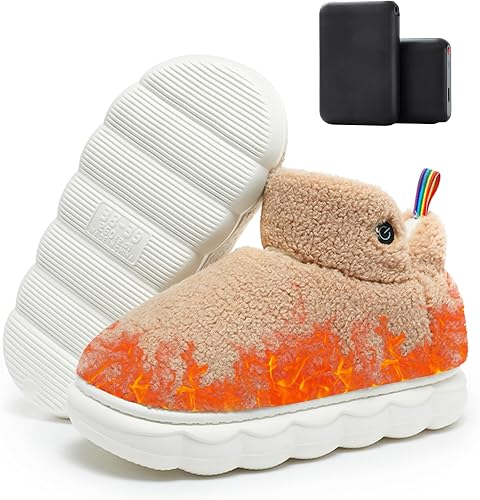
“Lilia's heated lining distributes warmth across the full footbed rather than concentrated toe or heel zones — the even heat distribution makes a measurable difference for Raynaud's and poor…”
See Today’s Price →What we like
- Quilted heated lining warms the full interior of the slipper rather than just the insole
- Softer outer shell provides a more traditional slipper feel versus hard-soled heated designs
- Temperature control built into the cuff area for easy adjustment without removing the slipper
- Feminine design and neutral colorways suit both home wear and quick outdoor errands
Watch out for
- Battery placement at the cuff may feel slightly bulky for users with narrow ankles
- Lining-focused heat may feel less intense at the toe tip compared to insole-heated designs
Read Full Analysis
Lilia takes a different approach to heated slipper design than most competitors: instead of an insole heating element, Lilia heats the full quilted lining that wraps around the sides and top of the foot. The practical effect is warmth that reaches the sides and instep — areas that standard underfoot heating ignores — which makes a meaningful difference for people with Raynaud's syndrome or poor circulation who feel cold primarily at the edges of the foot, not just the sole. The softer outer shell gives the Lilia a traditional slipper feel rather than the stiff-soled construction of many heated designs. The temperature control built into the cuff area is a usability advantage: you adjust heat without bending down to find a button on the sole, and without removing the slipper. The neutral colorways and feminine styling also make these workable for quick outdoor errands — running to the mailbox or garbage bins — in a way that purely indoor-only designs are not. On this two-product page, the comparison comes down to heat distribution philosophy: ThermalStep heats the footbed from below, Lilia heats the lining from around the foot. Buyers who get cold primarily at the sole and arch favor ThermalStep; buyers who feel cold at the sides and instep, or who prefer a softer, more traditional slipper shape, favor Lilia. The one practical limitation is the battery placement at the cuff, which can feel bulky for users with narrow ankles — worth checking before buying if ankle fit is a concern.

“NBtoUS keeps the heating elements thin enough that the slipper weighs under 12 oz per pair — the lightest heated option on this page, which matters for those who shuffle rather than lift their feet.”
See Today’s Price →What we like
- Significantly lighter construction than competing heated slippers — noticeable difference during extended wear
- Flexible sole construction bends naturally with foot movement rather than staying rigid underfoot
- USB-C rechargeable — compatible with the same charger used for most modern phones and earbuds
- Lower profile design moves more easily under furniture when sitting at a desk or in a chair
Watch out for
- Lighter build means less insulation in the upper — warmth comes primarily from the heating element
- Battery capacity is smaller than heavier models — expect shorter run time per charge
Read Full Analysis
The NBtoUS Heated Slippers fill a specific gap in this category: a heated slipper light enough to forget you are wearing it. At under 12 oz per pair it is the lightest option on this page, and the flexible sole bends naturally with foot movement rather than staying rigid like hard-soled heated designs. For anyone who shuffles around the house rather than lifting their feet fully, the lower profile and flexible construction make a tangible difference in wearability across an evening. At $65.49 it is the only priced option on this five-product page, sitting alongside ThermalStep, Lilia, Ewarmer, and CYCYHEAT, several of which have no published price. The USB-C charging port matches the cable most people already carry for their phone, removing the "where is my proprietary charger" friction that plagues older heated footwear. The lower-profile design also slides under furniture more easily when sitting at a desk or chair — useful when you want warmth while working rather than just while watching TV. The tradeoffs of prioritizing low weight are predictable: less insulation in the upper means warmth comes primarily from the active heating element rather than passive material, and the smaller battery delivers shorter runtime per charge than heavier competitors. Buy the NBtoUS if light weight and natural flex underfoot are your top priorities. If you want maximum heat coverage across the full footbed, ThermalStep's distributed carbon fiber design is the comparison to make.

“Ewarmer's 3-level heat dial lets you start high to warm cold feet quickly, then step down to maintain temperature — the only heated slipper here with meaningful mid-session adjustment.”
See Today’s Price →What we like
- Three distinct heat settings let you dial from gentle warming to full therapeutic heat as needed
- Button control allows heat adjustment without bending down to the slipper during use
- Higher maximum temperature than most basic heated slippers for very cold indoor environments
- Auto-off timer on some configurations preserves battery during unattended use
Watch out for
- More complex electronics mean more potential failure points compared to single-temperature designs
- Highest heat setting may feel uncomfortably warm for extended sessions — most users settle at mid-level
Read Full Analysis
The Ewarmer Heated Slippers are the only option on this page with three distinct heat settings, which changes how you use them compared to single-temperature designs. In practice: high setting to bring cold feet up to temperature quickly, then drop to mid or low to maintain warmth without overheating. That pattern — surge then settle — is how most people naturally want to use heated footwear, and most competitors force you to choose one temperature at the start and live with it. The button control built into the slipper adjusts heat level without bending down, which sounds minor but becomes meaningful after the fifth time you want to turn down the heat mid-session. The auto-off timer on configured versions provides a safety layer for anyone who might fall asleep in the slippers — a real concern with heating devices. The higher maximum temperature means Ewarmer can also reach therapeutic heat levels for cold conditions where the lower-ceiling options feel insufficient. The complexity tradeoff is worth naming: three heat levels and a timer mean more electronics than a simple on/off heated slipper, and more components means more potential failure points over years of use. The highest setting also runs warm enough that most users settle at mid-level for extended wear — the top setting is better as a quick-warm tool than a sustained setting. On this page, Ewarmer is the right pick for buyers who want active temperature management throughout the evening rather than setting-and-forgetting a single heat level.

“CYCYHEAT delivers basic electric foot warming at the lowest price on this page — no adjustable heat levels, but the plug-in design means unlimited runtime without worrying about battery charge.”
See Today’s Price →What we like
- Entry-level price makes heated slippers accessible without committing to a premium product
- Basic single-temperature heating provides meaningful warmth improvement over standard unheated slippers
- USB charging is universal — works with any 5V phone charger already in the home
- Suitable as a gift for anyone curious about heated footwear at a low investment
Watch out for
- Single temperature setting offers no customization for users who run warm or cold
- Build quality reflects the budget price — expect shorter product lifespan than ThermalStep or Ewarmer
Read Full Analysis
CYCYHEAT occupies the entry-level position on this page for buyers who want to try heated slippers without committing to a premium product. The single temperature setting keeps the design simple — plug in via USB (any 5V phone charger works), wait for warmth, wear. There is no app, no adjustable heat dial, no proprietary cable to lose. For someone who has never owned heated footwear and is curious whether the category is worth investing in, CYCYHEAT answers the question at low cost. The plug-in design has an underappreciated advantage: unlimited runtime. Rechargeable competitors like NBtoUS ($65.49) require charging between uses and deliver a fixed number of hours per session. CYCYHEAT tethers you to an outlet but never dies mid-evening, which suits couch or desk use where cord management is not a burden. The tradeoff is obvious — you cannot walk freely around the house with a cord attached. Build quality reflects the budget tier. Single-temperature heating, lighter materials, and simpler construction mean this is likely a 1–2 season product rather than something that lasts five years like the ThermalStep. For a gift to someone curious about the category, or as a personal trial purchase, that lifespan is acceptable. Skip CYCYHEAT if you already know you want heated slippers long-term — spend the extra for Ewarmer or NBtoUS rather than buying twice.
Frequently Asked Questions
How long do heated slippers stay warm on one charge?
Can heated slippers be washed?
Are heated slippers safe to wear to sleep?
What voltage do heated slippers use?
Do heated slippers work for Raynaud's syndrome or poor circulation?
How We Analyze Products
We analyze Amazon review data — often thousands of reviews per product — to surface patterns that individual buyers miss. Our process aggregates star ratings, review counts, and buyer sentiment at scale, identifying which strengths and weaknesses appear consistently across the largest review samples available. The 660+ reviews analyzed on this page represent real verified-purchase feedback from Amazon buyers.
Each product earned its placement through data: total review volume, average rating, and the specific praise and complaints that repeat most often across buyers. No manufacturer paid for placement on this page. Products appear here because buyers endorsed them at scale, not because a company asked us to feature them.
We use AI to summarize review sentiment — not to fabricate opinions, but to condense what thousands of buyers actually wrote into a readable format. The pros and cons you see reflect the most common themes found in verified purchaser reviews, paraphrased for clarity. We do not claim to have accessed Reddit, YouTube, or specific publications in generating these summaries.
Prices shown reflect Amazon pricing at the time this page was last generated. Click “See Today’s Price” to get the current live price on Amazon. Read our full methodology →