What Size Generator Do I Need? (2026 Wattage Calculator Guide)
Calculating wattage needs before buying prevents the most common generator mistake — the Honda EU2200i Companion Inverter Generator 2200W ($980.00) is the benchmark for clean power that won't damage sensitive electronics, running a refrigerator, CPAP, and phone chargers simultaneously during an extended outage.
At a Glance
| # | Product | Award | Price | Our Score | |
|---|---|---|---|---|---|
| 1 |  Honda EU2200i Companion Inverter Genera… Honda EU2200i Companion Inverter Genera… |
Best Overall | $980 | 9.2 | Buy → |
| 2 |  Champion Power Equipment 100520 7000-Wa… Champion Power Equipment 100520 7000-Wa… |
Best High-Capacity | $674 | 8.9 | Buy → |
| 3 |  Westinghouse WGen7500 Portable Generato… Westinghouse WGen7500 Portable Generato… |
Best Heavy Duty | $1049 | 8.5 | Buy → |
| 4 | 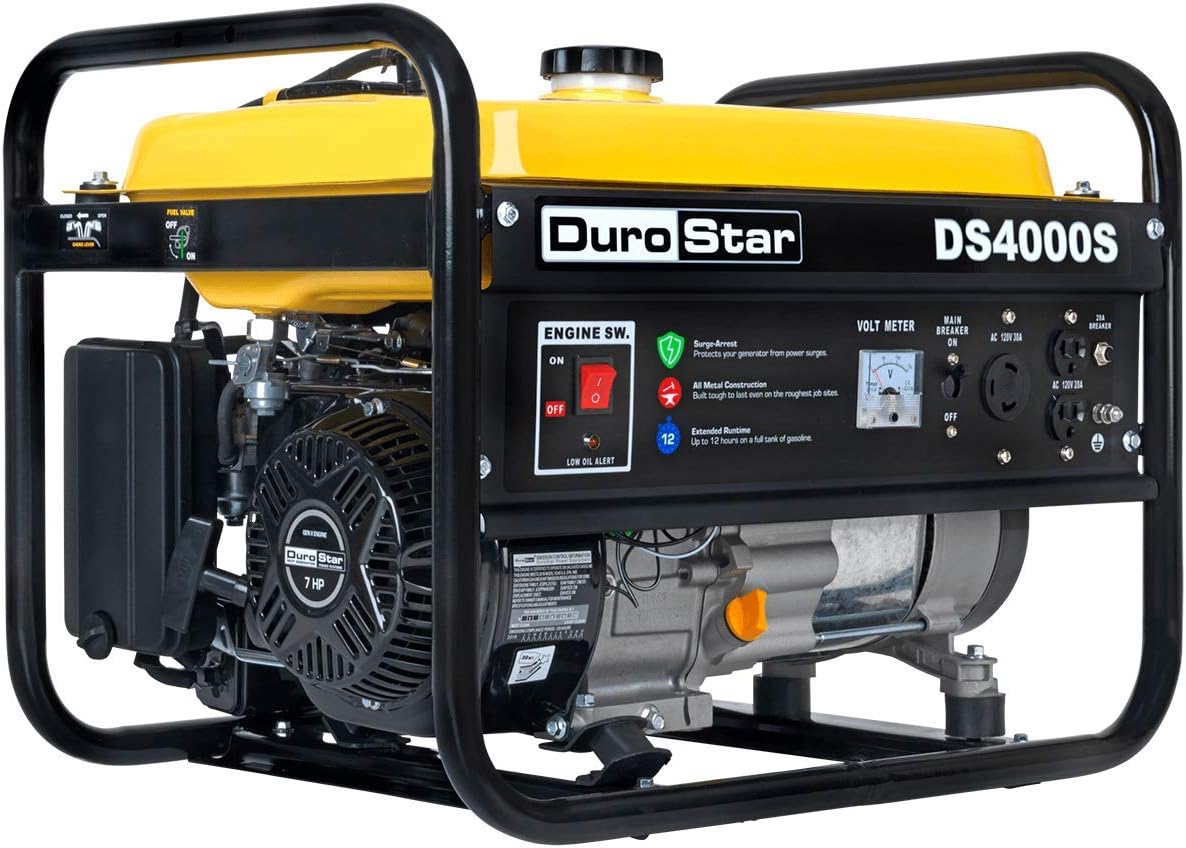 DuroStar DS4000S 4000-Watt Portable Gas… DuroStar DS4000S 4000-Watt Portable Gas… |
Best Value Mid-Range | $452 | 8.2 | Buy → |
What Size Generator Do I Need? (2026 Wattage Calculator Guide) Buying Guide
 Photo by Calvin Seng / Pexels
Quick Verdict: Our top pick is the Honda EU2200i Companion Inverter Generator 2200W (Best Inverter) — Honda EU2200i -- the gold standard for sensitive electronics. Priced at $999.
Budget Pick: The DuroStar DS4000S 4000-Watt Portable Gas Generator at $452.47 — DuroStar DS4000S -- 4000W surge, 3300W running, all-copper windings for durability, and a price that puts whole-home ....
Who This Guide Is For
This guide is for you if:
- You're improving your home and want to understand what products actually solve real problems
- You're comparing options at very different price points and want honest guidance on what the premium buys
- You want to avoid buying products you won't actually use
Skip this guide if:
- You've already decided and just need the best model — see our comparison pages
- You have very specific requirements — check the specialized guides in our home section
Quick verdict: To size a generator correctly: list every appliance you need to run, find the running wattage for each, add them together, then add the highest single starting wattage to that total. That number is your minimum generator wattage.
WATTAGE CHART: EVERY COMMON APPLIANCE
REFRIGERATION:- Refrigerator (standard): 150-200W running, 800-1200W starting
- Chest freezer: 100-150W running, 500-800W starting
- Wine cooler: 80-150W running, 400-500W starting
- Window AC unit (5,000 BTU): 500W running, 1,500W starting
- Window AC unit (10,000 BTU): 900W running, 2,700W starting
- Central AC (2.5 ton): 2,800W running, 7,500W starting
- Central AC (3 ton): 3,300W running, 9,000W starting
- Electric space heater: 1,500W running, 1,500W starting (no startup surge -- resistive heating)
- Gas furnace (blower fan only): 400-800W running, 1,500-2,000W starting
- Well pump (1/2 HP): 750-1,000W running, 2,000-2,500W starting
- Well pump (1 HP): 1,500-2,000W running, 4,000-5,000W starting
- Sump pump: 300-800W running, 1,000-2,200W starting
- Water heater (electric): 3,800-5,500W running -- typically NOT a generator priority
- Tankless water heater: 3,000-8,000W running -- also not typically generator-powered
- Microwave: 600-1,200W running, no significant starting surge
- Coffee maker: 600-1,200W running, minimal starting surge
- Refrigerator (as above)
- Electric range/oven: 5,000-8,000W -- not practical on portable generators
- Dishwasher: 1,200-2,400W running
- LED TV (32-50 inch): 30-80W running -- minimal
- Desktop computer: 200-400W running, 300-500W starting
- Laptop: 20-50W -- minimal
- Phone charging: 5-20W per device
- Internet router/modem: 5-20W
- Lights (LED bulbs): 8-15W each
- CPAP machine: 30-60W (critical -- buy an inverter generator for clean power)
- Nebulizer: 100-200W
- Oxygen concentrator: 150-300W
- Circular saw: 700-1,500W running, 2,200-4,500W starting
- Table saw: 1,500-2,000W running, 4,500-6,000W starting
- Air compressor (1 HP): 1,000-1,500W running, 3,000-5,000W starting
HOW TO BUILD YOUR POWER BUDGET
Step 1 -- List your must-haves. For most homeowners, this is: refrigerator, well pump or sump pump (if applicable), lights (LED, maybe 300W total), phone charging, CPAP if needed, and enough for one or two fans. Step 2 -- Add running watts. Refrigerator 200W + well pump 750W + lights 300W + fans 200W + phone charging 50W = 1,500W running. Step 3 -- Find the highest starting wattage. The well pump at 2,500W starting is the highest. Add that to running total: 1,500 + 2,500 = 4,000W minimum. Step 4 -- Add a 20% margin. Generator efficiency drops with age, load, and temperature. 4,000 x 1.2 = 4,800W. Buy a 5,000W+ generator. Step 5 -- Consider what you're NOT running. Most homeowners correctly decide NOT to run: electric water heater, electric oven, electric dryer, or central AC on a portable generator. These are optional comforts that require doubling or tripling generator size.
Watch Before You Buy
![Best Generators 2026 [don’t buy one before watching this]](https://img.youtube.com/vi/gRvUDgav3p0/mqdefault.jpg)
Our Picks
Honda EU2200i Companion Inverter Generator 2200W (Best Overall) — $980 See Price →
Champion Power Equipment 100520 7000-Watt Generator (Best High-Capacity) — $674 See Price →
Westinghouse WGen7500 Portable Generator 7500W (Best Heavy Duty) — $1049 See Price →
DuroStar DS4000S 4000-Watt Portable Gas Generator (Best Value Mid-Range) — $452 See Price →
Showing 4 of 4 products
Honda EU2200i Companion Inverter Generator 2200W
“The Honda EU2200i is the benchmark portable inverter generator. The clean sine wave output (under 3% THD) is safe for laptops, TVs, and medical equipment. At 57–68 dBA it's quieter than a normal conve”
See Today’s Price →What we like
- Inverter produces clean power (THD <3%)
- 57–68 dBA (quietest class)
- Eco-Throttle conserves fuel
- Parallel capable with second unit
Watch out for
- $1,100 premium price
- 2200W limits simultaneous loads
Read Full Analysis
The Honda EU2200i answers the "what size generator do I need" question for sensitive electronics with a definitive specification: under 3% total harmonic distortion (THD) from its inverter output. Standard conventional generators produce 20-25% THD — damaging to laptops, CPAP machines, and modern TVs over time. The EU2200i's clean sine wave output is safe for all electronics without a separate line conditioner. The 2200W running / 2500W starting capacity powers a refrigerator (700W), window AC (1,500W starting), several LED lights, and phone charging simultaneously — adequate for essential outage coverage. Eco-Throttle adjusts engine speed to match the actual load rather than running full speed constantly, reducing fuel consumption and noise when demand is low. At $980.00 it is the most expensive portable generator on this page by running wattage — the Champion 7000W at $674.00 costs $306 less and delivers 4,800W more running power. The Honda premium is specifically inverter clean power and 57-68 dBA quiet operation. For sizing: if your question is keeping essentials running (refrigerator, lights, CPAP, device charging), the EU2200i is correctly sized. If you need to run central HVAC, a well pump, or multiple circuits simultaneously, the 2200W limit requires stepping up to the Champion or Westinghouse.
Champion Power Equipment 100520 7000-Watt Generator
“Champion's 7000W dual-fuel generator is the whole-house backup workhorse. Running power covers most residential loads (HVAC, refrigerator, lighting, well pump) simultaneously. Propane capability exten”
See Today’s Price →What we like
- 7000W running / 8750W starting
- Remote electric start
- Dual-fuel (gas + propane)
- Cold Start Technology for -20°F
Watch out for
- Loud at ~74 dBA
- Conventional generator (not inverter)
- Heavy at 192 lbs
Read Full Analysis
The Champion 7000W answers the whole-house backup sizing question: 7000W running power handles a central AC unit (3,500-5,000W), refrigerator, well pump, and lighting simultaneously — the load set that most homeowners need to maintain livable conditions during extended outages. The 8750W starting surge handles compressor motor startups that demand momentary power spikes well above running wattage. Dual-fuel capability (gasoline or propane) is a significant advantage for extended outages. Gasoline stores for 1-2 years with stabilizer; propane stores indefinitely in sealed tanks. During a multi-day outage when gas stations are lines, propane from pre-stored tanks keeps the generator running. Cold Start Technology enables reliable starting at -20°F, addressing winter storm outage scenarios. At $674.00 it is $306 less than the Honda EU2200i at $980.00 — more watts at lower cost. The Honda's advantage is inverter clean power and quiet operation; the Champion is a conventional generator producing 74 dBA. For whole-house backup where electronics are protected by a transfer switch and noise is acceptable, the Champion is the correct size. The DuroStar at $452.47 provides 4,000W for $222 less — adequate for essential appliances but insufficient for central AC.
Westinghouse WGen7500 Portable Generator 7500W
“Westinghouse WGen7500 delivers 7500W running power with electric start and remote key fob start at a price point $150 below the Champion. CARB compliant for sale in California. A solid mid-range whole”
See Today’s Price →What we like
- 7500W running / 9500W starting
- Electric start + remote key fob
- Low oil shutdown protection
- CARB compliant
Watch out for
- Louder than inverter generators
- Gas only (no propane)
Read Full Analysis
The Westinghouse WGen7500 delivers 7500W running / 9500W starting — the highest capacity on this page — with remote key fob start that allows the unit to be running before you walk outside during an outage. CARB compliance makes it legal for sale in California and other states with stricter emissions standards, which eliminates a purchasing barrier for those regions. The remote start key fob works at a reported 109-meter range, meaning you can start the generator from inside the house and let it warm up before connecting loads. Low oil shutdown protection prevents engine damage during unattended overnight operation — the failure mode that destroys conventional generators when oil burns low. At $1,049.00, it is $375 more than the Champion 7000W at $674.00 for 500W more running power and the remote key fob. The Champion at $674.00 covers the same whole-house loads and includes dual-fuel capability (propane) that the Westinghouse lacks. For homeowners in California or CARB-compliance states where the Champion cannot be sold, the Westinghouse is the correct choice. For all other states, the Champion provides comparable whole-house backup capability with dual-fuel flexibility at $375 less.
DuroStar DS4000S 4000-Watt Portable Gas Generator
“DuroStar DS4000S is the budget entry point for emergency home backup power. 4000W running power handles a refrigerator, lights, fans, and phone charging simultaneously. For occasional emergency use an”
See Today’s Price →What we like
- Budget-friendly at ~$350
- 4000W running power
- Covers essential appliances
- Includes 4 outlets
Watch out for
- No electric start
- Louder operation
- No fuel gauge
- DuroStar engine longevity lower than Honda/Westinghouse
Read Full Analysis
The DuroStar DS4000S answers the essential-appliances sizing question at the lowest cost on this page. 4000W running power handles the core outage load: a refrigerator (700W), window AC or box fans, several LED circuits, and simultaneous phone and device charging. It does not have the capacity for central HVAC — that requires 5,000W+ for the blower and compressor combined. The manual recoil start and absence of a fuel gauge are budget compromises — you track runtime manually and start with a pull cord. Four outlets provide enough connections for the essential appliance set without a transfer switch or power strip multiplication. At $452.47, it is $222 less than the Champion 7000W at $674.00 and $528 less than the Honda EU2200i at $980.00. For homeowners whose question is keeping food from spoiling and phones charged during a 2-3 day storm outage — not whole-house comfort — the DS4000S is correctly sized and the rational budget choice. Step up to the Champion if central AC, well pump, or a sump pump must run simultaneously. Step up to the Honda if clean inverter power for medical equipment or sensitive electronics is required.
Frequently Asked Questions
What size generator do I need to run a refrigerator and well pump?
Can I run my central AC on a portable generator?
Is an inverter generator worth the extra cost?
How do I connect a generator to my house safely?
How much gas does a generator use per night?
Should I run my generator in the rain or cold?
How We Analyze Products
We analyze Amazon review data — often thousands of reviews per product — to surface patterns that individual buyers miss. Our process aggregates star ratings, review counts, and buyer sentiment at scale, identifying which strengths and weaknesses appear consistently across the largest review samples available. The 12,549+ reviews analyzed on this page represent real verified-purchase feedback from Amazon buyers.
Each product earned its placement through data: total review volume, average rating, and the specific praise and complaints that repeat most often across buyers. No manufacturer paid for placement on this page. Products appear here because buyers endorsed them at scale, not because a company asked us to feature them.
We use AI to summarize review sentiment — not to fabricate opinions, but to condense what thousands of buyers actually wrote into a readable format. The pros and cons you see reflect the most common themes found in verified purchaser reviews, paraphrased for clarity. We do not claim to have accessed Reddit, YouTube, or specific publications in generating these summaries.
Prices shown reflect Amazon pricing at the time this page was last generated. Click “See Today’s Price” to get the current live price on Amazon. Read our full methodology →