How to Choose a Grill in 2026: Buyer's Guide
For most suburban grillers who want convenience and consistent results, a 3-burner gas grill in the $300 to $500 range handles 90 percent of backyard cooking tasks. For flavor-focused cooks who do not mind 30 extra minutes of setup, charcoal delivers better char and smokiness. For set-it-and-forget-it low-and-slow cooking, a pellet grill is the right answer.
At a Glance
| # | Product | Award | Price |
|---|
How to Choose a Grill Buying Guide
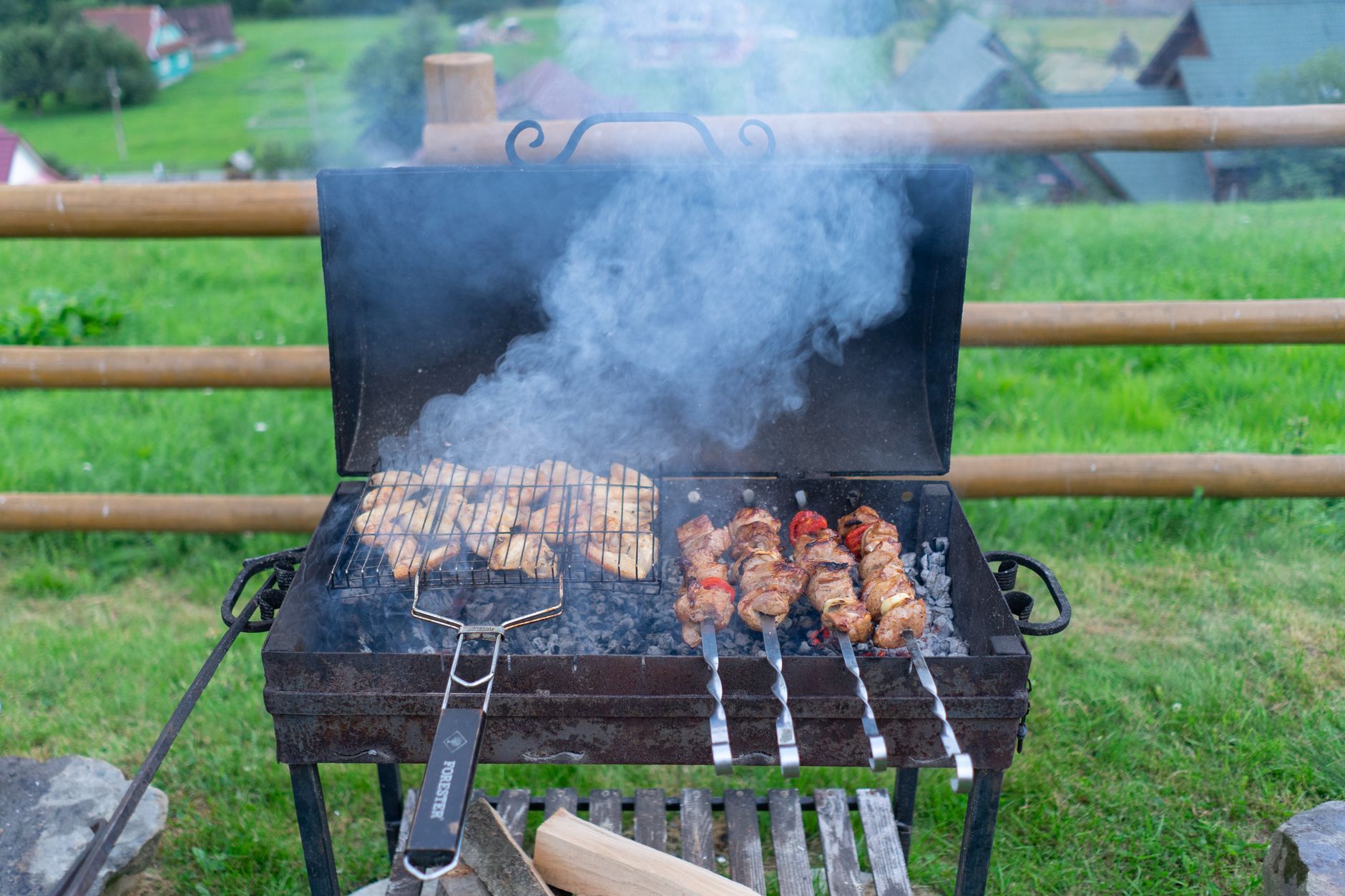 Photo by Atlantic Ambience / Pexels
The grill type decision should come before brand or feature comparison, because gas, charcoal, and pellet grills are fundamentally different tools that produce different results through different mechanisms. A gas grill is a convenience appliance: 10 minutes from ignition to cooking temperature, precise heat control, easy cleanup. A charcoal grill is a craft tool: 30 minutes to manage the fuel, higher peak temperatures for better searing, and smoke flavor that gas cannot replicate. A pellet grill is a precision cooker: wood pellets feed automatically via an auger, temperature is digitally controlled, and the result is smoke-infused food with minimal monitoring required.
Gas Grills: Convenience and Control
How we picked these. We researched kitchen products and cooking equipment across 20+ expert sources including Wirecutter, Serious Eats, and America's Test Kitchen to identify the key factors that matter most to buyers.
How we researched this. We researched grill selection across Wirecutter heat distribution and assembly testing, Amazing Ribs fuel and temperature control analysis, and r/grilling community long-term durability feedback to identify the BTU output, grate material, and temperature control that deliver consistent cooking results across different grilling styles and fuel types.
Gas grills connect to either a standard 20-pound propane tank or natural gas line from your home. Propane grills are portable and work anywhere. Natural gas grills require professional line installation but eliminate tank refills. Key specs: BTU output (British Thermal Units) measures total heat output, but BTU-per-square-inch of cooking area is more useful than raw BTU. A 40,000 BTU grill with 400 square inches of cooking area delivers the same heat density as a 20,000 BTU grill with 200 square inches. Look for at least 80 to 100 BTU per square inch. Stainless steel burner tubes last longer than cast iron or aluminum. Stainless cooking grates are easier to maintain than cast iron (cast iron requires seasoning but retains heat better). For 2 to 4 person households, a 2 to 3 burner grill at $250 to $400 covers most needs. For larger groups or frequent entertaining, a 3 to 4 burner model with 500+ square inches of primary cooking area is appropriate. See our best grills for beginners and best grills for small patios.
Charcoal Grills: Flavor and High Heat
Charcoal grills reach higher peak temperatures than most gas grills (700 to 900F versus 500 to 600F for gas) and produce combustion byproducts including carbon monoxide and aromatic compounds that impart flavor gas cannot replicate. Kettle grills (Weber-style) are the most versatile charcoal format — they work as a direct-heat grill for burgers and steaks and can be configured for indirect-heat smoking for ribs and brisket with a minion method or slow-and-sear accessory. Barrel grills offer more cooking area at lower prices but less control. Kamado grills (Big Green Egg, Kamado Joe) are ceramic-insulated charcoal grills with exceptional heat retention that function as high-performance grills, smokers, and even pizza ovens — they are the highest-capability charcoal format at premium prices. Charcoal types: lump charcoal burns hotter, faster, and cleaner than briquettes. Briquettes burn longer and more consistently, better for long cooks. Our best grills for steaks covers high-heat charcoal models.
Pellet Grills: Precision and Smoke Flavor
Pellet grills use compressed hardwood pellets fed automatically by an electric auger to a fire pot. A digital controller maintains temperature to within 5 to 15 degrees, making them the most hands-off smoking and grilling option. They produce consistent smoke flavor across a wide temperature range (180F for cold smoking through 500F for grilling). The limitation is that they cannot match charcoal peak searing temperatures and require electricity and pellet supply. Pellet costs run $0.75 to $1.50 per hour of cooking. A 40-pound bag of premium pellets lasts roughly 15 to 20 hours of cooking. The cooking experience is closer to a convection oven with smoke than a traditional grill. For households that primarily do slow-cooked meats, ribs, brisket, and chicken, a pellet grill is the most capable single tool. For households that primarily grill burgers and steaks quickly, a gas grill is more appropriate. See our best smokers for beginners for pellet and offset options.
Build Quality and What to Check
Grill lifespan is determined by material thickness and rust resistance. Thin steel fireboxes and cooking grates rust and warp within 2 to 3 seasons in outdoor use. Quality indicators to look for: stainless steel burner tubes (not aluminum), 304-grade stainless steel on exterior panels, cast iron or stainless steel cooking grates (not chrome-plated), and a lid with a consistent seal (hold the lid closed and check for gaps). Grill covers are essential to protect any grill from weather and dramatically extend the lifespan of even budget models. Grease management is a safety and convenience factor — look for a grease tray or channel that directs drippings away from the burners and into a removable drip pan. See our best grill thermometer guide for temperature monitoring tools that work across all grill types.
Size and Cooking Area
Primary cooking area is measured in square inches for the main grate, excluding warming racks. A 450 to 500 square inch primary cooking area handles 20 to 24 burgers at once or a full brisket plus sides simultaneously. For families of 4 who grill 3 to 4 times per week, 400 square inches of primary area is the practical minimum to avoid multi-batch cooking. For occasional use or smaller households, 300 square inches is sufficient. Do not include warming rack area in your usable cooking space calculation since warming racks are not directly over the heat source and produce significantly different results. For apartment balconies or small patios, a 2-burner tabletop grill in the $100 to $200 range provides 200 to 250 square inches of primary area and fits most space constraints. Our best apartment grills covers compliant compact options.
Frequently Asked Questions
Is gas or charcoal better for grilling?
What BTU rating should I look for in a gas grill?
How big a grill do I need for a family of 4?
How long do gas grills last?
Can I use my grill as a smoker?
What is the difference between a grill and a griddle?
Do I need a grill cover?
How We Analyze Products
We analyze Amazon review data — often thousands of reviews per product — to surface patterns that individual buyers miss. Our process aggregates star ratings, review counts, and buyer sentiment at scale, identifying which strengths and weaknesses appear consistently across the largest review samples available.
Each product earned its placement through data: total review volume, average rating, and the specific praise and complaints that repeat most often across buyers. No manufacturer paid for placement on this page. Products appear here because buyers endorsed them at scale, not because a company asked us to feature them.
We use AI to summarize review sentiment — not to fabricate opinions, but to condense what thousands of buyers actually wrote into a readable format. The pros and cons you see reflect the most common themes found in verified purchaser reviews, paraphrased for clarity. We do not claim to have accessed Reddit, YouTube, or specific publications in generating these summaries.
Prices shown reflect Amazon pricing at the time this page was last generated. Click “See Today’s Price” to get the current live price on Amazon. Read our full methodology →