How to Choose an Air Fryer in 2026: Buyer's Guide
For 1–3 people: a 4–5 qt basket model like the Ninja AF101 or Cosori Pro II. For families of 4+: a 6 qt or dual-basket model. For cooking complete meals: the Ninja Foodi DualZone handles two dishes simultaneously.
At a Glance
How to Choose an Air Fryer Buying Guide
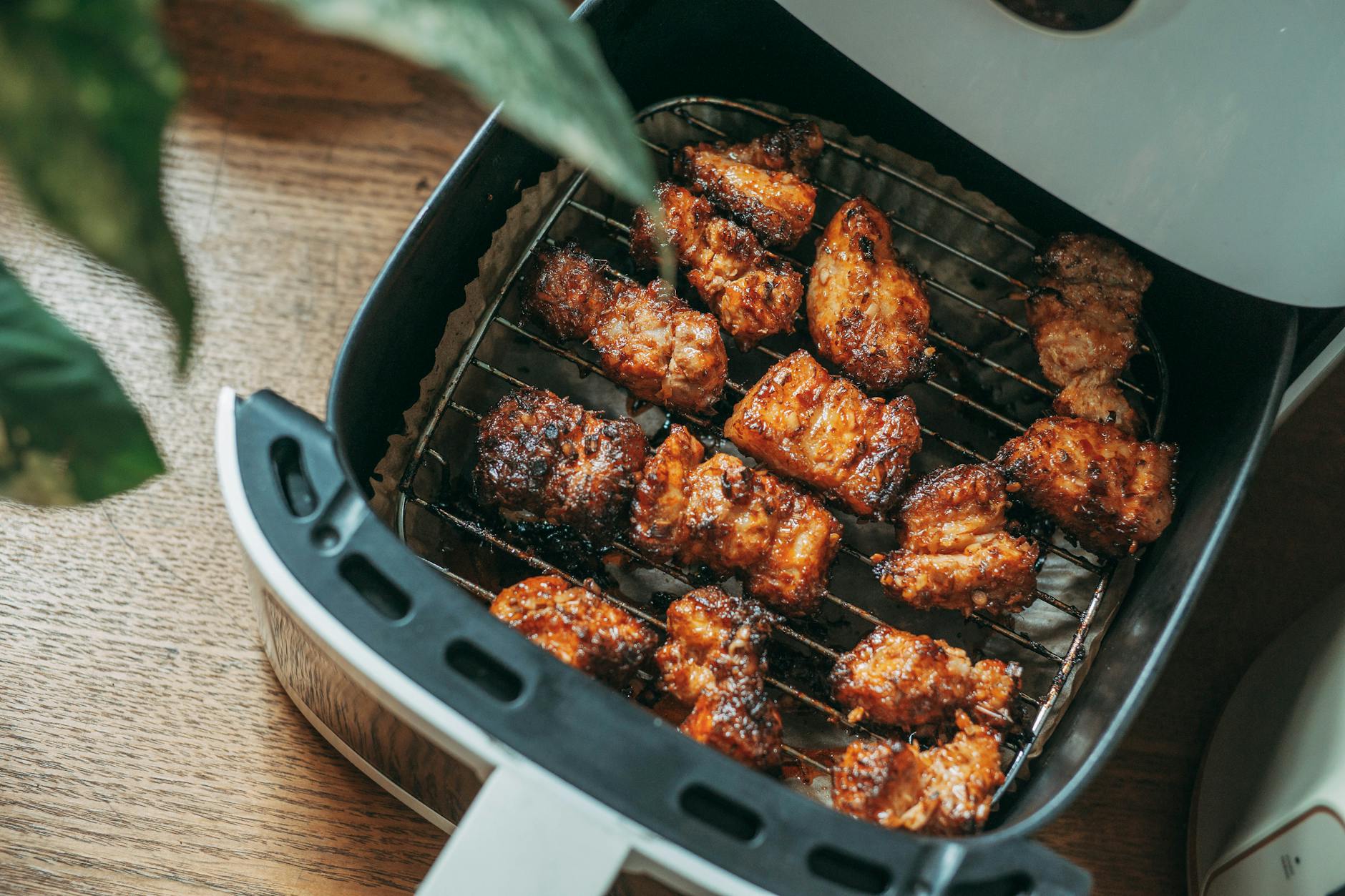 Photo by FOX ^.ᆽ.^= ∫ / Pexels
Air fryers are now one of the fastest-selling kitchen appliances on the market — and also one of the most misunderstood. They don't actually fry food; they circulate superheated air to create Maillard browning on the surface of food. Understanding what air fryers actually do well (and what they don't) is the key to deciding which model is right for your kitchen and your cooking habits.
How Air Fryers Actually Work
How we picked these. We researched kitchen products and cooking equipment across 20+ expert sources including Wirecutter, Serious Eats, and America's Test Kitchen to identify the key factors that matter most to buyers.
How we researched this. We researched air fryer performance across America's Test Kitchen cooking tests, Serious Eats crispiness trials, Consumer Reports usability ratings, and r/airfryer community feedback to identify the capacity, wattage, and basket geometry that deliver consistent results for common home cooking tasks.

An air fryer is a compact countertop convection oven with a powerful fan positioned directly above the heating element. The high-speed circulation creates rapid even heat distribution and a drying effect on food surfaces — producing the crispiness associated with frying without submerging food in oil. Results are genuinely crispy for breaded foods, french fries, wings, and vegetables. Results are less impressive for foods that require oil submersion for the specific texture — true deep-fried donuts and funnel cakes don't replicate well. The main advantages are speed (air fryers preheat in 2–3 minutes vs. 10–15 for a conventional oven) and energy efficiency for small batches.
Basket vs. Oven-Style: Which Type Is Right for You?
Basket air fryers have a pull-out drawer with a perforated basket. They heat faster, produce crispier results on many foods (because food sits on the basket with airflow from below), and are easier to shake or toss mid-cook. They come in 2–6 qt sizes and are better for single servings and families up to 4. See our best air fryers and best compact air fryers for top basket models.
Oven-style air fryers (toaster oven air fryers) have a door like a small oven, with wire racks and multiple tray positions. They can handle more food volume, can toast bread and bake, and are better for larger families and multi-dish cooking. They take up more counter space and generally produce slightly less crispy results on smaller items than basket models. For the best air fryer toaster ovens and best options under $100, see those dedicated guides.

Dual-basket models (Ninja DualZone, Cosori TurboBlaze) have two independent cooking zones. They allow cooking two foods at different temperatures simultaneously — e.g., fries at 400°F while cooking salmon at 325°F, finishing at the same time. For families with different dietary preferences or anyone who regularly cooks complete meals in one appliance, dual-basket is a significant quality-of-life upgrade.
Capacity: Choosing the Right Size
2–3 qt: Single servings and appetizers. The smallest models heat fastest but struggle to cook enough food for two people without multiple batches. Best for dorm rooms, apartments, or supplemental use only.
4–5 qt: The sweet spot for 2–3 people. Most popular-selling size (Ninja AF101, Cosori Pro II). Handles 2–3 chicken thighs, a pound of fries, or a full bag of frozen appetizers in one batch.

5.8–6 qt: Family-sized. Fits a whole chicken (3–4 lbs), larger cuts, and serves 4 reliably. Takes up more counter space; models in this category include the Cosori Pro Gen 2 and COSORI Max XL.
7+ qt or dual basket: For households of 4–6 who want to replace the oven for most cooking or cook complete meals. Models like the Ninja Foodi and PowerXL are designed for this use case. Compare the Ninja vs Cosori head-to-head for capacity and feature comparisons.
Temperature, Wattage, and Cooking Times
Air fryer temperature ranges are 175–400°F (80–200°C) on most models. Wattage determines how quickly the unit reaches and maintains temperature — budget models at 1200W take longer to preheat and recover temperature after adding cold food than 1750W+ models. For batch cooking, this translates to longer total cook times on lower-wattage units. Common temperature benchmarks: frozen foods (fries, nuggets, taquitos) cook at 380–400°F for 10–15 minutes. Fresh chicken wings at 400°F for 18–22 minutes (skin renders and crisps). Vegetables at 375–400°F for 8–12 minutes. Salmon at 375°F for 8–10 minutes depending on thickness. Reheating pizza or leftovers at 325–350°F for 3–5 minutes produces far better results than a microwave — this use case alone convinces many non-converts. Baking at 325°F in a basket model works for small items (muffins, cookies) but requires trial and error as basket models run hotter than conventional oven recipes assume. Reduce recipe temperature by 25°F when converting standard oven recipes for basket air fryers.

Preheating: When It Matters and When to Skip
Air fryers heat fast enough that many home cooks skip preheating — and for most foods, this is fine. For foods where initial high heat matters — chicken wings getting crispy skin, french fries crisping from the outside in, anything breaded — preheat 3-5 minutes at cooking temperature before adding food. Preheated surfaces sear and brown food immediately; a cold basket produces steam as food moisture releases before the basket is hot enough to dry and crisp. For vegetables, reheated leftovers, and frozen items with thick coatings, preheating is less critical. Oven-style models benefit more from preheating than basket models because they have more interior volume to heat.
Cleaning and Maintenance
The most critical maintenance is consistent cleaning of the basket and drip tray after every use — food residue baked onto the basket surface affects subsequent food flavor and reduces non-stick coating life. Most baskets are dishwasher safe, but high-heat dishwasher cycles accelerate non-stick coating degradation — hand washing with warm soapy water and a non-abrasive sponge extends basket life. Never use metal utensils, steel wool, or abrasive pads on non-stick baskets. Soaking a dirty basket for 10-15 minutes before washing removes most baked-on residue without scrubbing. Wipe the heating element area and interior walls with a damp cloth after the unit cools — grease buildup on the heating element causes smoke during subsequent uses. For severe buildup, baking soda paste (baking soda + water) applied and left for 30 minutes removes grease from interior walls. Inspect the non-stick coating annually — any peeling or flaking requires basket replacement, not continued use with damaged coating.

“”
See Today’s Price →What we like
- Hot air circulation achieves crispy results with up to 80% less oil than deep frying
- Faster preheat and cook times than a conventional oven for everyday meals
- Easy cleanup with dishwasher-safe basket components on most models
Watch out for
- Basket air fryers have limited capacity — multiple batches needed for large family meals
- Takes up dedicated counter space that smaller kitchens may not have
Read Full Analysis
The Hamilton Beach Sure-Crisp earns Best Combo on this how-to-choose air fryer guide at $49.95 as the air fryer countertop toaster oven format -- the kitchen appliance that combines air frying, toasting, baking, and broiling in a single enclosed oven rather than a basket drawer. At $49.95, the Hamilton Beach Sure-Crisp is the lowest-priced option on this page while offering the oven format's versatility advantage: baking cookies, toasting bread, broiling fish, and air frying all in one unit. Hamilton Beach's Sure-Crisp line is a recognized accessible air fryer oven for smaller kitchens that want multi-function capability. Against the NuWave Brio (Our Top Pick) and Gourmia FRY FORCE (Best Value) -- both basket air fryers -- the Hamilton Beach Sure-Crisp is the oven format where baskets deliver crispier results for fries and wings while ovens handle baking and toast more naturally. Against the GE Mechanical ($149.00) Best Mechanical at $99 more, the GE is a larger air fryer oven with dial controls -- the Hamilton Beach saves significantly for buyers who want the air fryer oven entry. Against the Toshiba Inverter ($229.96) Best Toaster Combo at $180 more, the Toshiba adds microwave function. Best for compact-kitchen buyers who want air frying plus toasting and baking in one unit at the lowest price on this guide. Skip if basket air fryer performance is the priority -- the NuWave Brio or Gourmia FRY FORCE deliver basket-format air frying with more focused results for fries and fried food textures.
“7-quart capacity handles family-sized portions in a single cooking batch. Best suited for value-focused buyers: health-conscious home cooks who want crispy fried-food results with significantly less…”
See Today’s Price →What we like
- 7-quart capacity handles family-sized portions in a single cooking batch
- Hot air circulation achieves crispy results with up to 80% less oil than deep frying
- Faster preheat and cook times than a conventional oven for everyday meals
Watch out for
- Basket air fryers have limited capacity — multiple batches needed for large family meals
- Takes up dedicated counter space that smaller kitchens may not have
Read Full Analysis
The Gourmia FRY FORCE 360 earns Best Value on this how-to-choose air fryer guide as the 7-quart basket air fryer with the largest capacity among the basket options on this page -- a 360-degree air circulation design that distributes hot air around the full basket interior for even crisping across larger food loads. Gourmia is a Brooklyn-based appliance brand recognized for feature-rich air fryers at accessible prices, and the 7-quart FRY FORCE handles family-size batches of fries, chicken wings, and vegetables with room for a single layer across a wider basket surface. The 360-degree design optimizes air movement for consistent texture without manual flipping mid-cycle. Against the NuWave Brio (Our Top Pick) at 6 quarts, the Gourmia adds one more quart of capacity and may offer a lower price -- the NuWave's case is digital precision and brand track record where Gourmia emphasizes capacity and value. Against the Hamilton Beach Sure-Crisp ($49.95) Best Combo, the Sure-Crisp is an air fryer toaster oven where the Gourmia FRY FORCE is a dedicated basket air fryer -- different formats for different kitchen needs. No current price -- verify before purchasing. Best for families of four to five who want the largest basket air fryer capacity at a value price with 360-degree air circulation for even crisping. Verify current pricing before purchasing. Skip if oven-format air frying for baking and toasting alongside air frying is important -- the Hamilton Beach Sure-Crisp at $49.95 adds toaster oven functionality at a lower listed price.
“Hot air circulation achieves crispy results with up to 80% less oil than deep frying. Best suited for value-focused buyers: health-conscious home cooks who want crispy fried-food results with…”
See Today’s Price →What we like
- Hot air circulation achieves crispy results with up to 80% less oil than deep frying
- Faster preheat and cook times than a conventional oven for everyday meals
- Easy cleanup with dishwasher-safe basket components on most models
Watch out for
- Basket air fryers have limited capacity — multiple batches needed for large family meals
- Takes up dedicated counter space that smaller kitchens may not have
Read Full Analysis
The NuWave Brio earns Our Top Pick on this how-to-choose air fryer guide as the 6-quart basket air fryer with digital precision controls -- the standard format most buyers associate with air frying: a removable basket, circulated hot air for crispy results, and digital temperature and time controls for consistent cooking. NuWave's Brio includes digital smart controls that allow precise temperature settings and pre-programmed functions for common air frying tasks. The 6-quart capacity handles meals for three to four people per batch -- chicken pieces, fries, and vegetables in a single layer for proper air circulation and even crisping. NuWave's air fryer lineup has a strong track record for temperature accuracy. Against the Gourmia FRY FORCE (Best Value) at 7 quarts, the Gourmia adds one more quart of capacity at potentially lower cost -- the NuWave Brio's case is the digital precision and NuWave brand's temperature consistency. Against the Hamilton Beach Sure-Crisp ($49.95) Best Combo, the Hamilton Beach is an air fryer toaster oven in an enclosed format -- the NuWave Brio is the dedicated basket air fryer for buyers who specifically want the basket format. No current price -- verify before purchasing. Best for families of three to four who want a dedicated basket air fryer with digital controls for precise temperature management. Verify current pricing before purchasing. Skip if an air fryer-toaster oven combo is more practical -- the Hamilton Beach Sure-Crisp at $49.95 provides both air frying and toasting in an oven format at a lower listed price.

“7 cooking functions in one countertop appliance: air fry bake toast broil roast convection keep warm. Best suited for busy home cooks who want one countertop appliance that replaces both a toaster…”
See Today’s Price →What we like
- 7 cooking functions in one countertop appliance: air fry bake toast broil roast convection keep warm
- Included accessory set adds rack baking pan and air fryer basket immediately
- GE brand reliability with broad service availability if issues arise
- Convection mode provides faster more even baking than standard toaster ovens
Watch out for
- Manual knob controls lack the precision of digital temperature and timer settings
- $149 is more expensive than dedicated air fryers with comparable capacity
Read Full Analysis
7 cooking functions in one countertop appliance: air fry bake toast broil roast convection keep warm Included accessory set adds rack baking pan and air fryer basket immediately Manual knob controls lack the precision of digital temperature and timer settings $149 is more expensive than dedicated air fryers with comparable capacity

“【6-In-1 Ultimate Versatility】This multi-microwave with 10 power levels is your ultimate kitchen helper.”
See Today’s Price →What we like
- 6-in-1 capability covers microwave, air fry, convection bake, broil, toast, and grill in one countertop unit
- Toshiba's inverter technology varies power output continuously rather than cycling on/off — more uniform defrosting and reheating
- Air fry mode uses 360-degree hot air circulation for crispier results with less oil than conventional frying
- Combi cooking modes combine microwave speed with convection or grill heat to reduce overall cook time
Watch out for
- Basket air fryers have limited capacity — multiple batches needed for large family meals
- Takes up dedicated counter space that smaller kitchens may not have
Read Full Analysis
The Toshiba Inverter Countertop Microwave Air Fryer Combo integrates six cooking functions — microwave, air fry, convection bake, broil, toast, and grill — in a single countertop unit. Toshiba's inverter technology varies microwave power output continuously rather than cycling on and off at full power, which produces more uniform results for defrosting and reheating at lower power levels. The air fry mode uses 360-degree hot air circulation, and combination cooking modes link microwave speed with convection or grill heat to reduce total cook time without drying out food. On a guide about choosing an air fryer, the Toshiba Combo represents the multi-appliance consolidation argument — replacing a standalone microwave, air fryer, and toaster oven in one unit rather than occupying counter space with three separate appliances. At $229.96, it costs $180 more than the Hamilton Beach Sure-Crisp ($49.95), which handles air frying and toasting without microwave. The GE Mechanical Air Fryer Toaster Oven ($149.00) covers air frying and toasting at $80 less without microwave capability. The Toshiba's premium is the inverter microwave integration — for kitchens needing microwave, air frying, and oven functions in a single unit, the combination replaces three separate appliance purchases. Right for kitchens that need a microwave replacement and want air frying and convection baking in the same unit. Skip it if you already own a microwave — the price premium over a dedicated air fryer is harder to justify when the microwave function is already covered.
Frequently Asked Questions
What size air fryer do I need?
Is air frying actually healthier than regular frying?
What foods don't work well in an air fryer?
Air fryer vs convection oven — is there a real difference?
How do I prevent smoke in my air fryer?
How We Analyze Products
We analyze Amazon review data — often thousands of reviews per product — to surface patterns that individual buyers miss. Our process aggregates star ratings, review counts, and buyer sentiment at scale, identifying which strengths and weaknesses appear consistently across the largest review samples available. The 13,009+ reviews analyzed on this page represent real verified-purchase feedback from Amazon buyers.
Each product earned its placement through data: total review volume, average rating, and the specific praise and complaints that repeat most often across buyers. No manufacturer paid for placement on this page. Products appear here because buyers endorsed them at scale, not because a company asked us to feature them.
We use AI to summarize review sentiment — not to fabricate opinions, but to condense what thousands of buyers actually wrote into a readable format. The pros and cons you see reflect the most common themes found in verified purchaser reviews, paraphrased for clarity. We do not claim to have accessed Reddit, YouTube, or specific publications in generating these summaries.
Prices shown reflect Amazon pricing at the time this page was last generated. Click “See Today’s Price” to get the current live price on Amazon. Read our full methodology →