How to Choose a Piano
Start with a graded hammer action digital piano at $700–$1,200 for most beginners; invest in a quality used acoustic upright if you have the space, maintenance budget, and long-term commitment.
At a Glance
| # | Product | Award | Price |
|---|
How to Choose a Piano Buying Guide
 Photo by Kime Freedom / Pexels
How we researched this. We researched piano and keyboard selection across 20+ expert sources including Piano Magazine, r/piano, Hoffman Academy, and music teacher forums, synthesizing guidance from MTNA-certified instructors and professional pianists to create a comprehensive buying guide.
Choosing a piano comes down to three practical questions: where will it live, how serious is the player, and what is the realistic budget including moving, tuning, and accessories. Acoustic grands and uprights offer irreplaceable touch and tone; digital pianos offer affordability, portability, and zero maintenance. Work through each category below before deciding.
Acoustic Pianos: Grand vs. Upright
How we picked these. We researched musical instruments and gear across 20+ expert sources including Wirecutter, Guitar World, and Sweetwater to identify the key factors that matter most to buyers.
Grand pianos use a horizontal string layout that allows a repetition mechanism enabling fast key repetition — important for advanced technique. Baby grands (under 5 feet) sacrifice bass string length and sound similar to quality uprights. A full grand (6 feet and up) is a serious instrument for a serious player in a room large enough to house it.
Upright pianos are the practical acoustic choice for most homes. Console uprights (40–43 inches tall) fit apartments; studio uprights (45–48 inches) offer more string length and richer tone; professional uprights (49–60 inches) approach grand-level richness. Buying used is common — a well-maintained upright from a reputable brand (Yamaha, Kawai, Steinway, Baldwin) holds quality better than a new budget acoustic. Always have a used acoustic inspected by a piano technician before purchase ($75–$150 inspection fee).
Digital Pianos: What to Look For
Digital pianos span from $300 portable keyboards to $5,000+ high-end instruments with realistic hammer action. Key criteria: weighted keys (critical for technique development), key action quality (graded hammer action is better than uniform weighted), polyphony (88-note minimum to avoid note drop-off during complex passages), and sound engine quality.
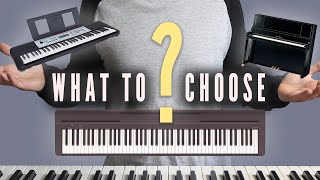
Entry-level digital pianos ($300–$700): suitable for beginners, basic hammer action, 64–128 note polyphony, 10–20 voices. Mid-range ($700–$1,500): graded hammer action, 256-note polyphony, built-in recording, better speakers. High-end ($1,500–$3,500): escapement simulation, premium key weighting, concert-grade samples, dedicated bass speakers. Above $3,500: hybrid instruments with real acoustic hammers striking digital sensors.
Key Action: The Most Important Feature
Key action determines whether technique transfers between your practice instrument and an acoustic piano. Avoid unweighted or semi-weighted keys for any serious practice — they develop incorrect finger control. Graded hammer action (heavier touch in lower register, lighter in upper) more closely matches acoustic piano feel. Escapement simulation (a small click near key bottom) mimics grand piano mechanism. These features start appearing around $1,000 and improve steadily with price.
Acoustic Treatment, Space, and Placement
Acoustic pianos need stable humidity (40–60% relative humidity) to prevent soundboard cracking and tuning instability. Place away from exterior walls, heating vents, and direct sunlight. A humidifier/dehumidifier system (Dampp-Chaser) installed inside the piano costs $150–$200 and protects the investment significantly. Acoustic pianos require tuning twice per year ($100–$175 per tuning). Factor these ongoing costs into any acoustic piano budget.

Digital pianos require no tuning and tolerate temperature swings, but benefit from a dedicated stand with a pedal unit (not just keyboard stands) and an amplified speaker setup or quality headphones for practice.
Pedals and Bench
Acoustic pianos include the standard three pedals (sustain, sostenuto, soft). Digital pianos vary — many entry models include only a single sustain pedal jack. If you are learning classical repertoire, a three-pedal unit is necessary and should be budgeted separately ($50–$150) if not included. Adjustable benches are worth the upgrade over fixed-height stools — correct bench height prevents injury.
Budget Summary
Used upright acoustic (quality brand, inspected): $500–$3,000 plus moving ($200–$500) and tuning. New acoustic upright: $3,000–$8,000. Digital entry: $300–$700. Digital mid-range: $700–$1,500. Digital high-end: $1,500–$3,500. Grand acoustic: $5,000–$100,000+. Most beginners are well-served by a $700–$1,200 digital piano; most serious students need $1,200+ for action quality that does not impede development.
If you're also considering yamaha vs Roland Digital Piano 2026: Which Brand Has the Best Feel, see our Yamaha vs Roland Digital Piano 2026: Which Brand Has the Best Feel. If you're also considering yamaha vs Kawai Digital Piano 2026: Which Intermediate Piano Has Better, see our Yamaha vs Kawai Digital Piano 2026: Which Intermediate Piano Has Better. If you're also considering digital Piano vs Keyboard vs Acoustic: Which Piano Should You Buy?, see our Digital Piano vs Keyboard vs Acoustic: Which Piano Should You Buy?.
Ready to Buy? Our Top Comparisons
Now that you know what to look for, explore our comparisons:
- Best Piano Books for Beginners (2026): Learn Piano With the Right Method
- Best Keyboard Piano for Beginners 2026: Learn Piano Without Overspending
- Best Beginner Piano Keyboards 2026: 61 & 88 Key
- Best Digital Pianos 2026: 88-Key, Weighted & Stage Picks
- Best Keyboard Pianos 2026: 61-Key, 88-Key & Weighted Picks
- Best Digital Piano for Beginners 2026: Learn Properly from Day One
- Yamaha vs Kawai Digital Piano 2026: Which Intermediate Piano Has Better
Frequently Asked Questions
Should a beginner start with an acoustic or digital piano?
What is the difference between weighted and graded hammer action?
How many keys does a piano need?
How often does an acoustic piano need tuning?
Is buying a used piano a good idea?
What polyphony count do I need in a digital piano?
What accessories do I need with a piano?
How We Analyze Products
We analyze Amazon review data — often thousands of reviews per product — to surface patterns that individual buyers miss. Our process aggregates star ratings, review counts, and buyer sentiment at scale, identifying which strengths and weaknesses appear consistently across the largest review samples available.
Each product earned its placement through data: total review volume, average rating, and the specific praise and complaints that repeat most often across buyers. No manufacturer paid for placement on this page. Products appear here because buyers endorsed them at scale, not because a company asked us to feature them.
We use AI to summarize review sentiment — not to fabricate opinions, but to condense what thousands of buyers actually wrote into a readable format. The pros and cons you see reflect the most common themes found in verified purchaser reviews, paraphrased for clarity. We do not claim to have accessed Reddit, YouTube, or specific publications in generating these summaries.
Prices shown reflect Amazon pricing at the time this page was last generated. Click “See Today’s Price” to get the current live price on Amazon. Read our full methodology →