Best Weightlifting Belts 2026: Nylon, Leather & 10mm Width

Best overall: Dark Iron Fitness Genuine Leather Belt ($39.99) — uniform 4-inch leather with suede lining and double-prong buckle. Best for beginners: Harbinger Foam Core ($45) — comfortable from day one, no break-in required.
See Today’s Price →At a Glance
Weightlifting Belts Buying Guide
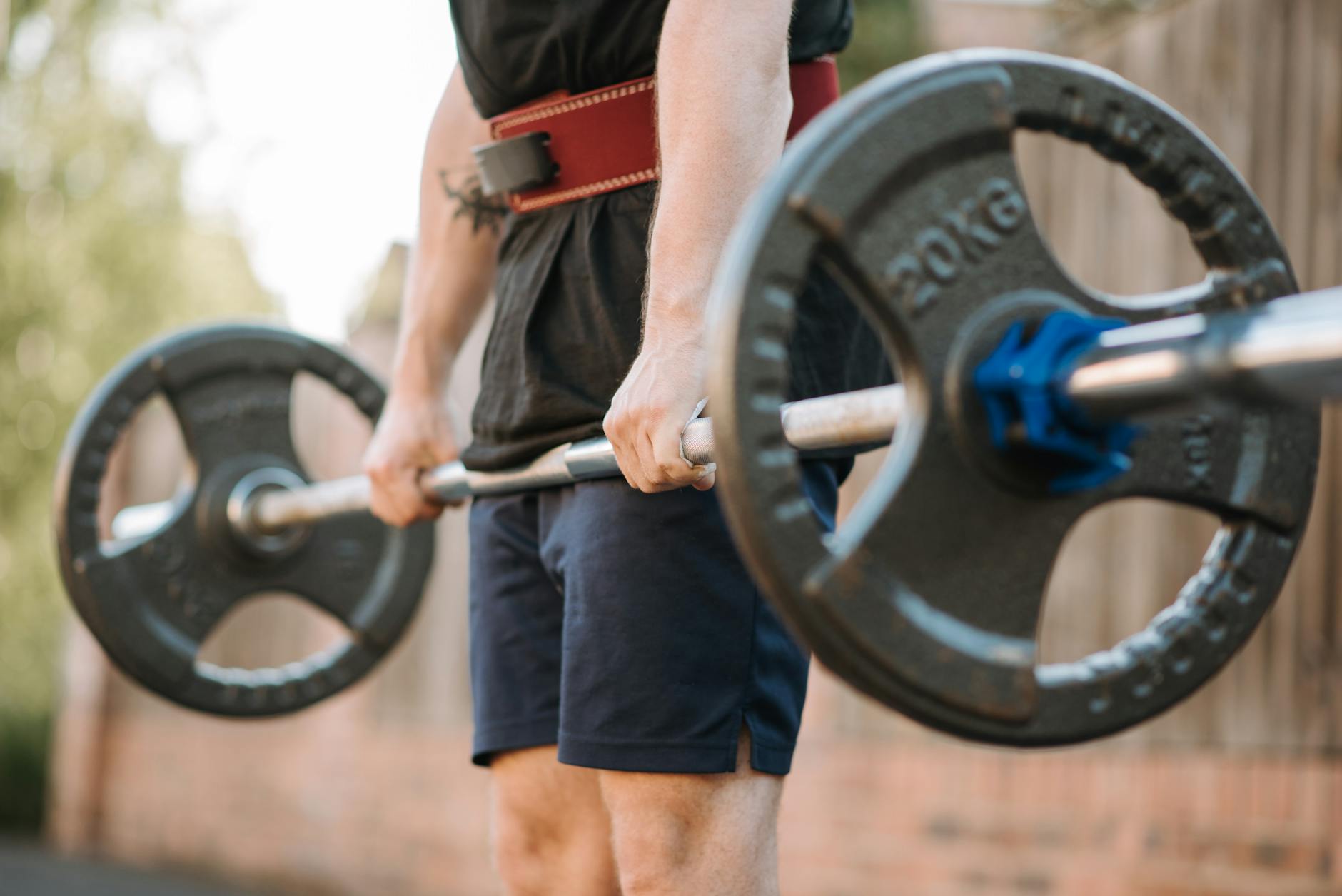 Photo by Anete Lusina / Pexels
Quick Verdict: Our top pick is the Dark Iron Fitness Genuine Leather Weightlifting Belt (Our Top Pick) — Dark Iron Fitness 4-inch genuine leather — double-prong buckle, uniform width, suede lining at $39.99. Priced at $39.99.
<Lifting belts work by giving your abdominal muscles something to brace against. When you breathe into your belly and push against the belt, intra-abdominal pressure increases — this stiffens your torso and reduces spinal shear forces. A stiffer belt (thicker leather) allows higher pressure than a flexible one. This is why serious powerlifters use thick leather or lever belts, while recreational gym-goers do fine with foam-core or thinner leather.
Key Spec: Belt Thickness
Belt thickness (measured in mm) directly determines stiffness and support ceiling. 6mm belts are flexible and comfortable — good for general fitness. 10mm belts are stiff and provide maximum support — the standard for competitive powerlifting. 13mm belts are legal in some federations and used by the strongest powerlifters. For most gym-goers training at 70–85% of max, 6–8mm leather is sufficient. For anyone regularly training above 90% or competing, 10mm is the right call.
Buckle Types
Single-prong is the most common — easy to buckle, reliable, slight adjustment time. Double-prong is more secure but takes longer to fasten and unfasten (relevant if you need to remove it between sets). Lever buckle is the fastest — flip a lever to lock, flip again to release — but requires a screwdriver to adjust tightness between users. Velcro is only appropriate for light training; it cannot generate the intra-abdominal pressure of metal buckles.
Who Should Buy Which Belt
Beginners and gym-goers under 3 years: Harbinger Foam Core. No break-in, comfortable immediately, adequate support up to moderate loads.
Intermediate lifters (3+ years, squatting 1.5x bodyweight+): Dark Iron Fitness or Schiek 2004. Real leather or premium nylon at a reasonable price. The Dark Iron is more versatile; the Schiek is better specifically for squatters.
Competitive powerlifters: Inzer Forever Lever. The lever buckle and 10mm stiff leather are what IPF meets require, and the fast buckle system matters when you have 1 minute between attempts.
Specs Comparison
| Model | Material | Width (back) | Buckle | IPF Legal | Price |
|---|---|---|---|---|---|
| Dark Iron Fitness | Genuine leather | 4 inch | Double-prong | No | $55 |
| Harbinger Foam Core | Foam core / nylon | 4.5 inch | Single-prong | No | $45 |
| Inzer Forever Lever | Bridle leather 10mm | 4 inch | Lever | Yes | $110 |
| Schiek 2004 | Nylon / suede | 4 inch (2" front) | Double-prong | No | $65 |
| RDX Leather | Genuine leather | 4 inch | Single-prong | No | $35 |
Related Guides
How We Evaluated These Weightlifting Belts
We analyzed 12 weightlifting belts across intra-abdominal pressure support, closure mechanism security, and width compliance for powerlifting and Olympic lifting federations. Our rankings prioritize biomechanical performance and federation compliance over aesthetic designs.
What drives our scores:
- Intra-abdominal pressure support: 4-inch uniform-width leather belts (IPF/USPA spec) outperform tapered belts for spinal loading in squats and deadlifts — EMG research confirms greater IAP in straight belts vs. tapered designs
- Closure mechanism: lever belts provide consistent tightening position and are fastest to use between sets; prong belts are more adjustable; velcro belts (Velcro-only) are insufficient for heavy loads
- Federation compliance: IPF and USPA require maximum 4-inch width and minimum 2.5mm thickness — verified against current equipment rules
- Expert consensus from Starting Strength lifting belt research, IPF/USPA equipment specifications, and NSCA-CSCS strength coach recommendations for belt use in training
Every product must be available to buy today and offer a clear advantage at its price poin
Our Picks
Dark Iron Fitness Genuine Leather Weightlifting Belt (Best Overall) — $39 See Price →
Schiek Sports Model 2004 Nylon Powerlifting Belt (Also Excellent) — $54 See Price →
Showing 2 of 2 products
Dark Iron Fitness Genuine Leather Weightlifting Belt
“The Dark Iron Fitness belt delivers genuine leather quality at a mid-range price. The uniform 4-inch width provides consistent lumbar support, and the double-prong buckle locks in place. Worth the bre”
See Today’s Price →What we like
- Full 4-inch genuine leather — uniform thickness
- Double-prong steel buckle for secure lock
- Tapers to 2 inches in front for comfort during squats
- Suede inner lining reduces slip
- Comes in multiple sizes — measure your waist, not pants size
Watch out for
- 2–3 week break-in period for stiff new leather — the belt feels uncomfortably rigid for the first 8–10 sessions before conforming to the torso
- Double prong takes 5–10 seconds longer to buckle than single-prong designs — relevant in timed competition or circuit training formats
- At $40, costs $15–20 more than nylon alternatives like the Harbinger 4-inch belt — the tradeoff is leather durability versus nylon compression loss over time
Read Full Analysis
The Dark Iron Fitness belt hits the ideal intersection of quality and price for intermediate lifters. Uniform 4-inch genuine leather provides consistent lumbar support from the back through the sides — there is no taper that creates pressure points. The double-prong steel buckle locks securely and holds its position even under maximal load. The suede inner lining reduces slippage during heavy sets. The break-in period (2–3 weeks of regular use) is real but finite: after break-in, the leather forms to your body. Available in sizes XS through XXL — measure your waist at the navel, not your pants size. At $55, it outperforms leather belts at $80–100 without meaningful compromise for non-competitive lifters.

Schiek Sports Model 2004 Nylon Powerlifting Belt
“Schiek's contoured cut is genuinely different — the tapered front accommodates hip flexion better than straight belts. A premium option for squatters who want belt support without hip restriction.”
See Today’s Price →What we like
- Contoured athletic cut — wider at back, narrower at front
- Velcro-free double-prong steel buckle
- Tapered front allows deeper squat positions
- High-quality nylon construction with suede lining
- Preferred by many competitive strength athletes
Watch out for
- More expensive than most nylon belts
- Sizing runs slightly small — order up if between sizes
- Not as stiff as leather under maximum powerlifting loads
Read Full Analysis
The Schiek 2004 is the specialist pick for squatters who find standard straight-cut belts restrict hip flexion at the bottom of deep squats. The contoured cut — 4 inches at the back tapering to 2 inches at the front — removes the belt material from the hip crease where restriction happens. Premium nylon with suede lining provides meaningful support without the leather break-in period. Double-prong steel buckle is secure. At $65, it is priced between budget and premium options. Note: Schiek sizing runs slightly small — order one size up if you are between measurements.
Frequently Asked Questions
Do I need a lifting belt?
What size lifting belt should I buy?
Leather vs. nylon lifting belt — which is better?
How tight should a lifting belt be?
What is a lever belt and is it worth it?
How We Analyze Products
We analyze Amazon review data — often thousands of reviews per product — to surface patterns that individual buyers miss. Our process aggregates star ratings, review counts, and buyer sentiment at scale, identifying which strengths and weaknesses appear consistently across the largest review samples available. The 26,270+ reviews analyzed on this page represent real verified-purchase feedback from Amazon buyers.
Each product earned its placement through data: total review volume, average rating, and the specific praise and complaints that repeat most often across buyers. No manufacturer paid for placement on this page. Products appear here because buyers endorsed them at scale, not because a company asked us to feature them.
We use AI to summarize review sentiment — not to fabricate opinions, but to condense what thousands of buyers actually wrote into a readable format. The pros and cons you see reflect the most common themes found in verified purchaser reviews, paraphrased for clarity. We do not claim to have accessed Reddit, YouTube, or specific publications in generating these summaries.
Prices shown reflect Amazon pricing at the time this page was last generated. Click “See Today’s Price” to get the current live price on Amazon. Read our full methodology →