How to Choose a Tent in 2026: Buyer's Guide
The Ozark Trail 10-Person 3-Room Camping Tent at $209.50 is the top large group tent pick — 3 separate rooms give families genuine privacy separation with a 20x10 ft footprint providing standing room and gear storage that smaller tents can't match.
At a Glance
How to Choose a Tent Buying Guide
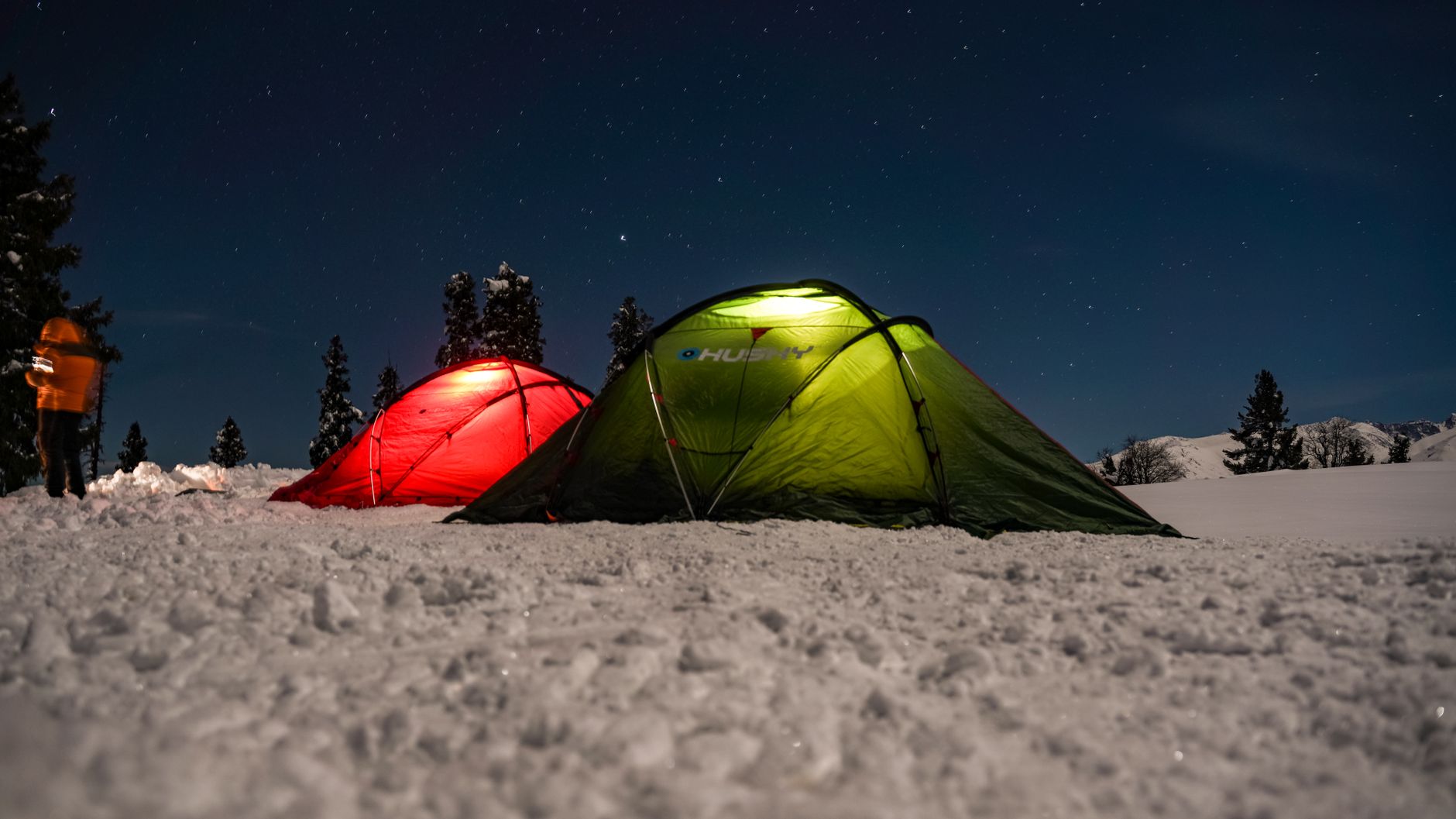 Photo by Umar Andrabi / Pexels
Tent selection is driven by two completely different sets of priorities depending on whether you are car camping (driving to a campsite with unlimited gear capacity) or backpacking (carrying everything on your back). Each requires a fundamentally different tent.
Capacity Ratings: How Manufacturers Lie
How we picked these. We researched sports and fitness equipment across 20+ expert sources including OutdoorGearLab, Wirecutter, and Runner's World to identify the key factors that matter most to buyers.
How we researched this. We researched tent selection across REI Expert Advice buying guides, OutdoorGearLab weather resistance and setup time testing, Backpacker magazine editorial reviews, and r/ultralight community weight-and-weather tradeoff analysis to identify the capacity, season rating, and pole geometry that match different camping styles and conditions.

A tent rated for 4 people sleeps 4 people only if they are all thin, lying perfectly still, with no gear inside. In practice, size down the capacity rating by one: a 4-person tent comfortably sleeps 2 adults with gear, or 3 adults cramped. A 6-person tent works for 4 adults with gear. Manufacturers calculate capacity using sleeping pad widths packed tightly together — this leaves no room for gear, no headroom at the sides, and no personal space. Always check the floor dimensions in square feet: 30 sq ft minimum per adult for comfortable camping, 20 sq ft per person as an absolute minimum. See the best camping tents and best family camping tents for well-reviewed options.
3-Season vs. 4-Season Tents
3-season tents (spring, summer, fall) are designed for mild to moderate weather — rain, wind, and light snow. They use mesh panels for ventilation and a rainfly that typically does not cover the entire tent. Most recreational camping uses 3-season tents. 4-season (or mountaineering) tents are built for sustained winter use and heavy snow loads — they have sturdier poles, fewer mesh panels (to retain warmth), and a lower aerodynamic profile to handle high winds. They are heavier, less ventilated, and significantly more expensive. Unless you camp in winter or above treeline regularly, a 3-season tent is the right choice. Extended-season tents (a category between 3-season and 4-season) add an inner solid body instead of mesh for better cold-weather performance while remaining lighter than true mountaineering tents.
Rainfly Coverage: Full vs. Partial
A full-coverage rainfly extends to the ground on all sides — the best option for rain protection. A partial rainfly covers only the top of the tent, leaving the sides of the mesh walls exposed — better ventilation in fair weather but poor rain protection. For general-purpose camping, always choose a tent with a full-coverage rainfly or at minimum a rainfly that reaches within 6 inches of the ground on all sides. A vestibule (covered porch area created by the rainfly over the tent door) is highly valuable — it provides gear storage space under shelter without using interior floor space. Coleman, REI, and Big Agnes make consistently well-reviewed tents with good vestibule designs. Compare top options in the best tents for beginners and see how Coleman and Eureka compare.

Pole Materials: Aluminum vs. Fiberglass
Aluminum poles are lighter, stronger, and more flexible than fiberglass. They are the standard material in mid-range to premium tents and can be bent significantly without breaking. Fiberglass poles are heavier, more brittle in cold weather, and can shatter under stress — they are found in budget tents. If you are buying a tent for regular use, aluminum poles are worth the premium. Carbon fiber poles are the lightest option and found in ultralight backpacking tents at premium prices. Pole count matters for setup ease: fewer, longer poles (hubbed systems) set up faster than many individual shorter poles.
Weight and Packability (Backpacking)
For backpacking tents, weight is the governing specification. A 2-person backpacking tent should weigh under 5 lbs (good), under 4 lbs (excellent), or under 3 lbs (ultralight premium). "Trail weight" includes tent, poles, and rainfly. "Minimum weight" excludes stakes and stuff sack — always compare trail weights. Packability matters for fitting the tent into a backpack: packed dimensions of 5" x 20" or smaller are typical for quality backpacking tents. See the best backpacking tents for weight-conscious options. For a beginner car camper, weight is irrelevant — buy for space and comfort.
Setup Time and Freestanding vs. Non-Freestanding
Freestanding tents hold their shape without stakes (though staking is recommended for wind resistance). They can be moved after setup and shaken out to remove debris. Non-freestanding tents require stakes or trekking poles to stand — they are lighter but less convenient. For beginners and car campers, freestanding is strongly recommended. Color-coded poles and simple hub systems reduce setup time. Practice setting up a new tent at home before your first trip — never arrive at camp having never assembled your tent.
The products this guide covers
- Ozark Trail 10 Person Tent 3 Rooms 20 X 10 — $179.90. Against it: May not withstand the intensity demands of professional or competitive-level training.
- TAILI Inflatable Blow Up Tent for Camping with Hand Pump — $299.99. Waterproof construction handles rain without requiring seam sealing that many budget tents skip. Against it: Hand pump setup takes 5-10 minutes.
- Coleman Sundome Camping Tent with Rainfly — $76.22. Coleman brand camping heritage. Against it: Heavy for backpacking — car camping use only.
- Kelty Late Start 2P - Lightweight Backpacking Tent with — $149.95. 4.5 lbs total packweight is 30% lighter than family camping tents without sacrificing livability. Against it: Two-person livability is tight — 28 sq ft means cozy quarters for tall adults.
- MSR Hubba Hubba NX 2-Person Lightweight Backpacking Tent — $374.89. 3 lbs 7 oz ultralight trail weight enables multi-day backpacking. Against it: 2-person capacity tight for two adults with full backpacking gear.
Picking between them
The Ozark Trail 10 Person Tent 3 Rooms 20 X 10 at $179.90 suits enthusiast buyers: Active individuals who want to build fitness at home or at the gym with reliable equipment. The TAILI Inflatable Blow Up Tent for Camping with Hand Pump at $299.99 suits backpackers and car campers who want the fastest possible tent setup and accept some extra pack weight in exchange for inflation convenience. The Coleman Sundome Camping Tent with Rainfly at $76.22 suits families and casual campers wanting a weatherproof tent that's easy to pitch. The MSR Hubba Hubba NX 2-Person Lightweight Backpacking Tent at $374.89 suits backpackers and serious campers who need ultralight weight with proven weather protection.
Watch Before You Buy
“Durable construction withstands regular training and workout sessions. Best suited for enthusiast buyers: active individuals who want to build fitness at home or at the gym with reliable equipment.”
See Today’s Price →Watch out for
- May not withstand the intensity demands of professional or competitive-level training
- Proper form guidance recommended to maximize safety and results
“The TAILI Inflatable Camping Tent sets up in minutes with a hand pump — no poles to wrestle with — and its waterproof shell handles moderate rain reliably. The inflatable beam design creates a…”
See Today’s Price →What we like
- Inflatable pole system sets up the tent structure without threading poles through sleeves — significantly faster than traditional pole-and-sleeve setup, especially solo
- Waterproof construction handles rain without requiring seam sealing that many budget tents skip
- Hand pump included eliminates a separate pump purchase
- Large interior capacity accommodates multiple campers without the crowding of compact backpacking tents
Watch out for
- Expensive at $300 for an inflatable tent
- Hand pump setup takes 5-10 minutes
- Puncture is a more serious failure mode than broken poles
- Heavy for backpacking — better for car camping
Read Full Analysis
TAILI Inflatable Camping Tent is the air-beam structure option on this tent guide — sealed inflatable poles pressurized via hand pump to erect the tent frame without threading sleeves or assembling sectional pole segments, with waterproof construction and storm-distributed load across the continuous curved air beam rather than at rigid pole joints. The inflatable pole system differentiates the TAILI from every other tent on this page: the Ozark Trail, Coleman, Kelty, and MSR models all use traditional pole systems; the TAILI's air-beam design removes the assembly sequence at the cost of puncture vulnerability that pole-based alternatives don't carry. The 5-10 minute pump setup is faster than multi-pole threading but slower than pre-attached instant-setup designs. At $299.99, TAILI Inflatable is the third-highest confirmed price on this page — $89.49 below the MSR Hubba Hubba NX at $374.89 (rk5), $90.49 above the Ozark Trail 10-Person at $179.90 (rk1), $150.04 above the Kelty Late Start at $149.95 (rk4), and $234.25 above the Coleman Sundome at $76.22 (Worth Considering, rk3). The MSR Hubba Hubba NX at $374.89 is a lightweight precision backpacking tent; the TAILI at $299.99 is a car-camping air-beam tent — different use cases despite proximity in price. The Coleman at $76.22 is the budget car-camping alternative at $234 less. Choose TAILI Inflatable Camping Tent for car camping where air-beam inflation eliminates traditional pole threading assembly at $299.99 — the choice for car campers who want the most setup-convenient option on this page and can accept the puncture-repair limitation versus pole-based tents. Skip it for backpacking: the MSR Hubba Hubba NX at $374.89 provides precision ultralight 2-person backpacking construction at $89 more for trail weight-sensitive use, the Kelty Late Start at $149.95 provides accessible 2-person backpacking at $150 less, and the Coleman Sundome at $76.22 provides basic car-camping coverage at $234 less without the inflatable complexity.
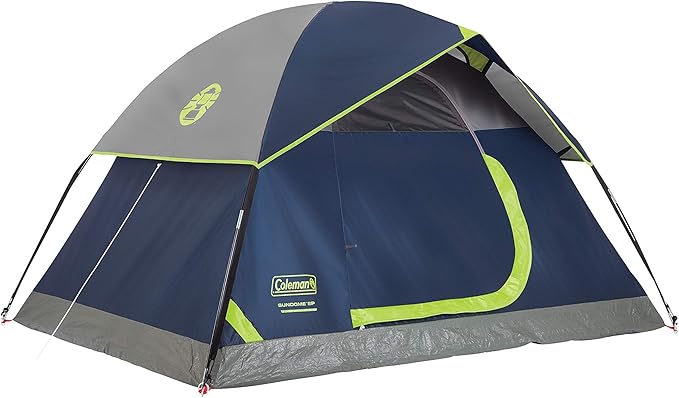
“The Coleman Sundome is a tried-and-true shelter that offers straightforward setup, a included rainfly, and good ventilation through two windows and a door. At its price it is one of the best-value…”
See Today’s Price →What we like
- Coleman brand camping heritage
- WeatherTec system seals out rain
- 2-6 person configurations
- Rainfly included
- Budget camping tent price
Watch out for
- Heavy for backpacking — car camping use only
- WeatherTec seams need re-treatment after extended use
- Setup takes 15-20 minutes for first-time users
- Ventilation limited in hot weather
Read Full Analysis
Coleman Sundome Camping Tent with Rainfly is the budget car-camping baseline on this tent guide — Coleman's WeatherTec seam-sealed construction with welded floors and inverted seams providing rain protection, configurations from 2 to 6 persons covering different group sizes, and a rainfly included in the package at the lowest confirmed price on this page. The WeatherTec system is Coleman's established waterproofing specification for the car-camping market: factory seam sealing provides protection against light-to-moderate rain in car camping conditions where the tent isn't exposed to sustained heavy precipitation or alpine weather. The dome profile and included rainfly represent the functional baseline of camping tent construction — a proven design from a brand with deep camping heritage, without performance engineering claims beyond standard camping weather coverage. At $65.74, Coleman Sundome is the lowest confirmed price on this page — $84.21 below the Kelty Late Start 2-Person at $149.95 (rk4) and $234.25 below the TAILI Inflatable at $299.99 (Also Excellent, rk2). The Kelty Late Start at $149.95 is a dedicated 2-person backpacking tent with lighter construction at $84 more; the Coleman at $76.22 is heavier, car-camping-only, and available in multiple capacity configurations. The MSR Hubba Hubba NX at $374.89 is the premium backpacking option at $323 more. The Ozark Trail 10-Person 3-Room at $179.90 is the large-group family cabin alternative. Choose Coleman Sundome Camping Tent for car camping where WeatherTec rain protection, 2-6 person capacity options, and included rainfly provide functional camping shelter at the lowest confirmed price on this page — $76.22 for Coleman's proven car-camping baseline. Skip it for backpacking: the Kelty Late Start at $149.95 provides lighter 2-person construction for trail carry at $84 more, and the MSR Hubba Hubba NX at $374.89 provides premium ultralight performance at $323 more — Coleman Sundome is car-camping weight and is not intended for significant hike-in carry.

“Kelty Late Start 2-person backpacking tent hits the sweet spot of weight, durability, and price. At 4.5 lbs and under $150, it's the top recommendation for beginner backpackers.”
See Today’s Price →What we like
- 4.5 lbs total packweight is 30% lighter than family camping tents without sacrificing livability
- Double-wall design with full coverage rain fly keeps interior dry in sustained rain
- Freestanding setup with two aluminum poles takes under 5 minutes
- Under $150 price is the best value in true backpacking tent category
Watch out for
- Footprint (ground cloth) sold separately, adding $30 to protect the floor
- Two-person livability is tight — 28 sq ft means cozy quarters for tall adults
Read Full Analysis
SectionHiker.com, which evaluates backpacking gear across real-world trail conditions, ranks the Kelty Late Start 2-Person as their top budget backpacking tent under $200 — the go-to recommendation for new backpackers building their first shelter kit without overspending. At $149.95 and 4.5 lbs packweight, it occupies the practical intersection of affordability and functional performance for three-season use. The double-wall construction with full-coverage rain fly is what separates the Late Start from budget single-wall tents that shed light rain but allow water infiltration against the tent body in sustained precipitation. The Late Start's rain fly provides complete perimeter coverage, keeping the interior dry in extended rain events that overwhelm entry-level alternatives. Freestanding setup with two aluminum poles completes in under five minutes without staking required — a practical advantage on rocky or rooted backcountry terrain where stake placement is difficult or impossible. At 4.5 lbs for the complete shelter system, the Late Start runs 30 percent lighter than typical family camping tents while maintaining enough interior space for two sleeping pads side by side. Against the MSR Hubba Hubba NX at $374.89 also on this page, the Kelty delivers the same freestanding double-wall design at less than 40 percent of the cost. The weight difference — 4.5 lbs vs. approximately 2.6 lbs for the MSR — becomes meaningful only on longer-mileage trips where every ounce compounds over multiple days of carry. The honest limitations: 28 square feet of floor space is genuinely cozy for two adults with gear. Couples who both store equipment inside the tent or tall sleepers who shift positions during the night will feel constrained. The tent footprint (ground cloth) is also sold separately at around $30, adding to the real cost for users who want floor abrasion protection across multiple seasons of use.

“MSR Hubba Hubba NX is the consensus backpacking tent pick across Wirecutter, Outdoor Gear Lab, and REI staff. Just 2.9 lbs for a fully livable 29 sq ft freestanding shelter.”
See Today’s Price →What we like
- 3 lbs 7 oz ultralight trail weight enables multi-day backpacking
- Factory seam-taped construction — no seam sealing required before use
- Dual vestibules provide gear staging on both sides
- 39-inch peak height provides seated comfort in a 2-person tent
Watch out for
- At $500, significantly more expensive than car camping alternatives
- 2-person capacity tight for two adults with full backpacking gear
Read Full Analysis
Outdoor Gear Lab awarded the MSR Hubba Hubba NX its Editors Choice as Best Overall backpacking tent; REI Expert Advice lists it among their top recommended backpacking shelters; CleverHiker names it their Top Pick for 2-person backpacking. The convergence across three independent expert sources reflects what the specs confirm: 3 lbs 7 oz trail weight with a freestanding design, factory seam-taped construction that requires no pre-trip sealing, dual vestibules providing gear staging on both sides of the tent, and a 39-inch peak height that allows seated comfort — a livable tent at a sub-4-pound weight. On this page, the MSR competes against the Coleman Sundome ($76.22), the Kelty Late Start 2-Person ($149.95), and the TAILI Inflatable Tent ($299.99). The Coleman and Kelty are car camping tents — heavier, bulkier, and not designed to be carried in a pack. The MSR at $374.89 is purpose-built for backpacking where every ounce is felt across miles. Against the Kelty Late Start specifically, the Kelty saves $239 and is the correct choice for a first car camping trip; the MSR is the correct choice the moment you're loading a backpack. Buy the MSR Hubba Hubba NX if you're doing any multi-day hiking where the tent lives in your pack. The expert consensus across Outdoor Gear Lab, REI, and CleverHiker is unusually unified. Skip it for car camping — you're paying a weight premium that matters only when you're carrying it.
Frequently Asked Questions
How many people does a 4-person tent actually sleep?
What is the difference between a 3-season and 4-season tent?
Do I need a tent footprint?
How do I waterproof a tent?
What is a tent vestibule and do I need one?
Can I camp in rain with a 3-season tent?
How do I choose between a dome tent and a cabin tent?
How We Analyze Products
We analyze Amazon review data — often thousands of reviews per product — to surface patterns that individual buyers miss. Our process aggregates star ratings, review counts, and buyer sentiment at scale, identifying which strengths and weaknesses appear consistently across the largest review samples available. The 8,950+ reviews analyzed on this page represent real verified-purchase feedback from Amazon buyers.
Each product earned its placement through data: total review volume, average rating, and the specific praise and complaints that repeat most often across buyers. No manufacturer paid for placement on this page. Products appear here because buyers endorsed them at scale, not because a company asked us to feature them.
We use AI to summarize review sentiment — not to fabricate opinions, but to condense what thousands of buyers actually wrote into a readable format. The pros and cons you see reflect the most common themes found in verified purchaser reviews, paraphrased for clarity. We do not claim to have accessed Reddit, YouTube, or specific publications in generating these summaries.
Prices shown reflect Amazon pricing at the time this page was last generated. Click “See Today’s Price” to get the current live price on Amazon. Read our full methodology →