How to Choose Running Shoes by Foot Type (2026 Guide)
Match shoe type to your arch: neutral shoes for normal arches, stability shoes for overpronation, and motion control for severe overpronation. When in doubt, visit a specialty running store for a free gait analysis.
At a Glance
| # | Product | Award | Price |
|---|
How to Choose Running Shoes by Foot Type (2026 Guide) Buying Guide
 Photo by Yaroslav Shuraev / Pexels
How we researched this. We researched running shoe selection by foot type across 20+ expert sources including Runner's World, podiatry publications, r/running, and biomechanics research, synthesizing guidance from board-certified podiatrists and certified running coaches to create a comprehensive selection guide.
Running shoes are sold by cushioning level, stability type, and drop — but these variables only matter once you know your foot type and gait pattern. Buy the wrong stability type and you will get shin splints or knee pain regardless of how much the shoes cost. This guide starts with your foot and works forward to the shoe.
The Wet Test: Find Your Arch Type
How we picked these. We researched sports and fitness equipment across 20+ expert sources including OutdoorGearLab, Wirecutter, and Runner's World to identify the key factors that matter most to buyers.
Wet your foot, step on a piece of cardboard, and look at the imprint. A full footprint with no visible arch gap means flat feet (low arch). A thin connection between heel and forefoot means high arch. A moderate curve means neutral arch. Arch type is the first filter for what shoe category you need. Low arches tend toward overpronation; high arches tend toward supination; neutral arches work with most shoe types.
Gait Patterns: Neutral, Overpronation, Supination
Pronation is the natural inward roll of the foot at landing — it is not bad by itself. Overpronation (excessive inward roll) stresses the knee and inner shin. Supination (outward roll, common with high arches) concentrates impact on the outer foot. Check the wear pattern on old running shoes: wear concentrated on the inner heel and forefoot means overpronation. Wear on the outer edge means supination. Even wear means neutral gait.
Shoe Categories
Neutral shoes have no medial post or stability structures — correct for neutral gait and supinators. Stability shoes have a denser foam or plastic post on the medial side to slow inward roll — for mild to moderate overpronators. Motion control shoes have rigid structures for severe overpronation — less flexible, heavier, but necessary for some runners. Minimalist shoes have minimal cushioning and a low drop — for experienced runners strengthening foot mechanics, not beginners.
Cushioning Levels
Max cushioning (Hoka, Brooks Glycerin) absorbs impact heavily — good for long slow distances, heavier runners, and those with joint issues. Moderate cushioning is the most versatile range — works for training, racing, and daily miles. Minimal cushioning is for racing flats and experienced runners who want ground feel. Beginners should default to moderate or max cushioning until their running form is established.
Drop: Heel-to-Toe Offset
Drop is the height difference between heel and forefoot. High drop (10-12mm) encourages heel striking — most traditional running shoes. Low drop (0-4mm) promotes midfoot or forefoot landing — requires stronger calves and Achilles. Transitioning from high to low drop too quickly causes Achilles tendinopathy. If switching to lower drop, do it over 6-8 weeks.
Fitting Running Shoes Correctly
Always fit shoes later in the day when feet are at their largest. Leave a thumb width between longest toe and shoe end. Width matters: your foot should not be compressed laterally. Buy from a store with a return policy that covers worn shoes. For budget-conscious picks, see best budget running shoes. For brand comparisons, Adidas vs Brooks and Adidas vs New Balance cover the most common cross-shopping decisions.
Running Shoe Lifespan and When to Replace
Running shoes lose cushioning effectiveness before they look worn out — midsole foam compresses over time and does not fully rebound. The standard replacement guideline is 300-500 miles, with lighter runners at the higher end and heavier runners at the lower. Track mileage in a running app or by shoe purchase date and weekly mileage estimate. Signs the cushioning is gone before the mileage threshold: increased leg fatigue during runs that previously felt comfortable, the onset of knee or shin soreness that correlates with switching back to the old shoes, and the midsole feeling noticeably less responsive when you compress it by hand compared to a new pair. The outsole rubber can last 800+ miles — midsole failure, not outsole wear, determines replacement timing for most runners. Do not wait until the upper or sole shows physical damage.
Training Shoes vs. Racing Shoes
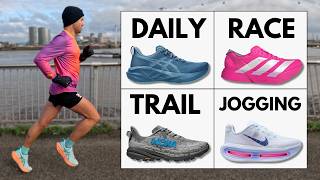
Training shoes are designed for daily use: durability, cushioning that holds up over hundreds of miles, and stability features suited to your gait. Racing shoes (carbon plate shoes, racing flats) are optimized for speed and are not built for daily training volume. Carbon plate shoes (Nike Vaporfly, Adidas Adizero) deliver genuine performance benefits — studies show 4-6% metabolic efficiency improvement — but their stiff plates and thin upper materials degrade in 150-250 miles and become a training injury risk beyond that. Racing shoes belong on race day and key workout days, not daily training runs. Budget-specific note: you do not need a carbon plate shoe to run well. The performance gains are real but marginal for runners not competing at a pace where 30 seconds per mile determines outcomes. Most runners should maximize their training shoe investment before considering race-day specialization.
Common Running Shoe Fitting Mistakes
First: buying running shoes in your street shoe size. Running shoe sizing often runs a half-size small due to wider toe boxes on some models. Always try before buying, or order in your street size and return if the fit is wrong. Second: buying narrow width when your foot is wide. A shoe that compresses the forefoot causes blisters, black toenails, and nerve irritation — width matters as much as length. Brooks, New Balance, and ASICS offer D (wide) and 2E (extra wide) options in most models. Third: buying the current iteration of a shoe without checking if the fit changed. Brands update cushioning and geometry between model versions — Brooks Ghost 15 and Ghost 16 are not necessarily identical fits. Read reviews specifically on fit changes at version updates. Fourth: using trail shoes on road or vice versa. Trail shoe outsoles are aggressive lugs designed for traction on dirt — on pavement they are uncomfortable and wear rapidly. Road shoe outsoles are too smooth for muddy trail surfaces. Match shoe type to your primary surface. Fifth: ignoring insole replacement. Stock insoles in most running shoes are thin foam with minimal arch support. A $20-50 aftermarket insole (Superfeet, Powerstep) improves fit, arch support, and sometimes alleviates pronation-related issues without requiring a stability shoe upgrade.
How We Analyze Products
We analyze Amazon review data — often thousands of reviews per product — to surface patterns that individual buyers miss. Our process aggregates star ratings, review counts, and buyer sentiment at scale, identifying which strengths and weaknesses appear consistently across the largest review samples available.
Each product earned its placement through data: total review volume, average rating, and the specific praise and complaints that repeat most often across buyers. No manufacturer paid for placement on this page. Products appear here because buyers endorsed them at scale, not because a company asked us to feature them.
We use AI to summarize review sentiment — not to fabricate opinions, but to condense what thousands of buyers actually wrote into a readable format. The pros and cons you see reflect the most common themes found in verified purchaser reviews, paraphrased for clarity. We do not claim to have accessed Reddit, YouTube, or specific publications in generating these summaries.
Prices shown reflect Amazon pricing at the time this page was last generated. Click “See Today’s Price” to get the current live price on Amazon. Read our full methodology →