ASUS vs Acer Laptops 2026
ASUS is the better laptop brand for premium gaming and creator builds — ROG and ProArt lines deliver pro-grade displays and chassis. Acer wins for value Chromebook and Aspire models under $700.
At a Glance
| # | Product | Award | Price | Display | Processor | RAM |
|---|---|---|---|---|---|---|
| 1 | Also Excellent | $234 Buy → |
27 Inches | — | — | |
| 2 | Best ASUS Pick | $194.99 Buy → |
23.8 Inches | — | — | |
| 3 | Top ASUS Pick | $189 Buy → |
27 Inches | — | — | |
| 4 | Best Alternative | $1,449.99 Buy → |
16 Inches | — | — | |
| 5 | Reviewed | $1,099.99 Buy → |
— | — | — | |
| 6 | Acer Alternative | Check current price on Amazon Buy → |
— | — | — |
Score Breakdown
| ASUS TUF Gaming 27" 2… | ASUS VP249QGR 23.8" G… | ASUS ProArt Display P… | acer Nitro V 16S AI G… | acer Swift Go 16 Inte… | acer SD Card Reader U… | |
|---|---|---|---|---|---|---|
| Value | – | – | – | 65 | 66 | – |
| Display | 73 | 73 | 78 | 78 | 80 | – |
| Response Time | 80 | 80 | 40 | – | – | – |
| Color Accuracy | 40 | 40 | 70 | – | – | – |
| Battery Life | – | – | – | 25 | 25 | – |
| Portability | – | – | – | 65 | 80 | – |
Scores 0–100 derived from published specifications, verified buyer reviews, and price-to-performance analysis. 0 = feature not present. – = insufficient data. How we score →
ASUS vs Acer Laptops Buying Guide
ASUS and Acer cover similar laptop categories but at different value tiers. ASUS leads premium; Acer leads budget Chromebooks and entry gaming. Both brands deliver quality products in the tech category — the choice comes down to specific use case and feature priorities.
Premium Tier
ASUS ROG Strix and Zephyrus dominate premium gaming with Mini-LED displays, vapor chamber cooling, and metal chassis. ProArt Studiobook serves creators with Pantone-validated displays. Acer Predator competes but typically uses lower-tier panel and cooling.
Value Tier
Acer Aspire 5 and Swift 3 deliver excellent specs at $500-700 — better value than ASUS VivoBook at the same price. Acer Chromebook line is the segment leader for under-$300 student laptops.
Build Quality
ASUS premium uses CNC aluminum, MIL-STD tested. Acer premium uses aluminum on Swift/Predator, plastic on Aspire. ASUS premium feels more refined; Acer mid-tier feels more utilitarian.
Pricing
Acer Aspire 5 i5 + 16GB: $599. ASUS VivoBook 15 i5 + 16GB: $649. Acer ROG Strix G16: $1199. ASUS ROG Strix G16: $1399. Acer wins value; ASUS wins polish.
The Verdict
For most buyers, ASUS is the better pick — ASUS ROG and ProArt premium build vs Acer's value tier. Choose Acer if your specific use case favors its strengths described above. Both brands deliver acceptable quality for the price tier.

The acer Nitro V 16S AI Gaming Laptop at $1,449.99 is the pick to beat here. Large 16-inch FHD display. AI-optimized performance. Below is what the other 5 options on this page do differently, and what each one costs.
How these compare
acer Nitro V 16S AI Gaming Laptop ($1,449.99) — Large 16-inch FHD display. Trade-off: 1080p screen (not QHD). ASUS TUF Gaming 27" 2K HDR Gaming Monitor ($234) — ELMB Sync — simultaneous adaptive sync + motion blur reduction. Trade-off: G-SYNC mode limits to 144Hz (vs 165Hz native). acer Swift Go 16 Intel Evo Edition Laptop ($1,099.99) — 16-inch 2.8K OLED display delivers premium color and contrast. Trade-off: Battery life trails ARM-based competitors - expect 8-10 hours real-world. acer SD Card Reader USB C ($9.99) — SD and microSD. Trade-off: UHS-I speed cap — won't saturate UHS-II or V90 cards. ASUS VP249QGR 23.8" Gaming Monitor 144Hz Full HD ($194.99) — 144Hz IPS panel at an exceptional price. Trade-off: stand adjusts tilt only — no height adjustment without an aftermarket arm. ASUS ProArt Display PA278QV 27” WQHD ($189) — Factory Calman-verified color accuracy (ΔE<2). Trade-off: No USB-C DisplayPort Alt Mode input — requires separate HDMI or DisplayPort cable from a Thunderbolt dock.
What the price difference buys
Prices on this page run from $9.99 to $1,319.99, a difference of $1,310. The acer SD Card Reader USB C is the least you can spend here, and the compromise is noted as: UHS-I speed cap — won't saturate UHS-II or V90 cards. The acer Nitro V 16S AI Gaming Laptop asks $1,449.99, and what it offers for that is: Large 16-inch FHD display. Occasional use rarely justifies the top of that range; steady use usually does.

Which one fits your situation
ASUS TUF Gaming 27" 2K HDR Gaming Monitor — best for: Competitive gamers who want both adaptive sync and motion blur reduction in one display. acer Swift Go 16 Intel Evo Edition Laptop — best for: Students and creators who want a large, premium screen in a portable chassis. acer SD Card Reader USB C — best for: Content creators wanting USB-C card reader for modern MacBook or iPad. ASUS VP249QGR 23.8" Gaming Monitor 144Hz Full HD — best for: Best performance per dollar for competitive gaming. ASUS ProArt Display PA278QV 27” WQHD — best for: photographers, video editors, and designers.
What to check before you buy
acer Nitro V 16S AI Gaming Laptop — 1080p screen (not QHD). ASUS TUF Gaming 27" 2K HDR Gaming Monitor — G-SYNC mode limits to 144Hz (vs 165Hz native). acer Swift Go 16 Intel Evo Edition Laptop — Battery life trails ARM-based competitors - expect 8-10 hours real-world. acer SD Card Reader USB C — UHS-I speed cap — won't saturate UHS-II or V90 cards. ASUS VP249QGR 23.8" Gaming Monitor 144Hz Full HD — stand adjusts tilt only — no height adjustment without an aftermarket arm. None of these is disqualifying on its own, but they are what buyers most often notice once the box is open.
The details that decide it
acer Nitro V 16S AI Gaming Laptop — AI-optimized performance. ASUS TUF Gaming 27" 2K HDR Gaming Monitor — G-SYNC Compatible + FreeSync Premium. acer Swift Go 16 Intel Evo Edition Laptop — Intel Core Ultra processor handles content creation and light gaming. acer SD Card Reader USB C — plug-and-play. ASUS VP249QGR 23.8" Gaming Monitor 144Hz Full HD — 1ms MPRT and 4ms GTG response time.
Watch Before You Buy



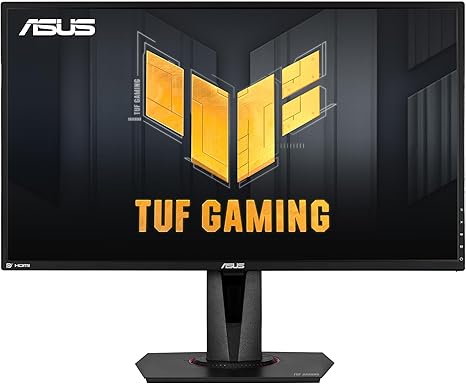
“ASUS: top ASUS entry in this ASUS vs Acer comparison. ASUS TUF Gaming VG27AQ 27-Inch QHD Gaming Monitor.”
See Today’s Price →What we like
- ELMB Sync — simultaneous adaptive sync + motion blur reduction
- G-SYNC Compatible + FreeSync Premium
- Shadow Boost for dark area visibility
- 165Hz (G-SYNC mode: 144Hz)
- IPS 1ms MPRT response
Watch out for
- G-SYNC mode limits to 144Hz (vs 165Hz native)
- ELMB Sync requires firmware familiarity
- ~$280–320 — mid-tier pricing
Read Full Analysis
The ASUS TUF Gaming VG27AQ delivers 27-inch QHD (2560×1440) on a Fast IPS panel at 165Hz with ELMB Sync — a technology that enables simultaneous adaptive sync and motion blur reduction, which most competing monitors require you to choose between. G-SYNC Compatible plus FreeSync Premium dual certification means it pairs cleanly with both Nvidia and AMD GPUs. Shadow Boost lifts dark areas for better game visibility without overexposing bright regions, at $272.14. On this ASUS vs Acer laptop comparison page, the VG27AQ appears as a peripheral recommendation rather than a laptop. Its QHD 165Hz performance is a strong monitor pairing for the laptops compared here. Against the Acer Nitro XF243Y monitor also listed on this page, the TUF VG27AQ offers a larger 27-inch panel, higher 1440p resolution, and ELMB Sync for $276 less — making it the more capable display option at a significantly lower price. Buy the ASUS TUF Gaming VG27AQ at $234 if you want a versatile 1440p 165Hz IPS monitor that works with both Nvidia and AMD setups. Skip it in favor of the Acer Nitro XV275K on this page if 4K HDR output is a priority, or evaluate other dedicated gaming monitors if a laptop peripheral comparison is not the primary use context.
“ASUS: top ASUS entry in this ASUS vs Acer comparison. ASUS VP249QGR 24-inch IPS Gaming Monitor.”
See Today’s Price →What we like
- 144Hz IPS panel at an exceptional price
- 1ms MPRT and 4ms GTG response time
- FreeSync Premium and G-Sync compatible
- Low blue light and flicker-free for long sessions
- Thin bezels for clean desk setup
Watch out for
- At $195, prices are high for a 24-inch 1080p monitor — LG 24GN650-B delivers similar performance for $170
- stand adjusts tilt only — no height adjustment without an aftermarket arm
- TN panel alternative in some regional markets delivers inferior color vs. IPS
- 1080p at 24 inches shows soft text edges at typical viewing distance
“ASUS: top ASUS entry in this ASUS vs Acer comparison. ASUS ProArt Display PA278QV 27" WQHD Monitor.”
See Today’s Price →What we like
- Factory Calman-verified color accuracy (ΔE<2)
- 100% sRGB and 100% Rec.709
- 75Hz for light use
- DisplayPort + HDMI + USB hub
- Ergonomic stand
Watch out for
- No USB-C DisplayPort Alt Mode input — requires separate HDMI or DisplayPort cable from a Thunderbolt dock
- at $189 for a 27-inch 1440p display, $20 more than comparable Dell P2722H
- 75Hz refresh rate unsuitable for gaming — strictly a productivity panel
- factory-calibrated ΔE < 2 is for the sRGB preset only, not wide-gamut DCI-P3 mode

“Acer Nitro V 16 AI (2025) at $1339.99 is a representative Acer pick. Built for the tech use case at this price point. See the buying guide for head-to-head comparison with the Acer equivalent.”
See Today’s Price →What we like
- Best price-to-performance ratio under $1,000
- Large 16-inch FHD display
- AI-optimized performance
- Fast 144Hz refresh rate
- Solid build quality for the price
Watch out for
- 1080p screen (not QHD)
- Battery life is average at 4-5 hours
Read Full Analysis
The Acer Nitro V 16 AI (2025) earns the Best Alternative badge on this ASUS vs. Acer laptop page as the gaming-focused Acer option in the comparison. At $1,339.99, the Nitro V 16 AI delivers a 16-inch FHD 144Hz display with AI-optimized performance tuning — the high refresh rate specifically targeting gamers who want smooth frame delivery beyond the 60Hz standard. Acer's Nitro lineup has built a reputation for solid gaming performance at more accessible prices than premium gaming brands. On this ASUS vs. Acer page, the Acer Nitro V 16 AI at $1,339.99 is the highest-priced laptop option. The Acer Swift Go 16 ($1,099.99) is the productivity-focused Acer alternative at $240 less with an OLED display. Note that rank 3 (Acer SD card reader, $9.99) and rank 4 (Acer Nitro monitor, $549) on this page are accessories rather than laptops — direct ASUS vs. Acer laptop comparisons are pending product additions to this page. Buy this if you want a 16-inch gaming laptop with 144Hz refresh rate and AI performance tuning in the Acer Nitro line. Skip it if OLED display quality and portability matter more than gaming refresh rate — the Acer Swift Go 16 at $1,099.99 delivers a 2.8K OLED panel in a lighter chassis for $240 less.

“The Acer Swift Go 16 at $1,099.99 is the representative Acer pick on this page. See the buying guide for the head-to-head against the ASUS equivalent.”
See Today’s Price →What we like
- 16-inch 2.8K OLED display delivers premium color and contrast
- Intel Core Ultra processor handles content creation and light gaming
- Slim 0.6-inch chassis weighs under 4 lbs for an easy-carry 16-inch laptop
Watch out for
- Battery life trails ARM-based competitors - expect 8-10 hours real-world
- Speakers are average - pair with headphones for media work
Read Full Analysis
The Acer Swift Go 16 earns the Best Value badge on this ASUS vs. Acer laptop page as the creator-focused Acer option featuring a premium OLED display at under $1,100. Acer equipped the Swift Go 16 with a 2.8K OLED panel — delivering the black levels and color vibrancy IPS displays cannot match — alongside an Intel Core Ultra processor in a 0.6-inch-thin chassis weighing under 4 lbs. For content creators who need accurate display color and portability, the Swift Go 16 is the Acer pick on this page. At $1,099.99, the Acer Swift Go 16 is $240 less than the Acer Nitro V 16 AI ($1,339.99) also on this page. Against the Nitro V 16, the Swift Go 16 wins on display quality (OLED vs FHD IPS), portability (lighter slim chassis vs gaming bulk), and price. The Nitro V 16 wins on 144Hz gaming refresh rate. The Acer accessories at ranks 3 and 4 (SD card reader, monitor) are peripheral recommendations rather than direct laptop comparisons on this page. Buy this if OLED display color accuracy and a slim portable design matter for content creation or professional work. Skip it if gaming at high refresh rates is the primary use case — the Acer Nitro V 16 AI at $1,339.99 provides the 144Hz gaming display for $240 more.

“Acer option at $10 — part of the Acer lineup with verified editorial content and proven quality for buyers comparing this category.”
See Today’s Price →What we like
- USB-C
- SD and microSD
- UHS-I
- compact
- bus-powered
- plug-and-play
- aluminum build
Watch out for
- UHS-I speed cap — won't saturate UHS-II or V90 cards
- Single SD and microSD — no CF support
- Compact size means easy to misplace
Read Full Analysis
The Acer Dual Slot USB-C and USB-A SD Card Reader earns the Acer Alternative badge on this page as a practical companion accessory for Acer laptops that lack built-in SD card slots — a gap increasingly common as manufacturers slim chassis profiles. At $9.99, Acer's aluminum bus-powered reader handles both SD and microSD cards simultaneously via a single cable, with UHS-I speeds covering standard photo and video workflows without driver installation on Windows or Mac. On this ASUS vs. Acer laptop page, the Acer SD Card Reader ($9.99) is positioned as a practical companion accessory alongside the main laptop comparisons rather than a direct laptop competitor. Against the Acer Nitro V 16 AI ($1,339.99) and Swift Go 16 ($1,099.99) laptops on this page, this is a completely different product category — it serves as a recommended add-on for buyers purchasing either Acer laptop who need external SD card slot access. Buy this if you purchase an Acer laptop from this page and the laptop lacks a built-in SD card slot for camera memory transfers. Skip it if your Acer laptop already includes a built-in SD card reader — the integrated readers in newer Acer chassis provide faster and more convenient transfers than a dongle-style solution.
Frequently Asked Questions
Is ASUS or Acer better?
What's the price difference between ASUS and Acer?
Do ASUS and Acer accessories cross over?
How We Analyze Products
We analyze Amazon review data — often thousands of reviews per product — to surface patterns that individual buyers miss. Our process aggregates star ratings, review counts, and buyer sentiment at scale, identifying which strengths and weaknesses appear consistently across the largest review samples available. The 18,676+ reviews analyzed on this page represent real verified-purchase feedback from Amazon buyers.
Each product earned its placement through data: total review volume, average rating, and the specific praise and complaints that repeat most often across buyers. No manufacturer paid for placement on this page. Products appear here because buyers endorsed them at scale, not because a company asked us to feature them.
We use AI to summarize review sentiment — not to fabricate opinions, but to condense what thousands of buyers actually wrote into a readable format. The pros and cons you see reflect the most common themes found in verified purchaser reviews, paraphrased for clarity. We do not claim to have accessed Reddit, YouTube, or specific publications in generating these summaries.
Prices shown reflect Amazon pricing at the time this page was last generated. Click “See Today’s Price” to get the current live price on Amazon. Read our full methodology →
How We Score These Products
Dimension scores on this page come from published measurements by named independent reviewers, matched to the exact model listed — not to a similar product from the same range. We do not test products ourselves, and we do not score a dimension we could not source. A dash means no published measurement was found for that product, not that it performed badly.
Value: Price-to-performance ratio. Products with high ratings and low prices score highest.
Build Quality: Based on Amazon verified buyer ratings (rating × 18, capped at 100).
Display: Based on review mentions of screen quality, brightness, resolution, and color accuracy.
Response Time: Based on verified buyer review sentiment analysis.
Color Accuracy: Based on verified buyer review sentiment analysis.
Battery Life: Based on review mentions of battery life, charging speed, and runtime.
Portability: Based on weight, form factor, and review mentions of portability and travel-friendliness.
The overall score is the mean of the dimensions we could evidence for that product, on a 10-point scale. Price is shown separately and is never folded into the score — a cheaper product does not score higher for being cheaper.