Best Budget NVMe SSDs 2026

The Crucial P310 1TB is our pick: a PCIe Gen4 NVMe drive rated up to 7,100MB/s read in the compact M.2 2230 size, and its listing names the Steam Deck, ROG Ally, Microsoft Surface and select Dell laptops. Choose the SUNEAST 2TB Gen5 if your desktop has a PCIe 5.0 M.2 2280 slot; it doubles the capacity and is rated up to 14,800MB/s read.
Holiday shopping





At a Glance
| # | Product | Award | Price |
|---|---|---|---|
| 1 | Our Top Pick | $349.95 as of Nov 25, 10:41 AM CT details Buy → |
|
| 2 | Best Gen5 Endurance Rating | $309.99 as of Nov 25, 10:42 AM CT details Buy → |
|
| 3 | Best Gen5 Performance | $399 as of Nov 25, 10:42 AM CT details Buy → |
|
| 4 | Best Gen4 With DRAM Cache | $345.99 as of Nov 25, 10:41 AM CT details Buy → |
|
| 5 | Best Gen5 With DRAM Cache | $349.99 as of Nov 25, 10:42 AM CT details Buy → |
Card scores are 0–100, from published specifications and independent reviewers' measurements. Amazon star ratings are shown separately and are never part of a score.
Related guides we’ve checked
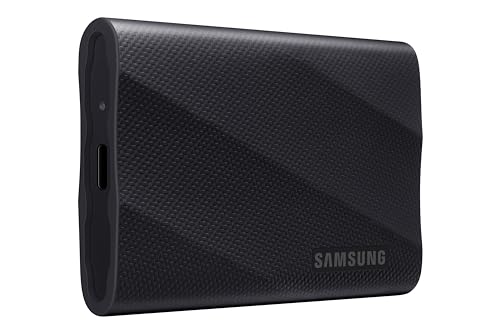 Best Portable External SSDs 2026: 1TB Drives ComparedTop pick: Samsung T9 Portable SSD 1TB
 Best HDMI Switches 2026: More Sources, One TVTop pick: UGREEN HDMI 2.1 Switch 3 in 1 Out
 Best Monitors for Mac 2026: 4K USB-C and Thunderbolt PicksTop pick: Dell UltraSharp U2725QE 27-Inch 4K UHD IPS Black Monitor
Gift shopping? Holiday Gift Guide 2026: checked picks for everyone on your list.
Budget NVMe SSDs Buying Guide
 Photo by Andrey Matveev / Pexels
Budget NVMe SSDs have never been more capable. A Gen3 drive delivers 3,500 MB/s sequential reads — faster than any SATA SSD — while Gen5 drives now reach 14,900 MB/s. The right pick depends less on raw speed and more on your use case, PCIe generation support, and how much capacity you actually need.
Gen3 vs. Gen4 vs. Gen5: What You Actually Notice
In real-world desktop use — game loading, file transfers, app launches — Gen3 NVMe SSDs are indistinguishable from Gen4 for most tasks. The 3,500 MB/s peak of a Gen3 drive saturates most storage workloads that aren't sustained large-file transfers. Gen4 starts to matter for video editing large raw files, virtual machine workloads, and PS5 compatibility (requires PCIe 4.0 M.2). Gen5 at 14,900 MB/s is transformative only for professional video I/O, large dataset ML training, and server-class workloads. For gaming, boot drives and general use, a Gen3 or Gen4 drive is enough.
1TB vs. 2TB: The Capacity Math
A 1TB NVMe SSD holds a Windows installation plus 10–12 large game titles (~50–70GB each). A 2TB drive handles a full game library (20–25 titles) without management. A 2TB Gen5 drive gives twice the capacity of a 1TB drive and about twice the rated sequential speed of a Gen4 drive. For a clean build, a 1TB drive for the OS and a 2TB drive for games and media is a common split.
M.2 2230 vs. 2280: Form Factor Check First
Standard desktop M.2 slots accept 2280 (80mm) drives — the most common format. The Crucial P310 on this page is M.2 2230 (30mm); its listing names the Steam Deck, ROG Ally, Microsoft Surface and select Dell laptops. The other four drives here are M.2 2280. Before putting a 2230 drive in a desktop, check your motherboard manual for a 2230 mounting position in the M.2 slot.
Heat and Heatsinks
Gen5 SSDs run hotter than Gen4 drives under sustained load. None of the three Gen5 drives here is described as shipping with a heatsink, and Crucial's listing says to install the T710 with a compatible one. If your motherboard has an M.2 heatsink cover, use it; if not, add a separate M.2 heatsink. The Predator GM7000, a Gen4 drive, has a heat spreader of its own.
How We Picked These
We compared five internal M.2 NVMe SSDs on each one's own listing: rated sequential read and write speed, PCIe generation, M.2 size, cache, and the warranty and endurance figures where the listing gives them.
Watch Before You Buy

“The Crucial P310 1TB is built in the compact M.2 2230 size, and Crucial lists the Steam Deck, ROG Ally, Microsoft Surface and select Dell laptops among the devices it works with.”
See Today’s Price →What we like
- M.2 2230 size; its listing names the Steam Deck, ROG Ally, Microsoft Surface and select Dell laptops
- PCIe 4.0, rated up to 7,100MB/s read and 6,000MB/s write
- Built with Micron G8 NAND and thermal control, per its listing
Watch out for
- PCIe Gen4, so its rated sequential speed is about half that of current Gen5 drives
- Its listing gives no warranty length or endurance (TBW) rating
Read Full Analysis
The Crucial P310 1TB exists for one reason: the M.2 2230 size. Most desktop boards take the longer 2280 (80mm) drive; the P310 is 30mm long, and Crucial's listing names the Steam Deck, ROG Ally, Microsoft Surface and select Dell laptops as devices it works with. It is the only 2230 drive on this page; the other four are 2280. It is a PCIe 4.0 drive rated up to 7,100MB/s read and 6,000MB/s write, built with Micron's G8 NAND and thermal control. For a Steam Deck or Surface whose factory drive has filled up, it is a capacity and speed upgrade in the one size that fits. Its listing gives no warranty length or endurance (TBW) rating. Buy the P310 if your device has a 2230 slot. If your machine takes a standard 2280 drive, look at the 2280 drives on this page instead: the 2230 size is the reason to choose this one, and at 1TB it holds half of what the 2TB drives here do.
Skip this if: Your device takes a standard 2280 M.2 drive and has no need for the short 2230 size

“SUNEAST 2TB - a PCIe 5.0 x4 NVMe drive with TLC NAND in the standard M.2 2280 size, rated up to 14,800 MB/s read and 12,800 MB/s write.”
See Today’s Price →What we like
- Rated up to 14,800MB/s read and 12,800MB/s write over PCIe 5.0 x4
- 2TB of 3D TLC NAND in the standard M.2 2280 size
- Endurance rating of up to 1900TBW and a 5-year limited warranty
Watch out for
- Needs a PCIe 5.0 M.2 slot to reach its rated speed; in a Gen4 slot it runs at Gen4 speed
Read Full Analysis
The SUNEAST 2TB is a PCIe 5.0 x4 NVMe drive in the standard M.2 2280 size, built on 3D TLC NAND and rated up to 14,800 MB/s sequential reads and 12,800 MB/s writes - within a whisker of the Crucial T710's headline read figure. SUNEAST aims it at AI, gaming, rendering and video-editing work, and its listing names PCs, laptops, gaming consoles and professional workstations as compatible; its title adds the PS5. To reach its rated speed it needs a motherboard with a PCIe 5.0 M.2 slot; in a Gen4 slot it runs at Gen4 speed, so check your board before paying for Gen5. Against the Crucial T710 on this page, its listing gives an endurance rating (up to 1900TBW) as well as a 5-year limited warranty, where the T710's gives the warranty but no TBW; the T710's listing names its NAND maker, Micron, where this one's does not.
Skip this if: You want the highest rated read speed here - the Crucial T710 is rated up to 14,900 MB/s

“The Crucial T710 2TB is rated up to 14,900 MB/s sequential read, the highest rated speed on this page, and is built with Micron G9 TLC NAND.”
See Today’s Price →What we like
- Rated up to 14,900 MB/s read and 13,800 MB/s write over PCIe 5.0
- Micron G9 TLC NAND and a 5-year warranty
- AES-256-bit hardware encryption with TCG Opal 2.01+
- Acronis cloning software and a one-month Adobe Creative Cloud All-Apps subscription included
Watch out for
- Needs a PCIe 5.0 M.2 slot to reach its rated speed; in a Gen4 slot it runs at Gen4 speed
- Its listing says to install it with a compatible heatsink and does not describe one as included
- Its listing gives a 5-year warranty but no endurance (TBW) rating
Read Full Analysis
The Crucial T710 2TB is a PCIe 5.0 drive in the standard M.2 2280 size, rated up to 14,900 MB/s read and 13,800 MB/s write, the highest rated read speed on this page. Crucial designs it for Intel 13th/14th Gen and AMD Ryzen 7000 platforms with an M.2 2280 Gen5 slot, so check your motherboard before paying for Gen5: in an older slot it will not reach those figures. It is built with Micron G9 TLC NAND and carries a 5-year warranty; its listing does not give an endurance (TBW) rating. It adds AES-256-bit hardware encryption with TCG Opal 2.01+, Acronis cloning software for moving an existing system across, and a one-month Adobe Creative Cloud All-Apps subscription. Crucial's listing says to install it with a compatible heatsink for sustained gaming sessions and demanding workloads, and it does not describe one as included: use your motherboard's M.2 heatsink cover if it has one, or plan on a separate M.2 heatsink. Against the SUNEAST 2TB on this page, the T710's listing names its NAND maker and adds encryption and the software bundle; against the Predator GM7000, a Gen4 drive with a DRAM cache, it is rated for about twice the sequential read speed.
Skip this if: Your motherboard has no PCIe 5.0 M.2 slot, or no M.2 heatsink and no room to add one

“The Predator GM7000 2TB pairs a DRAM cache with PCIe Gen4 x4 speeds rated up to 7,400 MB/s read, one of two drives on this page that list a DRAM cache.”
See Today’s Price →What we like
- DRAM cache with 3D NAND TLC, per its listing
- Rated up to 7,400 MB/s read and 6,700 MB/s write over PCIe Gen4 x4
- 5-year limited warranty covering up to 1300TBW
Watch out for
- PCIe Gen4, so its rated sequential speed is about half that of current Gen5 drives
Read Full Analysis
The Predator GM7000 2TB is one of two drives on this page that list a DRAM cache, alongside the Lexar NM1090 PRO. A DRAM cache helps keep random-access performance steady when many requests arrive at once, such as gaming while background tasks run. The GM7000 is rated up to 7,400 MB/s reads and 6,700 MB/s writes over PCIe Gen4 x4. Against the Gen5 drives on this page it delivers roughly half the rated sequential-read speed, a gap that matters mainly for large sustained transfers, and it runs at full speed in a PCIe 4.0 M.2 slot. Its listing describes a customized heat spreader designed to improve heat dissipation. It carries a 5-year limited warranty covering up to 1300TBW and uses 3D NAND TLC, and Biwin Intelligence software handles performance tests, data migration and drive cloning. Buy the GM7000 if you want a DRAM-backed Gen4 drive for a PCIe 4.0 slot. If your board has a PCIe 5.0 slot, the Crucial T710 on this page is rated for about twice the sequential read speed.
Skip this if: Your board has a PCIe 5.0 M.2 slot and you want Gen5 speed - the Crucial T710 here is rated about twice as fast

“Lexar's NM1090 PRO is a PCIe Gen5 M.2 2280 drive rated up to 14,000 MB/s read and 13,000 MB/s write, with a DRAM cache and an SLC dynamic cache.”
See Today’s Price →What we like
- Rated up to 14,000 MB/s read and 13,000 MB/s write over PCIe 5.0
- DRAM cache and SLC dynamic cache, per its listing
- 6nm controller that its listing says optimizes heat control
- Works with Microsoft DirectStorage
Watch out for
- Needs a PCIe 5.0 M.2 slot to reach its rated speed; in a Gen4 slot it runs at Gen4 speed
- Its listing gives no warranty length or endurance (TBW) rating
Read Full Analysis
Lexar's NM1090 PRO is a 2TB PCIe Gen5 drive in the standard M.2 2280 size, rated up to 14,000 MB/s read and 13,000 MB/s write, the same class as the Crucial T710 and SUNEAST on this page. Its listing names a DRAM cache and an SLC dynamic cache to speed up transfers, a 6nm controller that it says optimizes heat control, and support for Microsoft DirectStorage to boost game loads in games that use it. It needs a motherboard with a PCIe 5.0 M.2 slot to reach those figures; in a Gen4 slot it runs at Gen4 speed. Its listing does not say whether a heatsink is needed, so use your motherboard's M.2 heatsink cover if it has one. It also gives no warranty length or endurance (TBW) rating, where the T710 lists a 5-year warranty and the SUNEAST a 5-year warranty and up to 1900TBW. Among the three Gen5 drives here, the Lexar's case is its listed DRAM cache, which the other two Gen5 listings do not mention. Buy it if you want a Gen5 drive with a DRAM cache; choose the T710 if you want the highest rated read speed on this page.
Skip this if: Your motherboard has no PCIe 5.0 M.2 slot - in a Gen4 slot it runs at Gen4 speed
Frequently Asked Questions
Is a budget Gen3 NVMe SSD fast enough for gaming in 2026?
What is the best NVMe SSD for PS5?
Does NVMe SSD speed matter for video editing?
How much SSD capacity do I actually need?
Is Gen5 NVMe worth the premium over Gen4 in 2026?
What does PCIe x4 mean on NVMe SSD packaging?
How We Chose These Products
We compare each product’s Amazon listing, the manufacturer’s published specifications and Amazon customer ratings, shown with their review counts as Amazon’s data, and rank the products on how well they answer this page’s question. We do not test products in hand and we do not run our own analysis of review text. A publication or expert is named only where we cite its published findings about that product. No manufacturer paid for placement on this page.
A price appears only when Amazon’s API supplied it at a recent daily refresh, with the date and time beside it, and is withdrawn at 4 AM Central on the day after it turns 24 hours old; otherwise use “Check price on Amazon” for the live price. Read our full methodology →