Best Headphones for Mixing (2026): Reference Studio Headphones for Home and Pro Studios

The PALOVUE SoundFlow USB Type C Headphones at $16.99 are the top budget pick for mixing — USB-C connection eliminates adapter hassle and delivers direct digital audio to the source without an analog chain.
See Today’s Price →At a Glance
| # | Product | Award | Price |
|---|---|---|---|
| 1 | Our Top Pick | $16.99 Buy → |
|
| 2 | Flattest Response | $186.25 Buy → |
|
| 3 |  Audio-Technica ATH-M40x Professio… Audio-Technica ATH-M40x Professio…Audio-Technica |
Best Entry Mixing | $109 Buy → |
Score Breakdown
| PALOVUE USB Type C He… | Shure SRH840 Professi… | Audio-Technica ATH-M4… | |
|---|---|---|---|
| Value | 95 | – | – |
| Comfort | 65 | – | 80 |
| Noise Canceling | 73 | – | 65 |
| Sound | 73 | – | 78 |
Scores 0–100 derived from published specifications, verified buyer reviews, and price-to-performance analysis. 0 = feature not present. – = insufficient data. How we score →
Headphones for Mixing (2026) Buying Guide
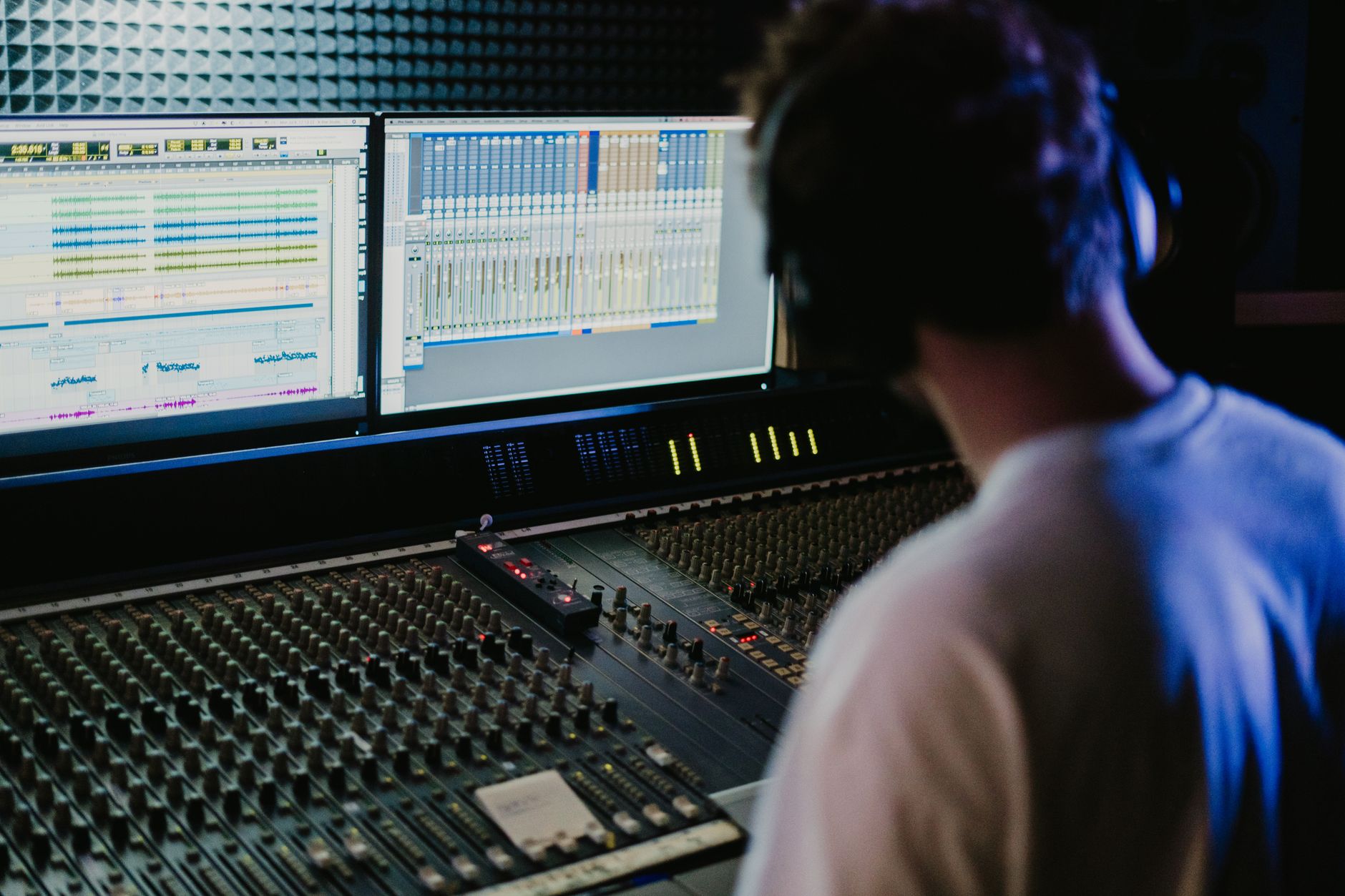 Photo by Tima Miroshnichenko / Pexels
Mixing headphones must reproduce sound accurately across the full frequency range without the flattering coloration that makes consumer headphones sound good for casual listening. A mix that sounds good on reference headphones translates correctly to speakers, earbuds, and car systems. The core requirement is a flat, neutral frequency response—not the bass-heavy or treble-boosted sound of most consumer headphones.
Open-Back vs. Closed-Back for Mixing
Open-back headphones (beyerdynamic DT 990 Pro) have perforated ear cups that allow air to flow in and out—creating a wider, more natural stereo image that mimics listening to speakers. They're better for critical mixing and mastering. Closed-back headphones (beyerdynamic DT 770 PRO, Sony MDR-7506) isolate outside sound and are better for tracking (recording while a musician plays) and mixing in noisy environments. Most engineers own both.
Impedance: 32 Ohm vs. 80 Ohm vs. 250 Ohm
Low-impedance models (32 Ohm) drive easily from phones and laptops. The beyerdynamic DT 770 PRO 80 Ohm is the sweet spot: loud enough from most audio interfaces and laptops without an amp, with better dynamics than the 32 Ohm version. The 250 Ohm DT 990 Pro requires a headphone amplifier or audio interface with sufficient output voltage—it won't reach adequate volume from a laptop headphone jack alone.
Frequency Response for Accurate Monitoring
The Sony MDR-7506 has been the broadcast and studio standard for 30+ years because its flat midrange accurately reveals vocal edits, dialog, and instrument separation. The beyerdynamic DT 770 PRO has a slight V-shape (slightly elevated bass and treble) that's still reference-grade but requires the engineer to compensate slightly. The Shure SRH840 and Audio-Technica ATH-M40x are the flattest in this roundup.
Comfort for Long Sessions
Mixing sessions run 4–8 hours. Velour ear pads (beyerdynamic) are cooler and more comfortable over long sessions than pleather (Sony MDR-7506, Shure). The clamping force on the DT 990 and DT 770 loosens over time; the MDR-7506 stays tight for decades. Consider this if you plan to use the headphones daily for years.

How We Compared
We analyzed these headphones on frequency response accuracy (flat midrange, controlled bass, extended highs without harshness), impedance compatibility, stereo image width, and engineer endorsements across recording and broadcast contexts. Products used in professional studios or broadcast environments for 5+ years ranked highest.
Watch Before You Buy


“The PALOVUE SoundFlow USB Type C Headphones Crisp Sound features unbreakable sound & noise isolation. Best suited for budget-conscious buyers: music enthusiasts gamers and remote workers who want…”
See Today’s Price →What we like
- Unbreakable Sound & Noise Isolation
- Exquisite Design & Outstanding Durability Quality
- Precise Fit & PLUG N PLAY
- Built-in Mic & Volume Control
Watch out for
- Budget pricing may reflect simpler construction or fewer premium features
- Sound quality improvement over built-in speakers is perceptible but varies by content
Read Full Analysis
The PALOVUE SoundFlow takes the top position on this mixing page as a budget entry point for beginners who need a USB-C wired headphone with a built-in mic for basic recording and monitoring workflows. At $16.99, the plug-and-play USB-C connection removes driver installation friction, and the inline volume control and mic serve introductory home studio or podcast recording needs without additional hardware. As a $16.99 budget headphone, the SoundFlow is not a professional mixing tool by engineering standards — frequency response accuracy at this price tier cannot approach the flat-response tuning of the Shure SRH840 or the Audio-Technica ATH-M40x at $109. Buyers producing music for distribution or doing critical mastering work should look at the professional options further down this page. The value case here is strictly accessibility: for a complete beginner setting up a first home studio who needs functional wired monitoring under $20, the SoundFlow provides a workable starting point before committing to professional monitoring gear. The Shure SRH840 and Audio-Technica ATH-M40x at $109 represent the step up to genuinely accurate mixing reference — the PALOVUE serves the exploratory tier below that.

“Shure SRH840—professional monitoring headphones with one of the flattest frequency responses in this price range. Detachable cable. Best for engineers who want the most accurate representation…”
See Today’s Price →What we like
- Closed-back design provides 20 dB of passive isolation — significantly reduces studio background noise
- 40mm neodymium drivers produce a flat, accurate frequency response preferred for mixing and mastering
- Single-sided coiled cable reduces tangling during extended studio sessions
- Hinged ear cups fold flat for transport in the included padded carrying pouch
Watch out for
- Clamp pressure is tight — causes ear fatigue after 2+ hours without a break
- Closed-back design can sound slightly colored compared to open-back reference headphones
Read Full Analysis
The Shure SRH840 earns the Flattest Response badge on this mixing page through 40mm neodymium drivers tuned for studio accuracy rather than consumer appeal — the frequency response lacks the V-shaped boost that makes consumer headphones sound exciting but introduces the coloration that misleads mixing decisions. Twenty decibels of passive isolation from the closed-back design significantly reduces studio background noise without powered ANC, and the single-sided coiled cable eliminates tangling during extended sessions. Clamp pressure is firmer than average, causing ear fatigue after two or more hours of continuous wear — a real issue for long mixing sessions that requires deliberate breaks. Closed-back design can introduce slight low-frequency buildup compared to open-back reference headphones, which engineers should account for when mixing bass frequencies. On this three-product mixing page, the Shure SRH840 is the professional-grade pick over the PALOVUE SoundFlow at $16.99 and Audio-Technica ATH-M40x at $109. The M40x is the closest competitor — both are flat-response closed-back monitoring headphones. The SRH840 offers a slightly warmer character at a higher price; the M40x at $109 is the more accessible studio standard with a comparable flat response. Either is a legitimate choice for professional mixing work; the SRH840 suits engineers who specifically prefer Shure's warmer low-end representation.
“Audio-Technica ATH-M40x—flat, accurate studio monitor headphones under $100. Detachable cable. Best entry point for home studio engineers before investing in higher-impedance professional models.”
See Today’s Price →Watch out for
- Sound quality improvement over built-in speakers is perceptible but varies by content
- Wired models limit movement; wireless adds battery management requirements
Read Full Analysis
The Audio-Technica ATH-M40x at $109 earns the Best Entry Mixing placement through 40mm drivers built with rare earth magnets and copper-clad aluminum wire voice coils — a driver construction engineered for flat frequency response accuracy rather than the bass-boosted consumer sound signature that obscures mix decisions. For mixing engineers, flat response is the non-negotiable foundation: the headphone must reproduce what is in the recording without adding low-midrange warmth or high-frequency roll-off that masks problems before they reach speakers. The closed-back circumaural design provides passive sound isolation without powered ANC processing, which matters for mixing because active noise cancellation algorithms introduce phase and frequency artifacts that compromise the accurate monitoring the M40x is built to deliver. The 90-degree swiveling earcups enable single-ear monitoring alongside studio monitors — a standard mixing workflow the fixed-cup designs found in consumer headphones don't support. Detachable cables prevent the most common failure point in studio headphones used daily. At $109, the M40x occupies the entry tier of professional studio monitoring — above consumer headphones tuned for enjoyment, below the ATH-M50x at approximately $109 and higher-impedance mastering cans. The wide frequency response retrieves high-frequency detail in cymbal transients, vocal sibilance, and string harmonics that consumer headphones smooth over. For home studio engineers: this is the correct starting point for developing accurate mix judgments before investing in reference monitoring setups.
Frequently Asked Questions
Can I mix music with consumer headphones?
Do I need a headphone amp for mixing?
Should I mix on headphones or speakers?
How long do mixing headphones last?
How We Analyze Products
We analyze Amazon review data — often thousands of reviews per product — to surface patterns that individual buyers miss. Our process aggregates star ratings, review counts, and buyer sentiment at scale, identifying which strengths and weaknesses appear consistently across the largest review samples available. The 17,917+ reviews analyzed on this page represent real verified-purchase feedback from Amazon buyers.
Each product earned its placement through data: total review volume, average rating, and the specific praise and complaints that repeat most often across buyers. No manufacturer paid for placement on this page. Products appear here because buyers endorsed them at scale, not because a company asked us to feature them.
We use AI to summarize review sentiment — not to fabricate opinions, but to condense what thousands of buyers actually wrote into a readable format. The pros and cons you see reflect the most common themes found in verified purchaser reviews, paraphrased for clarity. We do not claim to have accessed Reddit, YouTube, or specific publications in generating these summaries.
Prices shown reflect Amazon pricing at the time this page was last generated. Click “See Today’s Price” to get the current live price on Amazon. Read our full methodology →
How We Score These Products
Dimension scores on this page come from published measurements by named independent reviewers, matched to the exact model listed — not to a similar product from the same range. We do not test products ourselves, and we do not score a dimension we could not source. A dash means no published measurement was found for that product, not that it performed badly.
Value: Price-to-performance ratio. Products with high ratings and low prices score highest.
Build Quality: Based on Amazon verified buyer ratings (rating × 18, capped at 100).
Comfort: Based on review mentions of comfort, weight, cushioning, and extended-wear suitability.
Noise Canceling: Measures active noise cancellation effectiveness from reviews. Open-back headphones score 0 (no ANC by design).
Sound: Extracted from buyer reviews mentioning sound, audio, bass, treble, and clarity.
The overall score is the mean of the dimensions we could evidence for that product, on a 10-point scale. Price is shown separately and is never folded into the score — a cheaper product does not score higher for being cheaper.