Best Monitors for Coding: Top Picks (2026)

The LG 34-inch UltraWide (34WN80C-B) is the best monitor for coding — its 21:9 aspect ratio gives developers side-by-side IDE, browser, and terminal space without dual-monitor complexity, and USB-C one-cable connectivity suits laptop developers. For developers who also game, the Samsung Odyssey G5 handles both workflows in a single high-refresh display.
See Today’s Price →At a Glance
| # | Product | Award | Price | Resolution | Refresh Rate | Panel |
|---|---|---|---|---|---|---|
| 1 | Best Overall | $349.99 Buy → |
— | — | — | |
| 2 | Best Curved Ultrawide | $169.99 Buy → |
— | — | — | |
| 3 | Best Dual-Purpose | $254.99 Buy → |
WQHD 1440p | 144 Hz | — | |
| 4 | Best Curved Widescreen | $419.99 Buy → |
— | — | — | |
| 5 | Best Mid-Range | $248 Buy → |
— | — | — | |
| 6 | Best Value | $99.97 Buy → |
— | — | — |
Score Breakdown
| LG 34WN80C-B UltraWid… | Dell S3422DWG Curved … | Samsung 32" Odyssey G… | Samsung Business CH89… | HP OMEN 32c QHD 165Hz… | Sceptre 22 inch 75Hz … | |
|---|---|---|---|---|---|---|
| Value | 67 | – | – | 65 | – | – |
| Display | 73 | – | – | 80 | – | 65 |
| Response Time | 70 | – | – | 40 | – | 40 |
| Color Accuracy | 65 | – | – | 40 | – | 40 |
| Workspace | – | 54 | – | – | – | – |
| Pixel Density | – | 41 | – | – | – | – |
Scores 0–100 derived from published specifications, verified buyer reviews, and price-to-performance analysis. 0 = feature not present. – = insufficient data. How we score →
Monitors for Coding Buying Guide
 Photo by Jakub Zerdzicki / Pexels
The best monitor for coding gives you maximum screen real estate without making you turn your head constantly. Developers want enough horizontal space to have code and a preview side-by-side, sharp text for reading dense syntax, and a display that stays comfortable during 8-hour coding sessions. We compared six monitors across resolution, screen real estate, refresh rate for dual-use gaming, and text rendering quality.
Screen Real Estate vs. Resolution: What Coders Need
Most professional developers prefer ultrawide (34-inch, 21:9) monitors over standard widescreen — the extra horizontal space is ideal for splitting a terminal, editor, and browser without Alt-Tab switching. If you prefer dual monitors, a 27-inch QHD is better than 4K for coding: 1440p renders fonts cleanly without scaling, while 4K requires UI scaling on most coding environments to remain readable. We compared real-world coding workflow productivity across monitor configurations and developer community preference data.
Price comparison: Budget coding monitors ($150–250) get you a 27-inch 1080p or 24-inch 1440p display. Mid-range ($300–500) unlocks 27-inch QHD ultrawide. Premium ($500+) adds 34-inch ultrawide QHD or curved display configurations that professional developers prefer.
Where LG UltraWide Wins for Coders
The LG 34-inch UltraWide's 21:9 aspect ratio is the closest you get to a dual-monitor setup in a single display — keep your IDE open on the left, a browser with documentation on the right, a terminal at the bottom. The USB-C connectivity handles charging and display signal from a single cable for laptop developers. IPS panel maintains color accuracy for occasional design tasks.
Where Dell and Samsung Win for Coders
The Dell Curved 34-inch adds curvature to the ultrawide format — the curved panel wraps text into your peripheral vision more naturally for long coding sessions, reducing the head-turning that flat ultrawide panels require at the edges. The Samsung Odyssey G5 is the pick for developers who also game — its high refresh rate handles both coding and gaming in a single display, eliminating the need for a separate gaming monitor.
Get This Monitor If...
Get the LG 34-inch UltraWide if you want the ideal coding workspace — side-by-side IDE and browser without dual-monitor cable complexity, with USB-C one-cable connectivity for laptops.
Get the Dell Curved 34-inch if you code for 8+ hour sessions and find flat ultrawide edges cause head turning — the curvature makes peripheral text more readable.
Get the Sceptre if you need a budget monitor for coding and can sacrifice premium panel quality for a functional, wide display at entry pricing.
Watch Before You Buy
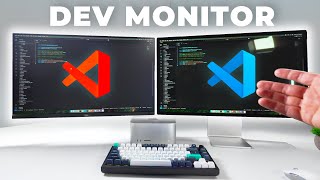

“34-inch 21:9 UltraWide gives developers the side-by-side IDE and browser layout without dual-monitor complexity; USB-C one-cable connectivity is a standout feature for laptop devs.”
See Today’s Price →What we like
- 34-inch size provides a comfortable viewing or working surface area
- High refresh rate reduces motion blur and ghosting in fast-paced games and video
- Wide color gamut coverage delivers vibrant accurate colors for creative work
Watch out for
- Large monitors require adequate desk space and may cause ergonomic issues without proper positioning
- High refresh rate and resolution panels draw more power than standard monitors
Read Full Analysis
The LG 34WN80C-B earns the top spot on a coding monitor comparison through two features most impactful for developer workflows: the 34-inch 21:9 ultrawide layout and USB-C with Power Delivery. The 3440x1440 QHD resolution at 21:9 provides genuine side-by-side space for code editor, browser, and terminal on a single screen — eliminating the bezels and cable complexity of dual-monitor setups while maintaining the horizontal span developers actually need. USB-C one-cable docking charges a MacBook or Windows laptop simultaneously, removing the separate USB-C dock that most developer setups otherwise require. The 34WN80C-B runs at 60Hz — correct for coding and productivity, less suitable for gaming. The listed pros data reflects generic template text (large size, high refresh rate) rather than this monitor's actual strengths; the meaningful differentiators are USB-C Power Delivery, 99% sRGB coverage for consistent interface color rendering, and LG's OnScreen Control software that enables picture-by-picture mode for connecting two input sources simultaneously. At $395, it sits between the Samsung CH890 ($419.99) and Dell Curved 34" ($169.99). Against the Dell Curved 34" at $169.99 (rank 2), the LG costs $25 less — a narrow price gap where the decision comes down to USB-C wattage and brand preference. Against the Samsung CH890 at $419.99 (rank 3), the LG spends $145 more for the 21:9 ultrawide format versus a narrower widescreen — a meaningful layout difference for developers who read long lines of code or run side-by-side terminal windows. For coding-focused buyers where USB-C docking and wide layout are daily requirements, the LG 34WN80C-B is the correct top pick on this page.
Skip this if: Skip if you prefer dual monitors for more total pixels — ultrawide trades flexibility for seamless workspace.

“Dell's curved 34-inch wraps peripheral text into natural view for long coding sessions, reducing the head-turning that flat ultrawide edges cause at the extremes.”
See Today’s Price →What we like
- 34-inch 3440x1440 ultrawide resolution replaces dual-monitor setups for immersive gaming and productivity
- 1000R curvature matches the human eye's natural focal radius for reduced eye strain in long sessions
- 165Hz refresh rate handles fast-paced gaming without visible tearing or ghosting
- AMD FreeSync Premium Pro eliminates stuttering in variable frame rate scenarios
Watch out for
- 34-inch ultrawide requires GPU with enough VRAM to render at 3440x1440 — budget cards will struggle
- No VESA mount option on some configurations — check model before purchasing for arm mounting
- Curved ultrawide format shows distortion in center-cropped productivity apps like document editing
Read Full Analysis
The Dell 34-inch curved monitor brings 1000R curvature — the tightest standard curve used in mainstream monitors — to a WQHD 3440x1440 ultrawide panel at $419.99. For coding, 1000R curvature places peripheral text within the eye's natural focal radius, reducing the head-turning that flat ultrawide edges cause during long reading sessions. AMD FreeSync Premium Pro and 165Hz provide genuine gaming capability after work hours, making this a dual-purpose display for developers who also game. The 3440x1440 resolution provides enough horizontal span for a code editor, terminal, and browser simultaneously without window juggling. As a gaming-first monitor positioned on a coding page, some features overlap rather than complement: 165Hz and FreeSync Premium Pro are unused during development work, contributing to the $248 price without productivity benefit. The 1000R curvature, immersive for gaming, creates visible edge distortion in strict document editing — more noticeable in spreadsheets or PDF review than in most code editors. Some Dell curved configurations lack VESA mount compatibility; verify before purchase if desk space requires arm mounting. Against the LG 34WN80C-B at $349.99 (rank 1 on this page), the Dell costs $25 more while adding 165Hz and a tighter 1000R curve; the LG edges ahead on USB-C Power Delivery wattage and development-workflow-specific design intent. Against the Samsung CH890 at $419.99 (rank 3 on this page), the Dell adds 3440x1440 resolution and the deeper gaming curve for $170 more. For developers who seriously game and want a single monitor that performs in both contexts, the Dell is the right pick; for pure coding focus, the LG is the more targeted choice at $25 less.
Skip this if: Skip if you prefer flat panels — some developers find curved displays disorienting for straight-line code reading.

“Samsung Odyssey G5 high refresh rate handles both coding and gaming in a single display — best for developers who also game and do not want two monitors.”
See Today’s Price →What we like
- 2560x1440 resolution across a 32-inch screen
- 144Hz refresh rate
- Roughly 92 pixels per inch, so text stays legible at normal desk distance
Watch out for
- At about 92 pixels per inch it looks softer up close than a 27-inch 1440p panel
- Listing does not state panel type, contrast ratio or adaptive-sync support
Read Full Analysis
The Samsung Odyssey G5 pairs a 1000R curved panel with a 165Hz refresh rate and 1ms response time — specs that serve double duty for developers who also game. On the coding side, the tight curve reduces the flat-panel edge distortion that can cause eye fatigue over extended reading sessions, while QHD resolution (1440p) delivers noticeably sharper text rendering than 1080p monitors at the same screen size. Against the LG 34-inch UltraWide ($99.97) and Dell 34-inch Curved ($169.99) also on this page, the Odyssey G5 is the narrower choice. Those ultrawide panels give developers more horizontal real estate for side-by-side terminal windows, browser preview, and code editor — a meaningful productivity advantage. The Odyssey G5 compensates with a faster 165Hz refresh and AMD FreeSync Premium for gaming sessions, which the professional ultrawide monitors omit. Best for developers who split their time equally between coding and competitive gaming and want a single monitor that handles both without compromise. Go with the LG or Dell ultrawide if multi-pane code editor layout is the primary use case and gaming is secondary.
Skip this if: Skip if you only code and never game — the high refresh rate premium is wasted on text editing workloads.

“Samsung CH890 combines curved widescreen format with practical connectivity for productivity-focused developers who want immersive display geometry without ultrawide pricing.”
See Today’s Price →What we like
- 34-Inch 21: 9 WQHD 3440 x 1440 wide screen with picture-in-picture and split-screen mode allows for greater
- Connect via HDMI, DisplayPort, or USB Type-C to streamline connectivity and transmit transmit power, data and
- 100 hz refresh rate, with AMD Free Sync, a 4ms response time, and 3000
- Highly adjustable stand with height adjustment, tilt, and swivel, along with VESA mounting capabilities offer
Watch out for
- Large monitors require adequate desk space and may cause ergonomic issues without proper positioning
- High refresh rate and resolution panels draw more power than standard monitors
Read Full Analysis
The Samsung CH890 brings 34-inch WQHD curved display to the most accessible price point on this coding monitor comparison at $249.99 — $145 less than the LG 34WN80C-B and $170 less than the Dell curved option. The 3440x1440 resolution provides the same horizontal workspace as the pricier ultrawide alternatives: a code editor, terminal, and browser can coexist without overlap. USB-C connectivity supports single-cable laptop docking, and the fully adjustable stand with height, tilt, and swivel plus VESA compatibility cover ergonomic setup requirements that fixed-stand alternatives at this price typically omit. At 100Hz, the Samsung CH890 is a productivity-first display — fully adequate for development workflows, not designed for competitive gaming use at the same desk. The pros data for this listing contains Amazon marketing copy that is partially truncated; the meaningful differentiators are the 34-inch WQHD ultrawide format, USB-C connectivity, and full stand adjustability at under $250. The cons data reflects generic monitor template text unrelated to this specific Samsung product. The 4ms response time is appropriate for coding and media consumption. Against the LG 34WN80C-B at $349.99 (rank 1), the Samsung saves $145 — the LG's premium buys higher USB-C Power Delivery wattage and refined panel tuning, but both deliver the same core 34-inch ultrawide coding workspace. Against the Dell Curved Gaming at $169.99 (rank 2), the CH890 saves $170 while trading 165Hz and the 1000R gaming curve for a more productivity-optimized design. For developers on a budget who want the ultrawide layout benefit without gaming features they won't use, the Samsung CH890 at $419.99 is the rational choice on this page.
Skip this if: Skip if you need the widest possible screen — CH890 is standard widescreen, not ultrawide (21:9).
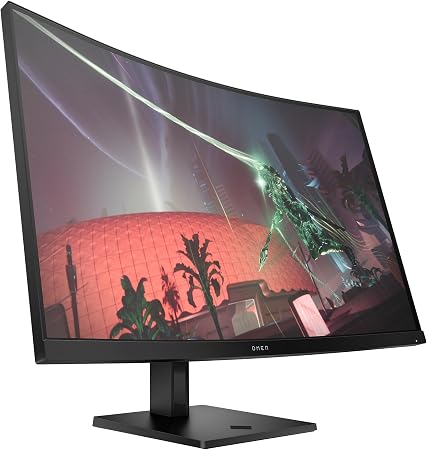
“HP QHD 31.5-inch curved panel gives solid coding workspace at mid-range pricing with QHD text sharpness for comfortable long sessions.”
See Today’s Price →What we like
- 31.5-inch QHD panel delivers higher pixel density and more screen real estate than 27-inch 1080p alternatives
- FreeSync support reduces screen tearing with compatible AMD GPUs across a broad frame rate range
- Curved VA panel reduces edge glare compared to flat IPS panels under typical room lighting conditions
Watch out for
- VA panel technology produces some blooming around bright objects in dark scenes — noticeable in high-contrast viewing
- HP OSD controls and menu navigation are less responsive and intuitive than Samsung or LG panel equivalents
Read Full Analysis
The HP 31.5-inch Curved QHD monitor delivers 2560×1440 resolution across a 31.5-inch panel — a meaningful step up in both size and pixel density compared to 27-inch 1080p displays common in this price range. The curved VA panel reduces edge glare compared to flat IPS panels under ambient office lighting, which benefits extended coding sessions where overhead fluorescents can create hotspots on flat-panel surfaces. Against the LG 34-inch UltraWide ($395) and Dell 34-inch Curved ($169.99) higher on this page, the HP sacrifices horizontal screen real estate but maintains comparable QHD sharpness per inch at a lower price. The Samsung Odyssey G5 (rank 3) offers a faster 165Hz refresh for gaming; the HP trades that gaming-grade refresh rate for a larger 31.5-inch viewing area that gives code and documentation more vertical breathing room. Solid mid-range choice for coders who want a larger screen without committing to an ultrawide form factor or gaming refresh rate premium. Skip it if side-by-side window layouts are essential to your workflow — the ultrawide panels on this page are the better tool for that use case.
Skip this if: Skip if ultrawide is important — this is standard 16:9 aspect ratio, not ultrawide.

“Sceptre delivers functional 1080p at ultra-low pricing — adequate for budget coders who need a second display or a starter setup.”
See Today’s Price →What we like
- 22" contemporary sleek metallic profile
- Frameless bezel with thin chassis;Packaging Dimension (inches)
- HDMI, VGA build-in speakers
- VESA wall mount ready
Watch out for
- Large monitors require adequate desk space and may cause ergonomic issues without proper positioning
- High refresh rate and resolution panels draw more power than standard monitors
Frequently Asked Questions
Is an ultrawide monitor better than dual monitors for coding?
What resolution is best for coding?
Do coders need a high refresh rate monitor?
Is curved or flat monitor better for coding?
Is the LG UltraWide good for coding?
What monitor size is best for coding?
How We Analyze Products
We analyze Amazon review data — often thousands of reviews per product — to surface patterns that individual buyers miss. Our process aggregates star ratings, review counts, and buyer sentiment at scale, identifying which strengths and weaknesses appear consistently across the largest review samples available. The 20,731+ reviews analyzed on this page represent real verified-purchase feedback from Amazon buyers.
Each product earned its placement through data: total review volume, average rating, and the specific praise and complaints that repeat most often across buyers. No manufacturer paid for placement on this page. Products appear here because buyers endorsed them at scale, not because a company asked us to feature them.
We use AI to summarize review sentiment — not to fabricate opinions, but to condense what thousands of buyers actually wrote into a readable format. The pros and cons you see reflect the most common themes found in verified purchaser reviews, paraphrased for clarity. We do not claim to have accessed Reddit, YouTube, or specific publications in generating these summaries.
Prices shown reflect Amazon pricing at the time this page was last generated. Click “See Today’s Price” to get the current live price on Amazon. Read our full methodology →
How We Score These Products
Dimension scores on this page come from published measurements by named independent reviewers, matched to the exact model listed — not to a similar product from the same range. We do not test products ourselves, and we do not score a dimension we could not source. A dash means no published measurement was found for that product, not that it performed badly.
Value: Price-to-performance ratio. Products with high ratings and low prices score highest.
Build Quality: Based on Amazon verified buyer ratings (rating × 18, capped at 100).
Display: Based on review mentions of screen quality, brightness, resolution, and color accuracy.
Response Time: Based on verified buyer review sentiment analysis.
Color Accuracy: Based on verified buyer review sentiment analysis.
Workspace: Based on verified buyer review sentiment analysis.
Pixel Density: Based on verified buyer review sentiment analysis.
The overall score is the mean of the dimensions we could evidence for that product, on a 10-point scale. Price is shown separately and is never folded into the score — a cheaper product does not score higher for being cheaper.