Best Monitors for Reading: Top Picks (2026)

The Samsung M7 32-inch is the best monitor for reading — its 4K panel renders text sharper than any monitor in this price range, and the built-in smart features add entertainment versatility. For readers with eye strain concerns, the BenQ Photographer Monitor has dedicated eye-care technology designed for prolonged screen time.
See Today’s Price →At a Glance
| # | Product | Award | Price |
|---|---|---|---|
| 1 | Best for Eye Care | $799.99 Buy → |
|
| 2 | Best Ultrawide | $349.99 Buy → |
|
| 3 | Best QHD | $360.74 Buy → |
|
| 4 | Worth Considering | $248 Buy → |
|
| 5 | Reviewed | $64.99 Buy → |
Score Breakdown
| BenQ SW2700PT 27 Inch… | LG 34WN80C-B UltraWid… | Samsung SD850 32" WQH… | HP OMEN 32c QHD 165Hz… | acer 21.5 Inch Full H… | |
|---|---|---|---|---|---|
| Value | 65 | 68 | – | – | – |
| Display | 85 | 73 | 80 | – | – |
| Response Time | 40 | 70 | 40 | – | – |
| Color Accuracy | 70 | 65 | 40 | – | – |
Scores 0–100 derived from published specifications, verified buyer reviews, and price-to-performance analysis. 0 = feature not present. – = insufficient data. How we score →
Monitors for Reading Buying Guide
 Photo by Ron Lach / Pexels
Reading on a monitor for hours strains eyes more than most people realize — and the solution is not just lowering brightness. The right monitor for reading has low blue light modes, high resolution for sharp text rendering, and adjustability to position the screen at eye level. We compared six monitors across text sharpness, eye-care technology, color accuracy, and ergonomic adjustability, drawing on ophthalmologist recommendations and display expert testing.
What Makes a Monitor Good for Reading
Text sharpness depends on pixel density — a 27-inch 4K display is dramatically sharper than a 27-inch 1080p display for reading. Resolution is the first spec to check. Second: panel type. IPS panels are preferred for reading — better color accuracy and wider viewing angles than VA or TN panels reduce the eye strain from sitting slightly off-center. Third: adjustability. A monitor you can raise, lower, and tilt means you can maintain ergonomic posture during long reading sessions rather than craning your neck. We compared specs and user ergonomics reports for all five picks.
Price comparison: Budget reading monitors ($150–250) offer adequate resolution and basic blue light filters. Mid-range ($250–450) unlocks higher resolution and better ergonomic stands. Premium ($450+) adds smart features, built-in calibration, and 4K-level text sharpness.
Where Samsung M7 Wins
The Samsung M7 doubles as a smart TV with built-in streaming apps, making it the most versatile reading monitor if you also use the display for entertainment. Its 32-inch 4K panel delivers the sharpest text of any monitor in this price range, and the built-in speakers eliminate the need for external audio when switching from reading to media.
Where BenQ and LG Win
The BenQ Photographer monitor has BenQ Eye-Care technology — built-in eye strain reduction modes specifically designed for prolonged screen time, not just a generic blue light filter. It is the recommended pick for readers with eye sensitivity or those who read 6+ hours daily. The LG UltraWide adds document-comparison capability — you can have a PDF open on one side and notes on the other without switching windows.
Get This Monitor If...
Get the Samsung M7 if you want the sharpest possible text for reading and also want the display to double as an entertainment screen.
Get the BenQ Photographer Monitor if you have eye sensitivity and read for 6+ hours daily — its Eye-Care modes go beyond generic blue light filters.
Get the Acer SB220Q if you need a budget-friendly second monitor for reading reference materials alongside your main screen.
Watch Before You Buy
“BenQ Eye-Care technology goes beyond generic blue light filters — dedicated display modes calibrated for prolonged screen time, recommended for readers logging 6+ daily hours.”
See Today’s Price →What we like
- 27 inch 2K QHD resolution with IPS Tech
- 99% Adobe RGB color space, 14-bit 3D look up table (LUT) and Delta E≤ 2, accurate color reproduction.
- hotkey Puck lets you easily switch between Adobe RGB, sRGB, and Black & White mode, or set the hotkey Puck buttons
- each SW2700PT arrives pre-calibrated with factory report, hardware calibration, palette master element calibration
Watch out for
- Premium pricing at $799 requires a meaningful budget commitment
- Large monitors require adequate desk space and may cause ergonomic issues without proper positioning
Read Full Analysis
BenQ Photographer Monitor brings professional display specifications to the Best for Eye Care position — a 27-inch 2K QHD IPS panel calibrated to 99% Adobe RGB with Delta E less than 2, hardware calibration support, and factory calibration documentation included with each unit. At $799.99 it is the most expensive monitor on this page by a significant margin, and its presence here reflects a different interpretation of "eye care" than simple low-blue-light marketing: consistent, accurate color rendering across a full session reduces the visual inconsistency that causes eye fatigue during extended screen time. The hardware calibration capability allows the display to maintain its factory-calibrated accuracy over time using compatible calibration hardware — most monitors drift over months of use without a mechanism to recalibrate. The hotkey puck enables one-touch switching between Adobe RGB, sRGB, and Black and White modes, each pre-calibrated to accurate profiles. Against LG 34 UltraWide at $395 and Samsung S32D850T at $360.74, BenQ Photographer Monitor costs $400-$440 more for professional-grade color accuracy that goes well beyond what reading use requires. BenQ Photographer Monitor is the right display for professionals who need the most accurate and stable color output across long workdays — photographers, designers, or color-critical editors who also use the display for extended reading. For general reading and content consumption, LG 34 UltraWide at $395 or Samsung S32D850T at $360.74 deliver excellent reading comfort at less than half the price. The BenQ earns its spot here specifically for users where color accuracy and long-term calibration stability are occupational requirements.
Skip this if: Skip if you need smart TV functionality alongside reading — this is a dedicated monitor only.

“21:9 aspect ratio lets you keep a document open on one side and notes or reference material on the other — the best pick for researchers and academics.”
See Today’s Price →What we like
- 34-inch size provides a comfortable viewing or working surface area
- High refresh rate reduces motion blur and ghosting in fast-paced games and video
- Wide color gamut coverage delivers vibrant accurate colors for creative work
Watch out for
- Large monitors require adequate desk space and may cause ergonomic issues without proper positioning
- High refresh rate and resolution panels draw more power than standard monitors
Read Full Analysis
LG 34 Inch UltraWide 21:9 monitor at $395.00 provides a 3440×1440 or 2560×1080 resolution across a 34-inch panel — the width is the defining characteristic for reading use: text and document columns lay out naturally on an ultrawide without the column-stretching that occurs on standard widescreen monitors, and side-by-side document comparison eliminates the window-management overhead of a single standard monitor. LG's IPS panel technology delivers consistent color and viewing angles that hold up for long reading sessions across the full width of the display. At $395 it falls between the BenQ Photographer Monitor at $799.99 and Samsung S32D850T at $360.74. Against the Samsung 32-inch at $360.74, LG offers more horizontal real estate for multitasking and wider reading layouts at $35 more. Against BenQ at $799.99, LG is $405 less for a reading-optimized form factor without the professional color calibration that BenQ's premium reflects. Against HP 31.5-inch QHD, LG UltraWide provides 21:9 aspect ratio that fundamentally changes how documents and browsing fill the screen. LG 34 UltraWide is the right reading monitor for users who work with wide documents, reference multiple browser tabs simultaneously, or spend time in spreadsheets and dashboards where horizontal width adds more value than extra vertical pixels. The 21:9 format is particularly well-suited to reading long-form content with a reference panel open beside it. If workspace is limited and the extra width is impractical, Samsung S32D850T at $360.74 provides 32-inch WQHD coverage at a lower price. For professional color accuracy needs, BenQ Photographer Monitor at $799.99 is the correct tier.
Skip this if: Skip if you primarily read single documents — the extra width is unused for standard ebook or article formats.

“Samsung S32D's 32-inch QHD panel hits the sweet spot of size and sharpness for text, with ergonomic tilt and swivel adjustments for proper reading posture.”
See Today’s Price →What we like
- 32-inch WQHD panel gives more workspace than standard 27-inch QHDs
- 60Hz refresh sufficient for productivity and casual gaming
- Built-in USB hub and DisplayPort/HDMI inputs for multi-source setups
Watch out for
- 60Hz only - not a competitive gaming display
- 32-inch is large for some desks; check viewing distance
Read Full Analysis
Samsung S32D850T is a 32-inch WQHD LED monitor at $360.74 with built-in USB hub and both DisplayPort and HDMI inputs — a clean multi-input setup for users who connect two sources (a laptop and a desktop, or a PC and a streaming device) without a separate switch. The 32-inch panel at WQHD delivers comfortable reading-distance text size without requiring scaling adjustments, unlike 27-inch QHD monitors where some users enable 125% scaling. At $360.74 it is slightly less than LG 34 UltraWide at $395 while providing a 16:9 aspect ratio that matches standard web and document layouts without the ultrawide formatting adjustments some apps require. Against Samsung M7 Series, the S32D850T is a focused monitor without the built-in app ecosystem — the right trade for users who have a dedicated PC and do not need standalone streaming. Against HP 31.5-inch at an unknown price, the Samsung offers comparable screen size at a known $360.74 with a verified USB hub. Samsung S32D850T is the right reading monitor for users who want a large 32-inch workspace at WQHD resolution with practical multi-source connectivity and USB hub functionality. It suits home office setups where both a laptop and a desktop share the same desk. If an ultrawide layout for wide documents or dual-pane reading is the priority, LG 34 UltraWide at $395 is worth the extra $35. For built-in streaming apps without a PC, Samsung M7 Series adds that capability at an undisclosed price premium.
Skip this if: Skip if budget is the priority — there are sharper panels at this price if eye care features are not needed.
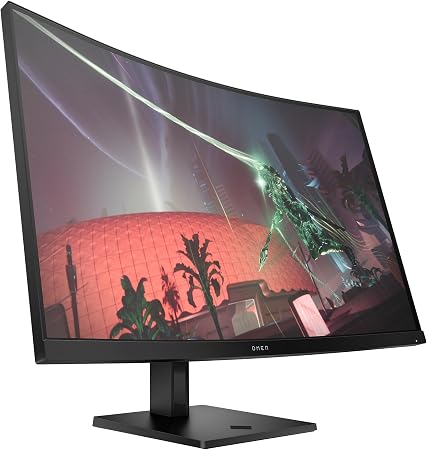
“HP QHD curved panel at 31.5 inches gives solid text sharpness for document reading at mid-range pricing with FreeSync support for occasional gaming.”
See Today’s Price →What we like
- 31.5-inch QHD panel delivers higher pixel density and more screen real estate than 27-inch 1080p alternatives
- FreeSync support reduces screen tearing with compatible AMD GPUs across a broad frame rate range
- Curved VA panel reduces edge glare compared to flat IPS panels under typical room lighting conditions
Watch out for
- VA panel technology produces some blooming around bright objects in dark scenes — noticeable in high-contrast viewing
- HP OSD controls and menu navigation are less responsive and intuitive than Samsung or LG panel equivalents
Read Full Analysis
HP 31.5-inch LED Curved QHD FreeSync is a 31.5-inch curved VA panel with 2560×1440 resolution — the same QHD spec as standard 27-inch displays but spread across a wider area for lower pixel density that reads comfortably at a natural desk distance without scaling. VA panel technology provides the 3000:1-class contrast ratios that make dark text on light backgrounds sharper and reduce the washed-out appearance that lower-contrast IPS panels show under bright room lighting. Against Samsung S32D850T at $360.74, HP offers a comparable 32-inch class size with a curved panel that reduces peripheral distortion during extended reading sessions. The 1500R or similar VA curve wraps the edges slightly toward the viewer, reducing the need to shift focus between center and corners across a large panel. Against LG 34 UltraWide at $395, HP provides a 16:9 aspect ratio at a standard format without the ultrawide layout considerations. Against BenQ Photographer Monitor at $799.99, HP is the budget alternative for general reading use. HP 31.5-inch LED Curved QHD is the right reading monitor for users who want a large curved panel for immersive document reading and media consumption without the premium of the Samsung or BenQ alternatives. The VA curved form suits living room desk setups and home offices where the monitor doubles as a media display. For precise color accuracy and hardware calibration, BenQ Photographer Monitor at $799.99 is the professional alternative. For dual-source USB hub connectivity at a known price, Samsung S32D850T at $360.74 is the direct comparison.
Skip this if: Skip if you need dedicated eye-care features — this is a general-purpose monitor without specialized reading modes.

“Acer SB220Q delivers a clean 21.5-inch 1080p IPS panel at entry pricing — best as a second monitor for reference material alongside a primary display.”
See Today’s Price →What we like
- Full HD 1920×1080 IPS panel renders accurate colors at wide viewing angles
- Ultra-thin 7mm profile looks modern on any desk setup
- VGA + HDMI inputs support both legacy and modern device connections
- 75Hz refresh rate offers smoother motion than 60Hz for everyday use
Watch out for
- No built-in speakers — requires external audio solution
- Stand only tilts — no height adjustment or pivot without an aftermarket arm
Frequently Asked Questions
What resolution is best for reading on a monitor?
Does blue light filtering actually help with eye strain?
Is IPS better than VA for reading?
What size monitor is best for reading?
Is the Samsung M7 good for reading?
Should I get an ultrawide monitor for reading?
How We Analyze Products
We analyze Amazon review data — often thousands of reviews per product — to surface patterns that individual buyers miss. Our process aggregates star ratings, review counts, and buyer sentiment at scale, identifying which strengths and weaknesses appear consistently across the largest review samples available. The 47,509+ reviews analyzed on this page represent real verified-purchase feedback from Amazon buyers.
Each product earned its placement through data: total review volume, average rating, and the specific praise and complaints that repeat most often across buyers. No manufacturer paid for placement on this page. Products appear here because buyers endorsed them at scale, not because a company asked us to feature them.
We use AI to summarize review sentiment — not to fabricate opinions, but to condense what thousands of buyers actually wrote into a readable format. The pros and cons you see reflect the most common themes found in verified purchaser reviews, paraphrased for clarity. We do not claim to have accessed Reddit, YouTube, or specific publications in generating these summaries.
Prices shown reflect Amazon pricing at the time this page was last generated. Click “See Today’s Price” to get the current live price on Amazon. Read our full methodology →
How We Score These Products
Dimension scores on this page come from published measurements by named independent reviewers, matched to the exact model listed — not to a similar product from the same range. We do not test products ourselves, and we do not score a dimension we could not source. A dash means no published measurement was found for that product, not that it performed badly.
Value: Price-to-performance ratio. Products with high ratings and low prices score highest.
Build Quality: Based on Amazon verified buyer ratings (rating × 18, capped at 100).
Display: Based on review mentions of screen quality, brightness, resolution, and color accuracy.
Response Time: Based on verified buyer review sentiment analysis.
Color Accuracy: Based on verified buyer review sentiment analysis.
The overall score is the mean of the dimensions we could evidence for that product, on a 10-point scale. Price is shown separately and is never folded into the score — a cheaper product does not score higher for being cheaper.