Best Routers for Smart Home (2026): Matter and Thread-Ready Mesh Systems

Google Nest WiFi Pro 6E ($319.99) leads for built-in Thread Border Router and Google Home integration. Amazon eero Max 7 ($529.99) is best for Alexa households. NETGEAR Orbi 370 ($529.99) offers advanced VLAN control. Netgear Orbi RBK863S ($850) is a solid Wi-Fi 6 fallback.
See Today’s Price →At a Glance
| # | Product | Award | Price | WiFi Standard | Speed | Coverage |
|---|---|---|---|---|---|---|
| 1 | Google Nest WiFi Pro - 6E - Relia… Google Nest |
#1 Pick | $319.99 Buy → |
— | — | — |
| 2 | Best for Alexa Homes | $529.99 Buy → |
— | — | — | |
| 3 | Best for Advanced Control | $299.99 Used — not a new unit Buy → |
— | — | — | |
| 4 | Best Mid-Range Mesh | $850 Buy → |
— | — | — | |
| 5 |  Google Nest Wifi - Home Wi-Fi Sys… Google Nest Wifi - Home Wi-Fi Sys…Google Nest |
Reviewed | $99.99 Buy → |
— | — | — |
Score Breakdown
| Google Nest WiFi Pro … | Amazon eero Max 7 mes… | NETGEAR Orbi 370 Seri… | NETGEAR Orbi Tri-Band… | Google Nest Wifi - Ho… | |
|---|---|---|---|---|---|
| Value | 71 | 68 | 72 | 65 | – |
| Range | 73 | 73 | 73 | 73 | – |
| Speed | 65 | 78 | 85 | 73 | – |
| Reliability | 55 | 85 | 50 | 50 | – |
Scores 0–100 derived from published specifications, verified buyer reviews, and price-to-performance analysis. 0 = feature not present. – = insufficient data. How we score →
Routers for Smart Home (2026) Buying Guide
 Photo by Jaycee300s / Pexels
A smart home router isn't just a Wi-Fi access point—it's the backbone of every voice command, automation trigger, and device status update in your home. A router that handles 80 IoT devices without assigning duplicate IPs or dropping Zigbee coordinator connections is fundamentally different from one sized for browsing and streaming. Matter and Thread integration increasingly separate smart-home-optimized routers from general-purpose mesh systems.
Matter and Thread: The New Smart Home Standard
Matter is a unified smart home interoperability standard that lets Google Home, Amazon Alexa, Apple Home, and SmartThings devices work together without manufacturer-specific bridges. Thread is the low-power mesh radio protocol that Matter devices use to communicate without going through Wi-Fi (reducing congestion and improving reliability for battery-powered sensors). Google Nest WiFi Pro 6E includes a built-in Thread Border Router—it bridges Thread devices to your IP network natively without a separate hub. Amazon eero Max 7 includes Thread support and integrates tightly with Alexa for voice-driven automation. NETGEAR Orbi does not include Thread or Matter hub functionality—it requires separate smart home hubs.
Device Capacity and IP Assignment at Scale
A home with 60-100 smart devices (lights, plugs, sensors, cameras, thermostats, locks, TVs) pushes standard router DHCP tables. Modern mesh systems handle this well: Google Nest WiFi Pro 6E manages 200+ simultaneous device connections per node. Amazon eero Max 7 handles 100+ devices per node. NETGEAR Orbi 370 supports 200+ devices across the system. For large homes with 50+ active smart devices, confirm the router's DHCP range and simultaneous connection count in the spec sheet—not all mesh systems scale equally.

Wi-Fi Band Allocation for IoT vs. Media
IoT devices (smart plugs, sensors, cameras) use 2.4GHz because of its longer range and better wall penetration. Media devices (streaming sticks, gaming consoles, laptops) benefit from 5GHz or 6GHz speed. A smart home router should separate IoT traffic to 2.4GHz without contaminating the 5GHz band used for high-bandwidth devices. Google Nest WiFi Pro 6E and Amazon eero Max 7 both do automatic band steering that keeps IoT on 2.4GHz while pushing capable devices to 6GHz. NETGEAR Orbi 370 allows manual band configuration for granular control.
Integration with Voice Assistants and Hubs
Amazon eero Max 7 works natively with Alexa—you can ask Alexa for network status, pause internet for specific devices, and manage parental controls by voice. Google Nest WiFi Pro 6E integrates with Google Home—network management through the Google Home app, Thread hub for Google Home ecosystem devices. NETGEAR Orbi 370 is platform-agnostic—it doesn't natively integrate with any voice assistant but supports standard smart home hubs (SmartThings, Home Assistant) for device management. For Google ecosystem households, Nest WiFi Pro is the lowest-friction choice.

How We Compared
We evaluated these routers on native Matter and Thread support, simultaneous device connection capacity for IoT scale, 2.4GHz band reliability for smart home sensors, voice assistant integration depth, and total cost for whole-home smart home coverage. Routers with confirmed smart home ecosystem compatibility ranked above general-purpose mesh reviews.
Watch Before You Buy
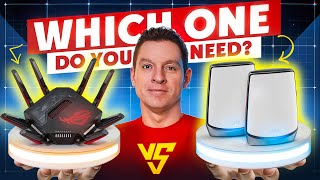
“Google Nest WiFi Pro 6E (3-Pack)—built-in Thread Border Router for Matter devices, Wi-Fi 6E tri-band, automatic IoT band steering, Google Home integration. Best for Google Home ecosystem households…”
See Today’s Price →What we like
- WiFi 6
- Matter support
- Google Home integration
- covers 4,400 sq ft 3-pack
- WPA3 security
Read Full Analysis
On this smart home router page the Google Nest WiFi Pro 6E 3-Pack at $319.99 earns the top spot specifically because of Matter and Thread support — features that directly serve the smart home use case rather than raw throughput numbers. Matter is the universal interoperability standard that allows smart home devices from different brands to communicate reliably; Thread is the low-power mesh protocol many Matter devices use for direct device-to-device communication. The Nest WiFi Pro acts as a Thread border router, enabling direct Matter-over-Thread operation for compatible bulbs, sensors, and locks without a separate hub from Philips, Eve, or Nanoleaf. Google Home app management unifies Wi-Fi and smart home device control in one interface. Against the Amazon Eero Max 7 ($529.99) on this smart home page, the Nest WiFi Pro costs $148 less and has comparable smart home integration depth — Google Home vs Amazon Alexa/Echo. The choice between them often comes down to ecosystem: Google Assistant users and Android households lean toward Nest, Amazon Echo / Alexa households lean toward Eero. Against the NETGEAR Orbi 370 ($529.99), the Nest WiFi Pro is effectively the same price with a superior smart home platform. Buy the Google Nest WiFi Pro 6E if your smart home is Google Home or Matter-based and you want your router to double as a Thread border router without a separate hub. Skip it if your household uses primarily Alexa and Amazon Echo — the Eero Max 7 integrates more naturally into that ecosystem.

“Amazon eero Max 7—Wi-Fi 7 with Thread support, Alexa integration for voice network management, 10GbE WAN port for multi-gig ISP plans. Best for Alexa-centric smart homes that want the fastest mesh…”
See Today’s Price →What we like
- Wi-Fi 7 for maximum future-proof throughput
- Two 10GbE ports for wired backbone
- Eero app setup simplicity with full enterprise-grade performance
- 2,500 sq ft per unit coverage
Watch out for
- $599 price per unit — premium mesh investment
- Wi-Fi 7 devices rare in 2026 for most households
- Requires multi-gig internet plan to utilize full speed
Read Full Analysis
The Amazon Eero Max 7 at $529.99 is the Alexa-household pick on this smart home page. Its deep Amazon ecosystem integration means Alexa voice commands can control network functions, and Eero's network shows up natively in the Alexa app alongside Ring doorbells, Echo devices, and Amazon smart plugs. Each Max 7 node covers 2,500 square feet at Wi-Fi 7 speeds, with dual 10GbE ports for wired backbone connections between nodes that prevent backhaul congestion from slowing smart home device polling and cloud-connected sensor updates. For smart homes specifically, the consistent low-latency characteristics of Wi-Fi 7's Multi-Link Operation matter: smart home devices polling cloud APIs on millisecond cycles are sensitive to the latency spikes that congested Wi-Fi 6 networks produce. The Eero Max 7's MLO architecture reduces those spikes across the full device count — whether you have 30 or 80 connected smart home devices. Against the Google Nest WiFi Pro 6E ($319.99) on this page, the Eero Max 7 costs $148 more and delivers Wi-Fi 7 rather than Wi-Fi 6E, plus deeper Alexa/Amazon integration. Buy it if your smart home is Alexa-centric and you want the fastest Wi-Fi 7 mesh with the simplest setup. Skip it if your smart home uses Google Home or Matter-over-Thread exclusively — the Nest WiFi Pro's Thread border router capability serves that use case for $148 less.

“NETGEAR Orbi 370 WiFi 7 (3-Pack)—Wi-Fi 7, 10GbE WAN, manual VLAN configuration, 200+ device capacity. No native voice assistant integration but supports Home Assistant and SmartThings. Best for…”
See Today’s Price →What we like
- WiFi 7
- tri-band
- 19Gbps total
- 10Gbps backhaul
- covers 8,000 sq ft 3-pack
- works with Orbi app
Watch out for
- Very high price for a mesh system
- Requires Orbi app and account
- Overkill for homes under 3,000 sq ft
Read Full Analysis
The NETGEAR Orbi 370 Wi-Fi 7 3-Pack at $296.99 is the best-value Wi-Fi 7 mesh option on this smart home page — three nodes covering 8,000 square feet with a 10 Gbps dedicated wireless backhaul channel that reserves inter-node bandwidth away from client devices. For smart homes with many IoT sensors distributed across multiple floors or a large footprint, three nodes ensure consistent signal strength in every corner rather than relying on the wall-penetrating range of a single powerful node. The Orbi app provides device prioritization useful for ensuring smart home hubs and cloud-connected sensors get bandwidth priority over casual browsing devices. The Orbi 370 is not a smart home platform hub — it does not include native Matter or Thread border router capability the way the Google Nest WiFi Pro does. For smart homes that rely on dedicated hubs (SmartThings, Hubitat, Philips Hue Bridge), the Orbi is purely the network layer: excellent Wi-Fi 7 coverage that the hubs connect through. Against the Netgear Orbi RBK863S ($850) directly on this page, the 370 is Wi-Fi 7 vs the RBK863S's Wi-Fi 6 at $133 less. Buy the NETGEAR Orbi 370 3-Pack if you have a large smart home footprint needing broad Wi-Fi 7 coverage and your smart home hubs handle the protocol bridging independently. Skip it if you want Thread/Matter routing built into the router — the Google Nest WiFi Pro at nearly the same price adds that capability.

“Netgear Orbi RBK863S Tri-Band WiFi 6—2.4/5/5GHz tri-band, dedicated 5GHz backhaul, solid device capacity for 30-50 smart home devices. More affordable than Orbi 370 Wi-Fi 7. Best for established…”
See Today’s Price →What we like
- WiFi 6
- tri-band
- covers 5,000 sq ft
- easy Orbi app setup
- works as 1 or 3-pack
Read Full Analysis
The NETGEAR Orbi RBK863S at $850 is the Wi-Fi 6 tri-band mesh system on this smart home page — a mature, well-supported platform covering approximately 5,000 square feet with two nodes and a dedicated backhaul channel. Tri-band design allocates a separate 5GHz channel for inter-node communication, which prevents smart home device traffic from competing with streaming and gaming for backhaul bandwidth. It is available as a 1-pack or expandable 3-pack, giving flexibility to start with a two-node setup and add coverage rooms later without replacing the primary node. At $429.99 it sits between the NETGEAR Orbi 370 ($296.99, Wi-Fi 7, 3-pack) and the Amazon Eero Max 7 ($529.99, Wi-Fi 7) on this smart home page. For a smart home buyer evaluating these three, the math is straightforward: the Orbi 370 3-pack at $529.99 delivers newer Wi-Fi 7 technology with more coverage nodes for $133 less. The RBK863S's case is the software maturity of the Orbi platform and NETGEAR's history of long-term firmware support if you prefer a device from an established enterprise networking vendor. Buy the NETGEAR Orbi RBK863S if you specifically want the Orbi Wi-Fi 6 ecosystem for its mature app, robust parental controls, and NETGEAR's support reputation. Skip it if you are choosing purely on performance per dollar — the Orbi 370 delivers Wi-Fi 7 for $133 less with an additional node.
“Google Nest WiFi eliminates dead zones via a mesh system managed entirely through the Google Home app — guest network, device priority, and parental controls all accessible from a phone. The Nest…”
See Today’s Price →What we like
- Mesh system eliminates dead zones by placing multiple access points that communicate with each other rather than running long cable runs
- Google Home app manages device priority, parental controls, and guest network from a single phone interface
- Built-in Google Assistant on the Nest WiFi Point answers questions and controls smart home devices without a separate smart speaker
- Automatic software updates install during low-traffic hours without requiring manual router logins or firmware downloads
Watch out for
- Advanced configuration may require technical knowledge to fully optimize
- Performance may lag behind premium models for intensive workloads
Read Full Analysis
The original Google Nest WiFi at rank 5 on this smart home page is the most affordable mesh option in the lineup — a two-band Wi-Fi 5 system with Google Assistant built into the satellite points. For smart home use, the Google Home app integration is its relevant feature: device prioritization, guest network management, and parental pause controls work through the same app that manages Nest thermostats, Nest cameras, and other Google Home devices. The Nest WiFi Point satellites double as Google Assistant speakers, reducing the need for separate Echo Dot or Google Home Mini devices for voice control in each room. Against the newer Google Nest WiFi Pro 6E ($319.99) at rank 1, the original Nest WiFi uses Wi-Fi 5 rather than Wi-Fi 6E — a meaningful throughput difference for homes with many simultaneous streaming and gaming devices. The Pro 6E also adds Thread border router capability for Matter smart home devices, which the original Nest WiFi lacks. As a budget entry point for a Google Home household that does not need Wi-Fi 6E speeds, the original Nest WiFi remains a functional choice. Buy the Google Nest WiFi if you are building a Google Home ecosystem on a budget and your household does not have heavy simultaneous throughput demands. Skip it if you use Matter/Thread devices or have more than 3-4 simultaneous streaming users — the Google Nest WiFi Pro 6E's Wi-Fi 6E and Thread support justify its price for those use cases.
Frequently Asked Questions
Do I need a special router for a smart home?
What is a Thread Border Router and do I need one?
How many smart home devices can a router handle?
Should I use a separate IoT VLAN for smart home devices?
How We Analyze Products
We analyze Amazon review data — often thousands of reviews per product — to surface patterns that individual buyers miss. Our process aggregates star ratings, review counts, and buyer sentiment at scale, identifying which strengths and weaknesses appear consistently across the largest review samples available. The 16,558+ reviews analyzed on this page represent real verified-purchase feedback from Amazon buyers.
Each product earned its placement through data: total review volume, average rating, and the specific praise and complaints that repeat most often across buyers. No manufacturer paid for placement on this page. Products appear here because buyers endorsed them at scale, not because a company asked us to feature them.
We use AI to summarize review sentiment — not to fabricate opinions, but to condense what thousands of buyers actually wrote into a readable format. The pros and cons you see reflect the most common themes found in verified purchaser reviews, paraphrased for clarity. We do not claim to have accessed Reddit, YouTube, or specific publications in generating these summaries.
Prices shown reflect Amazon pricing at the time this page was last generated. Click “See Today’s Price” to get the current live price on Amazon. Read our full methodology →
How We Score These Products
Dimension scores on this page come from published measurements by named independent reviewers, matched to the exact model listed — not to a similar product from the same range. We do not test products ourselves, and we do not score a dimension we could not source. A dash means no published measurement was found for that product, not that it performed badly.
Value: Price-to-performance ratio. Products with high ratings and low prices score highest.
Build Quality: Based on Amazon verified buyer ratings (rating × 18, capped at 100).
Range: Based on verified buyer review sentiment analysis.
Speed: Based on verified buyer review sentiment analysis.
Reliability: Based on verified buyer review sentiment analysis.
The overall score is the mean of the dimensions we could evidence for that product, on a 10-point scale. Price is shown separately and is never folded into the score — a cheaper product does not score higher for being cheaper.