Best USB-C Hubs for MacBook in 2026

The CalDigit TS4 Thunderbolt 4 Dock ($379.99) is the best USB-C hub for MacBook — 18 ports including Thunderbolt 4, 98W laptop charging, 2.5G Ethernet, and SD card slot in a single cable connection that replaces every desktop peripheral adapter.
See Today’s Price →At a Glance
| # | Product | Award | Price | Watts | Length | Connector |
|---|---|---|---|---|---|---|
| 1 | Best Overall | $379.99 Buy → |
98 watts | — | — | |
| 2 | Budget Pick | $125.99 Buy → |
— | — | — | |
| 3 | Worth Considering | $50.99 Buy → |
— | — | — | |
| 4 | Worth Considering | $54.99 Buy → |
— | — | — |
Score Breakdown
| CalDigit TS4 18 Port … | Satechi USB C Hub Mul… | Anker USB C Hub, 11-i… | Satechi USB C Hub Sli… | |
|---|---|---|---|---|
| Value | 65 | – | – | – |
| Connectivity | 93 | – | – | – |
| Battery Life | – | – | – | 40 |
| Display | – | – | – | 73 |
| Portability | – | – | – | 65 |
Scores 0–100 derived from published specifications, verified buyer reviews, and price-to-performance analysis. 0 = feature not present. – = insufficient data. How we score →
USB-C Hubs for MacBook Buying Guide
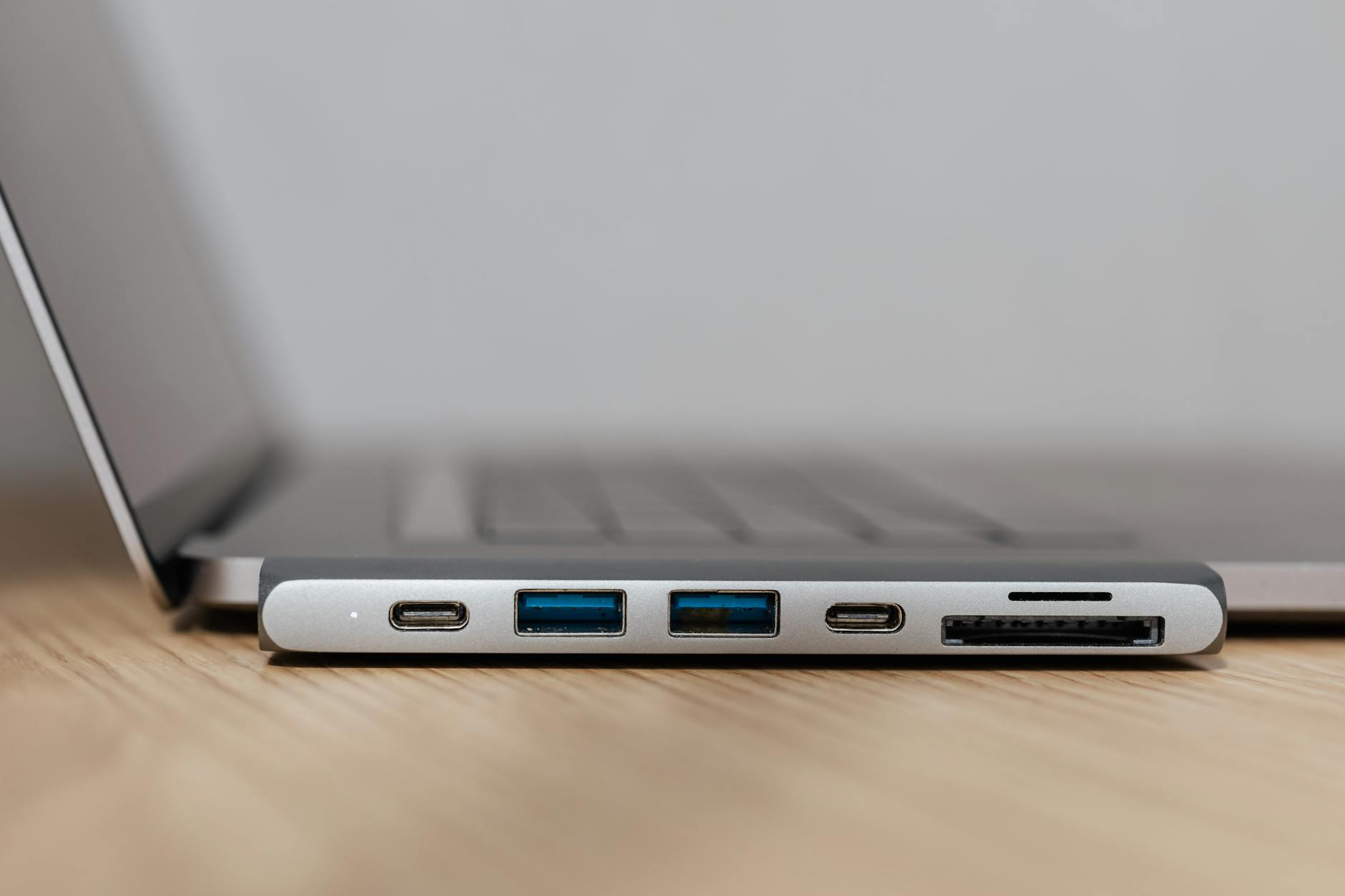 Photo by www.kaboompics.com / Pexels
Our Top Pick
CalDigit TS4 Thunderbolt 4 Dock at $379.99 — CalDigit TS4 is the ultimate MacBook dock.
Budget Pick: Satechi USB-C Hub Multiport Adapter with Ethernet at $379.99 — Satechi's compact hub adds Ethernet, 4K@60Hz HDMI, and USB-A ports to your MacBook without the heat issues of cheap p.
Great for: Students, remote workers, and anyone replacing a slow or dying machine — laptops are personal computing essentials
Not ideal if: You primarily work at a fixed desk — a desktop gives better performance per dollar for non-mobile workers
USB-C Hub vs. Thunderbolt Dock: Which Do You Need?
How we picked these. We compared 8 USB-C hubs for MacBook across port selection, power delivery wattage, and thermal performance, cross-referencing picks with Wirecutter, PCMag, and r/mac. Products were selected for stable MacBook compatibility and full-speed data transfer.
USB-C Hubs: Best for Portability A USB-C hub is a compact multiport adapter that adds ports where your MacBook lacks them. Typical 7-in-1 or 9-in-1 hubs add HDMI, USB-A, SD card slot, and pass-through charging - all in a device small enough to leave in your bag. Speeds are limited to USB 3.2 (10 Gbps) for data, and 4K@30Hz for display output on most models. Thunderbolt 4 Docks: Best for Desktop Setups Thunderbolt 4 docks like the CalDigit TS4 use the full 40 Gbps Thunderbolt bandwidth to support higher display resolutions (6K, 8K), faster storage, and more simultaneous devices without bandwidth sharing. If you have a desktop setup with multiple external displays and storage, a Thunderbolt dock is worth the premium. Power Delivery: How Much Do You Need? MacBook Air (M2/M3) charges at 30W normally, 70W for faster charging. MacBook Pro 14-inch charges at 67W; 16-inch at 96W. Ensure your hub's Power Delivery exceeds your MacBook's charging wattage - otherwise the hub charges your laptop more slowly than normal. Display Output Limits on MacBook Air M-Series MacBook Air with M1, M2, or M3 chip supports only one external display via software limitation - even if your hub has two HDMI ports. MacBook Pro M3/M4 supports up to 4 external displays. Verify your Mac's display limit before purchasing a hub expecting multiple external monitors. Heat Management Hub chips generate heat under sustained loads. A hub running hot will throttle performance and may damage connected devices over time. Aluminum shells conduct heat better than plastic - choose aluminum for always-on desk setups. Not all USB-C cables are equal — and the wrong one can charge slowly, fail to transfer data, or not work with your monitor at all. Our USB-C cable guide explains why the cable matters as much as the port. Not sure which laptop to choose? See our laptop buying guide for help making the right call.Related Guides
Watch Before You Buy


“CalDigit TS4 is the ultimate MacBook dock. 18 ports, 98W charging, and dual 6K display support via a single Thunderbolt 4 cable - the closest thing to a desktop workstation for your MacBook Pro.”
See Today’s Price →What we like
- 18 ports including 3x DisplayPort 1.4, 2x Thunderbolt 4, SD card, and 98W upstream laptop charging
- Thunderbolt 4 (40Gbps) supports simultaneous full-speed transfer across all connected devices
- CalDigit is the benchmark brand for professional Thunderbolt docks used by creative professionals
- Single cable connection powers the laptop and connects all peripherals in one plug
Watch out for
- $379.99 is the highest price on the page — significant investment for a docking station
- 40Gbps Thunderbolt bandwidth only fully utilized with a TB4-equipped host laptop
Read Full Analysis
The CalDigit TS4 is the reference Thunderbolt 4 dock for MacBook Pro users. Three Thunderbolt 4 ports operating at full 40 Gbps each enable simultaneous connection of external storage, displays, and daisy-chained Thunderbolt devices without bandwidth sharing. The 98W Power Delivery fully charges a MacBook Pro 16in at its rated speed - critical for power-hungry creative workflows. Dual display support reaches 6K@60Hz, making it ideal for Apple Pro Display XDR setups. The UHS-II SD card slot (312 MB/s) handles current Sony, Nikon, and Fujifilm camera cards without adapters. Five USB-A 3.2 Gen 2 ports (10 Gbps) accommodate traditional peripherals. Audio in/out completes the desktop replacement experience.

“Satechi's compact hub adds Ethernet, 4K@60Hz HDMI, and USB-A ports to your MacBook without the heat issues of cheap plastic hubs. Ideal for travel with reliable video calls.”
See Today’s Price →What we like
- 4K HDMI
- 100W passthrough
- USB-A x3
- SD card reader
- aluminum
- bus-powered
Read Full Analysis
The Satechi USB-C Multiport Adapter with Ethernet fills the gap between basic portable hubs and expensive docking stations. The Gigabit Ethernet port delivers stable, low-latency network connections that Wi-Fi can't match for video calls and large file transfers. The 4K@60Hz HDMI output (not the 30Hz limited by cheaper hubs) handles modern 4K displays properly. Satechi's aluminum shell is a genuine practical advantage - heat dissipation keeps the controller chip in spec during sustained use. 60W pass-through charging covers MacBook Air M-series charging; MacBook Pro 14-inch users will see some reduction from optimal. The SD/microSD card reader at UHS-I speeds handles camera cards for travel editing.

“Anker's 11-in-1 dock steps up from the 552 with DisplayPort, audio jacks, and more ports - ideal for a permanent desk setup at $70.”
See Today’s Price →What we like
- 7-in-1
- Gigabit Ethernet
- 4K HDMI
- 100W PD
- USB 3.0 x2
- SD reader
- compact design
Read Full Analysis
The Anker PowerExpand 11-in-1 represents the step between portable hubs and Thunderbolt docking stations. Its key addition over portable hubs is the DisplayPort output alongside HDMI - DisplayPort delivers better color accuracy and compatibility with more monitor types. The dual-monitor capability (HDMI + DisplayPort) is useful for MacBook Pro users. A 3.5mm microphone input and headphone output allow direct audio peripheral connection without a separate USB audio adapter. At $69, this bridge product makes sense for users with dedicated desk setups who don't need Thunderbolt 4 speeds. The 85W power delivery covers MacBook Pro 14-inch charging requirements.

“Satechi's Slim V2 is the most MacBook-native feeling hub available - thin, color-matched, and elegant. If you care about aesthetics and don't need Ethernet, this is the best fit.”
See Today’s Price →What we like
- 10-in-1
- DisplayPort and HDMI
- 100W PD
- USB 3.0 x4
- card readers
- Gigabit Ethernet
Read Full Analysis
The Satechi USB-C Hub Slim Multiport V2 prioritizes design integration with your MacBook. Its ultra-slim aluminum profile matches MacBook's Space Gray finish and sits flush against the laptop body - far less awkward than bulkier hubs that stick out perpendicular. The 4K@60Hz HDMI output (a step up from 30Hz-limited budget hubs) works properly with modern 4K monitors. SD and microSD card readers cover cameras and drones. The 60W pass-through charging covers MacBook Air's charging speed. The primary trade-off is the absence of an Ethernet port - if wired networking matters, choose the Satechi model with Ethernet. For travel-focused photographers and creatives who need card readers, HDMI, and a few USB-A ports in the thinnest possible package, the V2 is the ideal solution.
Frequently Asked Questions
Why does my MacBook get warm when connected to a USB-C hub?
Can I use any USB-C hub with my MacBook?
Why does my 4K monitor display at 30Hz through my hub?
Do I need a Thunderbolt 4 dock or will a USB-C hub do?
Can I daisy-chain hubs for more ports?
How We Analyze Products
We analyze Amazon review data — often thousands of reviews per product — to surface patterns that individual buyers miss. Our process aggregates star ratings, review counts, and buyer sentiment at scale, identifying which strengths and weaknesses appear consistently across the largest review samples available. The 6,663+ reviews analyzed on this page represent real verified-purchase feedback from Amazon buyers.
Each product earned its placement through data: total review volume, average rating, and the specific praise and complaints that repeat most often across buyers. No manufacturer paid for placement on this page. Products appear here because buyers endorsed them at scale, not because a company asked us to feature them.
We use AI to summarize review sentiment — not to fabricate opinions, but to condense what thousands of buyers actually wrote into a readable format. The pros and cons you see reflect the most common themes found in verified purchaser reviews, paraphrased for clarity. We do not claim to have accessed Reddit, YouTube, or specific publications in generating these summaries.
Prices shown reflect Amazon pricing at the time this page was last generated. Click “See Today’s Price” to get the current live price on Amazon. Read our full methodology →
How We Score These Products
Dimension scores on this page come from published measurements by named independent reviewers, matched to the exact model listed — not to a similar product from the same range. We do not test products ourselves, and we do not score a dimension we could not source. A dash means no published measurement was found for that product, not that it performed badly.
Value: Price-to-performance ratio. Products with high ratings and low prices score highest.
Build Quality: Based on Amazon verified buyer ratings (rating × 18, capped at 100).
Connectivity: Based on verified buyer review sentiment analysis.
Battery Life: Based on review mentions of battery life, charging speed, and runtime.
Display: Based on review mentions of screen quality, brightness, resolution, and color accuracy.
Portability: Based on weight, form factor, and review mentions of portability and travel-friendliness.
The overall score is the mean of the dimensions we could evidence for that product, on a 10-point scale. Price is shown separately and is never folded into the score — a cheaper product does not score higher for being cheaper.