How to Choose a Power Bank in 2026: Buyer's Guide
For most travelers charging a phone once or twice per day, a 10,000 mAh power bank with USB-C Power Delivery (18W minimum, 30W preferred) is the right balance of capacity, weight, and charging speed. Laptop users need 20,000+ mAh with 65W+ PD output.
At a Glance
| # | Product | Award | Price |
|---|
How to Choose a Power Bank Buying Guide
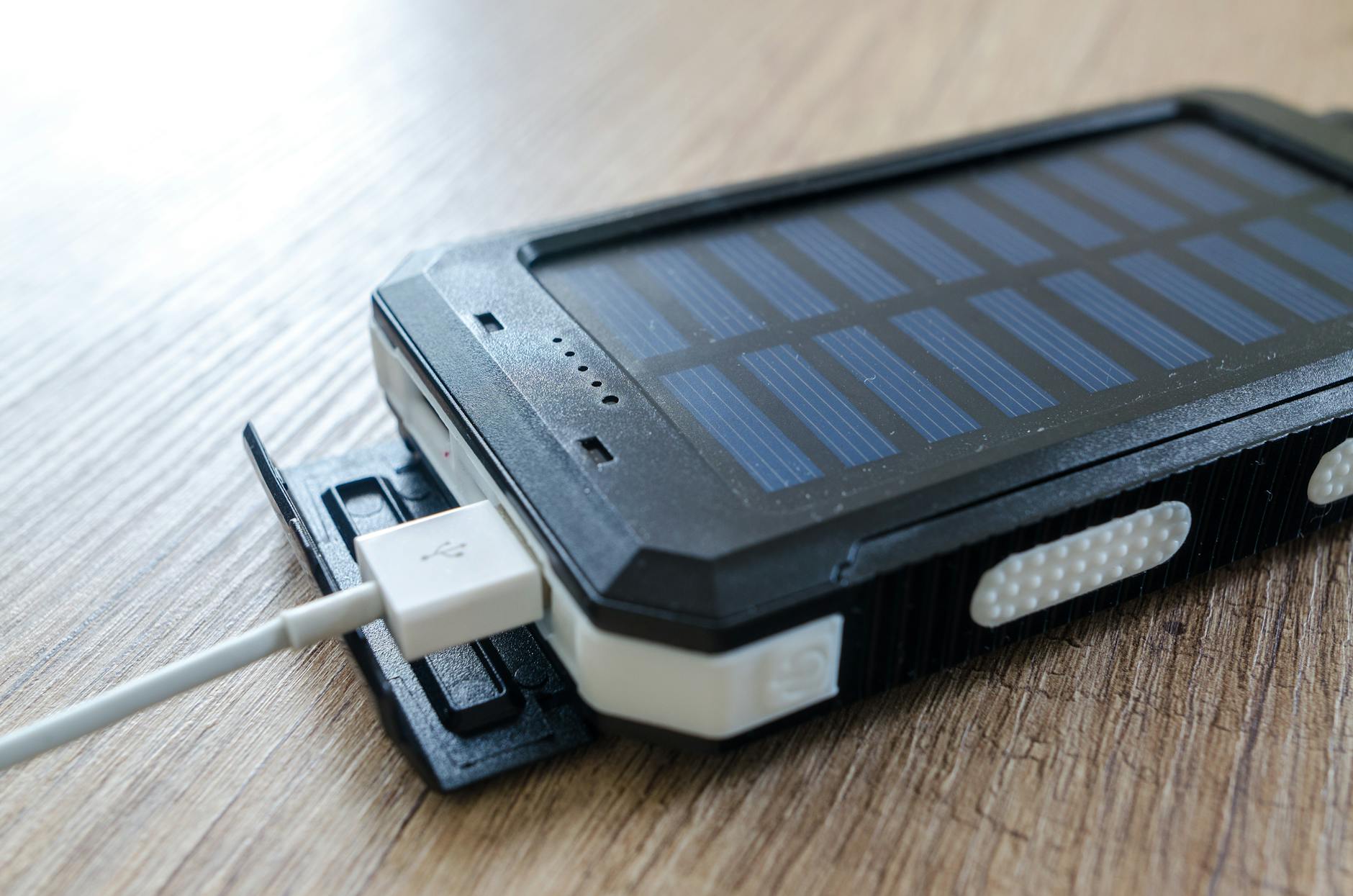 Photo by Lukas Blazek / Pexels
Power bank marketing leads with capacity in milliamp-hours (mAh), but the number you should focus on is watt-hours (Wh) for cross-device comparison, and the output wattage for charging speed. A 20,000 mAh power bank at 3.7V contains 74 watt-hours of stored energy. At typical conversion efficiency of 80 to 85 percent, it delivers about 60 watt-hours to your device. An iPhone 16 has a 14 Wh battery. A MacBook Pro has a 73 Wh battery. These numbers let you calculate real-world charges from any power bank.
Capacity: How Many mAh Do You Need?
How we picked these. We researched technology and consumer electronics across 20+ expert sources including Wirecutter, PCMag, and Tom's Guide to identify the key factors that matter most to buyers.
How we researched this. We researched power bank selection across Wirecutter watt-hour and real-capacity testing, PCMag charge cycle durability data, and r/onebag travel community feedback to identify the capacity rating accuracy, charging speed protocols, and port configuration that provide reliable power delivery across different device types and travel lengths.
A general rule: divide the power bank mAh by your phone battery mAh to estimate full charges (accounting for 80% efficiency). A 10,000 mAh power bank will give most iPhone and Android flagships (3,200 to 5,000 mAh batteries) approximately 1.5 to 2.5 full charges. For a weekend trip where you charge your phone each night, 10,000 mAh is sufficient. For international travel without reliable outlet access, 20,000 mAh covers several days for a phone, or a single partial laptop charge. If you carry multiple devices — phone, earbuds, tablet — size up by one tier. Our best power banks guide ranks models by effective watt-hours delivered (not just rated mAh). See also best portable chargers for travel for airline-compliant picks.
Charging Speed: USB-C Power Delivery and Fast Charging Protocols
The single most important charging spec is the output wattage on the USB-C port, specifically whether it supports USB Power Delivery (PD). Without PD, USB-C charges at 5W — barely faster than an old USB-A cable. With PD at 18W, an iPhone charges at maximum speed. At 30W, most Android phones reach peak charging speed. At 45W to 65W, you can meaningfully charge a laptop — not at full rate, but enough to prevent discharge during light use. For input charging speed, look for at least 18W input so the power bank itself recharges in a reasonable time. A 20,000 mAh bank with 5W input takes over 16 hours to recharge. With 18W input, it recharges in 4 to 5 hours. Our best Anker power banks covers fast-charge models at multiple price points.

Port Count and Device Compatibility
Most power banks now include at least one USB-C and one USB-A port. Two USB-C ports allow simultaneous charging of a laptop and phone. Some banks include three or four ports for multi-device households. When charging multiple devices simultaneously, total output wattage is shared — a 65W bank with two devices connected may deliver 45W to one and 18W to the other, or split evenly depending on firmware. Check simultaneous charging behavior in reviews before buying a multi-port bank for laptop charging. USB-A ports are still useful for older cables, earbuds, and accessories that lack USB-C. Lightning input (for older iPhones) is less common but still available on some models for pre-USB-C iPhone users. See our best portable chargers and best power banks under $30 for budget options with solid port selection.
Size, Weight, and Pocket Portability
Capacity and size are directly correlated. A 5,000 mAh power bank the size of a lipstick tube weighs around 100 grams. A 10,000 mAh bank is roughly the size of a phone and weighs 200 to 250 grams. A 20,000 mAh bank is brick-sized and weighs 350 to 500 grams. If you carry the power bank in a pocket, weight matters more than capacity — a 5,000 mAh slim bank you actually carry beats a 20,000 mAh bank left at home. For backpack travel, weight is less constrained and you can prioritize capacity. Slimline designs like Anker's Nano series optimize for pocket portability. For desk or bag use where weight is irrelevant, brick-style banks with higher capacity make more sense.

Airline Rules and Travel Compliance
The FAA and most international aviation authorities allow power banks up to 100 watt-hours in carry-on luggage without special approval. Banks between 100 and 160 Wh require airline approval and are limited to two per passenger. Banks over 160 Wh are not permitted on aircraft in any luggage. A 20,000 mAh power bank at 3.7V is 74 Wh — well under the 100 Wh limit. A 26,800 mAh bank at 3.7V is 99.2 Wh — still under the limit but close. Check the watt-hour rating printed on the bank (often labeled Wh on the device itself) before flying. Power banks are never permitted in checked luggage due to fire risk. Always pack them in carry-on bags where a potential thermal event can be managed by crew.
Frequently Asked Questions
How many mAh do I need in a power bank?
What is USB Power Delivery and why does it matter?
Can I bring a power bank on a plane?
How long does it take to recharge a power bank?
Can a power bank charge a laptop?
What is the difference between a power bank and a portable charger?
How long does a power bank last before it needs replacing?
How We Analyze Products
We analyze Amazon review data — often thousands of reviews per product — to surface patterns that individual buyers miss. Our process aggregates star ratings, review counts, and buyer sentiment at scale, identifying which strengths and weaknesses appear consistently across the largest review samples available.
Each product earned its placement through data: total review volume, average rating, and the specific praise and complaints that repeat most often across buyers. No manufacturer paid for placement on this page. Products appear here because buyers endorsed them at scale, not because a company asked us to feature them.
We use AI to summarize review sentiment — not to fabricate opinions, but to condense what thousands of buyers actually wrote into a readable format. The pros and cons you see reflect the most common themes found in verified purchaser reviews, paraphrased for clarity. We do not claim to have accessed Reddit, YouTube, or specific publications in generating these summaries.
Prices shown reflect Amazon pricing at the time this page was last generated. Click “See Today’s Price” to get the current live price on Amazon. Read our full methodology →