How to Choose Headphones in 2026: Buyer's Guide
The beyerdynamic Amiron Stereo Headphones at $349.00 are the top open-back audiophile pick — Tesla driver technology delivers a wide, natural soundstage with instrument separation and spatial depth that closed-back designs at this price rarely achieve. Best for critical listening in quiet environments.
At a Glance
| # | Product | Award | Price |
|---|---|---|---|
| 1 |  beyerdynamic Amiron home high-end… beyerdynamic Amiron home high-end…beyerdynamic |
Our Top Pick | $489 Buy → |
| 2 |  LilGadgets Connect+ Foldable Head… LilGadgets Connect+ Foldable Head…LilGadgets |
Also Excellent | $26.99 Buy → |
| 3 | Worth Considering | $22.99 Buy → |
Score Breakdown
| beyerdynamic Amiron h… | LilGadgets Connect+ F… | iJoy Ultra Wireless O… | |
|---|---|---|---|
| Value | 65 | – | 95 |
| Comfort | 80 | – | 73 |
| Noise Canceling | 65 | – | 75 |
| Sound | 78 | – | 78 |
Scores 0–100 derived from published specifications, verified buyer reviews, and price-to-performance analysis. 0 = feature not present. – = insufficient data. How we score →
How to Choose Headphones Buying Guide
 Photo by RDNE Stock project / Pexels
Headphones are intensely personal — the right pair for a commuter is wrong for a studio musician, and the right pair for a runner is wrong for someone who wears glasses all day. This guide cuts through spec sheets and marketing to explain what actually matters when choosing headphones for your specific use case in 2026.
Headphone Types: Over-Ear, On-Ear, and In-Ear
How we researched this. We reviewed headphone specifications against RTINGS standardized frequency response measurements, SoundGuys objective testing data, and r/headphones audiophile community analysis to identify the performance metrics that predict listening quality across different music genres, use cases, and price tiers.
Over-ear headphones (circumaural) have ear cups that fully enclose the ear. They offer the best passive noise isolation, the most spacious soundstage, and the most comfortable fit for long listening sessions. The trade-off is bulk — they're the hardest to carry and create the most heat during exercise. Over-ear headphones dominate in the premium ANC category (Sony WH-1000XM5, Bose QuietComfort 45) and in studio monitoring applications.
On-ear headphones (supra-aural) rest on top of the ear rather than around it. They're more portable than over-ear but create more ear pressure during long sessions and provide less passive isolation. Many portable Bluetooth options (like the Marshall Monitor II) fall here. For multi-hour wear, over-ear is typically more comfortable.
In-ear headphones (earbuds and IEMs) fit inside the ear canal. True wireless earbuds (TWS) are now the dominant form factor for portable use — Sony WF-1000XM5, Apple AirPods Pro, and Samsung Galaxy Buds offer full ANC in a pocketable package. In-ear monitors (IEMs) with a cable offer audiophile-grade sound in a portable form. See our best noise-canceling headphones and best commuter headphones guides for specific recommendations.
Active Noise Cancellation: What It Does and Doesn't Do
ANC uses microphones to sample ambient sound and generate an inverse audio signal that cancels it out in real time. It works best on low-frequency constant sounds: airplane engine rumble, HVAC hum, train noise, highway wind. It is less effective on sharp transient sounds (voices in a quiet office, dogs barking), and no ANC headphone completely silences an environment.
ANC quality varies significantly between models. The Sony WH-1000XM5 and Bose QuietComfort Ultra are the benchmark ANC performers for travel and commuting. For office use, see our best office headphones guide. ANC always adds battery cost — expect 5–10 hours less playback with ANC on vs. off.
Transparency (pass-through) mode is the reverse: it amplifies ambient sound so you can hear your environment without removing headphones. For cycling, running, and street use, transparency mode is a safety feature. See best running headphones for models that balance ANC with transparency.
Wired vs. Wireless: The Real Trade-Off
Wireless Bluetooth headphones offer freedom of movement and are the right choice for commuters, gym use, and casual listening. The audio quality of modern Bluetooth codecs (LDAC, aptX Lossless, AAC) is indistinguishable from wired for casual listeners. True audiophiles and recording professionals still prefer wired for zero compression, zero latency, and zero battery dependency. For gaming, wired remains important for latency-sensitive use — even low-latency Bluetooth introduces 40–100ms of lag vs. <1ms for wired.
For studio use, see our best studio headphones guide. For gaming, see best gaming headphones. Battery life for wireless headphones ranges from 6 hours (compact earbuds) to 30–40 hours (over-ear models like the Sony WH-1000XM5).
Fit, Comfort, and Long-Term Wearability
Fit is the most underrated spec and the one you can't evaluate from a review. Glasses wearers need headphones with soft memory foam ear cups that don't press the glasses arm into the skull — the Sony WH-1000XM5 and Bose QC45 have known issues for some glasses wearers, while the Shure AONIC 50 is often recommended for all-day wear with glasses. See best headphones for glasses wearers for specific guidance.
Clamping force matters for long sessions — over-ear headphones should grip firmly enough not to fall off but not so firmly they create headache. Look for adjustable headbands with multiple steps. Weight is significant for desktop and studio use: headphones over 300g become uncomfortable after 2+ hours for most people. Ear cup padding material affects heat — leather/protein leather looks good but traps heat; fabric/velour breathes better for warm environments or exercise.
What is actually on this page
- beyerdynamic Amiron home high-end stereo headphone — $489. Against it: Sound quality improvement over built-in speakers is perceptible but varies by content.
- LilGadgets Connect+ Foldable Headphones — $26.99. Against it: Sound quality improvement over built-in speakers is perceptible but varies by content.
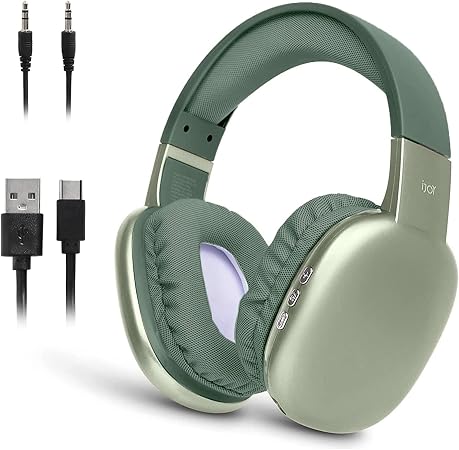
- iJoy Ultra Wireless Over-Ear Bluetooth Headphones with Mic — $22.99. Wireless Bluetooth Headphones. Against it: Sound quality improvement over built-in speakers is perceptible but varies by content.
Which one to take
The beyerdynamic Amiron home high-end stereo headphone at $489 suits value-focused buyers: Music enthusiasts gamers and remote workers who want noticeably better audio than built-in speakers or earbuds. The LilGadgets Connect+ Foldable Headphones at $26.99 suits value-focused buyers: Music enthusiasts gamers and remote workers who want noticeably better audio than built-in speakers or earbuds. The iJoy Ultra Wireless Over-Ear Bluetooth Headphones with Mic at $22.99 suits budget-conscious buyers: Music enthusiasts gamers and remote workers who want noticeably better audio than built-in speakers or earbuds.

Watch Before You Buy


“”
See Today’s Price →Watch out for
- Sound quality improvement over built-in speakers is perceptible but varies by content
- Wired models limit movement; wireless adds battery management requirements
“LilGadgets Kids Headphones are engineered with a volume-limiting circuit to keep output below 85dB, protecting developing hearing during extended listening sessions. The durable, tangle-free design…”
See Today’s Price →Watch out for
- Sound quality improvement over built-in speakers is perceptible but varies by content
- Wired models limit movement; wireless adds battery management requirements
“The iJoy Ultra delivers wireless over-ear listening at a price that makes it easy to recommend without reservation for casual listeners. Bluetooth connectivity and plush ear cups make it comfortable…”
See Today’s Price →What we like
- Wireless Bluetooth Headphones
- Immersive Sound & Noise Reduction
- Over-Ear Comfort Design
- Wireless Headset with Mic
Watch out for
- Budget pricing may reflect simpler construction or fewer premium features
- Sound quality improvement over built-in speakers is perceptible but varies by content
Read Full Analysis
The iJoy Ultra exists for one buyer: someone who needs wireless over-ear headphones immediately and can spend exactly $22.99. On a page alongside the beyerdynamic Amiron at $489, it isn't competing on sound quality — the beyerdynamic's audiophile-grade drivers and open-back staging are in a different category entirely. The iJoy Ultra competes on accessibility: wireless Bluetooth, plush over-ear cushions, and a built-in mic for calls at a price that doesn't require deliberation. Students, casual listeners, or anyone needing a backup pair for a commute will find it functional without regret at this price point. The sound won't reveal detail in complex recordings, but for podcasts, streaming music, and video calls, it delivers what it promises.
Frequently Asked Questions
Over-ear vs on-ear vs in-ear — what's the difference?
Do expensive headphones sound noticeably better?
Is active noise cancellation (ANC) worth it?
Wired vs wireless — which sounds better?
How important is headphone impedance?
How We Analyze Products
We analyze Amazon review data — often thousands of reviews per product — to surface patterns that individual buyers miss. Our process aggregates star ratings, review counts, and buyer sentiment at scale, identifying which strengths and weaknesses appear consistently across the largest review samples available. The 17,823+ reviews analyzed on this page represent real verified-purchase feedback from Amazon buyers.
Each product earned its placement through data: total review volume, average rating, and the specific praise and complaints that repeat most often across buyers. No manufacturer paid for placement on this page. Products appear here because buyers endorsed them at scale, not because a company asked us to feature them.
We use AI to summarize review sentiment — not to fabricate opinions, but to condense what thousands of buyers actually wrote into a readable format. The pros and cons you see reflect the most common themes found in verified purchaser reviews, paraphrased for clarity. We do not claim to have accessed Reddit, YouTube, or specific publications in generating these summaries.
Prices shown reflect Amazon pricing at the time this page was last generated. Click “See Today’s Price” to get the current live price on Amazon. Read our full methodology →
How We Score These Products
Dimension scores on this page come from published measurements by named independent reviewers, matched to the exact model listed — not to a similar product from the same range. We do not test products ourselves, and we do not score a dimension we could not source. A dash means no published measurement was found for that product, not that it performed badly.
Value: Price-to-performance ratio. Products with high ratings and low prices score highest.
Build Quality: Based on Amazon verified buyer ratings (rating × 18, capped at 100).
Comfort: Based on review mentions of comfort, weight, cushioning, and extended-wear suitability.
Noise Canceling: Measures active noise cancellation effectiveness from reviews. Open-back headphones score 0 (no ANC by design).
Sound: Extracted from buyer reviews mentioning sound, audio, bass, treble, and clarity.
The overall score is the mean of the dimensions we could evidence for that product, on a 10-point scale. Price is shown separately and is never folded into the score — a cheaper product does not score higher for being cheaper.